English हिन्दी
Connect with us

India News

Teacher held for molesting 12 minor girls at UP government school in Shahjahanpur dist

In a shocking incident, at least 12 girl students—all minors—were allegedly molested by their computer teacher at a government-run school in Uttar Pradesh’s Shahjahanpur, police said on Monday, adding that accused has been arrested.


Published

on

Teacher molests Girl student

In a shocking incident, at least 12 girl students—all minors—were allegedly molested by their computer teacher at a government-run school in Uttar Pradesh’s Shahjahanpur, police said on Monday, adding that accused has been arrested.
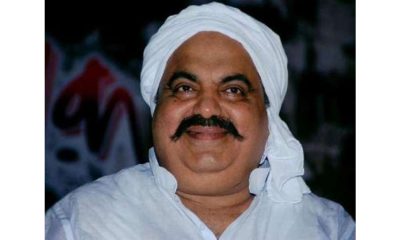
A senior police official said that the accused, identified as Mohammad Ali, who was posted as computer instructor at a junior government school in Tilhar area, was arrested for allegedly molesting at least 12 minor girl students, including some Dalit girls.

Talking to news agency PTI Circle Officer (Tilhar) Priyank Jain said that the school’s principal and an assistant teacher have also been charged in connection with the case and placed under suspension.

The officer said that the principal allegedly turned a blind eye to the incident and did not take any action against the accused despite receiving complaints from the students.

Giving details, the officer while citing a complaint filed by village head Lalta Prasad, the accused allegedly molested a Dalit girl on Saturday, following which the girl along with his other victims narrated their ordeal to their families.

Read Also: Drunk passenger molests air hostess aboard Dubai-Amritsar IndiGo flight, arrested

After the revelation, the family members of the minor girls accompanied by other villagers, arrived at the school and raised a hue and cry while demanding the arrest of the accused and action against school authorities.

The CO said a police team was rushed to the spot who pacified the aggrieved families and recorded the statements of the girls and some teachers of the school on the spot, adding that the girls have been sent for a medical examination.

The senior officer said that based on the complaint, an FIR has been registered against the accused under sections of the Scheduled Castes and Scheduled Tribes (Prevention of Atrocities) Act, the POCSO (Protection of Children from Sexual Offences) Act and sections of the Indian Penal Code (IPC), adding that further investigation is underway.

District Basic Shiksha Adhikari Kumar Gaurav said the accused computer teacher has been terminated while the school principal Anil Kumar and assistant teacher Sajia have also been suspended with immediate effect for dereliction of duty.

Maharashtra lovers die in suicide pact fearing disapproval from families

Patiala woman shot dead for consuming alcohol inside gurdwara

India News

Sonam Wangchuk’s health declines during hunger strike, actor Omi Vaidya calls for more popular support

Published

on

By

Actor Omi Vaidya, best known for playing Chatur Ramalingam in 3 Idiots, has appealed to people to support climate activist Sonam Wangchuk, whose health has reportedly deteriorated during his indefinite hunger strike on the Cockroach Janta Patry dais at Jantar Mantar in New Delhi.

Sharing a video message on Instagram, Vaidya referred to Wangchuk as the “real-life Phunsukh Wangdu,” the character in 3 Idiots inspired by the Ladakh-based innovator. He urged people not to remain silent and said, “Don’t let Phunsukh Wangdu die.” Calling Wangchuk’s work an inspiration, the actor appealed for greater support as concerns over the activist’s health continue to grow.

Recent updates from Wangchuk’s supporters indicate that his health has significantly declined after fasting for over two weeks. His blood glucose level reportedly dropped to 67 mg/ dL, and he has lost over 8 kg since beginning the indefinite hunger strike. The protest is aimed at drawing attention to environmental protection and governance-related demands concerning Ladakh.

Sonam Wangchuk, an engineer, education reformer and Ramon Magsaysay Award winner, is widely recognised as the real-life inspiration behind Wangdu, the iconic character played by Aamir Khan in Rajkumar Hirani’s 2009 film 3 Idiots. Although Wangchuk has previously distanced himself from direct comparisons with the character, his work in education and sustainable development has often been linked to the film.

Vaidya’s appeal has added a film industry voice to the growing concern over Wangchuk’s health. As his hunger strike continues, supporters and public figures have called for immediate attention to his condition and renewed dialogue over the issues he has raised. The protest is underway demanding Education Minister Dharmendra Pradhan resign over the NEETUG fiasco.


Continue Reading

India News

Ladakh may get Article 371-like safeguards, autonomous councils

Published

on

By

Laddakh Violence

The Central government is said to be working on a proposal to grant Ladakh a special governance framework similar to Article 371 of the Constitution.

The move is aimed at addressing the long-standing demands of the people of Ladakh for greater autonomy, protection of local culture, and stronger local self-governance after the region became a Union Territory in 2019.

According to the proposal, Autonomous Hill Development Councils (AHDCs) will be established in all seven districts of Ladakh. At present, only Leh and Kargil have elected hill councils. The expansion of these councils is expected to ensure balanced development, improve local administration, and give residents of every district a greater role in decision-making.

The Centre is also planning to create a Union Territory-level elected body that will coordinate the functioning of all district councils. This institution is expected to have powers related to planning, development, finance, and administration, helping improve governance across Ladakh while maintaining coordination with the Union Territory administration.

Article 371 is a special provision in the Constitution that gives some states extra rights to protect their culture, local traditions, land, and ensure better administration based on their unique needs. While Ladakh is not expected to receive Article 371 in its existing form, the government is considering a customized framework with similar constitutional protections suited to the region’s geographical and social conditions.

The proposal comes after several rounds of discussions between the Centre, the Ladakh administration, and representatives of civil society. Local groups have been demanding constitutional safeguards to protect the region’s fragile environment, tribal identity, employment opportunities, and control over land resources.

If approved, the Ladakh Autonomous Hill Development Council Act will be amended, followed by the delimitation of constituencies before elections are held for the newly-created councils. The proposal is currently under consideration.

The initiative is expected to strengthen grassroots democracy, promote inclusive development, and provide Ladakh with greater administrative autonomy while remaining a Union Territory.

Continue Reading

India News

Omar Abdullah criticises Martyrs’ Day restrictions, calls LG administration temporary guests

Omar Abdullah criticised the LG administration after being prevented from visiting Srinagar’s Martyrs’ Graveyard, alleging the 1931 martyrs’ sacrifices are being overlooked.

Published

on

Omar Abdullah

Jammu and Kashmir Chief Minister Omar Abdullah on Monday criticised the Lieutenant Governor (LG) administration after he was prevented from visiting the Martyrs’ Graveyard in Srinagar to pay tribute to those killed during the 1931 uprising.

The area surrounding the Martyrs’ Graveyard in downtown Srinagar was sealed by the authorities, with police declaring it a no-go zone and restricting entry to the site.

Omar Abdullah questions restrictions

Unable to visit the graveyard, Abdullah, along with his ministers, MLAs and National Conference leaders, held a tribute meeting at the party headquarters in Srinagar.

Addressing party workers after the meeting, the Chief Minister said the administration’s decision to block access would not erase the memory of the 1931 martyrs.

Calling the LG administration “temporary guests”, Abdullah said those responsible for preventing political leaders from paying homage would not remain in office forever, while the martyrs’ cemetery would continue to stand. He added that he and his party would visit the site in the future to offer floral tributes and prayers.

Alleges selective treatment of history

Abdullah alleged that the sacrifices of those who fought against British-era rule in Jammu and Kashmir were being ignored because they were Muslims and had opposed the Dogra Maharaja, who ruled under British paramountcy.

He argued that the 1931 movement was not based on religion but represented a struggle for democratic rights, principles and freedom during the British period.

The Chief Minister also said attempts were being made to portray participation in the freedom movement against British rule in a negative light.

Background of the annual observance

July 13 was earlier observed as a public holiday in the erstwhile state of Jammu and Kashmir. Every year, officials, political leaders and members of the public would gather at the Martyrs’ Graveyard to pay homage to those killed during the 1931 incident, with police also offering a ceremonial gun salute.

Following the abrogation of Article 370 and the reorganisation of Jammu and Kashmir into a Union Territory in 2019, July 13 was removed from the list of official public holidays. Since then, authorities have not permitted official or public commemorative events at the graveyard.

The Lieutenant Governor continues to exercise authority over key subjects in the Union Territory, including law and order and policing.

Why July 13 is significant

July 13 commemorates the deaths of 22 civilians who were killed in police firing outside Srinagar Central Jail in 1931 while protesting against the rule of Dogra Maharaja Hari Singh during the British era.

The protesters had gathered in support of Abdul Qadeer, who had urged Kashmiris to oppose the Maharaja’s administration.

The incident led to widespread protests and prompted the Maharaja and the British administration to appoint commissions to examine the grievances of the Valley’s Muslim population. It also contributed to political reforms, with Jammu and Kashmir holding its first Assembly elections in 1934, marking the beginning of an electoral process in the region.

Changes after 2019

Since 2020, both July 13 and December 5—the birth anniversary of former Jammu and Kashmir Prime Minister and Chief Minister Sheikh Abdullah—have ceased to be official holidays in the Union Territory.

Instead, the birth anniversary of Dogra ruler Maharaja Hari Singh is now observed as a public holiday in Jammu and Kashmir.

Continue Reading

Trending

© Copyright 2022 APNLIVE.com