English हिन्दी
Connect with us

India News

GST revamp effective September 22: What gets cheaper and costlier from September 22

Published

on

gst revamp

India’s Goods and Services Tax (GST) Council has cleared a major revamp of the indirect tax regime, simplifying the structure into two main slabs — 5% and 18% — along with a super-luxury bracket of 40% for select items. The new rates, effective from September 22, are expected to provide relief on essentials and household products while increasing levies on luxury goods, automobiles, tobacco, and certain leisure activities.

Key items that get cheaper

  • Food and beverages: Chapati, paranthas, paneer, UHT milk, pizza bread, khakra and many packaged items including ghee, butter, dry fruits, confectionery, beverages containing milk, and biscuits will see lower GST, moving to nil or 5%.
  • Household items: Toothpaste, shampoo, soap, combs, feeding bottles, umbrellas, bamboo furniture and bicycles shift to 5% from higher rates.
  • Consumer appliances: ACs, dishwashers and TVs to fall to 18% from 28%.
  • Stationery: Pencils, notebooks, crayons, sharpeners, erasers and maps to be either nil or 5%.
  • Footwear and textiles: Rates cut to 5% from 12%.
  • Healthcare: Life-saving drugs, oxygen, diagnostic kits, glucometers, thermometers and spectacles to attract 5% or nil tax.
  • Insurance: Life and health insurance policies will attract nil GST.
  • Transport & hospitality: Economy air tickets and hotel rooms up to ₹7,500 to be taxed at 5%.
  • Vehicles: Motorcycles up to 350cc, small hybrid cars and EVs to be cheaper at 5% or 18%. Auto components shift to 18% from 28%.
  • Construction: Cement to move from 28% to 18%.
  • Agriculture: Tractors, irrigation equipment, fertilisers and biopesticides shift to 5%. Tractor parts also attract 5% instead of 18%.
  • Wellness services: Salons, gyms, yoga and fitness centres to attract 5% without input tax credit.

Items that get costlier

  • Aerated and caffeinated drinks: Soft drinks, carbonated beverages, flavoured drinks and those with added sugar will be taxed at 40%, up from 28%.
  • Luxury vehicles: Automobiles above 1,200cc, motorcycles above 350cc, racing cars, yachts and personal aircraft to face 40% levy.
  • Tobacco: Will continue under 28% plus cess until compensation loans are repaid, later to be taxed at 40%.
  • Leisure activities: Casinos, horse racing, online gaming and IPL tickets to come under the 40% slab.

India News

No uniform civil code provisions will be imposed on tribals, clarifies Amit Shah

Union Home Minister Amit Shah has assured tribal communities that the proposed Uniform Civil Code will not interfere with their customs, urging them not to be misled by misinformation.

Published

on

Union Home Minister Amit Shah on Sunday declared that the proposed Uniform Civil Code (UCC) will not impact tribal populations in any manner. He called upon the community to stay vigilant against “conspiracies” and misinformation circulating on the subject.

Addressing the Janjati Sanskritik Samagam—a tribal conclave organized by the Janjati Suraksha Manch at the Red Fort grounds to mark the 150th birth anniversary year of Birsa Munda—Shah stated that specific provisions have been implemented in states ruled by the ruling party to exclude tribal communities from the scope of the code.

Clarification on customs and traditions

The Home Minister highlighted that a deliberate narrative has emerged suggesting the proposed legislation would strip tribal societies of their distinct culture, traditions, and customary lifestyles.

He explicitly clarified that the central government has no intention of forcing UCC regulations upon tribal or Vanvasi communities. Shah pointed out that where regional administrations have initiated the code, care has been taken by the leadership to ensure that indigenous populations remain fully outside its jurisdiction. He requested attendees to disseminate this assurance deeply into forest zones and rural villages to erase lingering apprehensions.

Focus on security and community development

Beyond the legislative framework, Shah detailed the progress made toward curbing internal security threats, stating that the nation is steadily advancing toward eradicating Naxalism entirely. He noted that violent disruptions had severely restricted progress in these belts for decades, leading to the loss of thousands of tribal lives. According to the minister, regional stability will now pave the way for accelerated development across remote hills and forests.

The address also covered constitutional rights regarding personal faith. Shah mentioned that the original framework of the Constitution grants every citizen the dignity to practice their traditional beliefs without facing coercion, temptation, or material inducement for religious conversion.

Reflecting on financial allocations, the minister criticized earlier political administrations for keeping tribal welfare funding low. He underscored that the current administration under Prime Minister Narendra Modi significantly elevated the dedicated tribal budget from a previous Rs 28,000 crore to Rs 1.54 lakh crore. Terming the vast gathering a historical movement for cultural preservation, Shah described the societal awakening as a major step toward safeguarding tribal heritage for future generations.

Continue Reading

India News

DU’s Hansraj College ties up with APN News to launch future-ready AI media courses

The collaboration aims to create a future-ready academic ecosystem by integrating emerging technologies with professional education in mass communication, content creation, legal studies, advertising, marketing and digital media.

Published

on

Hansraj College, University of Delhi, has signed a landmark Memorandum of Understanding (MoU) with the Global Foundation for Media & Innovation Institute, an initiative of Balaji Foundation, in association with APN News, to introduce industry-oriented programmes in Artificial Intelligence, media, communication and digital innovation.

The collaboration aims to create a future-ready academic ecosystem by integrating emerging technologies with professional education in mass communication, content creation, legal studies, advertising, marketing and digital media.

As part of the initiative, students will receive specialised training in areas such as AI-powered journalism, digital branding, OTT production, new-age content creation, media technologies and strategic communication. The programmes are designed to bridge the growing gap between academic learning and industry requirements in the rapidly evolving digital landscape.

Hansraj College Principal Prof Rama said, “Hansraj College has always believed in academic innovation and future-focused learning. Through this partnership, we aim to provide our students with practical exposure, emerging technology skills and meaningful industry engagement aligned with the evolving global landscape. The new AI-integrated media and communication courses are scheduled to commence in July 2026.”

The courses will be offered in both online and offline formats, enabling wider access for students across the country. Officials associated with the partnership said the initiative seeks to democratise professional education by bringing industry-led learning opportunities to aspiring students nationwide.

APN News Editor-in-Chief and Balaji Foundation Chairperson Rajshri Rai said, “The future of media lies at the intersection of technology, creativity and credible communication. This collaboration is a significant step towards equipping students with industry-relevant AI and digital media skills that will shape the next generation of media professionals.”

Beyond classroom learning, the collaboration will also focus on internships, mentorship, career counselling, live industry exposure, placement assistance and research opportunities. The programme aims to prepare students for careers in media, innovation, legal communication and the digital economy.

Representatives of the partnering institutions described the agreement as a significant step towards building an innovation-driven education model that combines technology, creativity, employability and practical industry exposure.

The partnership is expected to emerge as a pioneering model in AI-integrated media and communication education in India, while strengthening industry-academia collaboration in future-oriented professional learning.

Continue Reading

India News

Uttar Pradesh CM directs high vigilance ahead of Bakri Eid, orders strict compliance on sacrifice and prayers

Uttar Pradesh Chief Minister has directed state administrative and police heads to ensure strict vigilance ahead of Bakri Eid. Rules mandate animal sacrifice only at designated spots and prohibit road blockages for public prayers.

Published

on

Yogi Adityanath

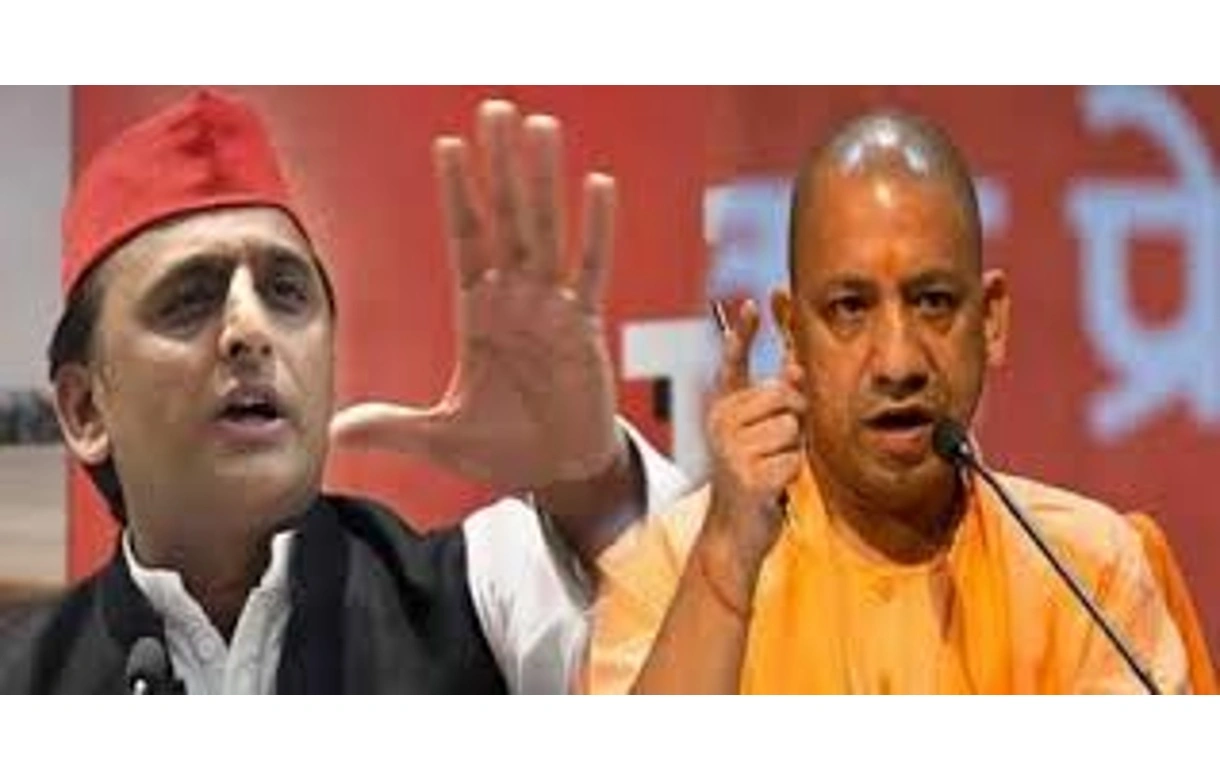
In view of the upcoming festival of Bakri Eid, Uttar Pradesh Chief Minister Yogi Adityanath reviewed administrative and security arrangements across the state. In a high-level security meeting, the chief minister directed officials to strengthen vigilance and clearly specified that the ritual sacrifice of animals will not be permitted in public spaces under any circumstances.

The state administration clarified that sacrifices must take place strictly at pre-designated, approved locations, and no new religious practices or traditions are to be encouraged. The chief minister also reiterated the ongoing ban on the sacrifice of prohibited animals across the state.

Guidelines on public prayers and law enforcement

To ensure that public mobility and normal life are not disrupted, the administration has directed that namaz must be offered exclusively at traditional venues. The government statement explicitly noted that permission will not be granted to offer prayers by blocking roads under any circumstances.

To prevent any communal friction or law-and-order issues, police chiefs and district magistrates in sensitive areas have been instructed to act proactively. The chief minister interacted directly with administrative heads of highly monitored districts, including Aligarh, Bijnor, Saharanpur, Rampur, and Sambhal. Law enforcement agencies have been asked to analyze past incidents to identify potential disruptive elements and initiate preventive action. Furthermore, continuous foot patrolling and pre-festival flag marches are to be conducted near religious sites and in sensitive neighborhoods. Regular dialogue will also be maintained with local peace committees at the police station, tehsil, and district levels to foster communal harmony.

Cleanliness, waste management, and slaughterhouse checks

The state directives place heavy emphasis on hygiene and the systemic disposal of waste during the festive period. Every district must implement a well-planned system to manage and dispose of waste following ritual sacrifices.

Media reports highlight that the open sale of meat remains strictly prohibited, and illegal slaughterhouses will not be allowed to operate anywhere in the state. For authorized and licensed slaughterhouses, the administration has mandated that the number of animals kept must strictly align with the officially prescribed capacity. Additionally, round-the-clock power supply, sanitation, and municipal security will be monitored.

Preparations for Ganga Dussehra and community grievance redressal

The review meeting also outlined security and safety measures for the upcoming Ganga Dussehra festival. Districts such as Prayagraj, Varanasi, Ayodhya, Chitrakoot, Hapur, Muzaffarnagar, and Amroha have been instructed to ensure clean ghats, proper barricading, shade provisions, and efficient parking management. Given the prevailing intense heatwave conditions, the comfort and safety of visiting devotees must be treated as a top priority, with ambulances deployed near heavy footfall areas.

In a bid to improve governance, the chief minister also passed several other structural directives during the session. Weekly ‘chaupals’ (community gatherings) are to be organized at the block level to immediately resolve public grievances, including revenue disputes, domestic violence, extortion, and local police complaints. These gatherings will also serve to enroll eligible beneficiaries into pending government welfare schemes.

On the administrative and regulatory front, a crackdown against vehicles running without number plates has been initiated alongside the creation of a specialized task force to eliminate illegal mining. Urgent appointments will also be filled in districts currently lacking a chief medical officer. Concluding the meeting, the administration reviewed the Department of AYUSH, ordering effective steps to deploy the ‘AYUSH Health and Wellness Policy-2026’ to promote the state as a premier global wellness tourism destination.

Continue Reading

Trending

© Copyright 2022 APNLIVE.com