English हिन्दी
Connect with us

India News

Henley Passport Index: Indian passport rank improves by seven, can now travel to THESE 60 nations without prior visa, check full list

Compared to last year, the rank of Indian passport is at 83 in the Henley Passport Index, up by seven places from 90th in 2021.

Published

on

Henley Passport

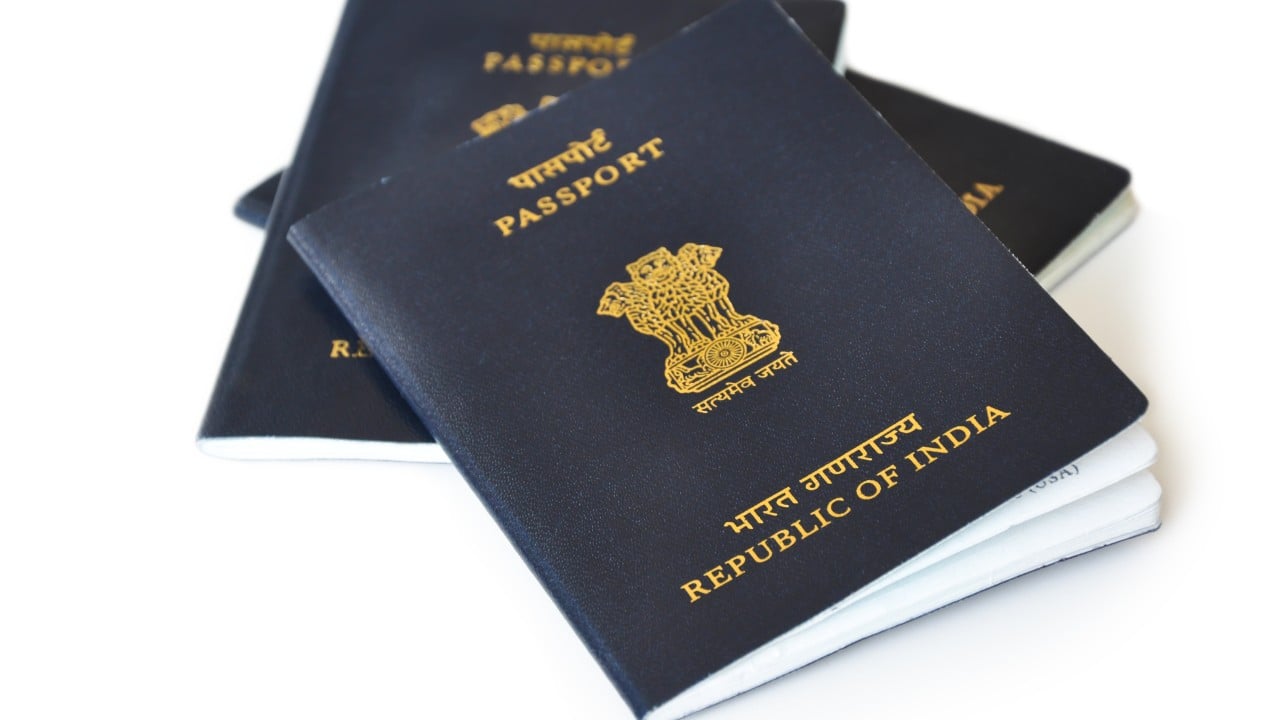
The Henley Passport Index has released the passport ranking for the first quarter of 2022 which showed a significant improvement for Indian passport holders. Compared to last year, India’s passport now ranks 83rd in the Henley Passport Index, up by seven places from 90th in 2021. India’s passport shares the ranking with African nations Sao Tome and Principe, behind Uganda and Rwanda, and can now travel to 60 nations visa-free.

Most powerful countries

Japan and Singapore passports have been listed as the world’s most powerful passports in 2022. Those holding Japan and Singapore passports can visit 192 countries visa-free. Finnish and Irish passport holders can visit more than 180 destinations without a visa.

Weakest countries

Afghanistan has the weakest passport in the world as it can travel to only 26 places visa-free, followed by Iraq (28), Syria (29) and Pakistan (31). Citizens of Vietnam, Chad, and Egypt can visit only about 50 countries.

Which countries India can travel to visa-free?

Oman and Armenia are the latest countries added to the 2021 list which had 58 visa-free destinations for India. Indian passport holders can now visit 60 countries without a prior visa. Some of the countries where Indian passport holders can get Visa On Arrival (VOA) are Cook Islands, Fiji, Samoa, Iran, Armenia, Jordan, Albania, Serbia, Trinidad and Tobago, British Virgin Islands, Bhutan, Nepal, Thailand, Bolivia, Mauritius, and Ethiopia.

Know which all countries allow Indians without prior visa here

What is Henley Passport Index?

The Henley Passport Index, or HPI, is a global ranking of countries based on the travel freedom of ordinary passport holders in each country. The ranking process involves comparing each of the 199 passports to each of the world’s 227 eligible destinations. It also keeps track of any important visa policy changes throughout the world.

Process of Henley Passport Index

If no visa is required for passport holders, a value of 1 is assigned to each travel destination. The same score applies to passport holders who obtain a visa on arriving at the destination.  A passport is given a value of zero if a visa is required or if the passport bearer must get an e-visa prior to departure. The number of places for which no visa is required determines the overall score for each passport.

Continue Reading

India News

In Manipur, Kuki-Zo groups launch counter-economic blockade

Published

on

By

Kuki-Zo organisations on Thursday launched a counter-economic blockade in Manipur, demanding that the Centre and the state government ensure uninterrupted movement of essential commodities to the hill districts amid renewed tensions over access to the highways.

The counter-blockade comes in response to the ongoing disruption of traffic on Manipur’s major transport routes with Kuki-Zo groups alleging restrictions on goods have hit residents of hill areas. They urged authorities to restore the free movement of food, medicines, fuel and other essential supplies, saying civilians should not bear the weight of the ongoing ethnic conflict.

In a joint statement, the organisations said the protest would continue until the government took concrete steps to guarantee safe passage for essential commodities and secure national highways. They also appealed to the authorities to prevent any further obstruction to the supply chain and ensure that relief and emergency services remain unaffected.

The development follows heightened tensions over the movement of vehicles on Manipur’s trunk routes, which serve as the primary lifeline for transporting goods across the state. The blockade is expected to impact logistics and transportation if the deadlock continues.

Security has been tightened along vulnerable stretches of highways, with additional personnel deployed to maintain law and order and facilitate the movement of essential supplies. Officials said the administration is monitoring the situation and is making efforts to prevent further escalation while ensuring that basic commodities continue to reach affected areas.

Manipur has witnessed repeated disruptions to road connectivity since ethnic violence erupted in the state, with competing blockades affecting supply of essential goods and normal life. The latest counter-blockade highlights the continuing challenges facing the administration in restoring stability and maintaining uninterrupted access to critical transport routes.

Continue Reading

India News

Can’t lathicharge a peaceful protest, says Supreme Court

Published

on

By

Supreme Court

The Supreme Court on Monday questioned the Delhi Police action leading to lathicharges during the student protest at Jantar Mantar on July 20.

The bench of Chief Justice of India Justice Surya Kant, Justice Joymalya Bagchi and Justice V. Mohana observed that a peaceful protest can’t be net with a lathicharge. The court made the remarks while hearing petitions against excessive force used by Delhi Police against students protesting irregularities in the NEET-UG 2026 examination and other public examinations.

The court said the right to peaceful and lawful protest is under the protection of the Constitution. The court observed that the presence of a protest can’t be a ground for police action and said that any allegation of police excess has to be independently examined.

The petitions concern the events of July 20, when thousands of students and supporters of the Cockroach Janta Party tried to march from at Jantar Mantar to Parliament as the Monsoon Session opened. The protesters were demanding action on paper leaks, examination system reforms and government accountability.

Police said they had stopped the march because of security concerns and restrictions in central Delhi. There was a clash later and police used tear gas and lathi charge to disperse the crowd. Over a 100 protesters and a similar number of police were injured in the incident.

The petitioners had sought an independent probe into the police action during the hearing. They also demanded the retention of CCTV footage, body-camera recordings and other electronic evidence, as well as compensation for those injured in the crackdown.

The case comes amid a nationwide debate over reforms of examinations and the handling of student protests. The Centre has brought in legislative measures to strengthen anti-paper leak laws, even as student organizations continue to demand greater accountability.

Continue Reading

India News

Bill against paper leaks eclipsed by Opposition push for Amit Shah reply

Published

on

By

Amit Shah

The Monsoon Session of Parliament witnessed Opposition-Government scenes on Monday as Union Minister Dr. Jitendra Singh introduced the Public Examinations (Prevention of Unfair Means) Amendment Bill, 2026 in the Lok Sabha.

The Bill aims to strengthen laws against examination paper leaks and organized cheating following the NEET-UG 2026 controversy.

During the discussions, the Opposition Congress demanded Home Minister Amit Shah’s reply to allegations of police excesses on July 20 during the Cockroach Janta Party (CJP) march to Parliament. Over 100 students were treated for injuries ranging from fractures to pellet wounds. CRPF personnel have confirmed seven rounds of pellets were fired and five rounds were fired at the students.

Congress leader Pawan Khera said such force should not have been used against the students and the Home Minister must reply to the allegations. Following disruptions, the House was adjourned several times.

The legislation seeks to impose stricter penalties for paper leaks, organized examination fraud, and other unfair practices. It also provides for faster investigations, time-bound trials, and the establishment of a STF to investigate major examination-related offenses. According to the government, the amendments are intended to improve transparency, protect the credibility of public examinations, and restore students’ confidence in the system.

The Congress and several Opposition parties demanded a detailed discussion in both the Lok Sabha and the Rajya Sabha, arguing that the government must be held accountable for both the examination irregularities and the police response.

The debate comes days after the resignation of former Union Education Minister Dharmendra Pradhan, following weeks of nationwide protests over paper leaks and examination malpractice. While the Centre has announced reforms and introduced the amendment Bill, Opposition leaders maintain that legislative changes alone are insufficient without fixing responsibility for the controversy and the police action against students.

The government defended its response, stating that it has initiated investigations into examination fraud, introduced stricter legal provisions, and taken steps to strengthen the security of public examinations. Parliamentary Affairs Minister Kiren Rijiju urged MPs to participate in the debate and allow the House to function smoothly instead of disrupting proceedings.

Continue Reading

Trending

© Copyright 2022 APNLIVE.com