English हिन्दी
Connect with us

India News

How to Manage Time Effectively?| Tips for Managing Time Effectively.

In a business climate where workers and talented experts are employed dependent on their information and profitability at a set time, it’s an incredible chance to instruct them time management aptitudes.

Published

on

Time Management

In a business climate where workers and talented experts are employed dependent on their information and profitability at a set time, it’s an incredible chance to instruct them time management aptitudes. Why? They’ll monitor time as well as have the occasion to keep tabs on their development in undertakings and add to the organization’s prosperity.

Being aware of time will bring about personal growth and objective accomplishment. That is valid in both your work and individual life. What’s the most ideal approach to manage time successfully? Applying these 10 hints is a decent beginning.

1.Have a Time Check

Know precisely how you invest your energy. In an office setting, you should know the assignments that are taking your time. Knowing precisely where your time is going can assist you with settling on choices about appointing errands or purchasing programming to accelerate some lower-level cycles.

  1. Set a Time Limit

Setting a period limit for an undertaking can be entertaining. Indeed, it very well may resemble a game. A few organizations really partition representatives into gatherings, and the gathering that completes a venture or assignment initially gets a prize. You can apply this guideline to any undertaking. Set an unequivocal time limit, for example, an hour or two. At that point attempt to complete the undertaking inside the designated time, and feel the energy as you do it.

  1. Use Software Tools for Time Management

Innovation is more refined at managing time.The web offers an assortment of applications and instruments, and some are valuable for business the board, particularly for checking and evaluating day by day measures. For some applications, the serious elements of the paid variants can likewise give you added control and better client experience.

  1. Have a To-Do List

Having a rundown is consistently an efficient device. On the off chance that you have a rundown, you’ll never need to consider what’s on the day by day plan or what to do straightaway. Surely, a rundown keeps you engaged and inspired, zeroed in on feeling that sweet fulfillment each time you tick off an assignment from your rundown. Records likewise let you see – and screen – your advancement. Regardless of whether you’re encircled by interruptions, your rundown will keep you in good shape.

  1. Plan Ahead

Preparing is a basic piece of time management. Preferably, you should prepare for the week or possibly the day preceding. At the point when you know precisely the main priority for the afternoon or week, you’ll remain composed and centered. You can break assignments across days to see, ahead of time, how long is expected to finish an undertaking. In any event, spending only a couple minutes preparing can change how you work.

  1. Start with Your Most Important Tasks

Do your most significant errands in the first part of the day. Each one of those unpleasant errands, the large greater part of your work, the hardest undertakings – destroy them the morning. The explanation is straightforward. You have the most energy in the first part of the day, so you will have the option to handle the undertakings productively and ably. Furthermore, the sentiment of achievement at completing the main stuff first will make the remainder of the day that greatly improved.

  1. Delegate and Outsource

You can’t do everything without anyone else, so cut yourself a little room to breath and representative. Possibly it’s the ideal opportunity for you to prepare somebody to do some straightforward cycles in your work or office. That lets loose you to zero in on the greater ventures or the more confounded assignments. You can even re-appropriate the work to an accomplished consultant and set aside cash.

  1. Zero in on One Task at a Time

On the off chance that you have decided to take care of a responsibility, oversee it as far as possible – finish it. Abstain from accomplishing half work, which means surrendering your present errand and accomplishing something different totally. One case of half-work is composing a report at that point unexpectedly searching your email for reasons unknown and composing answers. That is awful time the executives as well as awful for your focus. You’ll lose your force. Zero in on the job needing to be done, and keep away from these traps.

  1. Roll out Some Improvements in Your Schedule

In the event that you feel more stimulated at specific times, change your timetable to grasp that. A few people are more empowered toward the beginning of the day, while some are evening people. At the point when you pick the best time plan for you, you’ll appreciate the advantages of having the option to accomplish more.

  1. Maintain a strategic distance from Perfection

Try not to leave the ideal alone the adversary of the great, as it’s been said. Evade overanalysing all that you do. That doesn’t mean be thoughtless, notwithstanding. Put forth a valiant effort – consistently. However, flawlessness can drag you down, so don’t consider it. Whenever you’ve completed an errand and put forth a strong effort, you need to proceed onward.

Read Also : What Is Time Management? Time Management.

Viable time management is at last a consequence of having the correct disposition and pledge to your objectives. Programming apparatuses can help in your time management endeavours, and there are a lot of schedules and time-GPS beacons accessible to assist you to manage time viably.

Whatever tips or devices you use, utilize your time carefully, yet additionally set aside a few minutes for rest and unwinding to keep you glad and roused all for an amazing duration.

India News

Amit Shah counters delimitation concerns, says southern states to gain Lok Sabha seats

Amit Shah assures Parliament that southern states will gain Lok Sabha seats after delimitation, countering opposition criticism during the women’s reservation debate.

Published

on

Amit Shah

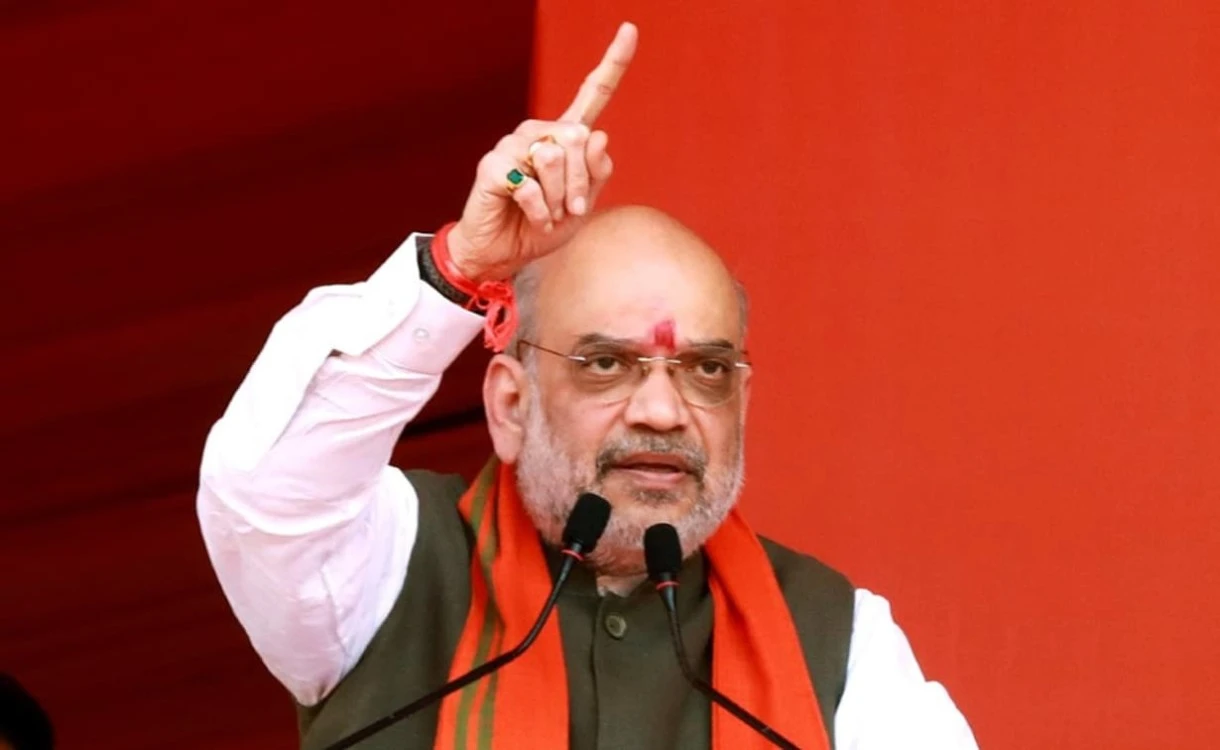
Union Home Minister Amit Shah on Thursday addressed concerns over the proposed delimitation exercise, asserting in the Lok Sabha that southern states will not lose representation but instead see an increase in their number of seats.

His remarks came during a heated debate linked to the implementation of women’s reservation, where opposition parties have raised fears that population-based delimitation could reduce the political weight of southern states.

Shah rejected these claims, calling them misleading, and said the proposed framework ensures fairness while expanding the overall strength of the Lok Sabha.

Seat count to rise with expansion of Lok Sabha

The government has indicated that the total number of Lok Sabha seats could increase significantly as part of the delimitation process. In this expanded House, the combined representation of southern states is expected to rise from 129 seats at present to around 195 seats.

Shah emphasised that no state will lose seats in absolute terms, and the exercise is designed to reflect population changes while maintaining balance across regions.

State-wise projections shared in Parliament

During his address, Shah also provided indicative figures for individual southern states, suggesting notable increases in representation. According to the projections:

  • Tamil Nadu could see its seats rise substantially
  • Kerala, Telangana, and Andhra Pradesh are also expected to gain additional seats
  • Karnataka’s representation may increase as well

These figures were presented to counter the argument that delimitation would disproportionately favour northern states.

Political debate intensifies over linkage with women’s quota

The delimitation exercise has been closely linked to the rollout of women’s reservation, which proposes one-third seats for women in Parliament and state assemblies.

Opposition leaders have questioned this linkage, arguing that tying reservation to delimitation could delay its implementation and raise federal concerns. Some leaders have also warned that the move could impact national unity if apprehensions among states are not addressed.

The government, however, maintains that the reforms are necessary to ensure equitable representation and to align the electoral system with demographic realities.

Centre dismisses ‘false narrative’ on southern states

Shah reiterated that concerns about southern states losing influence are unfounded. He said the delimitation process will increase representation across regions and described the criticism as a “false narrative” aimed at creating confusion.

The issue is expected to remain a key flashpoint as Parliament continues discussions on the women’s reservation framework and related legislative changes.

Continue Reading

India News

PM Modi assures no discrimination in women’s quota, delimitation debate intensifies in Parliament

PM Narendra Modi has assured that women’s reservation will be implemented without discrimination, amid a heated debate over delimitation in Parliament.

Published

on

PM modi

Prime Minister Narendra Modi has assured that there will be no discrimination in the implementation of women’s reservation, as Parliament witnessed a sharp debate over the proposed linkage between the quota and delimitation exercise.

During the ongoing special session, the government reiterated its commitment to ensuring fair representation while addressing concerns raised by opposition parties regarding the timing and structure of the legislation.

The proposed framework aims to reserve 33 percent of seats for women in the Lok Sabha and state assemblies. However, its implementation is tied to a fresh delimitation exercise, which is expected after the next census.

Opposition questions timing and intent

Opposition leaders have raised concerns that linking the women’s quota to delimitation could delay its implementation. They argue that the process of redrawing constituencies may push the actual rollout further into the future.

The issue has triggered a broader political confrontation, with multiple parties questioning whether the move could alter representation across states.

Some critics have also alleged that the delimitation exercise could disproportionately benefit certain regions based on population, a charge the government has rejected.

Government reiterates commitment to fair implementation

Responding to these concerns, the Centre has maintained that the reforms are necessary to ensure accurate and updated representation based on population data.

Leaders from the ruling side have repeatedly emphasized that the process will be carried out transparently and without bias. The assurance that there will be “no discrimination” is aimed at addressing fears among states and opposition parties.

The debate marks a key moment in Parliament, with both sides engaging in intense exchanges over one of the most significant electoral reforms in recent years.

Continue Reading

India News

Give all tickets to Muslim women, Amit Shah says, attacking Akhilesh Yadav on sub-quota demand

A sharp exchange between Amit Shah and Akhilesh Yadav in Parliament over sub-quota for Muslim women highlights key divisions on women’s reservation implementation.

Published

on

A heated exchange broke out in Parliament during discussions on the women’s reservation framework, with Union Home Minister Amit Shah and Samajwadi Party chief Akhilesh Yadav locking horns over the demand for a sub-quota for Muslim women.

The debate unfolded as the government pushed forward key legislative measures to implement 33% reservation for women in the Lok Sabha and state assemblies.

Akhilesh Yadav argued that the proposed reservation must ensure representation for women from marginalised communities, including Other Backward Classes (OBCs) and Muslim women. He said that without such provisions, large sections could remain excluded from political participation.

He also questioned the timing of the bill, alleging that the Centre was avoiding a caste census. According to him, a census would lead to renewed demands for caste-based reservations, which the government is reluctant to address.

Government rejects religion-based quota

Responding to the demand, Amit Shah made it clear that reservation based on religion is not permitted under the Constitution.

He stated that any proposal to provide quota to Muslims on religious grounds would be unconstitutional, firmly rejecting the idea of a separate sub-quota for Muslim women within the broader reservation framework.

The government has maintained that the existing framework already includes provisions for Scheduled Castes (SC) and Scheduled Tribes (ST) women within the overall reservation structure.

Wider political divide over implementation

The issue of sub-categorisation within the women’s quota has emerged as a major flashpoint, even as most opposition parties broadly support the idea of women’s reservation.

Samajwadi Party leaders reiterated that their support for the bill depends on inclusion of OBC and minority women, while the government continues to defend its constitutional position.

The debate is part of a broader discussion during the special Parliament session, where multiple bills linked to delimitation and implementation of the women’s quota are being taken up.

Continue Reading

Trending

© Copyright 2022 APNLIVE.com