
India News
India, South Korea to strengthen ties, hold regular summits


Prime Minister Narendra Modi and visiting South Korean President Moon Jae-In have agreed, on Tuesday, to hold regular summits to reflect the growing importance of their partnership in the region’s evolving security and economic environments.
According to the 17-point shared vision document released after the meeting of the two leaders on Tuesday, the two leaders “reaffirmed” their mutual desire to further strengthen the “Special Strategic Partnership” built on the foundations of deep rooted historical and cultural bonds.
India sees Republic of Korea (ROK) as an indispensible partner in its “Act East Policy” while ROK aims to further strengthen bilateral relations with India in accordance with its “New Southern Policy”, the document said.
The shared vision document further said, “Recognizing the importance of regular high-level exchanges to consolidate progress in the bilateral partnership, we agreed to intensify leadership-level contact, including through biennial visit by the leaders of the two countries. We agreed to expand interaction by regularizing existing dialogue mechanisms as well as by exploring other areas of mutual interest and cooperation”.
Both the leaders appreciated the commonalities in their views on a wide range of current regional and global issues and agreed to strengthen existing bilateral dialogue mechanisms, including the Joint Commission Meeting led by Foreign Ministers, the Vice Ministerial 2+2 dialogue, and the dialogue between the National Security Councils.
 According the Korean official sources quoted by The Korea Times, the two leaders decided to support small- and medium-sized enterprises operating in each other’s countries, and expand cooperation in advanced technology development and infrastructure construction in India.
“We agreed to boost people-to-people exchanges between the two nations so they can have more understanding of each other,” Moon said in a joint press conference after the summit.
Ministers of the two countries in charge of trade, industry, science, foreign affairs and culture signed four memoranda of understanding (MOUs) on a variety of cooperative moves, with the two leaders attending the signing ceremony.
Read More: Sushma Swaraj meets South Korean President Moon
On Monday both the leaders inaugurated Samsung production factory, the largest in the world, in Noida.
Earlier in the day, visiting South Korean President Moon and first lady Kim Jung-sook were given ceremonial welcome at Rashtrapati Bhavan.
Later in the evening on Tuesday President Ramnath Kovind is hosting dinner in the honour of the South Korean leader. Moon will leave on Wednesday morning.










India News
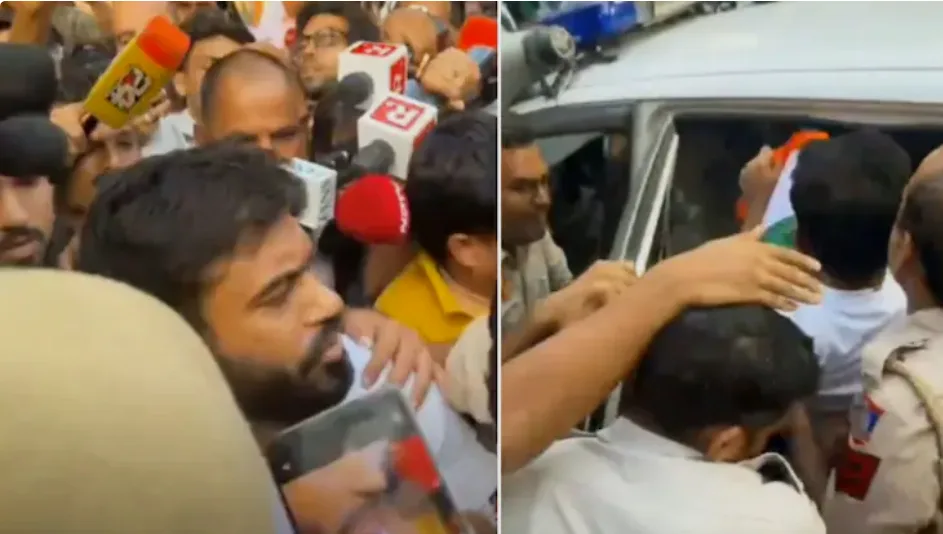
Abhijeet Dipke detained ahead of CJP’s national flag march in Delhi
Cockroach Janta Party founder Abhijeet Dipke was detained by Delhi Police on October 16, 2026, shortly before a planned national flag march. The proposed rally followed the judicial custody of two CJP members who had waved the Tricolour at Jantar Mantar.

India News
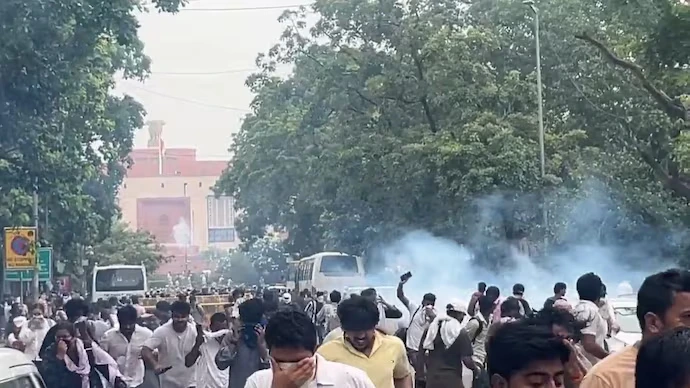
Delhi deploys 25,000 personnel, installs CCTV cameras ahead of CJP march
More than 25,000 police and paramilitary personnel have been deployed in Delhi ahead of the CJP’s planned protest march at Connaught Place. Authorities have also imposed restrictions and stepped up CCTV surveillance.
India News
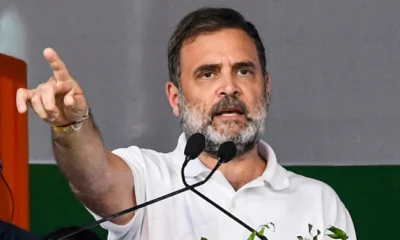
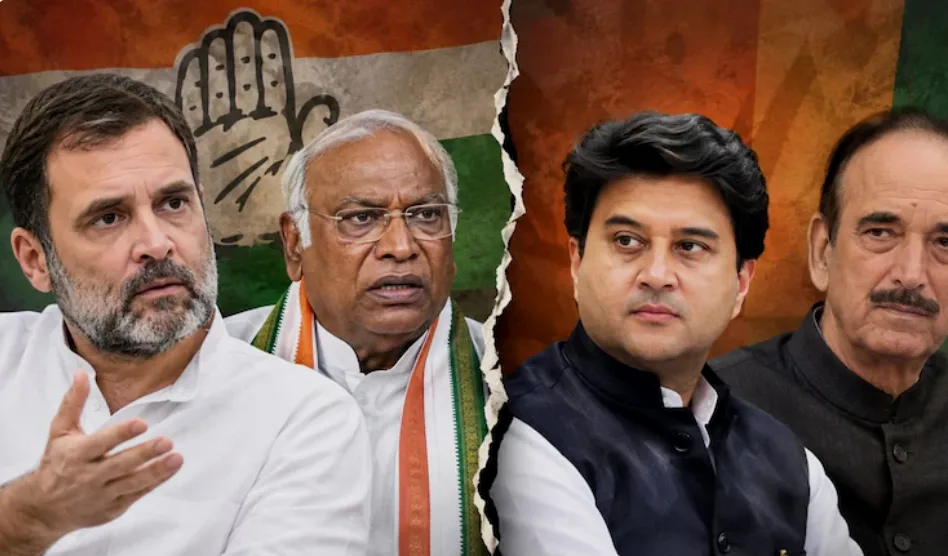
Mallikarjun Kharge’s ‘Your Friends’ jab at Rahul Gandhi over congress exits
Congress president Mallikarjun Kharge took a dig at Rahul Gandhi after the Leader of the Opposition reportedly described former party leaders Jyotiraditya Scindia and Ghulam Nabi Azad as among those who had left the Congress.

Election Commission orders voter roll revision in 17 states, UTs

Actor Imran Khan asked to leave India after CJP protest

Delhi Police offers 11-person limit for CJP’s Connaught Place protest

Mallikarjun Kharge’s ‘Your Friends’ jab at Rahul Gandhi over congress exits

Magnitude 7 earthquake strikes Russia’s Kamchatka Peninsula

Abhijeet Dipke detained ahead of CJP’s national flag march in Delhi
Magnitude 7 earthquake strikes Russia’s Kamchatka Peninsula

Delhi deploys 25,000 personnel, installs CCTV cameras ahead of CJP march
Mallikarjun Kharge’s ‘Your Friends’ jab at Rahul Gandhi over congress exits
Delhi Police offers 11-person limit for CJP’s Connaught Place protest

Afghan Men Try To Hang With The Jet Engine Of The Aircraft in Kabul- Afghanistan News – Kabul News
Trending Top 10 News: 10000 Crore Fine on Flipkart, Apple to Launch Unique Feature, Hdfc Bank Job Ad

Trending Top 10 News: Nokia 6310, Apple sales, Bachpan ka Pyar Video Kid, Dainik Bhaskar IT Raid

Trending Top 10 News: Canada bans Indian flights, Rain in Delhi NCR, AIMIM Twitter hacked, Raj Kundra case

Trending Top 10 News: Shein India, Apple New Service, Pocket Oxygen, Oppo Launched New Phone
-
 India News23 hours ago
Election Commission orders voter roll revision in 17 states, UTs
-
 India News23 hours ago
Actor Imran Khan asked to leave India after CJP protest
-
 India News22 hours ago
Delhi Police offers 11-person limit for CJP’s Connaught Place protest
-
 India News10 hours ago
Mallikarjun Kharge’s ‘Your Friends’ jab at Rahul Gandhi over congress exits
-
 Latest world news10 hours ago
Magnitude 7 earthquake strikes Russia’s Kamchatka Peninsula
-
 India News10 hours ago
Delhi deploys 25,000 personnel, installs CCTV cameras ahead of CJP march
-
 India News55 mins ago
Abhijeet Dipke detained ahead of CJP’s national flag march in Delhi
