
India News
Indian astronomers discover a supercluster of galaxies, name it Saraswati

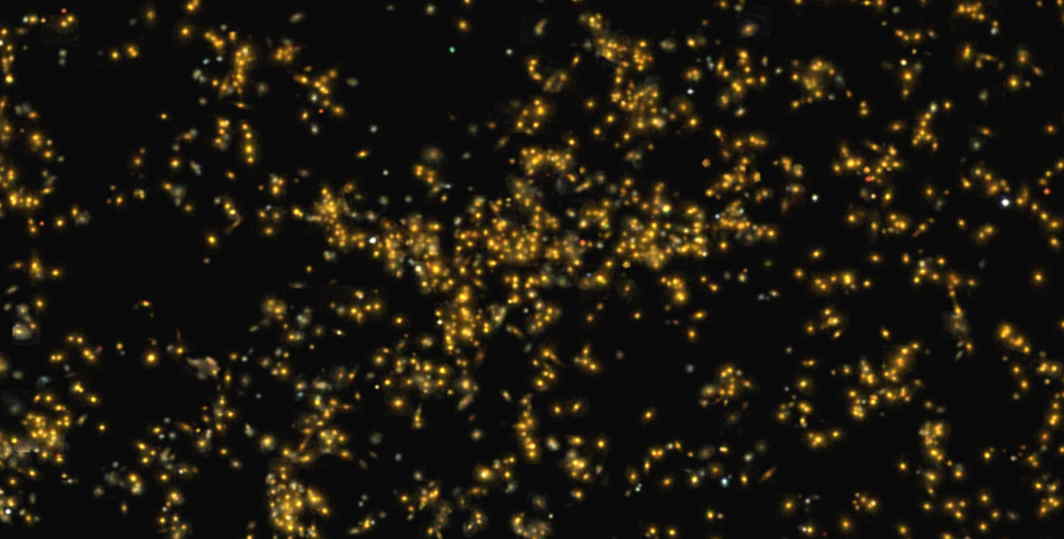
[vc_row][vc_column][vc_column_text]A team of Indian astronomers have identified an extremely large supercluster of galaxies and have named it Saraswati.
This previously unknown, extremely large supercluster of galaxies, was discovered by a team of astronomers from the Inter University Centre for Astronomy & Astrophysics (IUCAA), and Indian Institute of Science Education and Research (IISER), both in Pune, India, and members of two other Indian universities. The team was led by Joydeep Bagchi from IUCAA, while others included Shishir Sankhyayan, a PhD student at IISER, Pratik Dabhade, an IUCAA research fellow, Joe Jacob of the Newman College, Kerala, and Prakash Sarkar of the National Institute of Technology, Jamshedpur.
The discovery comes close on the heels of another, reported on July 1, of “a large sample of giant radio galaxies” by the same institution. A six-member team of Indian astronomers led by Pratik Dabhade from IUCAA had reported the discovery of 25 extremely rare kind of galaxies called giant radio galaxies (GRGs), known to be the largest known galaxies in the universe. Bagchi was also part of the team.
Saraswati supercluster, located in the direction of constellation Pisces, is one of the largest known structures in the nearby Universe, and is at a distance of 4,000 million (400 crore) light-years away from us. Our own galaxy is part of a Supercluster called the Laniakea Supercluster, announced in 2014 by Brent Tully at the University of Hawaii and collaborators.
Superclusters are the largest coherent structures in the Cosmic Web. A Supercluster is a chain of galaxies and galaxy clusters, bound by gravity, often stretching to several hundred times the size of clusters of galaxies, consisting of tens of thousands of galaxies. The newly discovered ‘Saraswati’ supercluster, for instance, extends over a scale of 600 million light-years and may contain the mass equivalent of over 20 million billion suns. \
The Saraswati supercluster has a total of 43 clusters of galaxies. The typical size of a galaxy here is around 250,000 light years.
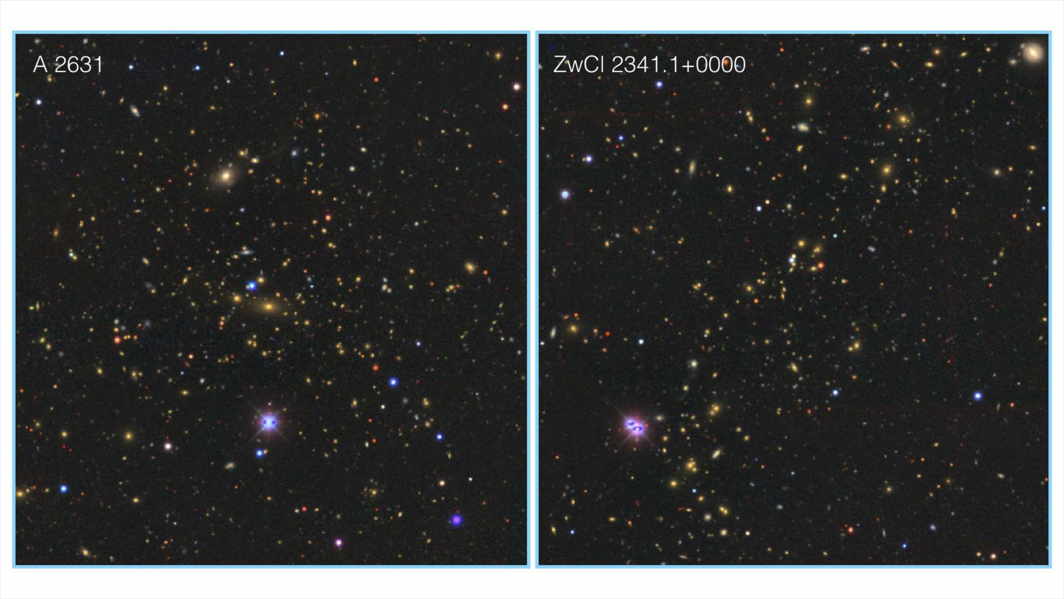
Two most massive clusters of galaxies in the Saraswati supercluster : “ABELL 2631” cluster (left) and “ZwCl 2341.1+0000” cluster (right). “ABELL 2631” resides in the core of the Saraswatisupercluster. The Saraswati supercluster has a total of 43 clusters of galaxies.
In a press statement, Joydeep Bagchi from IUCAA, the lead author of the paper and co-author Shishir Sankhyayan (PhD scholar at IISER, Pune) said, “We were very surprised to spot this giant wall-like supercluster of galaxies, visible in a large spectroscopic survey of distant galaxies, known as the Sloan Digital Sky Survey (see figure above). This supercluster is clearly embedded in a large network of cosmic filaments traced by clusters and large voids.”
Previously only a few comparatively large superclusters have been reported, for example the ‘Shapley Concentration’ or the ‘Sloan Great Wall’ in the nearby universe, while the ‘Saraswati’ supercluster is far more distant one. “Our work will help to shed light on the perplexing question; how such extreme large scale, prominent matter-density enhancements had formed billions of years in the past when the mysterious Dark Energy had just started to dominate structure formation,” said Bagchi.
“Saraswati” (or “Sarasvati”), a word that has proto-Indo-European roots, is a name found in ancient Indian texts to refer to the major river around which the people of the ancient Indian civilization lived. It is also the name of the celestial goddess who is the keeper of the celestial rivers. In modern India, Saraswati is worshipped as the goddess of knowledge, music, art, wisdom and nature – the muse of all creativity.
Their finding will be published in the latest issue of The Astrophysical Journal, one of the premier research journals of the American Astronomical Society.[/vc_column_text][/vc_column][/vc_row]



India News
Centre sends 3 letters to Punjab government after anti-drug activist’s killing
The Centre has sought reports from the Punjab government on three incidents linked to allegations surrounding drug-related activities, including the killing of anti-drug activist Parvinder Singh Jhota.

India News
Mallikarjun Kharge seeks all-party meeting with PM Modi on delimitation
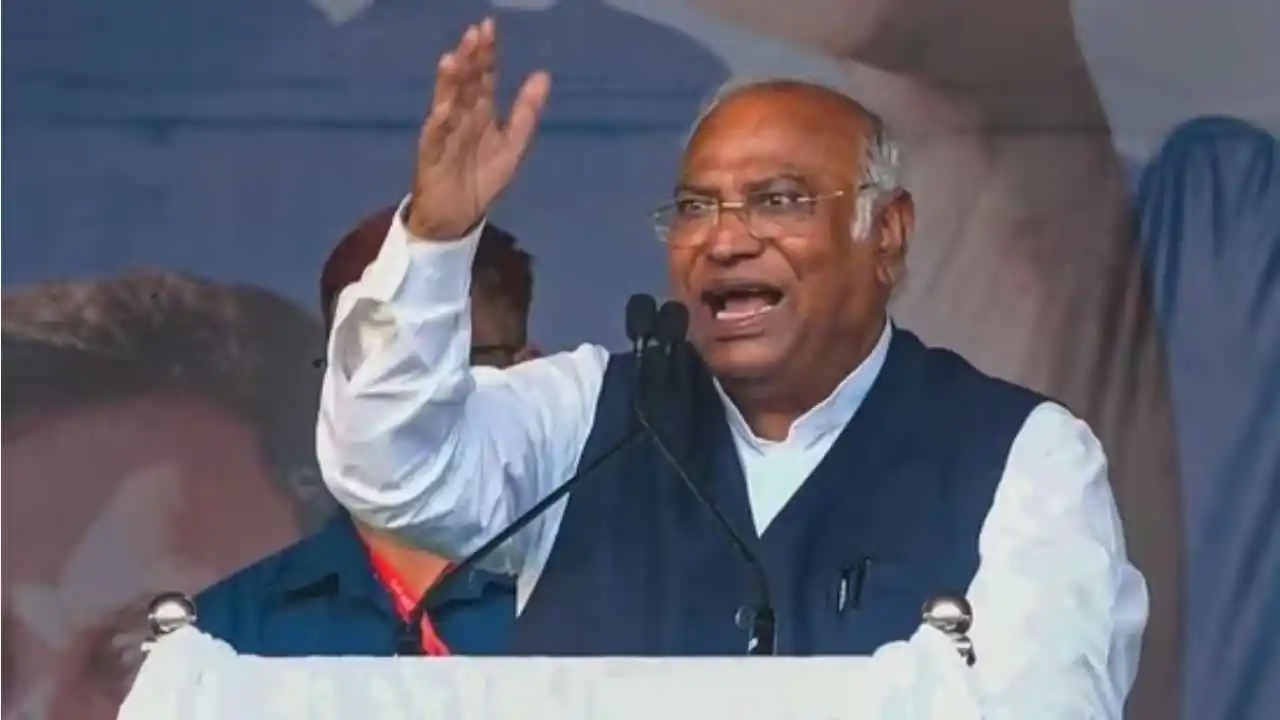
Congress president Mallikarjun Kharge has written to Prime Minister Narendra Modi for the fourth time, seeking an all-party meeting on delimitation. He also flagged the 64-day delay in proroguing Parliament’s Monsoon Session.
India News
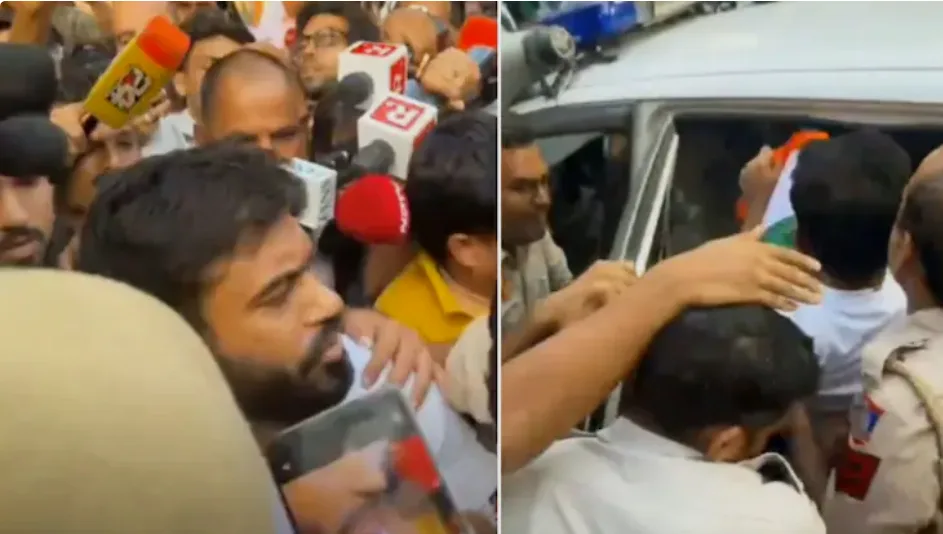
Abhijeet Dipke detained ahead of CJP’s national flag march in Delhi
Cockroach Janta Party founder Abhijeet Dipke was detained by Delhi Police on October 16, 2026, shortly before a planned national flag march. The proposed rally followed the judicial custody of two CJP members who had waved the Tricolour at Jantar Mantar.

Mallikarjun Kharge’s ‘Your Friends’ jab at Rahul Gandhi over congress exits

Magnitude 7 earthquake strikes Russia’s Kamchatka Peninsula

Delhi deploys 25,000 personnel, installs CCTV cameras ahead of CJP march

Abhijeet Dipke detained ahead of CJP’s national flag march in Delhi

Mallikarjun Kharge seeks all-party meeting with PM Modi on delimitation

Centre sends 3 letters to Punjab government after anti-drug activist’s killing
Mallikarjun Kharge seeks all-party meeting with PM Modi on delimitation
Abhijeet Dipke detained ahead of CJP’s national flag march in Delhi
Magnitude 7 earthquake strikes Russia’s Kamchatka Peninsula
Delhi deploys 25,000 personnel, installs CCTV cameras ahead of CJP march

Afghan Men Try To Hang With The Jet Engine Of The Aircraft in Kabul- Afghanistan News – Kabul News
Trending Top 10 News: 10000 Crore Fine on Flipkart, Apple to Launch Unique Feature, Hdfc Bank Job Ad

Trending Top 10 News: Nokia 6310, Apple sales, Bachpan ka Pyar Video Kid, Dainik Bhaskar IT Raid

Trending Top 10 News: Canada bans Indian flights, Rain in Delhi NCR, AIMIM Twitter hacked, Raj Kundra case

Trending Top 10 News: Shein India, Apple New Service, Pocket Oxygen, Oppo Launched New Phone
-
 India News15 hours ago
Mallikarjun Kharge’s ‘Your Friends’ jab at Rahul Gandhi over congress exits
-
 Latest world news15 hours ago
Magnitude 7 earthquake strikes Russia’s Kamchatka Peninsula
-
 India News15 hours ago
Delhi deploys 25,000 personnel, installs CCTV cameras ahead of CJP march
-
 India News6 hours ago
Abhijeet Dipke detained ahead of CJP’s national flag march in Delhi
-
 India News5 hours ago
Mallikarjun Kharge seeks all-party meeting with PM Modi on delimitation
-
 India News4 hours ago
Centre sends 3 letters to Punjab government after anti-drug activist’s killing
