Indian Railways cancel 200 trains across India, check complete list here
The Indian Railways has cancelled more than 200 passengers trains scheduled for Saturday. On the official page, Railways released the list of trains that have been cancelled.
The Indian Railways has cancelled more than 200 passengers trains scheduled for Saturday. On the official page, Railways released the list of trains that have been cancelled. However, it has not been mentioned that why the trains have been cancelled. The trains were also cancelled on Friday, and the reason is still unknown.
Here is the complete list of trains that have been cancelled by the Indian Railways that were scheduled for Saturday:
NIMITITA (NILE) – AZIMGANJ JN (AZ) PSPC 18:15
03060 NILE- KWAE PASS SPL
NIMITITA (NILE) – KATWA JN. (KWAE) PSPC 04:35
03082 JSME RPH PGR SPL
JASIDIH JN (JSME) – RAMPUR HAT (RPH) PSPC 16:30
03092 SBG-AZ SPL
SAHIBGANJ JN (SBG) – AZIMGANJ JN (AZ) PSPC 14:25
03095 KWAE-AZ MEMU PGR SPL
KATWA JN. (KWAE) – AZIMGANJ JN (AZ) PSPC 14:40
03096 AZ-KWAE MEMU PGR SPL
AZIMGANJ JN (AZ) – KATWA JN. (KWAE) PSPC 11:55
03408 SBG-RPH PASS SPL
SAHIBGANJ JN (SBG) – RAMPUR HAT (RPH) PSPC 04:45
03412 BHW-RPH PASS SPL
BARHARWA JN (BHW) – RAMPUR HAT (RPH) PSPC 02:10
03427 JMP-KIUL PGR SPECIAL
JAMALPUR JN (JMP) – KIUL JN (KIUL) PSPC 03:15
03428 KIUL-JMP PGR SPECIAL
KIUL JN (KIUL) – JAMALPUR JN (JMP) PSPC 05:15
03440 BGP-AZ PASSENGER SPL
BHAGALPUR (BGP) – AZIMGANJ JN (AZ) PSPC 04:45
03461 TPH-RJL SPL
TINPAHAR JN (TPH) – RAJMAHAL (RJL) PSPC 03:50
03468 RJL-TPH SPL
RAJMAHAL (RJL) – TINPAHAR JN (TPH) PSPC 02:00
03470 BHW – BWN PASSENGER SPL
TINPAHAR JN (TPH) – BARDDHAMAN (BWN) PSPC 14:10
03494 RJL-TPH SPL
RAJMAHAL (RJL) – TINPAHAR JN (TPH) PSPC 22:20
03497 TPH-RJL SPL
TINPAHAR JN (TPH) – RAJMAHAL (RJL) PSPC 23:30
03504 HTE BWN MEMU PGR SPL
HATIA (HTE) – BARDDHAMAN (BWN) PSPC 08:10
03591 BKSC-ASN MEMU PGR SPL
BOKARO STL CITY (BKSC) – ASANSOL JN (ASN) PSPC 15:40
03592 ASN-BKSC MEMU PGR SPL
ASANSOL JN (ASN) – BOKARO STL CITY (BKSC) PSPC 07:05
03593 PRR-ASN MEMU PGR SPL
PURULIA JN (PRR) – ASANSOL JN (ASN) PSPC 14:05
03594 ASN-PRR MEMU PGR SPL
ASANSOL JN (ASN) – PURULIA JN (PRR) PSPC 10:52
04153 RBL-CNB UNRESERVED SPL
RAE BARELI JN (RBL) – KANPUR CENTRAL (CNB) PSPC 02:50
04154 CNB-RBL UNRESERVED SPL
KANPUR CENTRAL (CNB) – RAE BARELI JN (RBL) PSPC 16:32
Journalist files police complaint against Rahul Gandhi over push allegation
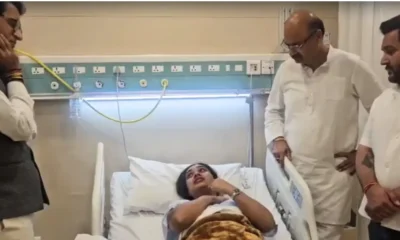
Journalist Richa Parashar has filed a criminal complaint against Rahul Gandhi and others, alleging that she was pushed while covering the Opposition’s march to the Supreme Court. The Congress has denied the allegation.
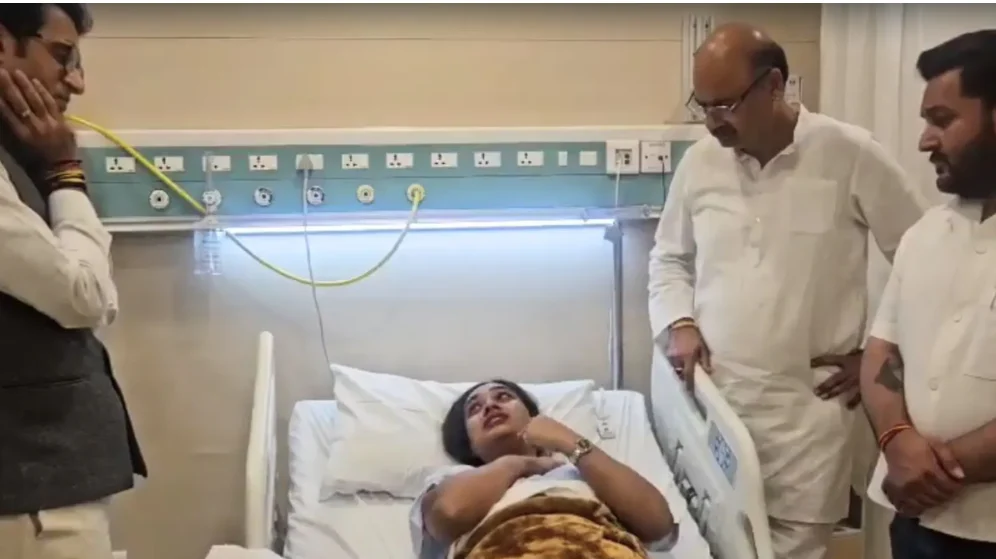
Journalist Richa Parashar has filed a police complaint against Congress leader Rahul Gandhi over an alleged incident during the INDIA bloc’s march to the Supreme Court in New Delhi on October 12. She has sought the registration of a First Information Report (FIR) against Gandhi and others, alleging that she was pushed while covering the protest.
Parashar submitted her complaint to the Deputy Commissioner of Police (DCP), New Delhi district, on Friday, seeking immediate action. She has said she was three months pregnant at the time of the alleged incident and accused those involved of mistreatment, threats and the use of force.
What Richa Parashar alleged in her complaint
Parashar alleged that she was reporting on the Opposition’s march when the incident occurred. According to her earlier account, she was waiting near a gate on the Supreme Court premises to seek a response from Gandhi when he allegedly grabbed her hand and pulled her forward. She further alleged that his security personnel pushed her away, causing her to fall on the Supreme Court steps.
In her complaint, Parashar said she asked Gandhi questions before he allegedly pushed her towards a gate. She claimed that the force caused her to lose her balance and fall, and that her repeated requests not to be pushed were ignored.
Parashar has sought legal action against Gandhi and others whom she alleges were involved. The complaint reportedly seeks action under provisions of the Bharatiya Nyaya Sanhita (BNS), 2023, including Sections 74, 115(2), 131, 125 and 3(5). These provisions concern alleged assault or criminal force against a woman, voluntarily causing hurt, assault or criminal force, acts endangering human life or personal safety, and joint liability for acts committed with common intention.
The allegations and the sections cited in the complaint do not, by themselves, establish criminal liability.
Congress disputes the allegation
The Congress has challenged Parashar’s account of the incident. According to report, the party said a video released by the journalist did not show the sequence of events she described.
Congress leader Alka Lamba also questioned the circumstances surrounding the incident and accused those raising the issue of attempting to manufacture propaganda.
The allegations remain disputed. The complaint and the competing accounts should not be treated as an established finding of wrongdoing.
Incident took place during Opposition’s Supreme Court march
The alleged incident occurred on October 12, when Rahul Gandhi and other INDIA bloc leaders marched to the Supreme Court to submit a petition concerning alleged irregularities in the Election Commission’s Special Intensive Revision (SIR) of electoral rolls.
The Opposition has raised concerns about the voter-list revision process and alleged irregularities.
Parashar’s police complaint adds a legal dimension to the controversy surrounding the march. Any further action will depend on the police process and the relevant legal proceedings.
Delhi court orders release of CJP founder Abhijeet Dipke
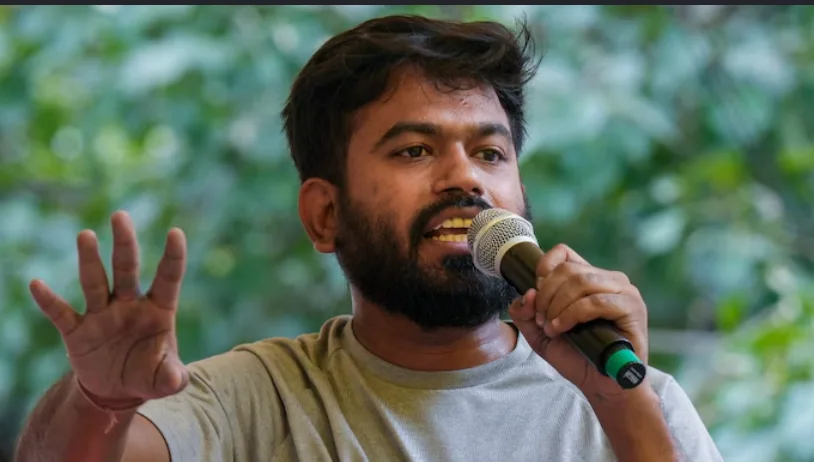
A Delhi court on Saturday ordered the conditional release of Cockroach Janta Party founder Abhijeet Dipke, who was detained and subsequently arrested ahead of a planned protest march at Connaught Place.
A Delhi court on Saturday ordered the conditional release of Cockroach Janta Party (CJP) founder Abhijeet Dipke, a day after he was detained and subsequently arrested ahead of a planned protest march in the national capital. The march was scheduled to take place at Connaught Place as part of demonstrations against alleged electoral irregularities.
Dipke was asked to furnish a bond and undertake to maintain peace as a condition of his release, according to reports. The court’s order came after he was produced before a Special Executive Magistrate following his arrest on Friday.
Why Abhijeet Dipke was detained
Dipke had planned to participate in the ‘Lehra Do Tiranga’ march at Connaught Place, where participants intended to gather and wave the national flag. The proposed demonstration was part of ongoing protests over alleged irregularities in the Special Intensive Revision (SIR) of electoral rolls and demands for the resignation of Chief Election Commissioner Gyanesh Kumar.
According to the Delhi Police, Dipke was taken into preventive custody before being formally arrested in a case related to the apprehension of a breach of peace. Police cited Sections 126 and 170 of the Bharatiya Nagarik Suraksha Sanhita (BNSS).
Neha Bora was also detained
All India Students’ Association (AISA) president Neha Bora was also detained on Friday ahead of the planned march. She was released early Saturday morning after completing the formalities associated with her detention, according to the report.
Bora criticised the police action and called for the release of protesters who remained in custody. She also demanded an end to the SIR exercise and sought the resignation of Chief Election Commissioner Gyanesh Kumar. These were her demands and allegations, rather than findings established by the court.
Protests over electoral rolls continue
The demonstrations involving CJP, student groups and opposition supporters have centred on allegations of irregularities in the voter-list revision process. Critics have questioned the exercise, while the Election Commission has maintained that its decisions were approved by the Supreme Court. The BJP has criticised the protests, describing them as attempts to spread anarchy, according to the report.
Dipke’s conditional release marks the latest development in the dispute over the planned Delhi protest. The court’s order concerns his release under specified conditions; it should not be interpreted as a judicial finding on the wider allegations surrounding the electoral-roll revision.
Music composer Anirudh Ravichander and Sunrisers Hyderabad executive Kavya Maran are set to marry in November. Their wedding reception is scheduled to take place in Chennai on November 21, according to an announcement by Telangana Chief Minister A Revanth Reddy’s office.
The development followed a meeting between Revanth Reddy and Kavya’s parents, Sun Group chairman Kalanithi Maran and Kavery Maran, at the chief minister’s residence in Jubilee Hills, Hyderabad.
According to the Telangana Chief Minister’s Office, the couple’s reception is scheduled for November 21, with Kavya’s parents extending an invitation to the chief minister.
Telangana CM’s office announces reception date
The Telangana CMO shared photographs and videos of the meeting on its official social media account on October 16. The announcement stated that Kalanithi Maran and his wife had met Revanth Reddy to invite him to their daughter’s wedding reception.
The post specifically confirmed that the reception of Kavya Maran and Anirudh Ravichander would be held in Chennai on November 21.
The announcement provided an official confirmation of the reception date and venue, while details about the wedding ceremony itself have also been reported separately.
Who are Anirudh Ravichander and Kavya Maran?
Anirudh Ravichander is a prominent music composer in the Indian film industry. He gained widespread recognition with the song “Why This Kolaveri Di” and has since composed music for several major films, including Leo, Indian 2, Vettaiyan, Vidaamuyarchi and Coolie.
Kavya Maran is the daughter of Kalanithi Maran, chairman of the Sun Group. She serves as an executive director at Sun TV Network and is widely recognised in cricket circles for her association with Sunrisers Hyderabad, the IPL franchise.
Wedding rumours and reported ceremony details
Speculation about a possible marriage between Anirudh Ravichander and Kavya Maran had circulated before the latest announcement. Earlier reports in August 2026 discussed the possibility of a November wedding in Greece.
A subsequent report said the wedding was reportedly scheduled to take place in Greece on November 11. However, the couple had not directly confirmed their wedding plans in the cited report.
The Telangana Chief Minister’s Office has confirmed that the reception is scheduled for November 21 in Chennai. The reported wedding ceremony details should therefore be attributed to reports rather than presented as officially confirmed information.
APN News is today the most watched and the most credible and respected news channel in India. APN has been at the forefront of every single news revolution. The channel is being recognized for its in-depth, analytical reportage and hard hitting discussions on burning issues; without any bias or vested interests.