English हिन्दी
Connect with us

India News

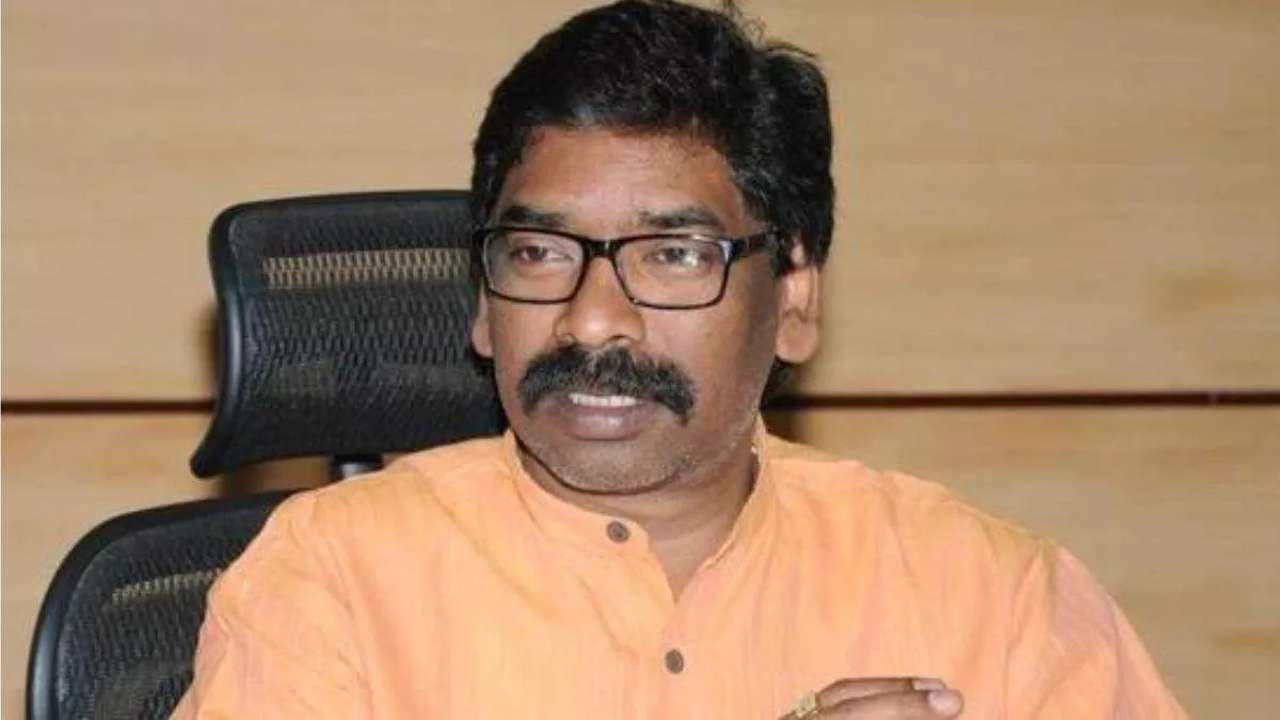
Court allows Hemant Soren to participate in trust vote in Jharkhand assembly on February 5

Hemant Soren requested authorization to take part in the trust vote that the newly elected Champai Soren government was requesting.

Published

on

Jharkhand’s former Chief Minister Hemant Soren was permitted to take part in the trust vote in the state assembly on February 5 by a special court in Ranchi on Saturday.

In a plea submitted to the special PMLA (Prevention of Money Laundering Act) court, Soren, who was detained by the Enforcement Directorate on Wednesday in connection with a money laundering case, asked for authorisation to take part in the trust vote that the newly elected Champai Soren government was requesting.
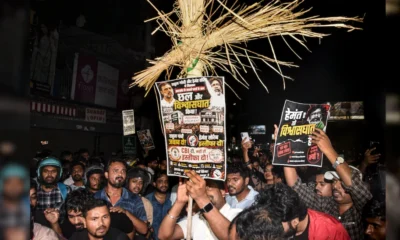
On Friday, the court remanded Soren to ED custody for a period of five days.

Three days after Champai Soren took the oath of office as Chief Minister, the Jharkhand coalition administration will seek a vote of confidence on February 5. During Chief Minister Champai Soren’s inaugural cabinet assembly, the resolution was approved.

Just hours before Hemant Soren was arrested, Champai Soren, 67, was chosen as the head of the ruling alliance in Jharkhand. Champai Soren took the oath of office alongside two other members, Satyanand Bhokta of the Rashtriya Janata Dal (RJD) and Alamgir Alam of the Congress.

Due to concerns that the BJP would try to poach them in the lead-up to a confidence vote, over 40 MLAs of the ruling Jharkhand Mukti Morcha (JMM)-led alliance were flown to Hyderabad, where the political drama in Jharkhand has now moved.

Shortly after his resignation, on Wednesday night at 10 p.m., Hemant Soren was taken into custody by the Enforcement Directorate. Prior to his detention, Hemant Soren acknowledged Champai Soren, the minister of transport, as the new leader of his party’s legal in a letter to the legislators.

The court on Friday remanded him to ED custody for a period of five days. Hemant Soren is allegedly the main beneficiary of a network of brokers and businessmen in Ranchi who have been forging registrar office records over the years in order to create fake deeds of landed parcels and then selling them off, according to evidence the ED claims it has.

India News

LPG Aadhaar authentication mandatory for subsidy from October 1

Biometric Aadhaar authentication will be required for subsidised domestic LPG refills from October 1. Here is what changes for consumers who have and have not completed the process.

Published

on

LPG cylinder

Biometric Aadhaar authentication will become a requirement for domestic LPG consumers seeking to book refills at the regulated retail selling price with applicable subsidy from October 1, 2026.

The government has said the measure is aimed at ensuring that subsidised LPG reaches eligible households and at preventing the diversion of subsidised domestic cylinders for commercial and industrial use.

What changes from October 1

Consumers who have already completed biometric Aadhaar authentication will not have to repeat the process. Their LPG refills will continue as before.

For consumers who have not completed the authentication, refill booking at the regulated price with subsidy will be enabled after the authentication is completed.

As of September 19, 2026, 27.43 crore active domestic LPG consumers, or 89.9 per cent of the total, had completed biometric Aadhaar authentication, according to the Petroleum and Natural Gas Ministry.

How to complete Aadhaar authentication

Consumers who have not yet completed the process can do so through several channels.

Authentication can be completed during LPG delivery, at the distributor’s showroom or through the mobile applications of the three state-owned oil marketing companies.

Indane customers can use IndianOil ONE, Bharatgas customers can use HelloBPCL, while HP Gas customers can use HP PAY.

What if consumers do not complete authentication

The government has clarified that consumers who are unwilling or unable to complete biometric Aadhaar authentication can still receive LPG.

However, they will have to register their choice through the available digital channels of their oil marketing company, such as its consumer portal, mobile app, WhatsApp chatbot or IVRS.

Such consumers will be supplied LPG at the applicable market price without subsidy, in 5-kg or 10-kg cylinders, subject to local availability.

Why the government is introducing the requirement

According to the Petroleum and Natural Gas Ministry, linking each LPG connection to an Aadhaar-authenticated consumer is intended to prevent diversion of subsidised domestic cylinders and remove duplicate or ineligible connections.

The government has also said the measure is intended to make subsidy delivery more targeted and transparent.

Authentication deadline and progress

Consumers were initially asked to complete biometric Aadhaar authentication by June 30, 2026. The deadline was subsequently extended several times, with September 14 being the final extended deadline mentioned by the ministry.

The nationwide authentication drive has been underway since October 2023. The government said more than 12 crore SMS and WhatsApp messages had been sent as part of the outreach campaign.

The government has urged consumers who have not yet completed the process to do so before October 1.

LPG Aadhaar authentication becomes mandatory for subsidised domestic LPG refills from October 1. Consumers who have already completed biometric authentication need not do it again. Those who haven’t can still get LPG, but at the applicable market price without subsidy.

Continue Reading

India News

BJP hits back at opposition over EC row, says disagreement is democracy

The BJP has defended reported differences among Election Commissioners, saying internal deliberations are part of a healthy democratic process.

Published

on

The BJP has defended the Election Commission amid a political row over reported differences among Election Commissioners concerning decisions linked to the Special Intensive Revision (SIR) of electoral rolls.

BJP MP Sambit Patra said discussions and exchanges of views within the poll panel should be seen as part of the democratic process rather than as evidence of institutional dysfunction.

According to the BJP’s position, disagreement during official deliberations reflects the fact that members of an institution are able to put forward their views before decisions are taken.

BJP defends EC deliberations

Patra said that if the three Election Commissioners discuss and debate issues among themselves, such exchanges should not be characterised as dictatorship. He described such deliberations as a sign of a healthy democracy.

The BJP’s response came amid reports that Election Commissioners Sukhbir Singh Sandhu and Vivek Joshi had raised objections on multiple occasions over decisions and orders associated with the SIR exercise and electoral rolls.

The Election Commission has said that differences in views and observations are a normal part of deliberations within an institution. It has maintained that decisions, including those related to SIR, were taken unanimously.

Row centres on SIR process

The controversy comes against the backdrop of the ongoing political debate over the Special Intensive Revision of electoral rolls.

Opposition parties have raised concerns over the reported differences within the poll panel, while the BJP has sought to counter those arguments by pointing to the role of discussion and deliberation in institutional decision-making.

Patra also said the BJP’s understanding of the matter was based on media reports rather than access to the Election Commission’s internal documents. He said the documents, as reported, indicated that the SIR process was finalised after democratic deliberations and consensus.

What the Election Commission has said

The Election Commission has rejected the suggestion that the reported objections indicate a breakdown in its functioning.

It has maintained that differing opinions during deliberations are part of normal institutional functioning and that the decisions eventually taken by the commission were unanimous.

Continue Reading

India News

IIT Bombay Professor Suryanarayana Doolla sent on leave amid student suicide row

IIT Bombay professor Suryanarayana Doolla has been sent on leave amid the ongoing student protests following Sahil Wakode’s death.

Published

on

IIT Bombay professor Suryanarayana Doolla has been sent on leave amid the ongoing controversy following the death of 20-year-old student Sahil Wakode, with protests on the campus seeking action against the professor.

Doolla, a faculty member in IIT Bombay’s Department of Energy Science and Engineering, had been involved in the examination incident concerning Wakode. The student was allegedly found using a mobile phone during a mid-semester examination and had uploaded the question paper to an AI platform to seek answers, according to the institute.

Why Suryanarayana Doolla is at the centre of the controversy

Doolla was the course instructor and examination invigilator during the examination and was involved in reporting the alleged examination malpractice to the institute’s authorities.

IIT Bombay has said Wakode was subsequently counselled by the instructor and the Head of Department and was assured that the examination incident would not adversely affect his academic career. The institute has also maintained that no disciplinary action had been initiated against the student before his death.

Wakode’s family, however, alleged harassment and caste-based discrimination. Mumbai Police registered a case based on the family’s complaint, with Doolla among those named. The allegations remain subject to investigation.

Student protests at IIT Bombay

Following Wakode’s death, students began protesting on the IIT Bombay campus and demanded action against Doolla.

IIT Bombay Director Professor Shireesh Kedare met the protesting students on September 20 and signed an 18-point charter of demands. The demands included action against Doolla.

Doolla was subsequently removed from the post of Dean Students Welfare amid the protests. The latest action comes as the controversy surrounding Wakode’s death and the allegations against the professor continue to be investigated.

Faculty members back Doolla

While students have demanded action against Doolla, IIT Bombay’s Faculty Forum has backed the professor, saying he was performing his duties as an invigilator and had followed the institute’s prescribed procedure after detecting the alleged examination malpractice.

The controversy involves the examination incident, allegations made by Wakode’s family and the police investigation into his death. The allegations against Doolla have not been established as facts and remain part of the ongoing investigation.

Continue Reading

Trending

© Copyright 2022 APNLIVE.com