[vc_row][vc_column][vc_column_text]Delhi Police have arrested a 26-year-old ‘kanwariya’ with a criminal past who was part of a group of Kanwar pilgims for vandalizing a car after it brushed one of them in Moti Nagar, Delhi on August 7.
Rahul alias Billa, a resident of west Delhi’s Uttam Nagar, is an unemployed man with no education and had been in jail for theft, said Vijay Kumar, deputy commissioner of police (west).
“He was out on bail in a theft case registered in 2014. He had spent six-seven months in jail back then,” said the DCP.
On Tuesday, he and other kanwariyas vandalised a car in Moti Nagar after it had allegedly brushed past one of the kanwariyas. The incident which was captured on camera, showed the culprits attacking the car with sticks, smashing its windscreens and windows before tipping it over on the road and triggering a massive traffic jam.
Police claimed that Rahul was travelling alone and did not even know the pilgrim who was allegedly hit and injured by the car.
CCTV footage and entries made by him in registers at several kanwariya camps along the route helped the police identify Rahul.
“When we checked the dossier of criminals available with us, we found Rahul’s name in it,” said the officer.
A police team finally arrested Rahul around 6.30 pm on Thursday.
The DCP said Rahul had not seen the news about the crime and did not know that the police were looking for him.
“He had collected Ganga water from Haridwar and was headed home when he joined other ‘kanwariyas’ to vandalise the car. He was clearly caught on camera using a stick to smash the car,” said the DCP.
The occupants of the car, he said, immediately left the spot and later refused to make a written complaint.
Moti Nagar police registered a suo motu case of wrongful restraint and mischief causing damage on Wednesday, almost 24 hours after the crime.
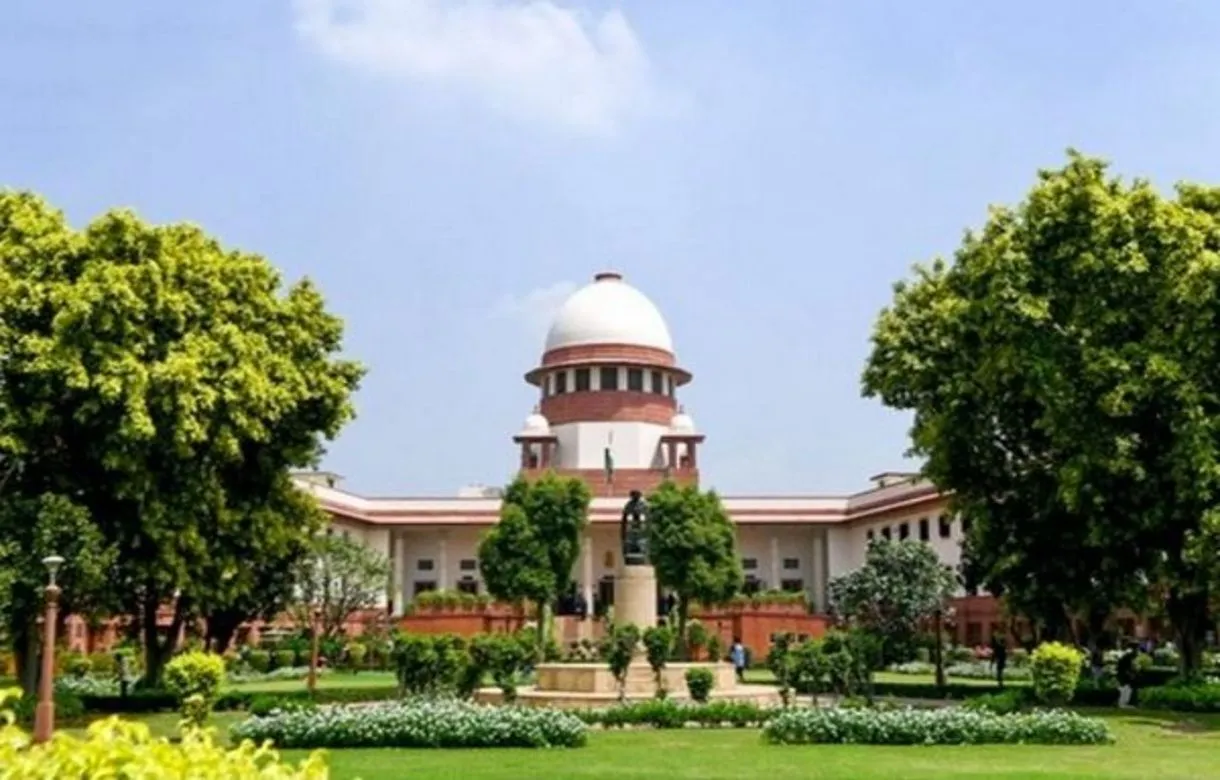
Since both the offences are bailable, police have now added an Indian Penal Code section pertaining to rioting. “Rahul has been arrested for rioting which is a non-bailable offence,” Kumar said. The police had earlier attributed the initial delay in registering a case to the pending enquiry and the unwillingness of the victims to lodge a complaint.
Police said the kanwariyas were “agitated” after a couple in a car slapped a pilgrim after their vehicle brushed past him around 5.30 pm on Tuesday. “Rumours that the pilgrim was badly thrashed by the couple united the kanwariyas,” said the officer.
The police are yet to identify the pilgrim whose accident triggered the violence. Officers said CCTV footage has helped them zero down on at least three other suspects.[/vc_column_text][/vc_column][/vc_row][vc_row][vc_column][vc_column_text css=”.vc_custom_1533901422258{border-top-width: 10px !important;border-right-width: 10px !important;border-bottom-width: 10px !important;border-left-width: 10px !important;padding-top: 10px !important;padding-right: 10px !important;padding-bottom: 10px !important;padding-left: 10px !important;background-color: #cccccc !important;border-radius: 10px !important;}”]The matter came up in the Supreme Court on Friday during the hearing of a petition by a film society about the threats and violence over the movie Padmaavat. The Supreme Court expressed its anger at such incidents of vandalism and asked the police to take strong action whoever indulged in such acts, irrespective of their religion.[/vc_column_text][/vc_column][/vc_row][vc_row][vc_column][vc_column_text]It wasn’t just in Delhi: more incidents of kanwariyas going on rampage were reported from Uttar Pradesh with the police looking on, even as there was at least one instance reported of the cops themselves being at the receiving end of the violence of the so-called devotees of Lord Shiva.[/vc_column_text][/vc_column][/vc_row][vc_row][vc_column][vc_column_text css=”.vc_custom_1533901872777{border-top-width: 10px !important;border-right-width: 10px !important;border-bottom-width: 10px !important;border-left-width: 10px !important;padding-top: 10px !important;padding-right: 10px !important;padding-bottom: 10px !important;padding-left: 10px !important;background-color: #e0e0e0 !important;border-radius: 10px !important;}”]To maintain law and order, Uttarakhand’s principal secretary (home) Anand Vardhan on July 9 had written to home secretaries in Delhi, Haryana, Uttar Pradesh and Himachal Pradesh, asking them to conduct checking of all kanwarias and their vehicles, and remove tridents, sticks, baseball bats and hockey sticks from their possession, said a report in The Indian Express.
In his letter, Vardhan said last year the footfall was around 3.7 crore, and it is only expected to increase this year. The kanwar yatra started on July 28 and ends on August 10. “Most of the time, kanwarias carry tridents, baseball bats, hockey sticks and they don’t hesitate to use these weapons whenever they have an argument or fight with anyone. They also fight with shopkeepers and local public, which becomes a major law and order issue,” the letter states.
He also claimed in the letter that some of them consume drugs, which is another challenge for law and order enforcement officers. “Kanwarias initially came walking, but later some of their groups came in tractors, trolley, trucks, etc to Haridwar. It was observed that they start competing while returning home, driving rashly and causing road accidents. Their vehicles are also equipped with big music system, which increases the possibility of road accidents,” it states. He said the Uttarakhand police always removes these weapons and music systems.
The letter also states that there is scope for mismanagement since they usually travel in large numbers.
In his letter, he asked all home secretaries to direct their state police to frisk and remove such items. “We should also ensure kanwarias don’t get involved in illegal activities,” the letter states.
The letter was first sent to the principal secretary (home) Manoj Kumar Parida before being sent to the Delhi Police.[/vc_column_text][/vc_column][/vc_row][vc_row][vc_column][vc_column_text]In fact, the Yogi Adityanath government in UP has gone out of its way to make Kanwariyas feel welcome, at the cost of great inconvenience to the rest of the citizens. Additional Director General of Uttar Pradesh Police (Meerut Zone) Prashant Kumar was caught on camera showering rose petals on the Kanwariyas from a helicopter on Wednesday. Meerut Commissioner Anita Meshram and other senior officials too showered rose petals on Kanwariyas from the helicopter.
UP Chief Minister Yogi Adityanath had earlier conducted an aerial survey of the Kanwar Yatra route during the first half of the Shrawan month that began on July 28. The CM also reportedly showered flower petals from his chopper on the Kanwarias.
ADG Prashant Kumar, however issued a clarification saying on Thursday saying, ‘no religious angle should be given to this. Flowers are used to welcome people. Administration respects all religions and actively takes part, even in Gurupurab, Eid, Bakrid or Jain festivals’.
The state government also reportedly spent over Rs 14 lakh for hiring the chopper from which senior police officers of the state were seen showering rose petals on Kanwar pilgrims in Meerut and adjoining districts, a gesture the officer seen on camera said was meant to welcome them. According to Economic Times, the chopper was hired from Air Charter Services Pvt Ltd at the cost Rs 14.31 lakh to the state exchequer.
Moreover, according to The Indian Express, not only did the top police officers shower flowers on the Kanwariyas, the government also made arrangements for DJ music for the yatris.
The DJs took a dig at the previous government which banned loud music during the pilgrimage. “Akhilesh ne hukum sunaya tha, DJ per ban lagaya tha, 2017 ke chunav me Bhole ne usey haraya tha. Chhakke chhuda diye Yogi ne. (Akhilesh had announced an order, DJs were banned; and in 2017 Lord Shiva ensured his defeat; Yogi has cut him to size),” they said while championing the Yogi Adityanath government for allowing DJs to play music: “DJ bajwa diye Yogi ne, Bhole nachwa diye Yogi ne (Yogi switched on the DJ, Yogi let the devotees dance).”[/vc_column_text][/vc_column][/vc_row][vc_row][vc_column][vc_column_text css=”.vc_custom_1533900977990{border-top-width: 10px !important;border-right-width: 10px !important;border-bottom-width: 10px !important;border-left-width: 10px !important;padding-top: 10px !important;padding-right: 10px !important;padding-bottom: 10px !important;padding-left: 10px !important;background-color: #d6d6d6 !important;border-radius: 10px !important;}”]Every year, thousands of devotees of Lord Shiva take up the kanwar pilgrimage, walking from their homes in various states to Haridwar and Gangotri in Uttarakhand to fetch pots filled with water from the river Ganga. The water is then offered at their local Shiva shrines on Maha Shivaratri.
Originally confined to Bihar-Jharkhand, the ritual march has spread to other parts of north India and the number of Kanwariyas has grown exponentially over the years. According to Uttarakhand government’s principal secretary (home), they numbered about 3.7 crore last year and the numbers this year were going to be even larger.[/vc_column_text][/vc_column][/vc_row][vc_row][vc_column][vc_column_text]While the state administration prostrated itself before them, the emboldened Kanwariyas resorted to violence in Uttar Pradesh’s Bulandshahr district, attacking police personnel on duty and vandalising their official vehicles after the incident in Delhi’s Moti Nagar. The UP cops had to flee to escape the wrath of the Kanwariyas.
A day later, Kanwariyas went on rampage in Muzaffarnagar market. In the incident captured on camera, 10-15 Kanwariyas were seen destroying a car. They were reportedly angry after the car brushed past them.
As videos showing the so-called Shiva devotees going berserk in Delhi and Uttar Pradesh’s Bulandshahr went viral, reports said that some Muslim families in a Bareilly village left their homes fearing violence when Kanwariyas would pass through areas in which their homes were located. A state official confirmed this to PTI, requesting anonymity, amid reports of stray incidents of violence involving the pilgrims.
The official revealed that since there was trouble last year at Khelam village in Bareilly district, which falls on the Kanwariya route, this time, the police have taken it upon themselves to deliver a ‘psychological message’ to avoid trouble.
Instead of trying to rein in the trouble maker Kanwariyas, the police have reportedly handed out ‘red cards’ as a warning to some Hindu and Muslim families in the village so that the incidents are not repeated.
“We have secret information that during the Kanwar yatra you might create trouble…with this red card, we are informing you that if you create any trouble during the Kanwar yatra, action will be taken against you. You will be held accountable,” the text on the red card reads according to The Indian Express.
About 1,500 villagers were also made to sign a ‘symbolic bond’, committing themselves to pay amounts ranging between Rs 1 lakh to Rs 10 lakh if they created any trouble, the official said. He said drones and CCTV cameras were also deployed over the past few days in the village, to ensure the yatris complete their pilgrimage without any trouble.
Senior officials, however, denied reports that people had shifted out fearing any violence, said media reports which also quoted District magistrate Virendra Kumar Singh as saying that ‘anti-social elements’ had fled the village fearing police action.
Meanwhile, reports of commuters being inconvenienced due to the Kanwar Yatra also surfaced. Over the last few days, travellers have complained of huge traffic disruptions by the Kanwariyas, who are seen walking in large groups or riding two-wheelers and trucks, ignoring traffic rules and wielding hockey sticks and baseball bats.
According to a report in The Indian Express, local authorities shut down about a 150-kilometre stretch of National Highway 27 from Rudaulin in Faizabad to Khalilabad area of Sant Kabir Nagar between Lucknow and Gorakhpur for the general public to facilitate movement of Kanwariyas. The move forced commuters to take a long detour of pothole-ridden roads, through Barabanki via Gonda. For commuters coming from Gorakhpur, the traffic was stopped at Khalilabad in Sant Kabir Nagar district, about 37 kilometres from Gorakhpur, and they were asked to take either the Balrampur route or the Tanda route to connect back to the National Highway.[/vc_column_text][/vc_column][/vc_row]