English हिन्दी
Connect with us

India News

Mahadev betting app founder Sourabh Chandrakar detained in Oman, India seeks extradition

Mahadev betting app founder Sourabh Chandrakar has been detained in Oman on an Interpol Red Notice, with Indian authorities pursuing his extradition in the alleged Rs 6,000 crore betting case.


Published

on

Sourabh Chandrakar

Indian authorities are working to bring back alleged Mahadev betting app founder Sourabh Chandrakar after he was detained in Oman, according to officials. Chandrakar, one of the key accused in the alleged online betting syndicate, has been held by the Royal Oman Police following an Interpol Red Notice issued at the request of Indian investigating agencies.

Officials said India is pursuing both extradition and deportation options to secure Chandrakar’s return, citing the seriousness of the charges against him.

Chandrakar detained following Interpol Red Notice

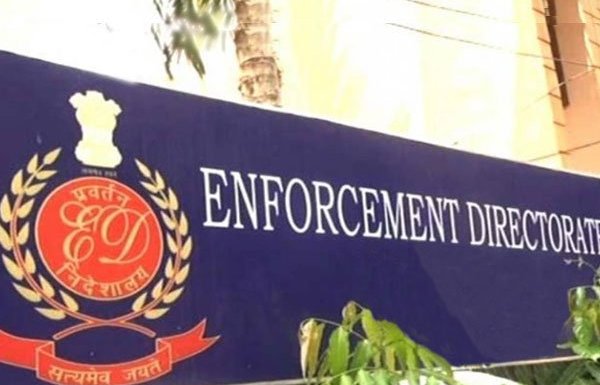
According to officials, Chandrakar, a native of Chhattisgarh in his 30s, was detained in Oman a few weeks ago based on an Interpol Red Notice issued by agencies including the Enforcement Directorate (ED) and Chhattisgarh Police.

Investigators tracking the case have also received informal inputs suggesting that Chandrakar was allegedly travelling using a passport issued by a Southeast Asian country.

Before his detention in Oman, Indian agencies had reported that Chandrakar was in Dubai. Authorities had earlier claimed that he was detained there in 2024 before being released. Officials have also stated that his alleged associate and Mahadev app co-founder Ravi Uppal later moved from Dubai to Vanuatu.

ED alleges Rs 6,000 crore betting racket

The Enforcement Directorate has described the Mahadev betting app case as a large-scale international online betting syndicate with alleged proceeds of crime estimated at around Rs 6,000 crore.

The agency has previously alleged that the investigation involves several high-ranking politicians and bureaucrats from Chhattisgarh.

According to the ED, the syndicate allegedly operated through multiple online betting platforms and domain names, including Tiger Exchange, Gold365 and Laser247. Investigators claim the operation functioned through a franchise-based network of panels and branches across India, while Chandrakar and Uppal allegedly managed its operations from Dubai.

Assets worth Rs 1,700 crore attached

In March, the ED said it had attached assets worth approximately Rs 1,700 crore linked to Chandrakar and associated entities. A significant portion of these properties is located in Dubai, including assets in the Burj Khalifa.

The agency has so far arrested 13 individuals in connection with the investigation and has named 74 entities as accused across five charge sheets filed before a special Prevention of Money Laundering Act (PMLA) court in Raipur.

The ED has also approached a court seeking to declare Chandrakar, Ravi Uppal and other accused, including Anil Agrawal alias Atul and Shubham Soni, as Fugitive Economic Offenders under the Fugitive Economic Offenders Act, 2018.

India hopeful of Chandrakar’s return

Officials expressed confidence that India would be able to secure Chandrakar’s return from Oman, highlighting the strong bilateral relationship between the two countries.

Authorities also referred to the Free Trade Agreement between India and Oman, which came into effect on June 1, as a sign of strengthening cooperation. Bilateral trade between the two nations stood at USD 11.2 billion during 2025-26.

Before leaving India for Dubai in 2019, Chandrakar reportedly operated a juice shop named “Juice Factory” with his brother in Bhilai, Chhattisgarh.

Chandrakar and Ravi Uppal have previously denied any involvement in the alleged betting racket through a statement issued a few years ago.

India News

Focus should be on preventing paper leaks, not just punishment, says Shashi Tharoor

During the Lok Sabha debate on the Public Examinations Amendment Bill, 2026, Shashi Tharoor called for systemic reforms to prevent paper leaks and reduce dependence on single high-stakes examinations.

Published

on

India’s public examination system requires structural reforms that prevent paper leaks instead of relying solely on stricter punishments after the damage is done, Congress MP Shashi Tharoor said while participating in the Lok Sabha debate on the Public Examinations (Prevention of Unfair Means) Amendment Bill, 2026.

Speaking in Parliament on Tuesday, the Thiruvananthapuram MP said millions of students and their families invest years of effort, financial resources and emotional commitment into competitive examinations, making the credibility of the examination process critical.

Tharoor says students deserve a fair and secure examination system

Tharoor said students appearing for examinations such as NEET, JEE and UGC-NET carry far more than an admit card into the examination hall.

He noted that families often spend significant savings on education, coaching and study material while students devote years of preparation in pursuit of professional opportunities. According to him, a paper leak undermines not only an examination but also the hard work and sacrifices made by candidates and their families.

While acknowledging the proposed legislation’s tougher penalties, including lengthy imprisonment and heavy financial penalties for those involved in paper leaks, Tharoor argued that punishment comes only after students have already suffered the consequences.

Calls for reforms beyond stricter penalties

The Congress leader said every paper leak points to deeper weaknesses within the country’s examination system rather than being an isolated incident.

He stressed that Parliament’s objective should be to prevent such incidents altogether through stronger safeguards instead of focusing primarily on punitive measures.

Tharoor also questioned whether the judicial system would be able to consistently deliver speedy trials under the proposed fast-track provisions included in the legislation.

Suggests multiple exam attempts through computer-based testing

Advocating long-term reforms, Tharoor proposed moving away from the existing model in which a student’s future often depends on a single high-stakes examination.

He suggested introducing continuous computer-based entrance examinations with multiple attempts during the year, allowing candidates to submit their best score for admissions. According to him, such a system could reduce stress, accommodate emergencies, strengthen examination integrity and minimise the risk of paper leaks.

Raises concern over competition and student mental health

Highlighting the intense competition for professional education, Tharoor said the large gap between the number of aspirants and available seats contributes to the pressure surrounding entrance examinations.

He also expressed concern over student suicides, saying these figures represent individual lives and families affected by the immense stress associated with competitive examinations.

Calling for broader educational reforms, Tharoor said India needs more quality institutions, increased professional education seats and multiple pathways to higher education so that a single examination does not determine a student’s future.

Concluding his remarks, he said the responsibility of students is to prepare sincerely, while the responsibility of the system is to ensure that their preparation is rewarded through a fair, credible and secure examination process. He added that although the proposed legislation is likely to be passed, broader reforms are necessary to restore confidence in India’s public examination system.

Continue Reading

India News

Delhi Police issue notices to X accounts over abusive posts targeting PM Modi during CJP protests

Delhi Police have issued notices to several X accounts over allegedly abusive posts targeting Prime Minister Narendra Modi during recent student protests, while continuing to monitor social media for content that may violate the law.

Published

on

PM Modi

Delhi Police have issued notices to several X (formerly Twitter) accounts, including some associated with news portals, over posts containing abusive remarks targeting Prime Minister Narendra Modi and security forces during recent student protests in Delhi and other locations.

According to police sources, the notices seek information about individuals who allegedly used abusive language in social media posts. The exact number of X accounts that have received notices has not been disclosed.

The action comes after authorities reviewed content shared during and after the protests, examining posts, videos and comments across multiple social media platforms for possible violations of law and their potential impact on public order.

Police continue social media monitoring

Delhi Police said its social media monitoring team has been continuously tracking online platforms for content related to the protests. Officials stated that notices are being issued to social media intermediaries whenever objectionable or abusive content is identified, directing them to remove such material.

According to the police, multiple posts containing abusive language directed at the Prime Minister surfaced during the student protests at Jantar Mantar and following the violence linked to the July 20 ‘Sansad Chalo’ march.

Officials said several comments and videos flagged by the police have already been removed after notices were served to the respective platforms.

Police had earlier flagged Pakistan-linked accounts

Earlier, Delhi Police said it had identified more than 400 social media handles allegedly linked to Pakistan that were circulating fake narratives, rumours and deepfake videos related to the protests.

The police said cyber and social media teams are continuing to monitor online activity connected to the demonstrations. Authorities said the exercise is aimed at identifying additional content that may violate applicable rules and taking appropriate action where necessary.

Continue Reading

India News

CJP hits back at Kangana Ranaut over Gen Z remarks, says young people have done more for the country

The Cockroach Janta Party has criticised BJP MP Kangana Ranaut over her comments on Gen Z protesters, saying elected representatives should maintain dignity and respect young people’s contribution to the country.

Published

on

The Cockroach Janta Party (CJP) has strongly criticised BJP MP Kangana Ranaut over her remarks targeting Gen Z protesters, saying the actor-turned-politician’s comments were inappropriate and did not reflect the responsibility expected from an elected representative.

The exchange comes days after Ranaut criticised protesters who participated in demonstrations led by the CJP over the alleged NEET paper leak, describing their language as “crass” and referring to them as “Generation Gutter” in an Instagram post.

CJP dismisses Kangana Ranaut’s criticism

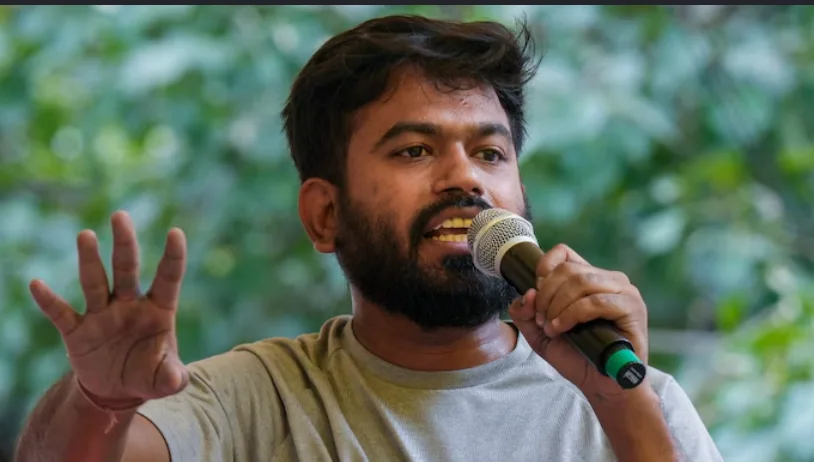
Responding to Ranaut’s remarks on Tuesday, CJP spokesperson Saurav Das said the BJP MP was not taken seriously even within her own party and claimed younger generations were unlikely to pay attention to her statements.

Das also referred to Ranaut’s earlier comments about the workload of being a Member of Parliament, arguing that they reflected a lack of seriousness. He accused the MP of criticising young people while exposing what he described as her own casual approach towards public office.

Calls for dignified political discourse

The CJP spokesperson said public representatives should use measured language and uphold the dignity associated with their constitutional positions.

According to Das, Gen Z has made meaningful contributions to the country and has played an important role in strengthening public faith in democratic processes. He argued that such contributions should not be dismissed through sweeping remarks about an entire generation.

Kangana Ranaut’s remarks

In a series of Instagram posts on Monday, Ranaut criticised the conduct of protesters participating in demonstrations at Delhi’s Jantar Mantar and elsewhere. She questioned their upbringing, described their language as offensive, and said their online content left her wanting a “digital detox.”

The BJP MP also criticised women participating in the protests, alleging they glorified substance abuse and depended on their parents financially. She referred to them as “Generation Gutter” and made further remarks questioning their abilities and contribution to society.

Her comments drew criticism from several political leaders, with some demanding an apology and questioning whether she fully understood the issues surrounding the NEET controversy that triggered the protests.

Background of the protests

The CJP began its protests at Jantar Mantar on June 20, demanding accountability over the alleged NEET paper leak and calling for the resignation of then Education Minister Dharmendra Pradhan.

The agitation intensified with a Parliament March on July 20, during which protesters and police clashed. Authorities said more than 118 police personnel were injured, while protesters alleged the use of lathicharge, tear gas and pellet guns during the confrontation.

Following two rounds of discussions between the Centre and the CJP, Dharmendra Pradhan resigned from the post of Education Minister on Saturday. The CJP subsequently ended its protest after stating that it had received assurances that peaceful demonstrators would not face action and that families of students who died by suicide following the NEET paper leak would receive compensation.

Continue Reading

Trending

© Copyright 2022 APNLIVE.com