
India News
Mumbai rains: NDRF rescues 500 from stranded Mahalaxmi Express, operation on


Hundreds of passengers were stranded on Mahalaxmi Express which was held up between Badlapur and Vangani station in Mumbai due to heavy rains since the wee hours today (Saturday, July 27).
A Central Railways officer said 700 passengers are on-board the train. Initial media reports said that at least 2,000 passengers are struck in the Mahalaxmi Express.
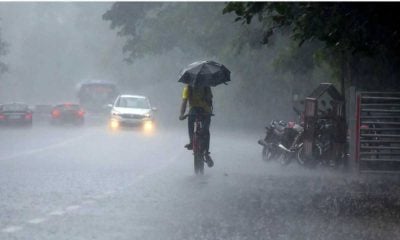
A continuous heavy downpour since last night created severe waterlogging on the tracks and in the entire area of the route. So far, 500 passengers have been rescued, reported ANI.
#WATCH Maharashtra: Aerials shots of Mahalaxmi Express rescue operation. More than 500 passengers have been rescued so far. pic.twitter.com/nLlsfebPAr
— ANI (@ANI) July 27, 2019
“Due to a raging Ulhas river, the Mahalaxmi Express train got stuck at Chamtoli within the limits of Badlapur due to flooded tracks. The passengers were safe, but the only concern was a rise in water level on the tracks,” Resident Deputy Collector (Thane) Shivaji Patil said.
The train is held up between Vangani and Badlapur, which is 100 kilometers away from Mumbai, since 3 AM today, said a report quoting a passenger on board the train.
 A team of National Disaster Response Force (NDRF) arrived at the location where Mahalaxmi Express was held up. Eight flood rescue teams from the Navy including three diving teams have been mobilised with rescue material, inflatable boats and life jackets. A Sea King helicopter has also been scrambled with divers equipped with auto inflatable craft for deployment in the area as advance assessment party. Western Naval Command is keeping a close watch on the situation and is in constant touch with the state administration to respond as required and provide necessary assistance in flood-affected areas.
Railway Protection Force and City police first reached the site and distributed biscuits and water to the stranded passengers.
Central Railways issued an advisory to the stranded passengers to not get down from the train. “Please don’t get down from train. Train is the safe place. Staff, RPF and City Police is in train to look after your well being. Please wait for advice from NDRF and other disaster management authorities,” the Central Railway said in a statement on Twitter.
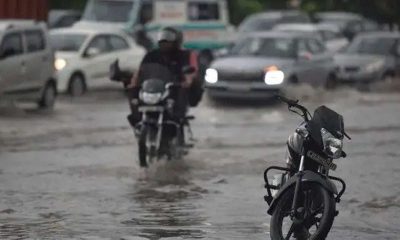
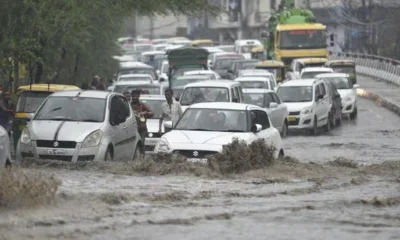
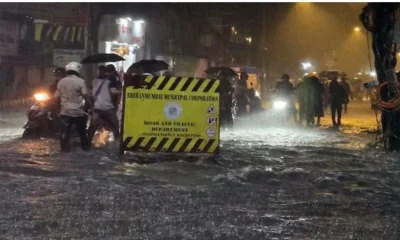
Heavy rains in Mumbai inundated several areas across the city including Sion, Matunga, Mahim, Andheri, Malad and Dahisar causing huge traffic snarls at major junctions.
Air traffic was also disrupted for a couple of hours in Mumbai, as seven flights were cancelled and around eight to nine were diverted. Around 8:15 am, Mumbai International Airport PRO had announced that flight operations returned to normal.
According to the India Meteorological Department (IMD), Mumbai will continue to receive heavy rains till July 29 with the minimum and maximum temperatures hovering around 24 degree Celsius and 30 degree Celsius, respectively.
The weather department also issued an orange alert signifying that authorities should be alert and ready to take necessary action. “Heavy to very heavy rainfall is likely in Mumbai, Thane, and Raigad districts, while extremely heavy rainfall is likely at isolated places in Palghar district,” an IMD official told PTI.





India News
Two election commissioners complained against senior poll officer, RTI reveals
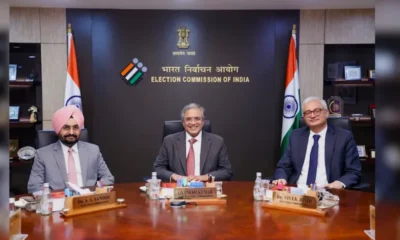
An RTI response has shed light on complaints by two Election Commissioners against a senior poll panel officer and the Cabinet Secretariat’s decision not to intervene directly.

India News
Punjab strike hits public services as 3 lakh employees and roadways workers protest
Punjab is facing disruption to government work and public transport as over three lakh government employees participate in a mass leave protest and roadways workers continue their strike over pending demands.
India News
Amit Shah says congress won’t return to power for 30 years
Union Home Minister Amit Shah took a swipe at Rahul Gandhi over the Opposition’s vote theft allegations, asserting that the Congress would not return to power for the next 30 years.


Magnitude 7 earthquake strikes Tibet after floods

PM Modi attacks Rahul Gandhi with failed product jibe

Amit Shah says congress won’t return to power for 30 years

Punjab strike hits public services as 3 lakh employees and roadways workers protest

Two election commissioners complained against senior poll officer, RTI reveals
Two election commissioners complained against senior poll officer, RTI reveals
Punjab strike hits public services as 3 lakh employees and roadways workers protest
Amit Shah says congress won’t return to power for 30 years
Magnitude 7 earthquake strikes Tibet after floods
PM Modi attacks Rahul Gandhi with failed product jibe

Afghan Men Try To Hang With The Jet Engine Of The Aircraft in Kabul- Afghanistan News – Kabul News
Trending Top 10 News: 10000 Crore Fine on Flipkart, Apple to Launch Unique Feature, Hdfc Bank Job Ad

Trending Top 10 News: Nokia 6310, Apple sales, Bachpan ka Pyar Video Kid, Dainik Bhaskar IT Raid

Trending Top 10 News: Canada bans Indian flights, Rain in Delhi NCR, AIMIM Twitter hacked, Raj Kundra case

Trending Top 10 News: Shein India, Apple New Service, Pocket Oxygen, Oppo Launched New Phone
-
 Latest world news22 hours ago
Magnitude 7 earthquake strikes Tibet after floods
-
 India News22 hours ago
PM Modi attacks Rahul Gandhi with failed product jibe
-
 India News22 hours ago
Amit Shah says congress won’t return to power for 30 years
-
 India News10 hours ago
Punjab strike hits public services as 3 lakh employees and roadways workers protest
-
 India News10 hours ago
Two election commissioners complained against senior poll officer, RTI reveals
