English हिन्दी
Connect with us

India News

Odisha: 3 held for procuring fake SIM cards, sharing OTPs with Pakistan’s ISI

Three people were arrested in Odisha on Sunday for allegedly procuring huge number of SIM cards fraudulently and sharing one-time passwords (OTPs) with agents of the Pakistan’s Inter-Services Intelligence and Pakistani Intelligence Operatives, officials said.


Published

on

Pakistan's ISI

Three people were arrested in Odisha on Sunday for allegedly procuring huge number of SIM cards fraudulently and sharing one-time passwords (OTPs) with agents of the Pakistan’s Inter-Services Intelligence and Pakistani Intelligence Operatives, officials said.
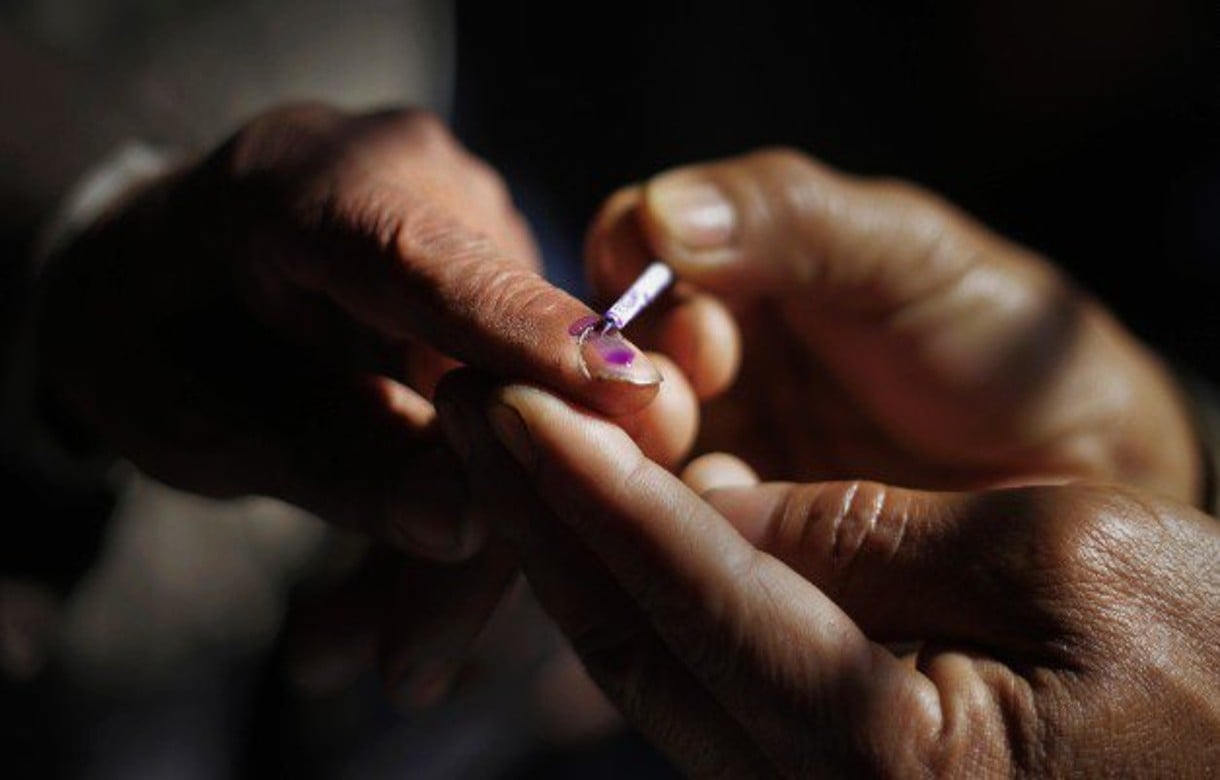
According to officials, based on specific inputs, a team of Special Task Force (STF) of the Odisha Police conducted raids in Nayagarh and Jajpur district on Sunday and arrested three accused persons identified as Pathanisamant Lenka, a 35-year-old ITI Teacher, Saroj Kumar Nayak, (26) and Soumya Pattanaik, (19).

An official of the Odisha STF said that various incriminating materials including 19 mobile phones, 47 pre-activated SIM Cards, 61 ATM cards, 23 SIM covers and laptops were seized from the possession of the accused.

Giving details, the official said that accused were engaged in fraudulently acquiring a large of SIM cards registered under other people’s names and using them to generate OTPs which they allegedly shared with their clients, some of whom included PIO and ISI agents in Pakistan and India.

The official said that the accused were being paid for this “service” by some Pakistani agents based in India and were also reportedly in touch with a female PIO agent who was arrested last year in an Official Secrets Act and Honey-Trap case in Rajasthan.

Read Also: Bihar man beaten to death in Kerala over theft suspicion, 9 held

The Odisha STF further said that the OTPs were reportedly being used to create fake social media accounts on several platforms like Whatsapp, Telegram, Facebook and Instagram and also on online shopping sites like Amazon and Flipkart.

They said the SIM cards were also being used to open email accounts, adding that all this was done so that it may seem that the accounts are Indian but are actually being operated from Pakistan.

The social media accounts, they said, were intended to be used for various anti-India activities like Spying, communication with terrorists, radicalization, running anti-India propaganda, fuelling anti-India/ divisive sentiments on social media, sextortion, Honey-trapping etc.

The accounts being registered and linked to Indian mobile numbers was to give them legitimacy in people’s eyes.

The STF further said that online shopping accounts created by using these nefarious methods were used to supply items to terrorists, anti-India elements etc.

The Pakistani spies were also creating and selling mule accounts through social media groups, which are used in various crimes, they said.

Karnataka gave befitting reply to BJP: Kerala CM Pinarayi Vijayan on poll results

Patiala woman shot dead for consuming alcohol inside gurdwara

India News

8 Tamil Nadu engineering students killed in Kerala car-lorry crash

Eight engineering students from Tamil Nadu were killed after their car collided with a parked lorry on NH-66 in Kerala’s Thrissur district.

Published

on

Eight engineering students from Tamil Nadu were killed after the car they were travelling in crashed into a parked lorry on NH-66 in Kerala’s Thrissur district late Friday night, police said.

The accident took place at around 11.40 pm at Panambikkunnu in Kaipamangalam. The students were travelling from Guruvayur towards Kodungallur when their car collided with the rear of the lorry.

What happened in the Thrissur accident

According to the FIR, the lorry was parked illegally on the right side of the highway near a barricaded section where traffic had been diverted because of ongoing construction work.

Police said the car was travelling at high speed and its driver apparently failed to notice the diversion barricade before the vehicle crashed into the rear of the lorry.

The lorry was registered in Maharashtra.

Six students died at the accident spot, while two others were declared dead on arrival at a nearby hospital, police said.

Six victims identified

The victims were students of an engineering college in Dindigul and were travelling towards Kodungallur along NH-66.

Police have identified six of the eight victims. Four of them — Surya, Yuvasanjith, Vishva and Johua — were from Dindigul. The other two identified victims were Santhosh and Prasanna from Madurai.

The identities of the remaining two students are yet to be confirmed.

Residents, fire and rescue personnel and police took part in the rescue operation and pulled the students from the badly damaged car. The bodies were subsequently taken to the mortuary of Thrissur Medical College.

Case registered against lorry driver

Kaipamangalam police have registered a case against the lorry driver under Section 105 of the Bharatiya Nyaya Sanhita for culpable homicide.

Police said the driver went into hiding shortly after the accident.

The families of the victims were contacted using student identity cards recovered from the bodies. Police said some families were unaware that their children had travelled to Kerala.

Postmortem examinations will begin after the families reach Thrissur Medical College, police said.

Continue Reading

India News

Air India sacks Phuket-Delhi flight pilot after failing drug test

Air India has terminated the Phuket-Delhi flight pilot after a confirmatory test found a psychoactive substance following the August 4 incident.

Published

on

Air India has terminated the employment of the pilot-in-command of a Phuket-Delhi flight after he tested positive for a psychoactive substance.

The pilot was in command of flight AI2379, which was travelling from Phuket to Delhi on August 4 when the aircraft suddenly lost altitude over Odisha. The incident left 24 passengers injured.

Air India said the termination was in line with its zero-tolerance policy regarding safety violations and regulatory requirements.

Air India terminates pilot with immediate effect

In a statement, the Tata-owned airline said the pilot-in-command had tested positive for a psychoactive substance.

The airline said that, considering its zero-tolerance approach to violations related to safety, fitness and regulatory requirements, the pilot’s employment had been terminated with immediate effect.

Air India also said it continues to cooperate fully with the investigation into the incident and has provided access to relevant operational, maintenance and technical records.

What happened on the Phuket-Delhi flight?

According to the preliminary findings of the Aircraft Accident Investigation Bureau (AAIB), the Airbus A320 was carrying 145 people when it experienced the near-simultaneous loss of all three hydraulic systems while cruising at around 36,000 feet.

The technical failure resulted in the autopilot disconnecting and triggered a brief stall warning. The aircraft subsequently lost altitude, resulting in injuries to 24 passengers.

The preliminary report also noted that the pilot tested non-negative for a psychoactive substance in a confirmatory test.

However, the report did not establish that the pilot’s drug-test result caused or contributed to the hydraulic system failure or the subsequent loss of altitude.

AAIB recommends action over psychoactive substance finding

The AAIB described the confirmation of psychoactive substance use as a serious concern and recommended that the Directorate General of Civil Aviation (DGCA) take appropriate action against the pilot on priority.

The investigation into the technical and other aspects of the incident is still underway.

The preliminary report also noted that the co-pilot was flying the aircraft when the incident occurred and attempted to bring the situation under control.

Air India said safety remains its highest priority and that its pilots undergo training, proficiency checks, medical examinations and other regulatory assessments in accordance with applicable requirements.

Continue Reading

India News

India offers forensic DNA support to identify Nepal flood victims

India will make forensic laboratory facilities available for DNA profiling of first-degree relatives of people missing after Nepal’s August 26 flash floods.

Published

on

India has offered forensic laboratory support to help identify people who remain missing after the devastating flash floods in Nepal.

The Ministry of External Affairs (MEA) said central and state forensic laboratories in India will make their DNA profiling facilities available for first-degree biological relatives of people missing after the August 26 flash floods in Nepal.

DNA samples can be provided by relatives in India

According to the MEA, first-degree biological relatives living in India can have their biological samples collected and DNA profiles prepared.

The relatives can include a person’s father, mother, son, daughter or sibling. DNA profiling can be carried out at Central Forensic Science Laboratories (CFSLs), State Forensic Science Laboratories (SFSLs), laboratories of the National Forensic Sciences University (NFSU), and NABL-accredited laboratories with DNA profiling capabilities.

The initiative is intended to support Nepal’s ongoing process of identifying mortal remains recovered after the flash floods.

DNA profiles to be compared with unidentified remains

The MEA said the DNA profiling may use Autosomal STR DNA profiling, as advised by Nepal Police, subject to the technical requirements communicated by the Nepali authorities.

Once prepared, DNA profiles and the preliminary information required by Nepalese authorities can be sent to Nepal Police by email for comparison with DNA profiles obtained from unidentified mortal remains.

The Indian Embassy in Kathmandu will also facilitate coordination, with copies of the DNA profiles to be shared with the embassy for this purpose.

Nepal flood death toll rises

The death toll from the flash floods has risen to at least 1,259, according to Nepalese authorities, after rescue workers recovered additional bodies from affected areas.

More than 12,000 people have been rescued, while around 5,000 people remain missing as search and rescue operations continue.

The flash floods, which followed an ice-rock avalanche near the Nepal-Tibet border, caused extensive destruction across towns and villages in northern and central Nepal.

Continue Reading

Trending

© Copyright 2022 APNLIVE.com