English हिन्दी
Connect with us

Entertainment

Joker: Folie à Deux review: A Masterpiece of Tragedy and Theatrics

It masterfully turns fantasy into reality, refusing to indulge the audience’s desire for escape.

Published

on

By Inderjit Badhwar

For those seeking the heart-pounding chaos of Gotham—the car chases, explosions, and violent mayhem that punctuated Joker: Folie à Deux’s 2019 predecessor—you’re bound to feel cheated. This film shuns the devilish spectacle, the apocalyptic laughter, and numbing bloodletting that made audiences reel last time. Instead, Joker takes a different path—one that draws you into a theatrical allegory, where sorrow lurks behind every scene like the unspoken melancholy of Busby Berkeley’s gals, whose smiles mask tears behind the brass and drums. It’s a film that will break your heart if you’re willing to look beneath the surface.

Most critics who have panned this work have utterly missed its genius. They’ve approached it as another instalment of the Batman universe or a Marvel spin-off, never realising they should have been viewing it through a Bergmanesque or Kafkaesque lens.

This is not a superhero movie; it is a meditation on despair. In fact, even with its colour palette, the film strikes the mind in grainy black and white, resonating with the heavy weight of reality and the tragedy that lies at its core.

Tragedy reigns in every frame. From the grimy, passionless prison where Joker awaits trial for his previous murders, to his imploding visage as he engages in cramped and joyless lovemaking with Harley Quinn in a dingy cell, the mood is one of relentless gloom. As the film unfolds, we understand one central truth: Joker is already dead. Joaquin Phoenix’s face in the opening shots tells us this immediately—the rest of the movie exists to prove why this is so. It’s not a question of fate; it’s an exploration of inevitability.

This film becomes a tug-of-war—not just between Joker and the world around him—but between director Todd Phillips, Joaquin Phoenix, and the audience. Phillips and Phoenix push a painful reality down the throats of viewers and characters alike, while the world around them begs for fantasy. It’s as though the cast itself, along with the audience, yearns for the Joker of old—the virile, immanent figure who once offered Gotham’s downtrodden an escape, a chance at vengeance, a wild ride through the storm. But that Joker is gone.

Fantasy, it turns out, is what many wanted—and critics, too, missed the film’s central theme of “fantasy as entertainment.” The repeated number, “That’s Entertainment,” becomes the leitmotif, a sardonic nod to an audience desperate to maintain illusion. The powerful Joker of the previous film offered this fantasy. He was an avenging angel, the ultimate escape hatch for Gotham’s wretched—their abused and neglected, whose collective pain he embodied. He thrilled the wealthy, the beautiful people, the theatre-going elite, who saw in him a Marvel comic made flesh.

Even Harley was captivated by this illusion, but unwittingly, she played the role of femme fatale. In love, Joker became Fleck once again, irreversibly human. And this was his fatal flaw. Joker could never survive as a human. His love for Harley shattered the very fantasy he had created, and in doing so, he signed his own death warrant. The human Fleck had to die, tried and convicted not only for his crimes but for betraying those who longed for him to remain the Joker—the untouchable, the fantastical. Even Harley, in the end, turns her back, revealing that she, too, was just another devotee of the illusion.

This film is an extraordinary piece of art, driven by Joaquin Phoenix’s near-flawless artistry and supported by brilliant character performances from an impassioned cast. It masterfully turns fantasy into reality, refusing to indulge the audience’s desire for escape.

Go see it. Joker is not entertainment for entertainment’s sake—it is art, designed to rip away our comforting illusions and force us into deeper reflection. This is not a film that indulges the tooth fairy; it crushes her underfoot, daring us to see the world as it truly is.

Entertainment

Veteran actor Mushtaq Khan, known for Welcome and Hera Pheri, dies at 56

Veteran actor Mushtaq Khan, known for his memorable supporting role in Welcome, has died at 56.

Published

on

Mushtaq Khan

Veteran actor Mushtaq Khan, who appeared in several Hindi films and was particularly remembered for his role in the 2007 comedy Welcome, has died at the age of 56.

Khan was known for playing supporting characters across Hindi cinema and had worked in films spanning several decades. His role as Balu in Welcome remains among his best-known performances.

Mushtaq Khan’s film career

Mushtaq Khan appeared in a wide range of films during his career. His filmography included Aashiqui, Hum Hain Rahi Pyar Ke, Gopi Kishan, Krantiveer, Raja, Mujhse Shaadi Karogi, Jodi No. 1 and Hera Pheri.

He also featured in more recent films including Stree 2, Gadar 2, Baby John, Dhoom Dhaam and Jaat. His filmography lists acting work continuing into 2026.

In Welcome, Khan played Balu, a supporting character in the comedy starring Akshay Kumar, Nana Patekar, Anil Kapoor and other prominent actors.

Khan’s career also included television work, with his credits spanning a wide range of acting roles over the years.

Mushtaq Khan dies at 56

The actor’s death was reported on September 24, 2026. Reports said Khan had been undergoing treatment after being diagnosed with liver cancer and had been hospitalised for around 15 days. Further details surrounding his death were awaited in the initial reports.

Mushtaq Khan was 56. IMDb lists his date of birth as December 31, 1969.

Continue Reading

Entertainment

Deepika Padukone and Ranveer Singh welcome baby girl, their second child

Deepika Padukone and Ranveer Singh have welcomed their second child, a baby girl. The couple announced the birth on Instagram.

Published

on

deepika-padukone-ranveer

Bollywood stars Deepika Padukone and Ranveer Singh have welcomed their second child, a baby girl. The couple announced the arrival of their daughter on Instagram on Saturday through a post featuring a baby’s footprint.

The newborn is the couple’s second daughter. Deepika and Ranveer became parents for the first time in September 2024, when they welcomed their daughter Dua.

The couple has not announced the name of their newborn daughter in the post.

Deepika Padukone and Ranveer Singh’s last spotting

Just a day before the announcement, Deepika Padukone visited Mumbai’s Siddhivinayak Temple with Ranveer Singh and his parents.

Deepika was seen wearing an orange and purple kurta set, while Ranveer wore a purple kurta with white trousers. The visit came as the couple awaited the arrival of their second child.

Interestingly, the couple had also visited Siddhivinayak Temple in September 2024, shortly before the birth of their first daughter Dua.

Deepika and Ranveer’s family

Deepika Padukone and Ranveer Singh married on November 14, 2018, in Lake Como, Italy. Their wedding featured ceremonies reflecting their Konkani and Sindhi backgrounds.

The couple’s relationship began while working together on Goliyon Ki Raasleela Ram-Leela in 2013. They later got engaged in 2015 and welcomed their first child, Dua, on September 8, 2024.

Continue Reading

Entertainment

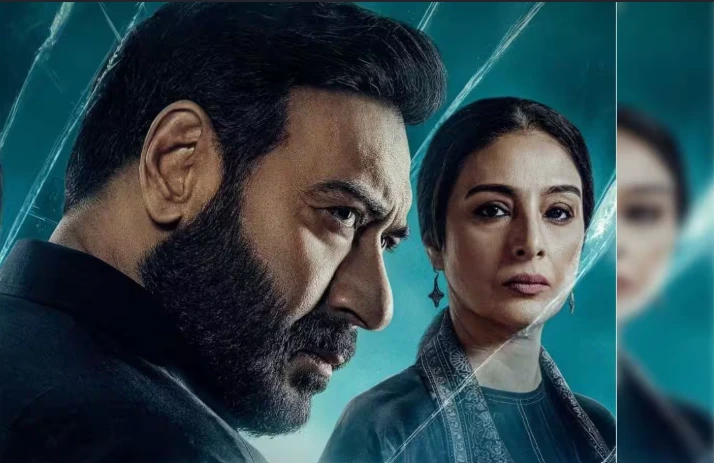
Drishyam 3 trailer: Ajay Devgn faces triple threat from Tabu, Jaideep Ahlawat and Prakash Raj

Drishyam: The Conclusion trailer brings back Ajay Devgn and Tabu, while Jaideep Ahlawat and Prakash Raj join the franchise in new roles.
Published

on

Drishyam 3 trailer

The trailer of Drishyam: The Conclusion, the third instalment of the Ajay Devgn-led franchise, has been released, bringing Vijay Salgaonkar back for what is billed as the final chapter of the story.

Ajay Devgn returns as Vijay, while Tabu reprises her role as Meera Deshmukh. The latest chapter also introduces Jaideep Ahlawat and Prakash Raj in new roles, creating fresh challenges for Vijay and his carefully planned attempts to protect his family.

Ajay Devgn faces new challenges

The trailer continues the story of Vijay Salgaonkar, a family man who has repeatedly relied on his intelligence to protect his family from the law.

This time, Vijay faces Tabu’s Meera Deshmukh along with two new adversaries. Jaideep Ahlawat plays an SP from the Crime Branch, while Prakash Raj appears as a lawyer. The two characters add another layer to the investigation surrounding Vijay and the events of the previous films.

The trailer suggests that Vijay’s earlier strategy may face its toughest test yet as the investigation moves forward and pressure mounts on his family.

Tabu returns as Meera Deshmukh

Tabu is back as Meera Deshmukh, continuing a character that has remained closely connected to Vijay’s story since the earlier films.

Shriya Saran also returns to the franchise, reprising her role from the previous instalments.

Jaideep Ahlawat and Prakash Raj join the cast

Jaideep Ahlawat and Prakash Raj are among the key additions to the cast of the third film.

Ahlawat plays an SP in the Crime Branch, bringing a new investigating officer into Vijay’s path. Prakash Raj plays a lawyer, adding another significant character to the conflict surrounding the case.

Drishyam The Conclusion release date

Drishyam: The Conclusion is directed by Abhishek Pathak and is backed by Star Studio18 and Panorama Studios.

The film is scheduled to arrive in cinemas on October 2, 2026.

The trailer sets up another battle of wits for Vijay Salgaonkar, with the final outcome of his long-running struggle with the law expected to form the central conflict of the concluding chapter.

Continue Reading

Trending

© Copyright 2022 APNLIVE.com