English हिन्दी
Connect with us

India News

Few Pfizer doses could be available in July, but no call on indemnity request: Govt

Paul said government officials are constantly in touch with the company, India is looking for what expectations Pfizer has from the Indian government, at the same time Pfizer looking at what the Indian government expecting from them.

Published

on

pfizer vaccine

The India Covid-19 task force on Thursday said Pfizer has indicated that it will allow some of its mRNA covid-19 vaccine doses in India, possibly starting in July.

The head of the National Expert Group on Vaccine Administration for Covid-19 (NEGVAC) Dr. V K Paul said the government is thinking about the American pharma company’s request for indemnity against the cost of compensation for any severe side effects. He said the top officials of the Indian government having a discussion with Pfizer on the cold chain-related issues because the vaccine made by Pfizer along with German biotechnology company BioNTech needs ultra-low temperature at the time of import.

Paul said government officials are constantly in touch with the company, India is looking for what expectations Pfizer has from the Indian government, at the same time Pfizer looking at what the Indian government expecting from them.

Paul said the American vaccine makers have requested indemnity from India. We are examining this request, but there is no decision as of now, Paul said the Indian drug regulator has not granted indemnity against the costs of compensation for severe side effects to the manufacturers of any of the three Covid-19 vaccines to which it has issued emergency use authorisation (EUA).

However, Pfizer has received EUA in many big countries, obtained indemnity before rolling out its vaccine.

According to the health ministry, India has more than 25.03 lakh COVID-19 vaccine doses that were administered on May 10.

Read Also: Apollo Hospitals to administer Russian Covid vaccine Sputnik V from mid-June

Over 17.27 crore COVID-19 vaccine doses have been administered across the country so far. On May 10, 10.75 lakh beneficiaries received their first shot and 14.27 lakh people were given their second dose. This included healthcare and frontline workers, people aged over 60 and beneficiaries above the age of 45 with or without comorbidities.

India News

Eknath Shinde backs Shaina NC over Bal Thackeray photo row

Eknath Shinde defended Shaina NC after she faced criticism over a photograph featuring Bal Thackeray during a protest against Sonia Gandhi’s memoir.

Published

on

Eknath_shinde (1)

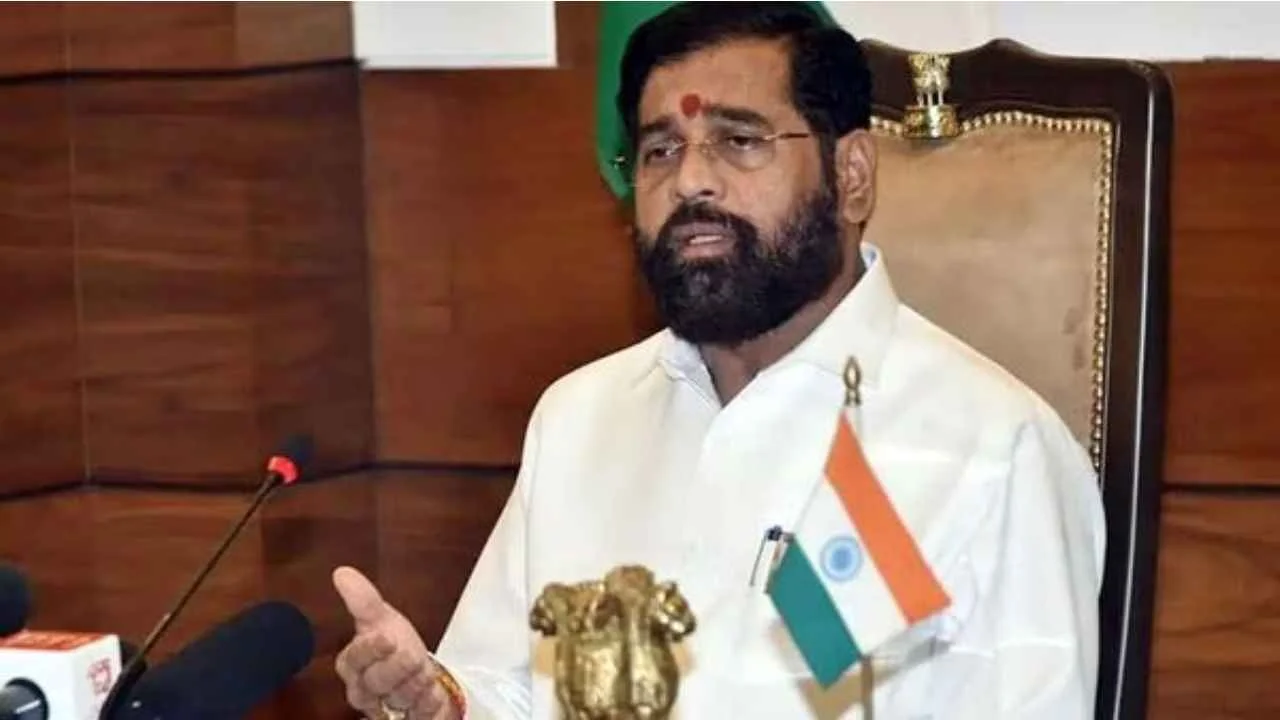
Maharashtra Deputy Chief Minister and Shiv Sena chief Eknath Shinde has defended party spokesperson Shaina NC after a photograph featuring Shiv Sena founder Bal Thackeray was torn during a protest against Congress leader Sonia Gandhi’s memoir.

The incident triggered a political row after Shaina was seen tearing a paper containing a photograph of Bal Thackeray striking an effigy of Congress leader Mani Shankar Aiyar with a slipper. Opposition leaders accused her of insulting the late Shiv Sena founder.

Shaina and leaders of the Eknath Shinde-led Shiv Sena, however, said the photograph was torn unintentionally and that the portion showing Mani Shankar Aiyar was the one that was ripped.

What Eknath Shinde said

After summoning Shaina NC for an explanation, Shinde defended her and rejected the allegation that Bal Thackeray’s image had been deliberately disrespected.

Shinde said the photograph showed Bal Thackeray striking an effigy of Mani Shankar Aiyar with a slipper and claimed that it was Aiyar’s face that was torn, not Bal Thackeray’s.

He also said Bal Thackeray was revered by Shiv Sainiks and that no party worker could imagine insulting him.

Shaina had earlier maintained that she had torn the portion showing Aiyar and denied deliberately disrespecting Bal Thackeray. She also warned that those spreading what she described as a false narrative could face legal action.

How the controversy started

The Shinde-led Shiv Sena held a protest in Mumbai against the distribution of Sonia Gandhi’s memoir, Belonging: A Journey of Love.

Party leaders, including Shaina NC, Sanjay Nirupam and Anand Dubey, tore pages from copies of the book. They objected to passages concerning Hindutva ideologue Veer Savarkar and demanded that the publisher remove passages on pages 201 and 443.

During the protest, Shaina tore a paper containing the photograph of Bal Thackeray hitting an effigy of Aiyar. After Sanjay Nirupam pointed out the mistake, she was seen placing the partly torn photograph under other papers.

The incident was subsequently seized upon by the Uddhav Thackeray-led Shiv Sena and Congress, which accused the Shinde faction of disrespecting Bal Thackeray.

Opposition attacks Shaina NC

Shiv Sena (UBT) MP Sanjay Raut criticised the incident and accused the Shinde faction of insulting Bal Thackeray. UBT corporators also raised the issue at the Brihanmumbai Municipal Corporation and demanded action against Shaina.

Congress leaders also condemned the incident. Mumbai Congress president Varsha Gaikwad said the episode had hurt the sentiments of Shiv Sainiks who respected Bal Thackeray. 

The Shinde faction, meanwhile, maintained that the controversy was being used to create a political narrative against the party.

The photograph’s 2004 background

The photograph at the centre of the controversy dates to August 27, 2004, when Bal Thackeray launched a protest near Mumbai’s Shivaji Park against then Union Petroleum Minister Mani Shankar Aiyar over his alleged remarks about Veer Savarkar.

Thackeray had struck an effigy of Aiyar with a slipper during the protest, which was known as the “Jode Mara” agitation.

The old photograph was brought to the latest protest as part of the Shinde-led Sena’s attack on the Congress and its alliance with the Uddhav Thackeray faction.

Continue Reading

India News

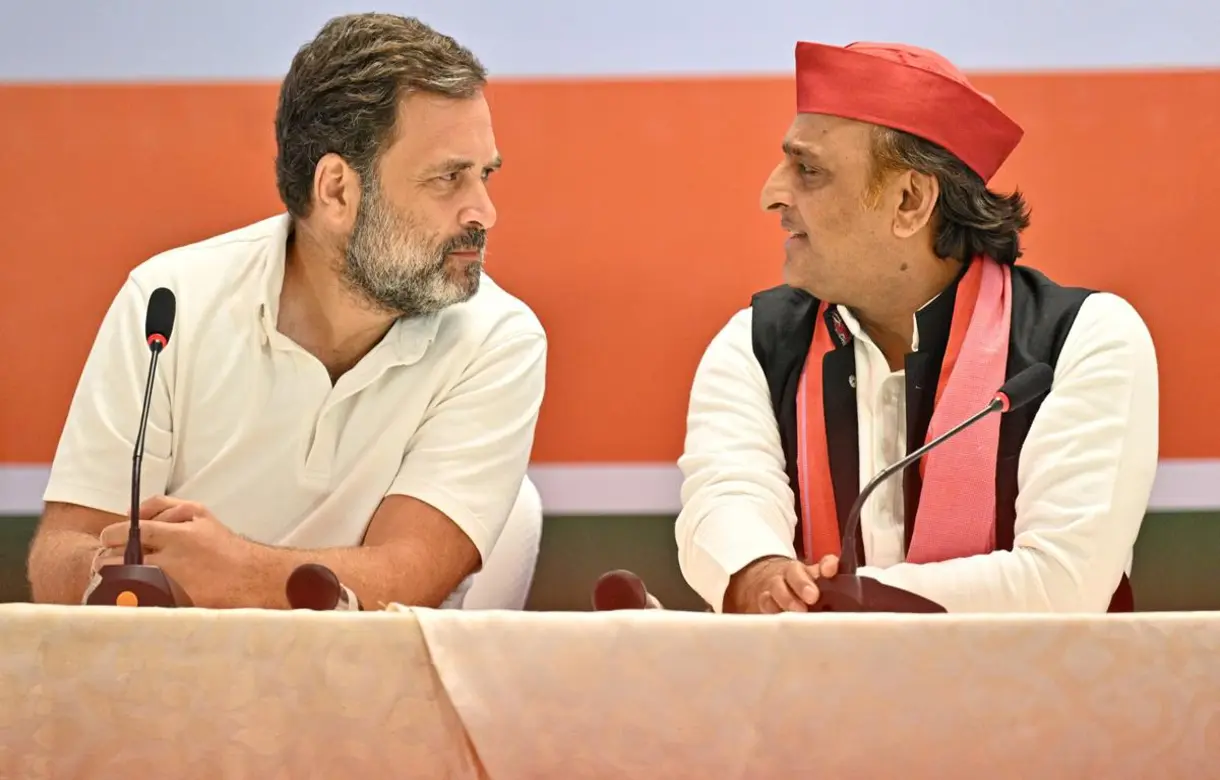
Samajwadi Party tells Congress no deal on 334 UP seats it won or finished second in

The Samajwadi Party is reportedly unwilling to negotiate over 334 Uttar Pradesh Assembly seats where it either won or finished second in 2022, leaving a much smaller pool for Congress.
Published

on

Rahul akhilesh

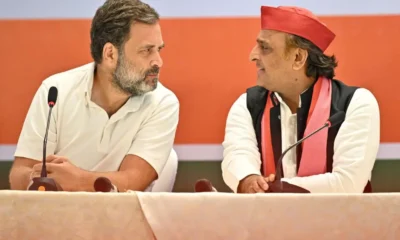
The Samajwadi Party is taking a firm position in its seat-sharing negotiations with the Congress ahead of the 2027 Uttar Pradesh Assembly election, indicating that it does not want to give up seats where it either won or finished second in the 2022 polls.

According to the current discussions, the SP won 111 Assembly seats in 2022 and finished as the runner-up in another 223. The party’s position effectively puts 334 constituencies outside its proposed negotiations with the Congress.

The development comes as both parties prepare for further discussions on seat sharing. Congress has sought a substantially larger share, with its reported list containing 181 seats. The SP, however, is arguing that the focus should be on candidates and constituencies with the strongest prospects of defeating the BJP rather than simply dividing seats by number.

Why the SP is resisting Congress’s demand

The SP’s calculation is based largely on its performance in the 2022 Assembly election. Of the 403 seats in the Uttar Pradesh Assembly, the party won 111 and was second in 223, according to the latest report.

This leaves 69 seats outside those two categories. The SP’s position, therefore, could significantly restrict the number of constituencies available to Congress if the calculation becomes the basis of the final arrangement.

The Congress, meanwhile, has argued that its political position has changed since 2022. It won six of the 17 Lok Sabha seats it contested in Uttar Pradesh in the 2024 general election and is seeking a larger role in the upcoming Assembly contest.

Congress has sought 181 seats

The seat-sharing dispute intensified after Congress submitted a list of 181 constituencies it wants to contest, according to reports. Several of these seats are either represented by SP MLAs or fall in constituencies where the SP has a strong electoral position.

The SP has questioned whether Congress can justify such a large demand on the basis of its current organisational and electoral strength in Uttar Pradesh.

Earlier, SP chief Akhilesh Yadav had indicated that the key consideration would be the ability of candidates to win rather than simply the number of seats being demanded.

Amethi and Rae Bareli among points of contention

The negotiations are also expected to involve constituencies linked to the Amethi and Rae Bareli Lok Sabha seats.

Congress has won both Lok Sabha constituencies, with Rahul Gandhi representing Rae Bareli and KL Sharma representing Amethi. However, several Assembly segments under these parliamentary constituencies are currently held by the SP or were won by other parties in the 2022 Assembly election.

The SP’s position is that existing electoral strength and the presence of its sitting MLAs should carry weight during seat allocation. Congress, on the other hand, is expected to press its claim based on its recent Lok Sabha performance and its political position in these areas.

Final seat-sharing formula is yet to be decided

Despite the differences over the number and selection of constituencies, the alliance has not been formally ruled out.

The two parties are expected to hold further discussions, with senior leaders from both sides involved in the negotiations. The final seat-sharing arrangement will ultimately require agreement between the top leadership, including Akhilesh Yadav and the Congress leadership.

For now, the SP’s message is that it does not want to surrender constituencies where it already has a proven electoral base. The Congress, meanwhile, is seeking to use its improved performance in the 2024 Lok Sabha election to negotiate a larger share for the 2027 Assembly contest.

Continue Reading

India News

Azam Khan walks out of jail after getting interim bail in money laundering case

Samajwadi Party leader Azam Khan walked out of Dasna jail after completing bail formalities in the money-laundering case filed by the Enforcement Directorate.

Published

on

Azam Khan

Samajwadi Party leader Azam Khan walked out of Dasna jail in Ghaziabad on Wednesday after completing the formalities for his release on interim bail in a money-laundering case filed by the Enforcement Directorate.

The Allahabad High Court had granted the 78-year-old politician interim bail on Tuesday. The court said there appeared to have been non-compliance with mandatory provisions governing his arrest under Article 22(1) of the Constitution and Section 19 of the Prevention of Money Laundering Act (PMLA).

Khan was arrested by the ED on October 31, shortly after he had stepped out of Rampur district jail on bail in another case. He was subsequently lodged in Dasna jail.

Why Azam Khan got interim bail

The Allahabad High Court’s order came after Khan challenged his arrest and subsequent custody in the ED case.

The court observed prima facie that the mandatory procedure under Article 22(1) and Section 19 of the PMLA had not been strictly followed at the time of his arrest. It also noted concerns over whether the grounds of arrest had been supplied to Khan in writing before he was produced for remand.

The court directed his release on a personal bond with two sureties of an equal amount, subject to the satisfaction of the Chief Judicial Magistrate in Ghaziabad. The next hearing in the case is scheduled for December 10.

Supreme Court refuses to stay interim bail

The ED subsequently approached the Supreme Court challenging the High Court’s interim bail order.

On Wednesday, the Supreme Court refused to stay Khan’s release on interim bail. The bench said the ED’s challenge would be listed for hearing on Thursday, November 19.

What is the money laundering case against Azam Khan?

The ED’s investigation is linked to the Maulana Mohammad Ali Jauhar Trust and allegations concerning government funds, land acquisition and the construction of Mohammad Ali Jauhar University in Rampur. Khan founded and controls the trust and is the honorary chancellor of the university.

The ED had arrested Khan under the PMLA on October 31 and sent him to judicial custody. The agency’s investigation was initiated in connection with multiple FIRs registered by Uttar Pradesh Police in 2019 over alleged forcible occupation of agricultural land for the university.

The interim bail order provides Khan temporary relief in the money-laundering case; it does not amount to an acquittal or a final decision on the allegations against him.

Continue Reading

Trending

© Copyright 2022 APNLIVE.com