
India News
PM Modi slips on unemployment and price rise, will not get majority if polls held now: Survey


An opinion poll by India Today-Karvy Insights says that the BJP, unlike 2014 Lok Sabha elections, would not muster a majority on its own if polls are held now.
Unemployment, price rise, and corruption remain the three biggest issues of concern for Indians, found the survey and all three seem to have become bigger concerns in the last six months.
The Mood Of The Nation (MOTN) survey, released on Saturday, 18 August, says the BJP-led NDA would be back in power, but barely so, if elections were held today.
The Congress-led United Progressive Alliance may not be able to fulfil its goal of displace the Modi-Shah led BJP, though it makes significant gains.
While the BJP will not fall short of getting a majority, it will remain the single-largest party with 245 seats (it won 282 in the 2014 Lok Sabha polls), 27 less than the 272 required for simple majority, making it dependent on allies.
According to the biannual poll, the NDA would be just nine ahead of the Lok Sabha halfway mark with 281 seats.
The Congress, on the other hand, would nearly double its 2014 tally by winning 83 seats.
The UPA would win 122 seats while ‘Others’ would pick up the remaining 140.
In terms of the vote share, the NDA would win 36 per cent of votes polled while the UPA would win 31 per cent. ‘Others’ will manage to get more vote share than UPA at 33 per cent.
In the 2014 Lok Sabha elections, BJP crossed the 272-mark comfortably on its own, winning 282 seats, a gain of 166 from the previous election. The NDA had a total of 336 seats in the Lower House of the Parliament. For the Congress, it was one of their worst defeat and managed to win a paltry 44 seats with just 19 per cent vote share.
The NDA’s combined vote share in 2014 was 38.5 per cent and the UPA’s was just under 23 per cent. That leaves out nearly 39 per cent — or a chunk roughly equal to the NDA’s — for all others.
The survey, conducted seven months ahead of the scheduled general assembly elections, takes into account three possible scenarios, analysed The Quint.
Scenario 1: UPA and NDA as in 2014
In scenario 1, the allies under both the coalitions remain the same as they were in 2014, without any new equations coming into play.
Here, the UPA, sans its major allies of BSP, SP and TMC, is predicted to get 122 seats, as against the NDA’s mammoth 281 seats. Others get 140 seats.
As far as vote share is concerned, the UPA is pegged at 31 percent, while the NDA is at 36 percent and the others at 33 percent.
Scenario 2: UPA Allies with BSP, SP and TMC
A scenario in which the opposition gets its act together and forms a ‘mahagathbandhan’ consisting mainly of the Congress, the Trinamool Congress, the Samajwadi Party, the Bahujan Samaj Party and the Janata Dal (Secular).
Such a coalition could win as many as 224 seats , just four behind the NDA whose tally will be down to 228 seats. Others get 91 seats.
The BJPs own tally would drop to 194 seats and though it will still be the single-largest party, it will be heavily dependent on its allies and breakaway parties to form a government.
Modi’s credibility as BJP’s prime vote-catcher would get severely dented in such a case and cast doubts over his acceptability as prime minister by the NDA allies. Modi himself may not be inclined to rule a gaggle of parties as he may balk at running a coalition where his writ would not run unchallenged as it does now.
As far as vote share is concerned, the UPA is at 41 percent, far ahead of the NDA which is at 36 percent, while others are expected to get 23 percent.
The survey pegs the reason behind the UPA alliance getting lesser seats despite a far higher vote share to the fact that the BJP vote base is concentrated at specific regions like the north, west and the north-west.
Scenario 3: NDA and its Southern Allies
In this scenario, the NDA placates its new alliance partners in the south – AIADMK in Tamil Nadu and the YSR Congress in Andhra Pradesh.
With those allies in tow, the NDA+ is likely to garner 255 seats, while the UPA is expected to get 242 seats.
However, if TRS and BJD join the NDA in a post-poll alliance, the number could spike up to 282 seats.
In all scenarios, the NDA alliance is ahead of the UPA as far as seat share is concerned.
The survey further predicts that to up its chances in the final contest, the Congress will have to win in two of three upcoming state elections – Madhya Pradesh, Rajasthan and Chhattisgarh.
The survey found Prime Minister Narendra Modi continues to get the highest rating as prime ministerial candidate, with 49 percent polling – but he has slipped four points from January 2018, when he was favoured by 53 percent of those surveyed and has dropped a significant 16 percent from January 2017’s 65 percent.
The survey shows that Rahul Gandhi‘s popularity is on the rise, with his rating moving up steadily from a low of 10 per cent in the January 2017 MOTN to 22 percent in January 2018 and 27 per cent this time. The gap between Modi and him is still a large 22 percentage points, but it indicates that Rahul, as Congress president, is emerging as a challenger.

- From India Today
None of the BJP leaders feature in the top three list of best chief ministers in the MOTN survey. While TMC supremo Mamata Banerjee topped the poll, Bihar CM Nitish Kumar and Delhi CM Arvind Kejriwal were ranked third and fourth.
Manohar Parrikar, Vijay Rupani, ML Khattar, Devendra Fadnavis and Amarinder Singh are among the chief ministers who have gotten a lowly two per cent popularity mark in the poll.
An overwhelming 49 per cent of the respondents believe that the Opposition unity would translate into an electoral alliance against BJP in the 2019 Lok Sabha elections.
Moreover, the India Today poll shows Rahul Gandhi is the best person to lead such an alliance. He was backed by 46% of respondents.
However, in the case of a non-BJP, non-Congress front, Mamata Banerjee has the upper hand to lead the alliance, according to the survey.
Among the ministers in the Narendra Modi cabinet, Arun Jaitley has emerged as the best performer, according to the survey. Rajnath Singh and Sushma Swaraj follow close behind while Nitin Gadkari and Nirmala Sitharaman rank fourth and fifth, respectively.
Asked about Modi’s performance, 55 per cent of respondents voted favourably. However, this is a drop of six percentage points compared to MOTN January 2018. A similar percentage of respondents (56 per cent) are satisfied by the NDA government’s performance – a sharp drop from its peak of 71 per cent in the January 2017 MOTN.
 Unemployment, price rise, and corruption remain the three biggest issues of concern for Indians. In fact, all three are issues that seem to have become bigger concerns since the January MOTN poll. Unemployment tops the list and 34 per cent of the respondents feel it is a burning issue, five percent more than in January 2018.
One of the biggest policy decisions of the Narendra Modi government, the pain of the shock November 2016 demonetisation exercise hasn’t gone away for India, according to MOTN July 2018. Nearly three-fourths of the respondents said that demonetisation caused more pain than gain; the number (73 per cent) is the same as what it was in MOTN January 2018 but is a steep rise from last year’s MOTN (61 per cent).
The India Today Group-Karvy Insights Mood of the Nation (MOTN) poll was conducted by Karvy Insights Limited. A total of 12,100 interviews were conducted (68% in rural & 32% in urban areas) across 97 parliamentary constituencies in 194 assembly constituencies in 19 statesAndhra Pradesh, Assam, Bihar, Chhattisgarh, Delhi, Gujarat, Haryana, Jharkhand, Karnataka, Kerala, Madhya Pradesh, Maharashtra, Odisha, Punjab, Rajasthan, Tamil Nadu, Telangana, Uttar Pradesh and West Bengal.


India News
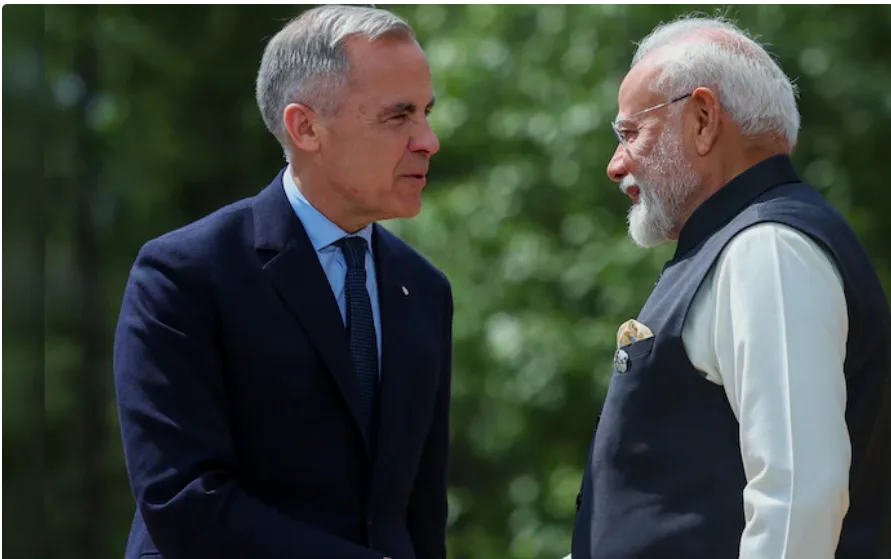
PM Modi speaks to Mark Carney as India and Canada push to strengthen ties
Prime Minister Narendra Modi held a telephone conversation with Canadian Prime Minister Mark Carney on October 13, with both leaders agreeing to strengthen India-Canada ties and pursue concrete outcomes across key areas of their strategic partnership.

India News
CJP leaders Saurav Das, Ashutosh Ranka, Ajinkya Shinde sent to 5-day judicial custody
Three CJP leaders, Saurav Das, Ashutosh Ranka and Ajinkya Shinde, were placed under preventive arrest following a protest at Delhi’s Jantar Mantar over Chief Election Commissioner Gyanesh Kumar.

India News
BJP focuses on religion as opposition pushes BDM strategy in UP
The BJP is emphasising religious issues ahead of the Uttar Pradesh Assembly elections, while opposition parties are seeking to consolidate Backward, Dalit and Minority voters. Recent exchanges involving Yogi Adityanath, Akhilesh Yadav and Asaduddin Owaisi have added to the political contest over the state’s electoral narrative.


Supreme Court stays defamation case against Rahul Gandhi over PM Modi remarks

Rahul Gandhi hosts high tea for INDIA bloc after Gyanesh Kumar protests

L Murugan quits Union ministry to strengthen BJP in Tamil Nadu

Amit Shah attacks Rahul Gandhi over Congress poll losses, questions SIR row

BJP focuses on religion as opposition pushes BDM strategy in UP

PM Modi speaks to Mark Carney as India and Canada push to strengthen ties

S Jaishankar says India is a natural option for Russia amid Europe tensions

CJP leaders Saurav Das, Ashutosh Ranka, Ajinkya Shinde sent to 5-day judicial custody
BJP focuses on religion as opposition pushes BDM strategy in UP
L Murugan quits Union ministry to strengthen BJP in Tamil Nadu

Afghan Men Try To Hang With The Jet Engine Of The Aircraft in Kabul- Afghanistan News – Kabul News
Trending Top 10 News: 10000 Crore Fine on Flipkart, Apple to Launch Unique Feature, Hdfc Bank Job Ad

Trending Top 10 News: Nokia 6310, Apple sales, Bachpan ka Pyar Video Kid, Dainik Bhaskar IT Raid

Trending Top 10 News: Canada bans Indian flights, Rain in Delhi NCR, AIMIM Twitter hacked, Raj Kundra case

Trending Top 10 News: Shein India, Apple New Service, Pocket Oxygen, Oppo Launched New Phone
-
 India News22 hours ago
Supreme Court stays defamation case against Rahul Gandhi over PM Modi remarks
-
 India News14 hours ago
Rahul Gandhi hosts high tea for INDIA bloc after Gyanesh Kumar protests
-
 India News14 hours ago
L Murugan quits Union ministry to strengthen BJP in Tamil Nadu
-
 India News14 hours ago
Amit Shah attacks Rahul Gandhi over Congress poll losses, questions SIR row
-
 India News13 hours ago
BJP focuses on religion as opposition pushes BDM strategy in UP
-
 India News2 hours ago
CJP leaders Saurav Das, Ashutosh Ranka, Ajinkya Shinde sent to 5-day judicial custody
-
 Latest world news2 hours ago
S Jaishankar says India is a natural option for Russia amid Europe tensions
-
 India News1 hour ago
PM Modi speaks to Mark Carney as India and Canada push to strengthen ties
