English हिन्दी
Connect with us

India News

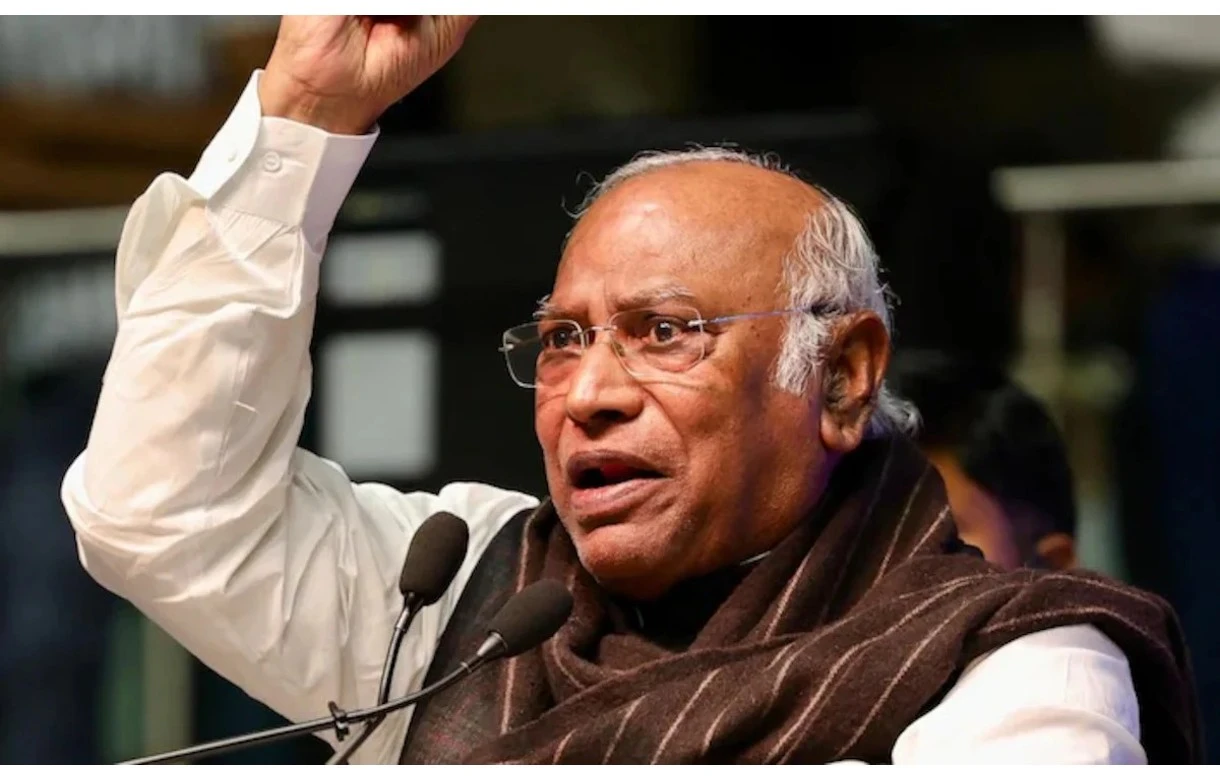
RSS should be banned; PM Modi ‘insulting’ Patel’s legacy: Kharge

Published

on

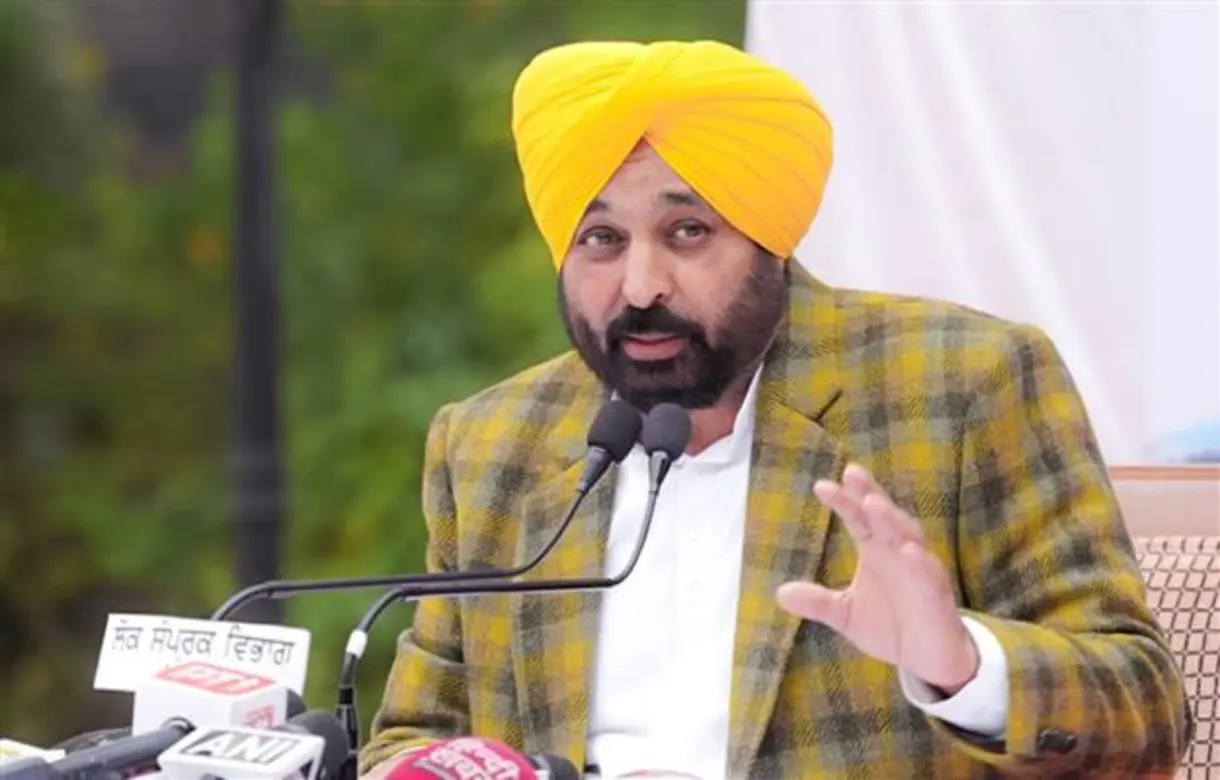
Congress president Mallikarjun Kharge on Friday said that in his personal opinion the RSS should be banned as most law and order problems in the country are arising because of the BJP-RSS.

He also charged that Prime Minister Narendra Modi has insulted the legacy of Sardar Vallabhbhai Patel by allowing government employees to be associated with the Sangh.

Kharge hit back at Prime Minister Modi after he attacked the party on Patel’s birth anniversary, and cited Patel’s remarks criticising the RSS following the assassination of Mahatma Gandhi in 1948.

Responding to a question on banning the RSS again, Kharge said, “It is my personal opinion and I will say it openly, it should be done” as most of the issues and law and order problems are all arising because of the BJP-RSS.

He said what Patel put forth before us, the prime minister and Home Minister Amit Shah should pay heed to them.

Asked about government lifting the ban on government employees associating with the RSS, Kharge said when Patel himself banned the RSS, “then naturally he is disrespecting our Vallabhbhai Patel ji, who himself gave all the reasons why he banned the RSS and there is no ambiguity.”

The Congress chief said Patel wanted to bring in unity and peace and he fought for it.

“But after bringing unity in the country, anyone who tries to break that unity should be taught a lesson. And, you know who are those people who are breaking that unity,” he said.

Asked further if this would create an atmosphere of disunity, Kharge said, “I clearly feel that something which had ended, this government has revived that and these people will be responsible for whatever happens in the country”.

He said till 2024, nothing happened and now that it is not good for the country to once again “awaken the people”.

“This is not good for the country and it is like tasting poison, whose result is certain death. There is no need to taste poison once again. The things being done by Modi ji are not good for the country,” he said.

Noting that today is the birth anniversary of Patel and death anniversary of former prime minister Indira Gandhi, the Congress president said these two great leaders –“ “iron man” and “iron lady” — made a big contribution to the country and strived to maintain unity.

This is the history of the Congress and its contribution, Kharge said at a press conference here.

Kharge cited a letter written by Patel to Syama Prasad Mookerjee in which the then home minister said the RSS had created an atmosphere that led to the tragedy of Mahatma Gandhi’s assassination.

They always tried to portray a rift between India’s first prime minister Jawaharlal Nehru and Patel when they had great ties and both had praised each other, Kharge said.

Nehru hailed Patel for shaping India’s unity and Patel called Nehru an ideal for the country.

Kharge recalled a letter written by Patel to Mukherjee on February 4, 1948, in which he said, “On Gandhiji’s death, the RSS members expressed such joy and distributed sweets, which further intensified the opposition. In these circumstances, the government had no choice but to take steps against the RSS.”

“While writing this letter to Mukherjee, he said — The report proves that the atmosphere created in the country due to the activities of the RSS and the Hindu Mahasabha is what led to Gandhiji’s assassination.”

Kharge’s remarks came after Prime Minister Modi said Sardar Patel wanted to unite the entire Kashmir, just as he did with other princely states, into India, but then PM Nehru did not allow it to happen.

Slamming the Congress, Modi said that the party inherited the slave mentality from the British who ruled India. The country is removing every trace of colonial mindset, he added.

Earlier on Patel’s 150th birth anniversary, Kharge paid him tributes and said he is a source of inspiration for them as he described him as “the great Iron Man of India” who wove the entire nation into the thread of unity and integrity.

“Pandit Nehru called him the ‘Architect of India’s unity’,” he said, adding that Patel was former Congress chief and the resolution on fundamental rights passed in the Karachi Congress under his leadership is the soul of the Indian Constitution.

“Sardar Patel Saheb resides in our hearts, and his ideas, which emphasise mutual harmony and brotherhood, are an inseparable part of the Congress party’s ideology,” he said.

Rahul Gandhi also paid rich tributes to the country’s first home minister.

“By weaving India into a single thread, he laid a strong foundation for the unity and integrity of the nation – his indomitable courage, foresight, and ideals will forever guide us,” Gandhi said.

Born in Nadiad, Gujarat, in 1875, Patel was a pivotal figure in India’s struggle for Independence. He died in 1950.

—PTI

India News

TMC faces fresh turmoil as signature controversy exposes internal divisions in Bengal

A political controversy has erupted in West Bengal after two TMC MLAs alleged their signatures were used without consent on a letter endorsing Sobhandeb Chattopadhyay as Leader of Opposition, leading to their expulsion from the party.

Published

on

Mamata Banerjee

The Trinamool Congress (TMC) has found itself at the centre of a fresh political controversy after allegations emerged that signatures of some party legislators were used without their consent on a letter related to the appointment of the Leader of Opposition in the West Bengal Assembly.

The row intensified after two TMC MLAs, Ritabrata Banerjee and Sandipan Saha, reportedly objected to their signatures appearing on a letter endorsing senior party leader Sobhandeb Chattopadhyay for the post of Leader of Opposition. The legislators alleged that they had not signed the document.

Allegations trigger political confrontation

The controversy gained prominence after opposition leader Suvendu Adhikari raised the issue and questioned the authenticity of the signatures submitted to the Assembly Secretariat. The allegations have fuelled a political confrontation between the ruling party and the opposition.

Authorities are examining the matter, with the authenticity of the disputed signatures becoming a key focus of the ongoing inquiry. The investigation is expected to determine whether any procedural irregularities occurred during the submission of the endorsement letter.

TMC expels two MLAs

Amid the controversy, the Trinamool Congress expelled Ritabrata Banerjee and Sandipan Saha from the party. TMC leaders cited anti-party activities as the reason for the action, while the expulsions have further intensified debate around the signature dispute.

The development has brought internal disagreements within the party into public view and added to the political tensions surrounding the issue.

Inquiry continues

Officials are continuing to examine the allegations and related documents. The outcome of the inquiry is expected to clarify the circumstances under which the endorsement letter was submitted and whether any irregularities took place.

Continue Reading

India News

K Annamalai likely to quit BJP after declining Rajya Sabha offer, sources say

Former Tamil Nadu leader K Annamalai is set to exit the BJP after rejecting a Rajya Sabha seat offer. Sources indicate he will launch a new public movement following strategic disagreements over assembly election alliances.

Published

on

K Annamalai

Former Tamil Nadu party chief K Annamalai is expected to resign from the Bharatiya Janata Party following a scheduled meeting with party president Nitin Nabin in Delhi. According to media sources, the former Indian Police Service (IPS) officer believes that his growth and opportunities within the national party have reached a dead end.

The developments follow a reported offer by the leadership to secure a Rajya Sabha seat for him, which he chose to decline. Instead of continuing his journey within the party, he is highly anticipated to introduce a fresh public movement in the state. This grassroots initiative will focus on mobilizing a broad network of volunteers and connecting with like-minded individuals across diverse professional and social spectrums. When questioned regarding the ongoing speculation about establishing his own political platform, he responded, “Please wait. We will sit down and talk in two days.”

The root of tactical disagreements

The impending departure highlights a growing divide concerning the party’s electoral approach leading up to the 2026 state assembly polls. He had strongly advocated for the party to contest the elections independently, relying on the significant grassroots momentum built during his tenure. Conversely, the central leadership opted to resurrect its alliance with the AIADMK, seeking to unite opposition votes against the governing DMK.

This strategic pivot coincided with structural alterations in the state unit’s administration. Media reports indicate that AIADMK general secretary Edappadi K Palaniswami explicitly requested structural changes in leadership as a prerequisite for the partnership, leading to his replacement as the state president. Consequently, he did not contest the assembly elections or play an active role in the frontline campaigning. The alliance ultimately managed to secure just a single seat in the assembly elections.

A rapid political trajectory

He entered the political sphere in 2020 after stepping away from the civil services, quickly advancing through the local party hierarchy. He was appointed as the state vice-president shortly after his entry and ascended to the position of state president within a single year.

As the state chief, he became one of the most prominent faces for the party in a region traditionally dominated by regional Dravidian parties. Through extensive mass outreach programs, aggressive digital campaigns, and high-visibility public interactions, he substantially enhanced the national party’s presence in the state. Despite the momentum, his opposition to traditional alliances and subsequent exclusion from national organizational roles created friction, paving the way for his expected departure.

Continue Reading

India News

Western disturbance brings major relief from heatwave as mercury drops in Delhi-NCR

An active western disturbance over Rajasthan and central Pakistan has triggered heavy rain and thunderstorms, causing temperatures to plunge across Delhi-NCR and neighboring states.

Published

on

Delhi Rain

The intense heatwave sweeping across large parts of the country has officially abated, bringing much-needed respite to citizens. According to weather experts and the India Meteorological Department (IMD), a drastic drop in temperatures has kept the national capital significantly cooler than normal. On Sunday, Delhi recorded a maximum temperature of 35.8 degrees Celsius, which is 4.2 degrees below the seasonal average.

Western disturbance alters regional weather

Meteorologists have attributed this sudden shift to rain and thunderstorm activity triggered by an active western disturbance currently hovering over Rajasthan and central Pakistan. Media reports indicate that the city recorded 0.9 mm of rainfall in the 24 hours leading up to Saturday morning. While the current spell of rain is expected to weaken and move away gradually, leading to a slight rise in temperature from Monday, experts emphasize that no heatwave conditions are anticipated in Delhi during the first week of June.

Widespread rain across states; disruptions in hilly terrains

The impact of the changing weather systems is visible across multiple states. The IMD has forecast heavy rainfall, thunderstorms, and gusty winds reaching speeds of 40-50 kmph for Delhi-NCR, alongside localized heavy showers in Uttar Pradesh and Rajasthan. Furthermore, severe thunderstorm activity with squally winds up to 90 kmph has been predicted over northwest, central, and adjoining eastern regions of India.

In Gujarat, scattered to isolated rainfall and thunderstorms are projected over the next six days due to the active weather systems. Meanwhile, the southwest monsoon is making steady progress, with the weather office indicating its potential advancement into parts of Kerala and Tamil Nadu over the next three to four days.

While the plains enjoy a break from the scorching heat, the sudden weather transition caused temporary complications in the hill states. In Uttarakhand, a heavy downpour and adverse weather conditions led to the brief suspension of the Kedarnath Yatra, leaving hundreds of pilgrims stranded before the restrictions were lifted later in the day. Conversely, the cooler mountain breeze and pre-monsoon showers have triggered a massive influx of tourists to Shimla, as people flock from high-temperature states like Gujarat to seek comfort in the hills.

Continue Reading

Trending

© Copyright 2022 APNLIVE.com