English हिन्दी
Connect with us

India News

Sardar Patel wanted to unite entire Kashmir with India, Nehru did not allow it: Modi

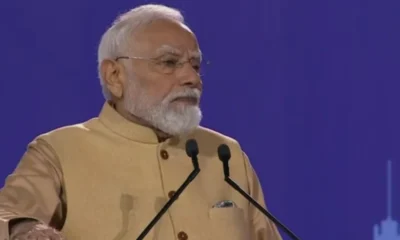
Prime Minister Narendra Modi said Sardar Vallabhbhai Patel wanted to unite the entire Kashmir into India, but Jawaharlal Nehru prevented it, adding that the country suffered for decades due to that mistake.

Published

on

PM Modi speech on sardar patel

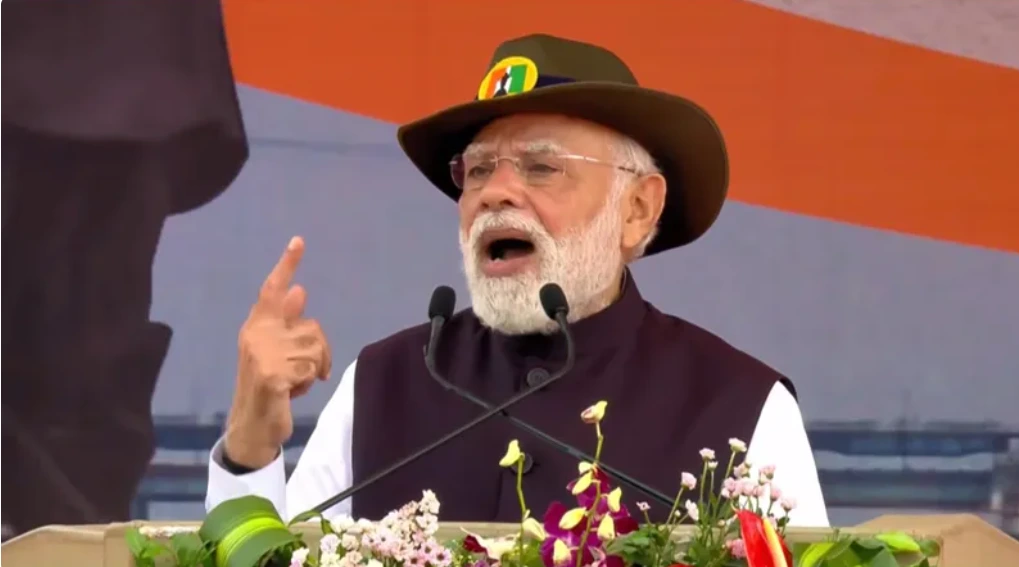
Prime Minister Narendra Modi on Friday said Sardar Patel wanted to unite the entire Kashmir, just as he did with other princely states, into India, but then PM Nehru did not allow it to happen.

“Sardar Patel believed that one should not waste time writing history but we should work hard to create history,” Modi said, addressing the gathering after the Rashtriya Ekta Diwas parade near the Statue of Unity in Gujarat’s Ekta Nagar.

“Sardar Patel wanted to unite the entire Kashmir, just as he did with other princely states. But Nehru ji stopped his wish from being fulfilled. Kashmir was divided, given a separate Constitution and a separate flag – and the nation suffered for decades because of Congress’ mistake,” Modi said.

The policies that Sardar Patel formulated, the decisions he took, created new history, the PM said.

“After Independence, the impossible task of uniting more than 550 princely states was made possible by Sardar Patel. The idea of One India, Excellent India, was paramount for him,” Modi said.

“Sardar Patel once remarked that his greatest joy came from serving the nation. I want to convey to the people of our country that there is no greater source of happiness than dedicating oneself to the service of the nation,” he said.

“The country has decided to have a decisive fight against infiltrators. On Rashtriya Ekta Diwas, we should pledge to remove each and every infiltrator from the country,” Modi said.

“Today, the unity and internal security of our nation face serious threat from infiltrators. For decades, infiltrators have been entering our country and disrupting its demographic balance,” Modi said.

Highlighting the work against Naxal terror, Modi said his government will not stop till Naxalism and Maoism is rooted out of the country.

Slamming the Congress, Modi said that party inherited “slave mentality” from the British who ruled India. The country is removing every trace of colonial mindset, he added.

“Every thought or action that weakens the unity of our nation must be shunned by every citizen. This is the need of the hour for our country,” the prime minister said.

Before his speech, Modi reviewed the National Unity Day parade in which contingents from police and paramilitary forces took part.

Women officers commanded all the contingents, including paramilitary forces like BSF, CISF, ITBP, CRPF and SSB, and police contingents from Jammu & Kashmir, Punjab, Assam, Tripura, Odisha, Chhattisgarh, Kerala, Andhra Pradesh, Maharashtra and Madhya Pradesh.

A contingent of the National Cadet Corps (NCC) also participated in the parade.

The parade featured 16 BSF personnel who were awarded gallantry medals for their participation in Operation Sindoor.

The parade showcased a marching contingent of Indian breed dogs from the BSF, including the celebrated Mudhol hound Riya which recently won the All-India Police Dog Competition.

Rampur hounds and Mudhol hounds demonstrated their skills at the event, which included a spectacular air show by the Surya Kiran team of the Indian Air Force.

The Surya Kiran Aerobatic Team was formed in 1996 and is among the very few nine-aircraft aerobatics teams in the world, and the only one of its kind in Asia.

The parade also featured a motorcycle daredevil show by Assam Police, and a camel mounted contingent and band by the BSF.

Ten tableaux from various states and union territories, including the NSG and NDRF, reinforce the theme of unity in diversity.

—PTI

India News

Centre caps airfares to curb surge amid IndiGo crisis

To protect passengers from soaring fares amid IndiGo’s operational crisis, the Centre has introduced temporary airfare caps and ordered expedited refunds for cancelled flights.

Published

on

As operational disruptions at IndiGo entered their fifth day, the Civil Aviation Ministry moved to prevent steep ticket price hikes by imposing fare caps across affected routes. The decision comes as hundreds of flights were cancelled, leaving passengers stranded at airports nationwide.

Ministry steps in to prevent “opportunistic pricing”

The ministry said it had taken note of unusually high fares being charged by some airlines during the ongoing travel disruption. Invoking regulatory powers, it ordered all carriers to follow newly prescribed fare caps until flight schedules stabilise.

According to the statement, the move aims to prevent any exploitation of travellers—especially senior citizens, students and those undertaking urgent medical travel—during the crisis. Airlines and online travel platforms will continue to be monitored through real-time fare data.

IndiGo told to clear refunds by Sunday evening

In a separate direction, the ministry asked IndiGo to ensure all refunds for cancelled or disrupted flights are processed by 8 pm on December 7. It also instructed airlines not to impose rescheduling fees for passengers whose plans were affected.

Hundreds of cancellations as pilot shortage triggers meltdown

IndiGo, which operates around 2,300 daily flights with a fleet of over 400 aircraft, has seen widespread cancellations due to a planning-related pilot shortage. Operational delays are expected to continue for several more days.

Scenes of severe inconvenience have unfolded at airports, with passengers reporting long waits, disrupted travel plans, and a lack of clarity from the airline.

IndiGo issues apology, promises gradual restoration

The airline apologised publicly, saying it understood the difficulties faced by passengers. IndiGo assured that refunds for cancelled flights would be processed automatically and added that full normalisation of domestic operations is likely between December 10 and 15, though recovery may take time due to the scale of disruption.

Minister claims crisis nearing resolution

Civil Aviation Minister Ram Mohan Naidu said the situation is “on the verge of getting resolved”. He noted that major metro airports such as Delhi, Mumbai and Chennai had cleared most backlogs, and that IndiGo would resume operations with limited capacity before gradually increasing flights.

Continue Reading

India News

Centre plans major crackdown on IndiGo amid mass cancellations

Published

on

The Centre is preparing strong action against IndiGo after widespread disruption triggered by the airline’s handling of new pilot rest rules, according to sources. With thousands of passengers stranded and over 500 flights cancelled on consecutive days, the government is now likely to seek the removal of CEO Pieter Elbers, alongside other stringent measures.

Government weighs removal of IndiGo CEO

Sources indicate that the airline may be asked to remove its chief executive following what officials view as poor management of revised duty and rest regulations for pilots. The developments led to severe operational breakdown across airports and sparked public outrage.

Heavy penalties and flight curbs under consideration

According to officials, an unprecedented crackdown is being prepared. This includes the possibility of a hefty financial penalty on the carrier, which commands nearly two-thirds of India’s domestic aviation market.

Authorities are also evaluating whether the number of flights permitted to IndiGo should be temporarily reduced, marking what could become the toughest action taken against any airline in recent years.

IndiGo representatives were summoned by the aviation ministry on Friday evening as the government sought explanations for the crisis and measures to restore order.

Continue Reading

India News

Lok Sabha clears bill to levy cess on pan masala and similar goods for health, security funding

The Lok Sabha has passed a bill to impose a cess on pan masala manufacturing units, aiming to create a dedicated revenue source for public health and national security initiatives.

Published

on

Nirmala Sitharaman

The Lok Sabha has approved the Health Security se National Security Cess Bill, 2025, paving the way for a new cess on pan masala manufacturing units. The legislation aims to generate dedicated funds for strengthening national security and improving public health, both areas identified as critical national priorities.

Bill aims to create predictable funding stream

Finance Minister Nirmala Sitharaman, responding to the debate before the bill was passed by voice vote, said that the cess will be shared with states because public health falls under the state list.

The new cess will be applied over and above the GST, based on production capacity and machinery used in units manufacturing pan masala and similar goods. The minister clarified that this cess will not affect GST revenue, and that pan masala already attracts the maximum GST slab of 40 per cent.

According to the bill text, the objective is to build a “dedicated and predictable resource stream” to support expenditure related to health and national security.

Sitharaman also mentioned that cess collection as a percentage of gross total revenue currently stands at 6.1 per cent, lower than the 7 per cent average between 2010 and 2014.

Continue Reading

Trending

© Copyright 2022 APNLIVE.com