English हिन्दी
Connect with us

India News

Sonam Wangchuk’s wife seeks urgent High Court hearing to shift him to private hospital

Gitanjali J Angmo has moved the Delhi High Court seeking Sonam Wangchuk’s transfer to a private hospital, alleging his continued stay at Safdarjung Hospital amounts to illegal detention.

Published

on

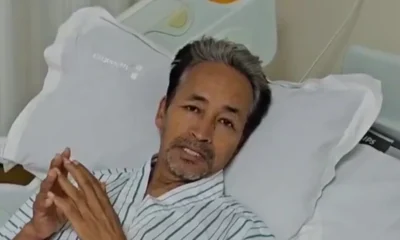
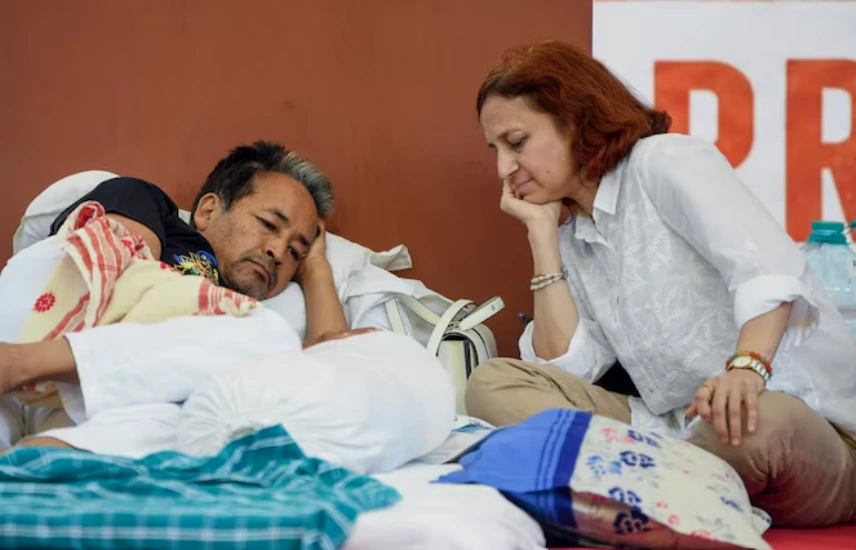
Activist Sonam Wangchuk’s wife, Gitanjali J Angmo, has approached the Delhi High Court seeking an urgent hearing to allow his transfer from Safdarjung Hospital to a private medical facility. The plea comes amid concerns over Wangchuk’s health after he spent weeks on a hunger strike demanding reforms in the education system.

According to Angmo, the government-run hospital has refused to discharge Wangchuk despite repeated requests from the family. She has also alleged that heavy police deployment inside the hospital has severely restricted their movement.

Wife alleges ‘illegal detention’ inside hospital

In a social media post, Gitanjali J Angmo claimed that hospital authorities have not permitted the family to shift Wangchuk to a private hospital of their choice.

She alleged that around 30 police personnel were stationed on their hospital floor, with more than 100 deployed across the premises, describing the situation as “illegal detention” rather than medical care.

Angmo said the restrictions have limited the family’s movement within the hospital and urged the court to intervene.

Shifted to hospital after hunger strike entered 21st day

Police shifted Sonam Wangchuk from the Jantar Mantar protest site to Safdarjung Hospital after his hunger strike entered its 21st day.

The activist has been on an indefinite fast since June 28 as part of the Cockroach Janta Party (CJP)’s protest against Union Education Minister Dharmendra Pradhan over the alleged NEET paper leak. His family says his health has deteriorated significantly during the protest.

The Delhi High Court is expected to consider the plea seeking his transfer to a private hospital.

India News

PM Modi inaugurates Chennai Metro Phase II stretch worth Rs. 4,900 crore

Prime Minister Narendra Modi inaugurated the Poonamallee–Vadapalani stretch of Chennai Metro Phase II, a project built at an estimated cost of Rs. 4,900 crore. The section is part of Corridor 4 of Chennai Metro Phase II and features a 3.7-kilometre double-decker structure.
Published

on

PM Modi

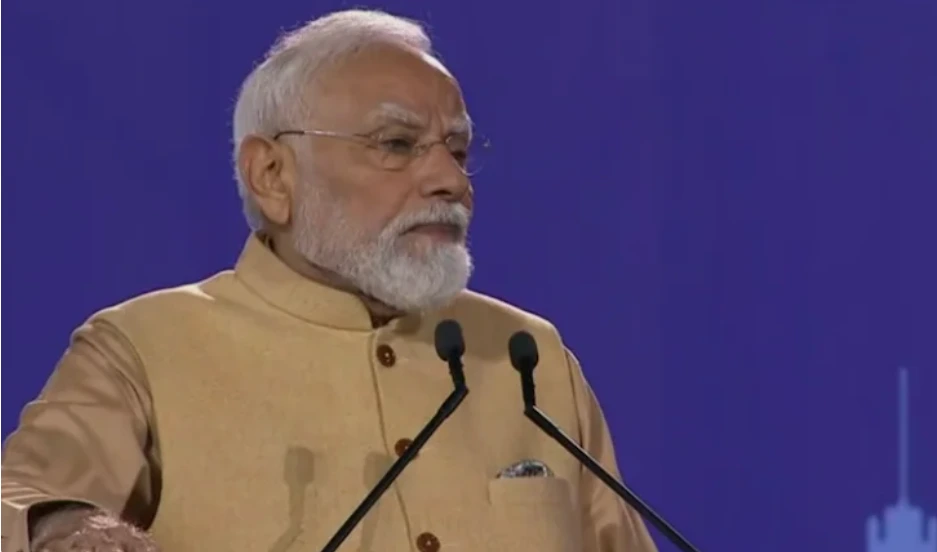
Prime Minister Narendra Modi on Sunday inaugurated a new stretch of Chennai Metro Phase II, connecting Poonamallee and Vadapalani. The project, constructed at a cost of around Rs. 4,900 crore, is aimed at improving public transport connectivity across parts of Chennai.

The inauguration took place on October 11, 2026, as part of the Prime Minister’s visit to Tamil Nadu, during which development projects worth more than Rs. 13,000 crore were scheduled to be launched or dedicated to the nation.

The newly opened section forms part of Corridor 4 of Chennai Metro Phase II. The corridor features advanced signalling systems designed to support driverless train operations. 

Chennai Metro Phase II to improve connectivity

The Poonamallee–Vadapalani stretch is expected to strengthen links between Chennai’s western suburbs and the city centre. The expansion is expected to improve connectivity and provide commuters with an additional public transport option. 

One of the corridor’s key infrastructure features is a 3.7-kilometre double-decker structure. The section is part of the broader Phase II expansion of the Chennai Metro Rail Project.

During his visit, Modi travelled on the Metro between Porur Bypass Station and Poonamallee Bypass Station and back. Tamil Nadu Chief Minister C Joseph Vijay was also present during the inauguration programme.

Other infrastructure projects in Tamil Nadu

The Metro inauguration formed part of a wider development programme involving projects worth more than Rs. 13,000 crore across Tamil Nadu.

The programme included national highway projects worth around Rs. 3,700 crore, along with railway infrastructure works valued at more than Rs. 750 crore. Other initiatives covered port infrastructure and development projects at Chennai Port, Kamarajar Port and V.O. Chidambaranar Port.

Modi was also scheduled to dedicate the Sudha Gopalakrishnan Brain Centre at IIT Madras and participate in the golden jubilee celebrations of Jaigopal Garodia Hindu Vidyalaya Matriculation Higher Secondary School in Chennai.

The Chennai Metro Phase II expansion is intended to improve urban connectivity and provide commuters with additional public transport options as the city develops its Metro network.

Continue Reading

India News

Supreme Court tells centre to remove Delhi barricades unless necessary

The Supreme Court has directed authorities to remove barricades unless absolutely necessary and withdraw restrictions imposed under Section 163 of the Bharatiya Nagarik Suraksha Sanhita near the courts. The observations came during a hearing concerning movement restrictions and detentions linked to the CJP protest in Delhi.
Published

on

Supreme Court on Delhi CJP Protest

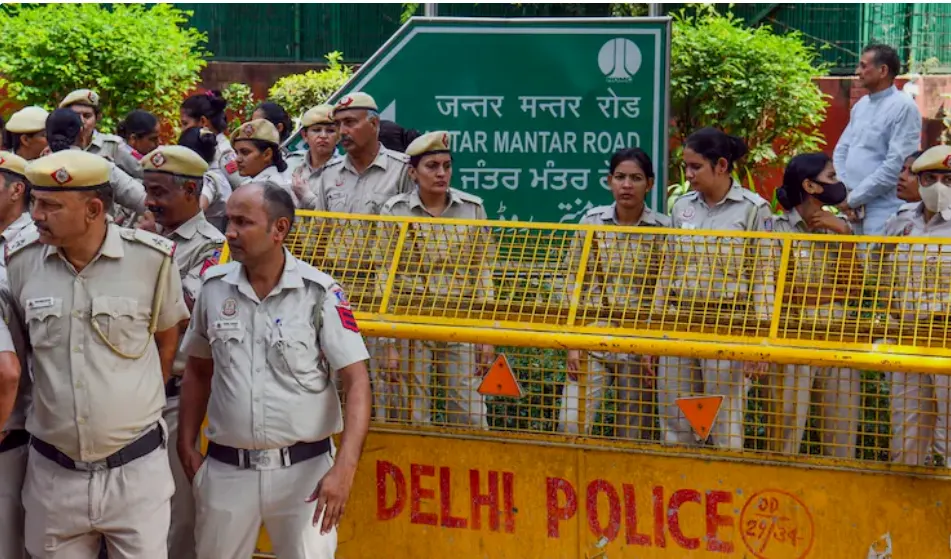
The Supreme Court has directed authorities to remove barricades in Delhi unless they are “absolutely warranted”, calling for the normalisation of public movement amid restrictions imposed in connection with the Cockroach Janta Party (CJP) protest.

The observations were made on Sunday, October 11, during a special sitting concerning petitions over restrictions linked to the planned protest. The court said that free movement should be normalised, subject to necessary regulation in situations involving public order.

Supreme Court On Section 163 Restrictions

The court also directed authorities to withdraw restrictions imposed under Section 163 of the Bharatiya Nagarik Suraksha Sanhita (BNSS), 2023, in and around the Supreme Court.

The bench of Justices Joymalya Bagchi and V Mohana said the restrictions should be lifted to ensure that access to the Supreme Court and other courts was not impeded.

The bench’s observations came amid concerns over the restrictions imposed in Delhi ahead of the CJP protest, including the closure of Metro stations and disruption to transport services.

Supreme Court Issues Notice Over Detentions

The hearing followed a contempt petition filed by lawyer Shailendra Mani Tripathi. The petition referred to the Supreme Court’s October 9 order concerning restrictions on Metro and train services ahead of the planned demonstration.

The court had previously directed the Centre to ensure there was no complete prohibition on the movement of Metro services and trains arriving in Delhi because of the protest.

The petitioner argued that Metro stations had remained closed despite the earlier order.

During Sunday’s hearing, the Supreme Court issued notices to authorities, including the Delhi Police, the Union Home Secretary and the Delhi Metro Rail Corporation (DMRC), seeking responses concerning the detentions and the circumstances surrounding them.

The court ordered the authorities to submit a compliance report by Tuesday.

Supreme Court Says Right To Protest Must Follow The Law

The bench also reiterated that people have a right to protest, but demonstrations must remain within the framework of applicable law.

“You have a right to protest, absolutely no quarrel on that but the process in which you protest has to be within the Police Act,” the Supreme Court said.

Justice Bagchi told the petitioner that the right to protest could not be treated as being beyond the law.

The court also heard concerns raised by lawyers and said they should not be prevented from carrying out their professional duties. At the same time, it reminded lawyers to protest peacefully and not instigate others.

Why Were Restrictions Imposed In Delhi?

The restrictions were imposed ahead of a planned CJP demonstration in the national capital. The party and opposition groups have been seeking the resignation of Chief Election Commissioner Gyanesh Kumar over alleged irregularities in the Special Intensive Revision (SIR) process.

The allegations concern the revision of electoral rolls. The court’s observations on barricades and movement restrictions came amid the wider dispute over the handling of the planned protest.

The Supreme Court’s position underscored the need to balance public order with the movement of citizens and access to courts. It also maintained that the right to protest must be exercised in accordance with the law.

Continue Reading

India News

BJP attacks Congress over protests, says India is not a banana republic

The BJP defended police action ahead of the Cockroach Janata Party’s protest in Delhi and criticised Rahul Gandhi and the Congress-led Opposition over demonstrations concerning alleged electoral fraud.

Published

on

Ravi Shankar Prasad

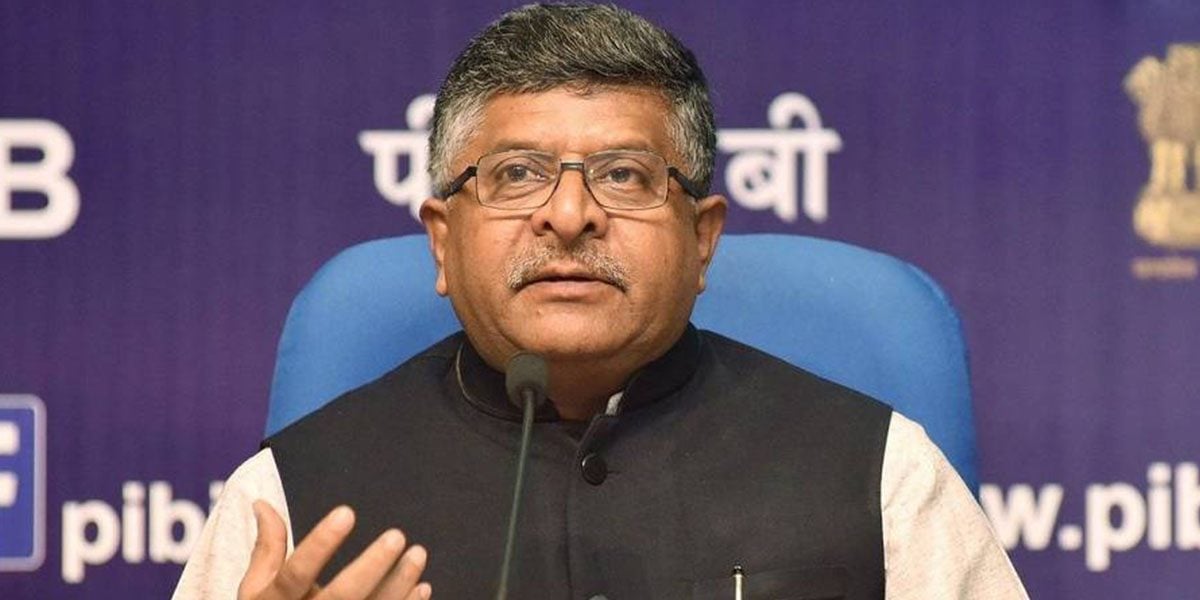
The Bharatiya Janata Party (BJP) on Saturday defended police action ahead of a protest called by the Cockroach Janata Party (CJP) in Delhi and launched an attack on Congress and Rahul Gandhi over demonstrations concerning alleged electoral fraud.

Addressing the issue, BJP spokesperson and MP Ravi Shankar Prasad defended the Special Intensive Revision (SIR) of electoral rolls and Chief Election Commissioner Gyanesh Kumar, whose resignation has been demanded by Opposition parties.

“India is not a banana republic,” Prasad said, asserting that the country had not bowed under Prime Minister Narendra Modi’s leadership and would not do so in the future.

He also described the developments surrounding the protests as an attempt to create anarchy, arguing that democratic institutions and Parliament, rather than street demonstrations, should determine the country’s course.

BJP accuses Congress of politicising street protests

Prasad said the BJP was not opposed to protests but accused Congress of using street demonstrations as a political weapon following electoral defeats.

He argued that the BJP-led National Democratic Alliance’s victories in bypolls in Assam, West Bengal and Puducherry on Friday demonstrated public support for the ruling alliance. He also claimed that the protests had failed to secure popular backing.

The BJP spokesperson’s remarks were directed primarily at Congress and Rahul Gandhi, although he did not specifically name CJP while criticising the protests.

Over 1,000 people detained amid Delhi protest crackdown

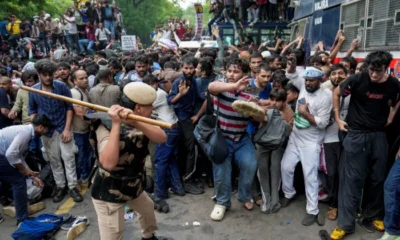
More than 1,000 people, including CJP founder Abhijeet Dipke and other leaders, were detained in Delhi on Saturday morning as police action prevented protesters from reaching the planned demonstration site at Jantar Mantar.

Four former chief ministers — Arvind Kejriwal, Mamata Banerjee, Pinarayi Vijayan and Manik Sarkar — were also detained during the day. All India Students’ Association president Neha Bora was among those detained.

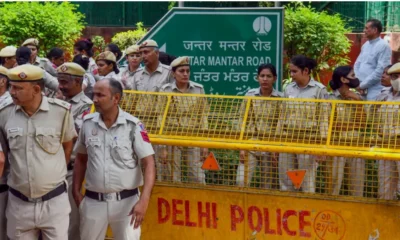
A heavy deployment of police and paramilitary personnel across the capital prevented protesters from reaching Jantar Mantar, with authorities citing the absence of permission for the demonstration.

The CJP protest was called over allegations of electoral fraud and concerns surrounding the conduct of the Election Commission. The allegations remain contested.

BJP responds to Rahul Gandhi’s remarks on the President

Prasad also criticised Rahul Gandhi over his statement following a meeting with President Droupadi Murmu on Friday.

Gandhi had said the President did not deny the Opposition’s allegations of “vote chori”, or vote theft. Prasad described Gandhi’s interpretation as an insult to the office of the President.

The INDIA bloc had submitted a memorandum outlining its demands concerning the Election Commission and the electoral process.

These included the resignation of Chief Election Commissioner Gyanesh Kumar, repeal of the 2023 law providing legal immunity to the Chief Election Commissioner and Election Commissioners, suspension of the SIR exercise, restoration of 13.3 crore voters whom the Opposition said had been deleted from electoral rolls, and a return to paper ballots.

The memorandum also sought the repeal of Assembly election results from the previous two years in constituencies where the Opposition claimed conclusive evidence of vote theft had been presented.

The BJP’s response comes amid a wider political confrontation between the ruling party and Opposition groups over electoral rolls, the Election Commission and allegations of irregularities in the electoral process.

Continue Reading

Trending

© Copyright 2022 APNLIVE.com