English हिन्दी
Connect with us

India News

Supreme Court tells centre to remove Delhi barricades unless necessary

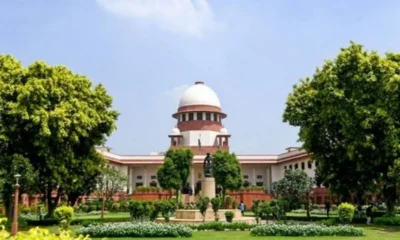
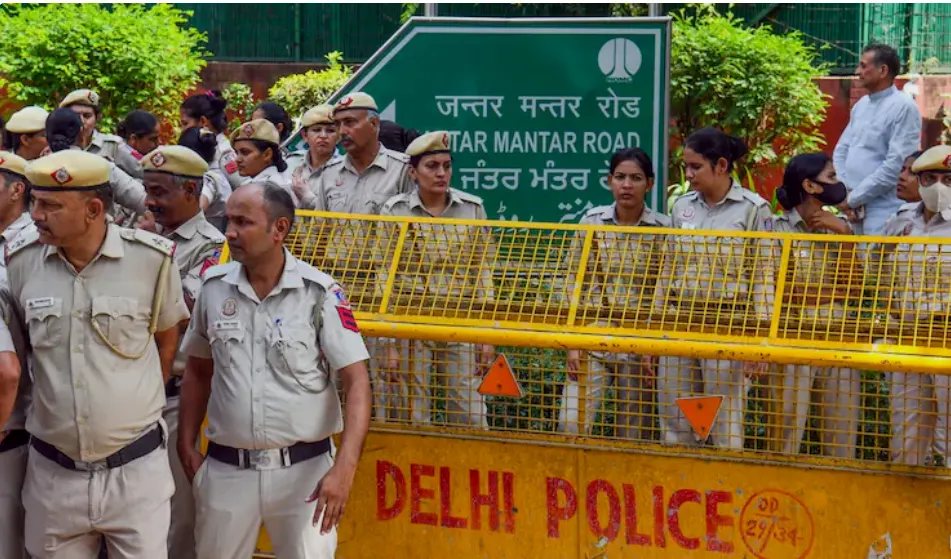
The Supreme Court has directed authorities to remove barricades unless absolutely necessary and withdraw restrictions imposed under Section 163 of the Bharatiya Nagarik Suraksha Sanhita near the courts. The observations came during a hearing concerning movement restrictions and detentions linked to the CJP protest in Delhi.

Published

on

Supreme Court on Delhi CJP Protest

The Supreme Court has directed authorities to remove barricades in Delhi unless they are “absolutely warranted”, calling for the normalisation of public movement amid restrictions imposed in connection with the Cockroach Janta Party (CJP) protest.

The observations were made on Sunday, October 11, during a special sitting concerning petitions over restrictions linked to the planned protest. The court said that free movement should be normalised, subject to necessary regulation in situations involving public order.

Supreme Court On Section 163 Restrictions

The court also directed authorities to withdraw restrictions imposed under Section 163 of the Bharatiya Nagarik Suraksha Sanhita (BNSS), 2023, in and around the Supreme Court.

The bench of Justices Joymalya Bagchi and V Mohana said the restrictions should be lifted to ensure that access to the Supreme Court and other courts was not impeded.

The bench’s observations came amid concerns over the restrictions imposed in Delhi ahead of the CJP protest, including the closure of Metro stations and disruption to transport services.

Supreme Court Issues Notice Over Detentions

The hearing followed a contempt petition filed by lawyer Shailendra Mani Tripathi. The petition referred to the Supreme Court’s October 9 order concerning restrictions on Metro and train services ahead of the planned demonstration.

The court had previously directed the Centre to ensure there was no complete prohibition on the movement of Metro services and trains arriving in Delhi because of the protest.

The petitioner argued that Metro stations had remained closed despite the earlier order.

During Sunday’s hearing, the Supreme Court issued notices to authorities, including the Delhi Police, the Union Home Secretary and the Delhi Metro Rail Corporation (DMRC), seeking responses concerning the detentions and the circumstances surrounding them.

The court ordered the authorities to submit a compliance report by Tuesday.

Supreme Court Says Right To Protest Must Follow The Law

The bench also reiterated that people have a right to protest, but demonstrations must remain within the framework of applicable law.

“You have a right to protest, absolutely no quarrel on that but the process in which you protest has to be within the Police Act,” the Supreme Court said.

Justice Bagchi told the petitioner that the right to protest could not be treated as being beyond the law.

The court also heard concerns raised by lawyers and said they should not be prevented from carrying out their professional duties. At the same time, it reminded lawyers to protest peacefully and not instigate others.

Why Were Restrictions Imposed In Delhi?

The restrictions were imposed ahead of a planned CJP demonstration in the national capital. The party and opposition groups have been seeking the resignation of Chief Election Commissioner Gyanesh Kumar over alleged irregularities in the Special Intensive Revision (SIR) process.

The allegations concern the revision of electoral rolls. The court’s observations on barricades and movement restrictions came amid the wider dispute over the handling of the planned protest.

The Supreme Court’s position underscored the need to balance public order with the movement of citizens and access to courts. It also maintained that the right to protest must be exercised in accordance with the law.

India News

INDIA bloc begins public impeachment of CEC Gyanesh Kumar at Kharge’s house

The INDIA bloc has begun its public impeachment proceedings against Chief Election Commissioner Gyanesh Kumar at Mallikarjun Kharge’s residence in New Delhi. Rahul Gandhi and Sonia Gandhi are among the leaders present.

Published

on

CEC Gyanesh Kumar

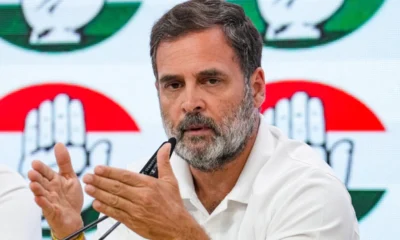
The Opposition INDIA bloc has begun its public impeachment proceedings against Chief Election Commissioner (CEC) Gyanesh Kumar at the residence of Congress president Mallikarjun Kharge in New Delhi. Several prominent Opposition leaders, including Rahul Gandhi and Sonia Gandhi, are present at the programme.

The event is being conducted as a symbolic protest against Gyanesh Kumar over allegations of irregularities in the electoral process and the Special Intensive Revision (SIR) of electoral rolls.

Former Lok Sabha Speaker Meira Kumar is presiding over the proceedings, while Mallikarjun Kharge is leading the initiative by moving the motion against the Chief Election Commissioner. Rahul Gandhi is scheduled to deliver the concluding remarks.

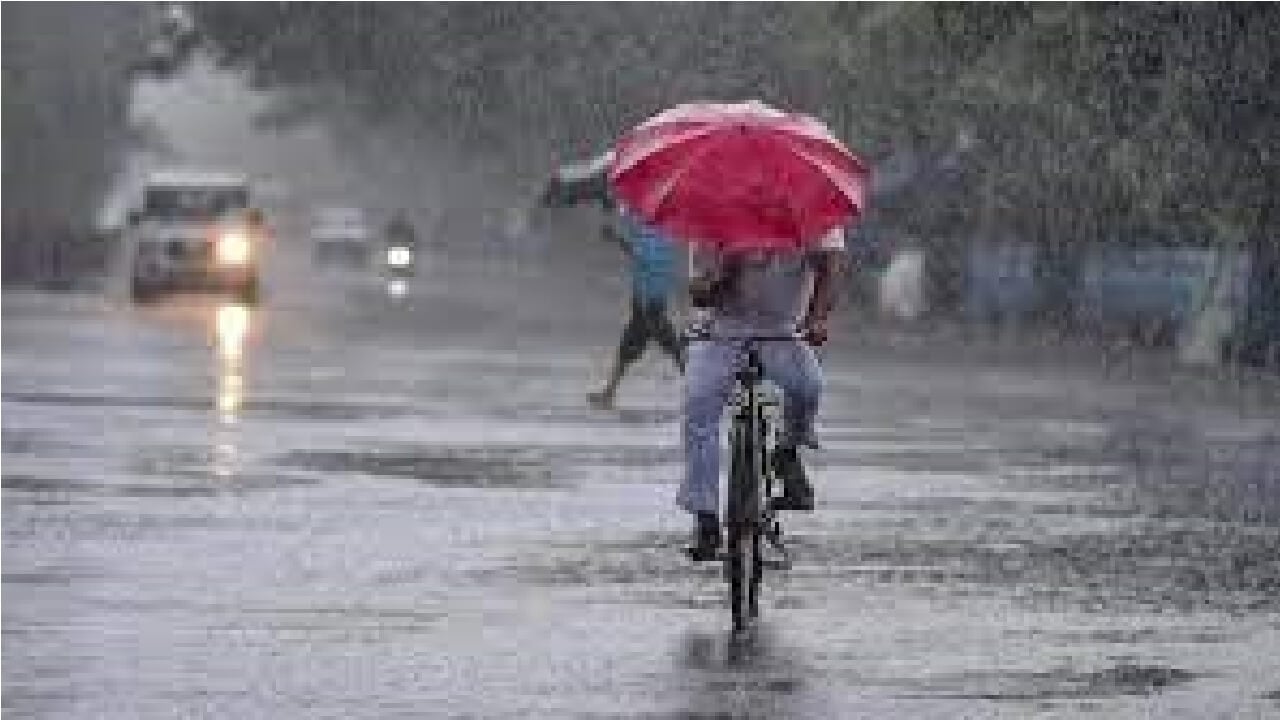
The programme was organised at Kharge’s residence at 10, Rajaji Marg, after the Opposition’s original schedule was disrupted by rainfall in Delhi. The event, initially planned for Friday, was postponed to Saturday.

Why the INDIA bloc organised the public impeachment

The Opposition has been demanding Gyanesh Kumar’s resignation, raising concerns over the functioning of the Election Commission and alleged irregularities in electoral rolls.

The dispute has largely centred on the Special Intensive Revision (SIR) exercise and allegations of ‘vote chori’ (vote theft) raised by Opposition parties.

The INDIA bloc has maintained that the proceedings are intended to provide a platform for discussing concerns related to the electoral system and bringing together parties opposing the CEC.

How the proceedings are being conducted

The programme follows a format resembling parliamentary proceedings, although it is a symbolic political exercise rather than a formal constitutional impeachment process.

Mallikarjun Kharge is moving the motion, with Meira Kumar presiding over the proceedings. Representatives of participating Opposition parties are expected to speak, while Rahul Gandhi is scheduled to make the concluding remarks before the motion is adopted.

The public impeachment programme is also part of the Opposition’s wider campaign against Gyanesh Kumar, with INDIA bloc parties planning a rally at Delhi’s Ramlila Maidan on November 1.

The Opposition has been raising concerns over the SIR exercise and alleged irregularities in electoral rolls, describing them as issues affecting voters’ rights and the electoral process. These allegations have been central to its campaign against the CEC.

The public impeachment programme was initially scheduled for October 30 but was postponed because of continuous rainfall in the national capital. It was subsequently rescheduled for October 31 at the same venue.

The event also comes ahead of the INDIA bloc’s planned November 1 rally at Ramlila Maidan in Delhi, where Opposition parties intend to continue their campaign over allegations of vote theft and electoral irregularities.

Continue Reading

India News

Diljit Dosanjh responds to CJP criticism, says don’t teach Punjabis how to fight

Diljit Dosanjh responded to criticism from the Cockroach Janata Party over his earlier comments on student protests and his film Satluj during a Delhi concert. Abhijeet Dipke later expressed his admiration for the singer and asked him to let the disagreement go.

Published

on

Punjabi singer and actor Diljit Dosanjh addressed criticism over his earlier remarks on student protests during his Delhi concert on Friday, October 30. Without directly naming the Cockroach Janata Party (CJP), he responded to comments made about his stance on protests and his film Satluj.

Speaking to the audience at the Jawaharlal Nehru Stadium, Dosanjh said that people should not teach Punjabis how to fight for a cause. He also expressed his displeasure over the film being mocked on stage, saying that considerable effort had gone into making it.

The singer’s remarks came amid an ongoing disagreement with CJP leader Abhijeet Dipke, who had previously criticised him over his response to the student protests.

What Diljit Dosanjh said at Delhi concert

During his performance, Dosanjh addressed the criticism surrounding his earlier statement that he was an artist and not a politician.

“I love all of you because I am an artist, bro. I am being quiet, so let me stay quiet. I support all of you. But don’t teach Punjabis how to fight,” he told the audience.

Referring to Satluj, a film based on human rights activist Jaswant Singh Khalra, the singer said that those making fun of the film had overlooked the struggle involved in bringing the project to the screen.

He reiterated that he loved everyone, adding that even if some people disliked him, he had no intention of responding with hatred.

Abhijeet Dipke responds with ‘Mitti Pao’ message

Following Dosanjh’s remarks, CJP leader Abhijeet Dipke shared a message addressed to the singer on Instagram.

Dipke explained that he had felt hurt by Dosanjh’s comments during the student protests in June. However, he clarified that his criticism was not driven by any personal disagreement with the singer.

He said he had always admired Dosanjh for speaking up on important issues and continued to respect him despite their differences.

Dipke also recalled attending the singer’s Chicago concert in May, saying that his admiration extended beyond Dosanjh’s music to the person he was.

Praising the singer’s courage, authenticity and contribution to taking India onto the global stage while remaining connected to his roots, Dipke said that one disagreement or misunderstanding would not change his respect for him.

He concluded his message with the Punjabi expression, “Baaki paaji, chhota bhai samajh ke mitti pao”, asking Dosanjh to consider him a younger brother and let the matter go.

What sparked the Diljit Dosanjh-Abhijeet Dipke controversy?

The disagreement dates back to June, when Dosanjh faced criticism over his response to questions about student protests at Jantar Mantar concerning alleged examination irregularities and the NEET paper leak controversy.

During an Instagram Live session, a fan asked the singer whether he would join the protests.

Responding to the question, Dosanjh said, “Keep me away from all this. Bro, I’m an artist. I’m no politician, I don’t know what you think I am.”

He also said that he did not know enough about the matter to comment on it.

His response drew criticism from some people, who questioned why he was not taking a more direct position on the protests. Some also compared his remarks with his public support for farmers during the 2020 farmers’ agitation.

Dipke was among those who criticised the singer, questioning his response in the context of his association with socially and politically sensitive projects such as Satluj.

What is Diljit Dosanjh’s film Satluj about?

Satluj is based on the life and work of human rights activist Jaswant Singh Khalra, who highlighted alleged illegal killings and secret cremations in Punjab during the late 1980s and early 1990s.

The film, originally titled Panjab 95, faced a prolonged delay over certification-related issues before its release on ZEE5 on July 3. However, it was removed from the streaming platform within two days.

The film’s removal also attracted criticism, particularly from those who had raised concerns about its delayed release.

Continue Reading

India News

Amit Shah challenges Rahul Gandhi, Akhilesh Yadav to debate SIR in Parliament

Union Home Minister Amit Shah challenged Rahul Gandhi and Akhilesh Yadav to discuss the voter roll controversy in a special session of Parliament, as the INDIA bloc prepares to hold a symbolic public impeachment of Chief Election Commissioner Gyanesh Kumar.
Published

on

Amit Shah

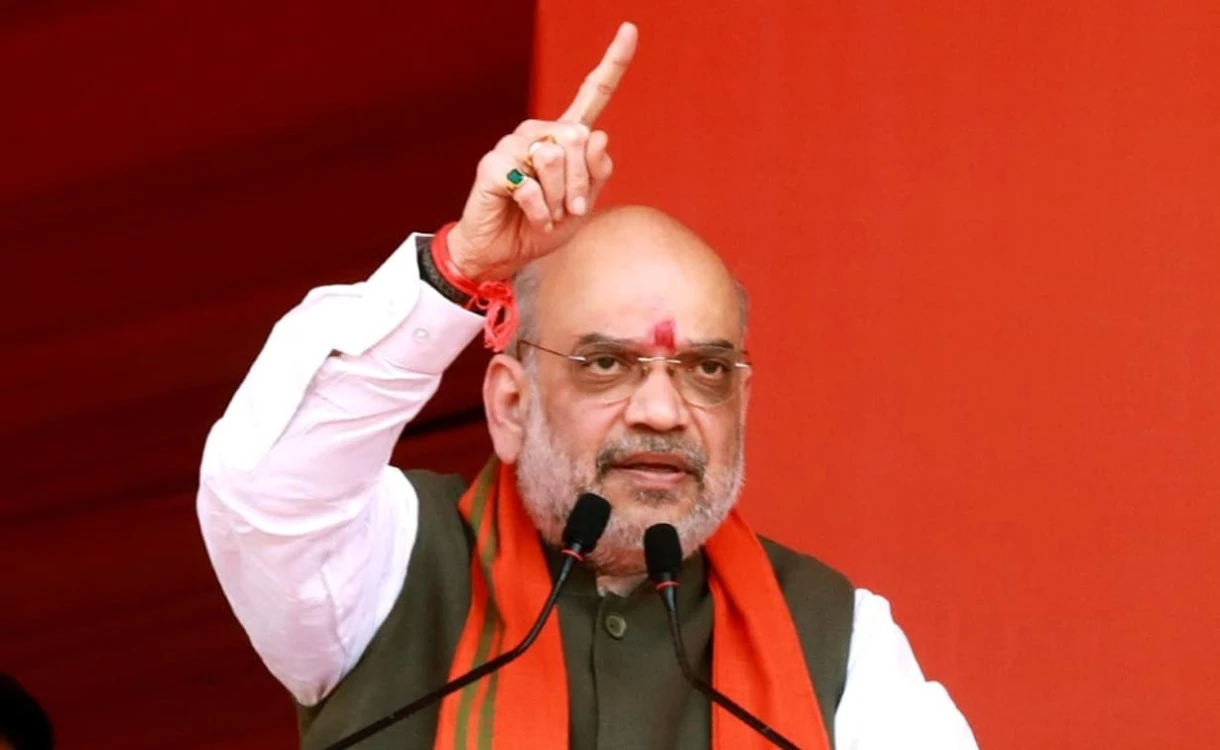
Union Home Minister Amit Shah has challenged Congress leader Rahul Gandhi and Samajwadi Party chief Akhilesh Yadav to discuss the controversy surrounding electoral rolls in a special session of Parliament. The challenge came a day before the Opposition INDIA bloc’s planned symbolic public impeachment of Chief Election Commissioner (CEC) Gyanesh Kumar over the Special Intensive Revision (SIR) of voter lists.

Speaking at the Uttar Pradesh BJP state executive committee meeting in Lucknow on Friday, Shah said the BJP was prepared to discuss the issue in Parliament and had nothing to hide.

“I challenge both Rahul Gandhi and Akhilesh Yadav right here and now. The BJP is fully prepared to discuss this in Parliament. We have nothing to hide. Let us convene a special session,” Shah said.

He also accused the Opposition of preventing Parliament from functioning, alleging that its leaders preferred creating disruptions rather than discussing the matter inside the House.

Amit Shah targets Opposition over voter roll allegations

Taking aim at Rahul Gandhi, Shah said the Congress leader would not discuss the issue in Parliament but would instead raise it through street protests.

He also referred to the BJP’s electoral victories in Haryana, Maharashtra, Bihar, Delhi, Puducherry and Assam while responding to allegations of electoral irregularities.

Shah said the Opposition had started accusing the electoral system of wrongdoing instead of accepting its election defeats. Referring to a cricketing analogy, he said that a team that loses should practise harder rather than accuse the umpire of cheating.

INDIA bloc plans symbolic impeachment of Gyanesh Kumar

Shah’s remarks came ahead of the INDIA bloc’s planned public impeachment-style programme against Chief Election Commissioner Gyanesh Kumar.

The Opposition has been protesting against the SIR exercise and demanding Kumar’s resignation, suspension of the revision exercise and restoration of electoral rolls that existed before the revision.

The Congress had initially planned to organise a mock Parliament before changing the format to a symbolic public impeachment. However, the programme, scheduled for Friday, was postponed because of rain in Delhi. It is now scheduled to take place on Saturday, ahead of the INDIA bloc’s November 1 rally at Ramlila Ground.

Congress president Mallikarjun Kharge is expected to move the symbolic impeachment motion, while former Lok Sabha Speaker Meira Kumar is expected to preside over the proceedings. Rahul Gandhi is also expected to deliver the concluding remarks.

The proposed programme is a symbolic political protest and not a formal constitutional impeachment proceeding. Earlier notices seeking Gyanesh Kumar’s removal had been rejected by the Lok Sabha Speaker and Rajya Sabha Chairman.

SIR controversy has repeatedly disrupted Parliament

The Special Intensive Revision of electoral rolls has been a major point of confrontation between the government and Opposition parties.

The issue had also disrupted parliamentary proceedings during the 2025 Monsoon and Winter sessions, with repeated adjournments and Opposition protests.

During a debate on electoral reforms in December 2025, Rahul Gandhi had challenged Shah to respond to his allegations of vote theft. Shah had replied that he would decide the order of his own speech. Opposition MPs subsequently staged a walkout.

The Election Commission’s independent constitutional status had also been cited by the government during discussions on the issue.

The Opposition has continued to accuse the Election Commission of irregularities in the voter list revision process, while the BJP has rejected the allegations.

Continue Reading

Trending

© Copyright 2022 APNLIVE.com