English हिन्दी
Connect with us

India News

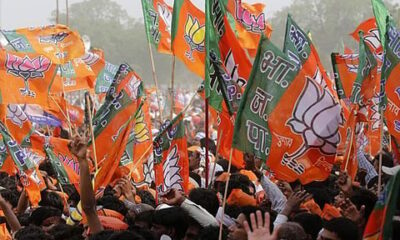
BJP attacks Congress over protests, says India is not a banana republic

The BJP defended police action ahead of the Cockroach Janata Party’s protest in Delhi and criticised Rahul Gandhi and the Congress-led Opposition over demonstrations concerning alleged electoral fraud.

Published

on

Ravi Shankar Prasad

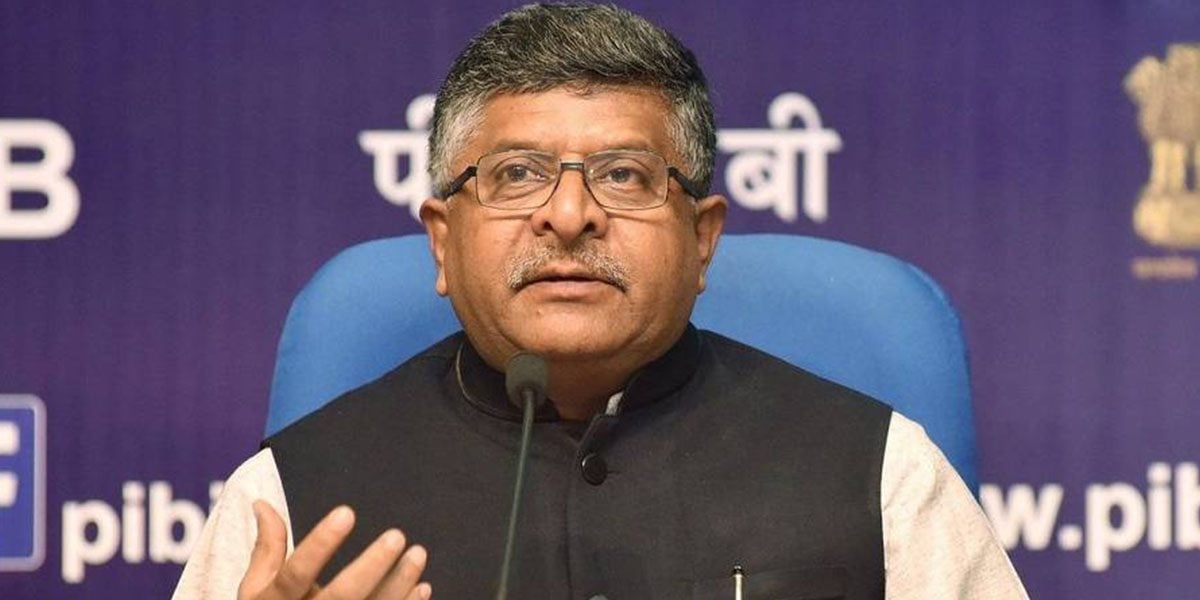
The Bharatiya Janata Party (BJP) on Saturday defended police action ahead of a protest called by the Cockroach Janata Party (CJP) in Delhi and launched an attack on Congress and Rahul Gandhi over demonstrations concerning alleged electoral fraud.
Addressing the issue, BJP spokesperson and MP Ravi Shankar Prasad defended the Special Intensive Revision (SIR) of electoral rolls and Chief Election Commissioner Gyanesh Kumar, whose resignation has been demanded by Opposition parties.

“India is not a banana republic,” Prasad said, asserting that the country had not bowed under Prime Minister Narendra Modi’s leadership and would not do so in the future.

He also described the developments surrounding the protests as an attempt to create anarchy, arguing that democratic institutions and Parliament, rather than street demonstrations, should determine the country’s course.

BJP accuses Congress of politicising street protests

Prasad said the BJP was not opposed to protests but accused Congress of using street demonstrations as a political weapon following electoral defeats.

He argued that the BJP-led National Democratic Alliance’s victories in bypolls in Assam, West Bengal and Puducherry on Friday demonstrated public support for the ruling alliance. He also claimed that the protests had failed to secure popular backing.

The BJP spokesperson’s remarks were directed primarily at Congress and Rahul Gandhi, although he did not specifically name CJP while criticising the protests.

Over 1,000 people detained amid Delhi protest crackdown

More than 1,000 people, including CJP founder Abhijeet Dipke and other leaders, were detained in Delhi on Saturday morning as police action prevented protesters from reaching the planned demonstration site at Jantar Mantar.

Four former chief ministers — Arvind Kejriwal, Mamata Banerjee, Pinarayi Vijayan and Manik Sarkar — were also detained during the day. All India Students’ Association president Neha Bora was among those detained.

A heavy deployment of police and paramilitary personnel across the capital prevented protesters from reaching Jantar Mantar, with authorities citing the absence of permission for the demonstration.

The CJP protest was called over allegations of electoral fraud and concerns surrounding the conduct of the Election Commission. The allegations remain contested.

BJP responds to Rahul Gandhi’s remarks on the President

Prasad also criticised Rahul Gandhi over his statement following a meeting with President Droupadi Murmu on Friday.

Gandhi had said the President did not deny the Opposition’s allegations of “vote chori”, or vote theft. Prasad described Gandhi’s interpretation as an insult to the office of the President.

The INDIA bloc had submitted a memorandum outlining its demands concerning the Election Commission and the electoral process.

These included the resignation of Chief Election Commissioner Gyanesh Kumar, repeal of the 2023 law providing legal immunity to the Chief Election Commissioner and Election Commissioners, suspension of the SIR exercise, restoration of 13.3 crore voters whom the Opposition said had been deleted from electoral rolls, and a return to paper ballots.

The memorandum also sought the repeal of Assembly election results from the previous two years in constituencies where the Opposition claimed conclusive evidence of vote theft had been presented.

The BJP’s response comes amid a wider political confrontation between the ruling party and Opposition groups over electoral rolls, the Election Commission and allegations of irregularities in the electoral process.

India News

Amit Shah challenges Rahul Gandhi, Akhilesh Yadav to debate SIR in Parliament

Union Home Minister Amit Shah challenged Rahul Gandhi and Akhilesh Yadav to discuss the voter roll controversy in a special session of Parliament, as the INDIA bloc prepares to hold a symbolic public impeachment of Chief Election Commissioner Gyanesh Kumar.
Published

on

Amit Shah

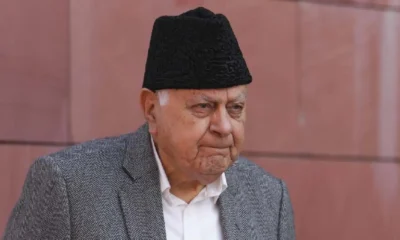
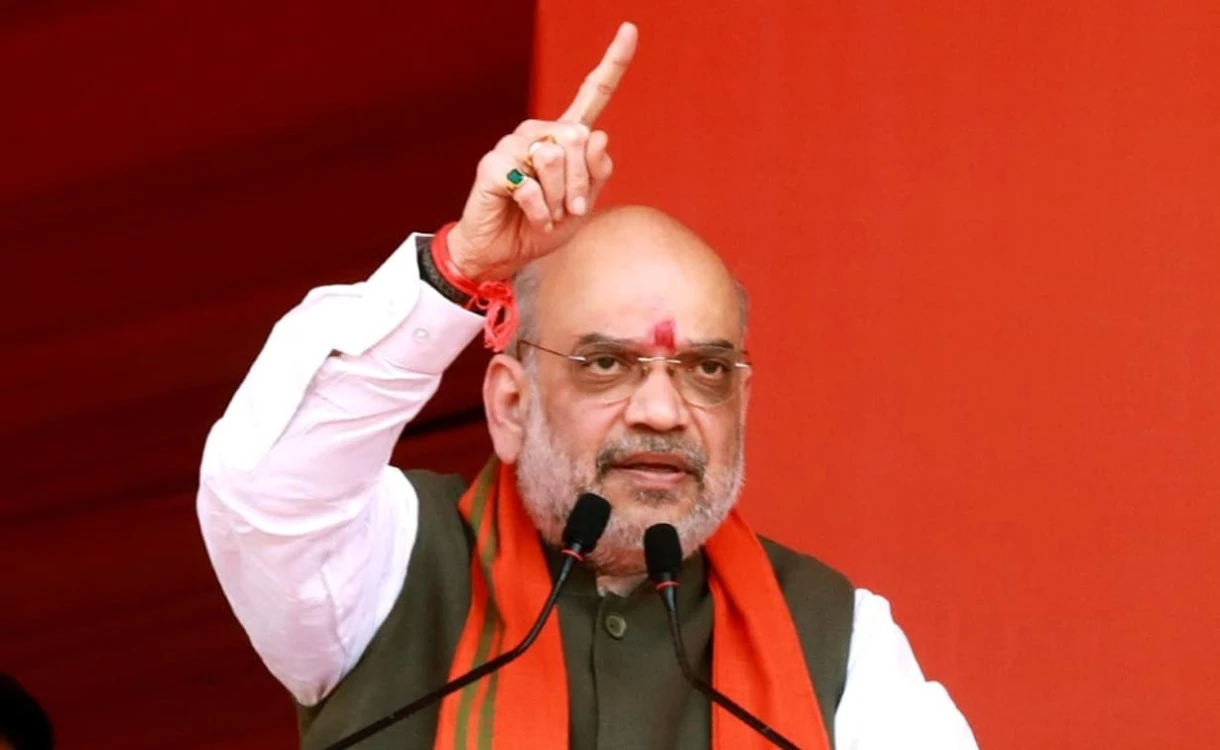
Union Home Minister Amit Shah has challenged Congress leader Rahul Gandhi and Samajwadi Party chief Akhilesh Yadav to discuss the controversy surrounding electoral rolls in a special session of Parliament. The challenge came a day before the Opposition INDIA bloc’s planned symbolic public impeachment of Chief Election Commissioner (CEC) Gyanesh Kumar over the Special Intensive Revision (SIR) of voter lists.

Speaking at the Uttar Pradesh BJP state executive committee meeting in Lucknow on Friday, Shah said the BJP was prepared to discuss the issue in Parliament and had nothing to hide.

“I challenge both Rahul Gandhi and Akhilesh Yadav right here and now. The BJP is fully prepared to discuss this in Parliament. We have nothing to hide. Let us convene a special session,” Shah said.

He also accused the Opposition of preventing Parliament from functioning, alleging that its leaders preferred creating disruptions rather than discussing the matter inside the House.

Amit Shah targets Opposition over voter roll allegations

Taking aim at Rahul Gandhi, Shah said the Congress leader would not discuss the issue in Parliament but would instead raise it through street protests.

He also referred to the BJP’s electoral victories in Haryana, Maharashtra, Bihar, Delhi, Puducherry and Assam while responding to allegations of electoral irregularities.

Shah said the Opposition had started accusing the electoral system of wrongdoing instead of accepting its election defeats. Referring to a cricketing analogy, he said that a team that loses should practise harder rather than accuse the umpire of cheating.

INDIA bloc plans symbolic impeachment of Gyanesh Kumar

Shah’s remarks came ahead of the INDIA bloc’s planned public impeachment-style programme against Chief Election Commissioner Gyanesh Kumar.

The Opposition has been protesting against the SIR exercise and demanding Kumar’s resignation, suspension of the revision exercise and restoration of electoral rolls that existed before the revision.

The Congress had initially planned to organise a mock Parliament before changing the format to a symbolic public impeachment. However, the programme, scheduled for Friday, was postponed because of rain in Delhi. It is now scheduled to take place on Saturday, ahead of the INDIA bloc’s November 1 rally at Ramlila Ground.

Congress president Mallikarjun Kharge is expected to move the symbolic impeachment motion, while former Lok Sabha Speaker Meira Kumar is expected to preside over the proceedings. Rahul Gandhi is also expected to deliver the concluding remarks.

The proposed programme is a symbolic political protest and not a formal constitutional impeachment proceeding. Earlier notices seeking Gyanesh Kumar’s removal had been rejected by the Lok Sabha Speaker and Rajya Sabha Chairman.

SIR controversy has repeatedly disrupted Parliament

The Special Intensive Revision of electoral rolls has been a major point of confrontation between the government and Opposition parties.

The issue had also disrupted parliamentary proceedings during the 2025 Monsoon and Winter sessions, with repeated adjournments and Opposition protests.

During a debate on electoral reforms in December 2025, Rahul Gandhi had challenged Shah to respond to his allegations of vote theft. Shah had replied that he would decide the order of his own speech. Opposition MPs subsequently staged a walkout.

The Election Commission’s independent constitutional status had also been cited by the government during discussions on the issue.

The Opposition has continued to accuse the Election Commission of irregularities in the voter list revision process, while the BJP has rejected the allegations.

Continue Reading

India News

PM Modi announces projects worth over Rs 14,000 crore in Gujarat

Prime Minister Narendra Modi outlined development projects worth more than Rs 14,000 crore in Gujarat’s Banaskantha district. The initiatives include metro extensions, road infrastructure, railway services, Bio-CNG plants and agricultural facilities.
Published

on

PM Narendra Modi

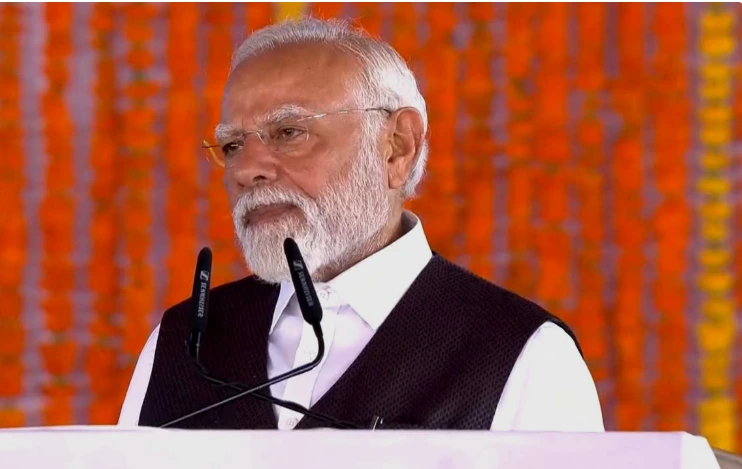
Prime Minister Narendra Modi on Friday announced development projects worth more than Rs 14,000 crore during his two-day visit to Gujarat, highlighting initiatives spanning infrastructure, agriculture, animal husbandry and rural development.

Beginning his visit with a roadshow in Banaskantha district, the Prime Minister addressed a public gathering in the presence of Gujarat Chief Minister Bhupendra Patel and Deputy Chief Minister Harsh Sanghavi.

During his address, PM Modi reflected on his journey from serving the people of Gujarat to leading the country. He credited the people for shaping his political journey and said his priorities had always remained public service and national development.

“I only knew two things – from serving the people to serving the nation, and from the development of Gujarat to the development of the country. The rest, how to do it and how to move forward, you have taught me,” he said.

The Prime Minister also reiterated his commitment to public service, saying he would continue working for the people until his last breath.

Major development projects announced in Gujarat

The development programme includes several initiatives across Banaskantha and other parts of Gujarat, covering transportation, agriculture, animal husbandry and rural infrastructure.

Among the key projects is the Bharat Bovine Breeding and Research Centre (BBBRC) at Bhildi in Banaskantha. Spread across 127 acres, the facility has been developed as a Centre of Excellence for bovine breeding, genetic improvement and advanced reproductive technologies.

The programme also includes the foundation stone laying for two Bio-CNG plants belonging to Banas Dairy at Tharad and Radhanpur. These facilities will process cattle dung at capacities of 75 metric tonnes and 100 metric tonnes per day, respectively.

Other major initiatives include the expansion of Ahmedabad Metro, improvements to road connectivity and the introduction of two railway services.

Ahmedabad Metro expansion and road infrastructure

The infrastructure programme includes the foundation stone laying for Ahmedabad Metro Phase-2A and Phase-2B.

Phase-2A will extend metro connectivity towards the airport, while Phase-2B will connect GIFT City.

Another major project involves widening the Ahmedabad-Mehsana Road, also known as State Highway-41, from four lanes to eight lanes. The project has an estimated cost of Rs 2,600 crore.

Two railway services will also be flagged off as part of the programme. These are the Ahmedabad (Sabarmati)-Varanasi Express and the Mehsana-Becharaji-Sabarmati MEMU service.

The initiatives are aimed at strengthening transportation infrastructure and connectivity across the state.

4,030 new Anganwadi centres and agricultural projects

The programme also places emphasis on child welfare and agricultural infrastructure.

The Prime Minister will lay the foundation stone for 4,030 new child-friendly Anganwadi centres in Gujarat. Additionally, 361 completed centres will be inaugurated.

The Agriculture Infrastructure Fund will also see the dedication of 521 completed projects to the nation. These projects include cold storage facilities, warehouses, processing facilities, greenhouses and other agricultural infrastructure.

The initiatives are intended to strengthen facilities supporting agricultural production, storage and processing.

PM Modi releases 24th PM-KISAN instalment

Farmers’ welfare was another major focus of the Prime Minister’s address.

During the Gujarat visit, PM Modi released the 24th instalment of the PM-KISAN Samman Nidhi scheme, amounting to approximately Rs 19,000 crore for eligible farmers across the country.

He highlighted the government’s financial assistance to small farmers, who account for more than 85 per cent of India’s farming community.

The Prime Minister also referred to the Soil Health Card scheme, stating that more than 26 crore cards had been provided to farmers.

He emphasised the importance of integrating agriculture and animal husbandry with science and technology to improve farmers’ incomes and strengthen rural economies.

PM Modi’s Gujarat visit to continue on October 31

Following the Banaskantha programme, the Prime Minister is scheduled to travel to Ekta Nagar in Kevadia.

His programme includes inaugurating Bharat Parv 2026, witnessing the Ekta Prakash Parv and attending the Narmada Aarti.

On October 31, PM Modi will pay floral tributes at the Statue of Unity and participate in Rashtriya Ekta Diwas celebrations marking the 151st birth anniversary of Sardar Vallabhbhai Patel.

The celebrations will feature the Ekta Parade, involving the Central Armed Police Forces, state police forces and Central Police Organisations.

A theatrical presentation titled “Naxal Mukt Bharat”, organised by the National School of Drama, will involve approximately 2,000 artists from 126 districts affected by Left-Wing Extremism.

A separate cultural presentation involving around 5,000 artists from across the country will showcase India’s classical and folk traditions.

Continue Reading

India News

Delhi AQI drops to 78 after record October rain brings winter chill

Delhi’s Air Quality Index (AQI) improved from 363 to 78 within 24 hours after widespread rainfall brought cooler temperatures to the national capital. The city also recorded its wettest October day in four years.

Published

on

Delhi weather today

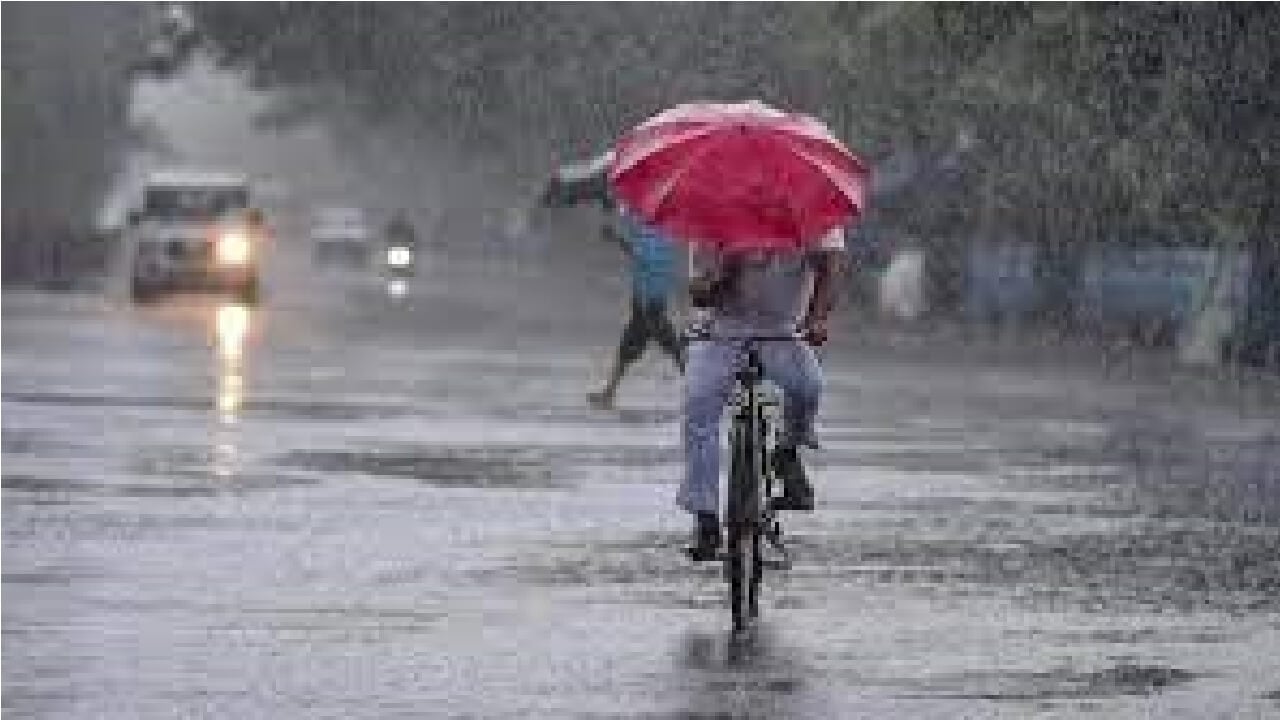
Delhi witnessed a dramatic improvement in air quality on Friday after overnight rainfall brought down pollution levels and temperatures across the national capital. The Air Quality Index (AQI) dropped from 363 on Thursday morning to 78 on Friday morning, moving from the severe category to the satisfactory category within 24 hours, according to data provided by AQI.in.

The widespread rainfall also brought an early winter-like chill to Delhi, offering relief from the relatively warmer conditions experienced earlier in the week.

The downpour was significant enough to make Friday the wettest October day in Delhi in four years. According to India Meteorological Department (IMD) data, the Safdarjung weather station recorded 61.4 mm of rainfall in the 24-hour period ending Friday morning.

What caused the sudden rainfall in Delhi?

According to the IMD, the unusual weather conditions resulted from the interaction of multiple weather systems.

A western disturbance positioned over the Western Himalayas combined with an induced cyclonic circulation over South Punjab. Meanwhile, winds originating from the Bay of Bengal, influenced by the remnants of Cyclone Arnab, also reached Delhi.

These weather systems converged over Delhi-NCR and neighbouring regions, resulting in widespread and unseasonal rainfall.

Mahesh Palawat, Vice President of Meteorology and Climate Change at Skymet Weather Services, explained that the interaction between the western disturbance, cyclonic circulation and winds from the Bay of Bengal contributed to the rainfall across northwest India, including Delhi, Punjab, Haryana and East Rajasthan.

He noted that such rainfall is unusual for this time of the year, as winter rainfall in northwest India generally occurs under the influence of western disturbances during November and December.

Delhi temperatures drop after overnight rain

The rainfall also resulted in a significant decline in temperatures across the national capital.

Maximum temperatures fell by 4 to 6 degrees Celsius over a 24-hour period, remaining considerably below seasonal averages.

Delhi’s Safdarjung weather station recorded a maximum temperature of 25.4 degrees Celsius, which was 5.6 degrees below normal. It was also the lowest maximum temperature recorded for an October day in four years.

Minimum temperatures across Delhi remained between 15 degrees Celsius and 18 degrees Celsius.

Safdarjung recorded a minimum temperature of 17.2 degrees Celsius, around 1.1 degrees above normal. Meanwhile, Palam registered 15.4 degrees Celsius and the Ridge recorded 16.8 degrees Celsius.

The IMD forecast that maximum temperatures would remain between 24 and 26 degrees Celsius on October 30 before gradually rising towards normal levels over the following days.

Will Delhi’s air quality deteriorate again?

Despite the significant improvement, the relief from pollution may not last long.

Mahesh Palawat said widespread rainfall had helped bring down pollutants and improve air quality across the region. However, he cautioned that pollution levels could increase again once the skies clear and temperatures rise.

According to him, air quality could return to the poor category after a day or two as weather conditions change. He also indicated that pollution could deteriorate further during the second week of November as Diwali approaches.

The improvement in AQI, therefore, offers temporary relief rather than a permanent solution to Delhi’s pollution problem.

IMD’s weather forecast for Delhi and other states

According to the IMD, weather conditions across Delhi-NCR are expected to gradually become drier.

The national capital is likely to experience partly cloudy skies on October 31 and November 1, followed by clearer conditions. Daytime temperatures are expected to return to the 28 to 31 degrees Celsius range.

Meanwhile, several other parts of the country are likely to experience rainfall during the coming week.

In South Peninsular India, a low-pressure system over the South Andaman Sea is expected to develop into a depression over the Bay of Bengal. This could bring isolated very heavy rainfall to Coastal Andhra Pradesh and Yanam on November 2 and 3, along with widespread showers across Karnataka, Kerala and Tamil Nadu.

In Central India, Chhattisgarh is expected to receive fairly widespread rainfall, with isolated heavy showers accompanied by thunderstorms on November 2.

Parts of Bihar, Jharkhand, Odisha and Arunachal Pradesh are also likely to receive scattered light to moderate rainfall during early November.

As Delhi moves towards clearer weather conditions, the improvement in air quality will depend partly on how atmospheric conditions evolve after the recent spell of rain.

Continue Reading

Trending

© Copyright 2022 APNLIVE.com