English हिन्दी
Connect with us

India News

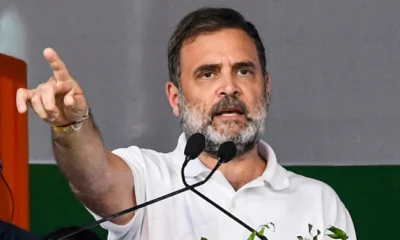
Rahul Gandhi says Maharashtra next after Telangana kicks off caste census

Gandhi said the party will use the data obtained from the Telangana caste census to formulate policies for the development of every section of the state.

Published

on

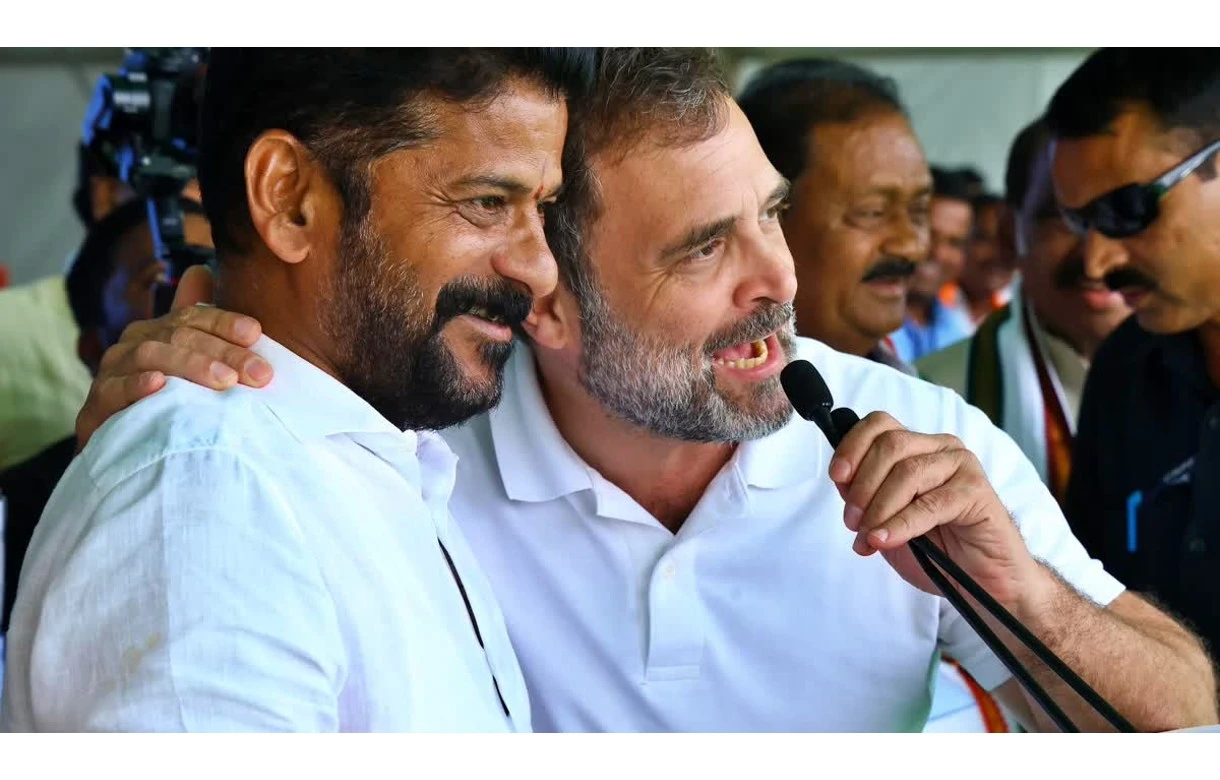
Hours after the Congress-led Telangana government kicked off the caste census in the state, Leader of Opposition in the Lok Sabha Rahul Gandhi on Saturday asserted that soon there will be caste enumeration in Maharashtra too.

“Soon this will happen in Maharashtra also,” the former Congress chief said in a post on X (formerly Twitter). The Maharashtra Assembly election will take place in a single phase on November 20 and counting on November 23.

Gandhi said the party will use the data obtained from the Telangana caste census to formulate policies for the development of every section of the state.

“Modi ji, caste census has started in Telangana from today. We will use the data obtained from this to formulate policies for the development of every section of the state,” he said.

“Everyone knows that the BJP does not want to conduct a comprehensive caste census in the country,” said Gandhi.

Challenging Prime Minister Narendra Modi, Gandhi said Modi cannot stop the caste census across the country. “We will pass the caste census in this parliament and break the wall of 50% on reservation,” he said.

Earlier today in a post on X, Congress leader Jairam Ramesh announced that the Telangana government will kick off its long-awaited caste-based survey on Saturday and called it a historic and revolutionary moment for the state.

“The Congress Government in Telangana will begin its caste-based survey today. 80,000 enumerators will be going door to door over the next few weeks, covering over 1.17 crore households across 33 districts,” he said.

Ramesh said this is the first time a caste-based survey will be conducted by the government in Telangana since 1931. “It is a historic, revolutionary moment – one that is a realization of the Telangana Movement’s aspirations for the state and a fulfilment of one of the key ideals of Dr Babasaheb Ambedkar’s Constitution,” he added.

“It is also, as Rahul Gandhi noted in Hyderabad earlier this week, a blueprint for the national caste census that the INDIA coalition’s Government will conduct. This census, and the lifting of the Supreme Court’s arbitrary ceiling of 50 per cent on reservations for Scheduled Castes, Scheduled Tribes, and Other Backward Classes are central to @INCIndia’s vision for the country,” Ramesh said.

Ramesh said the party is committed to the idea of social, political, and economic justice in India, as laid out in “our Constitution and as envisioned by India’s founding fathers”.

Earlier on Tuesday, Gandhi attended a meeting on the caste census at the Gandhian Ideology Centre in Telangana’s Bowenpally. Congress leader Dr Kota Neelima spoke about the significance of the meeting.

Telangana Backward Classes Welfare Minister Ponnam Prabhakar provided details about the caste survey, which is being conducted for the first time in Telangana.

In October, Prabhakar announced that a comprehensive caste survey would take place in Telangana from November 6 to November 30. The enumerators will conduct the survey by visiting houses from November 9, he said.

India News

Supreme Court questions EC over missing records in Sringeri election dispute

The Supreme Court questioned the Election Commission over missing video footage of the 2023 counting in Karnataka’s Sringeri constituency. The case involves a revised result following a recount of postal ballots.

Published

on

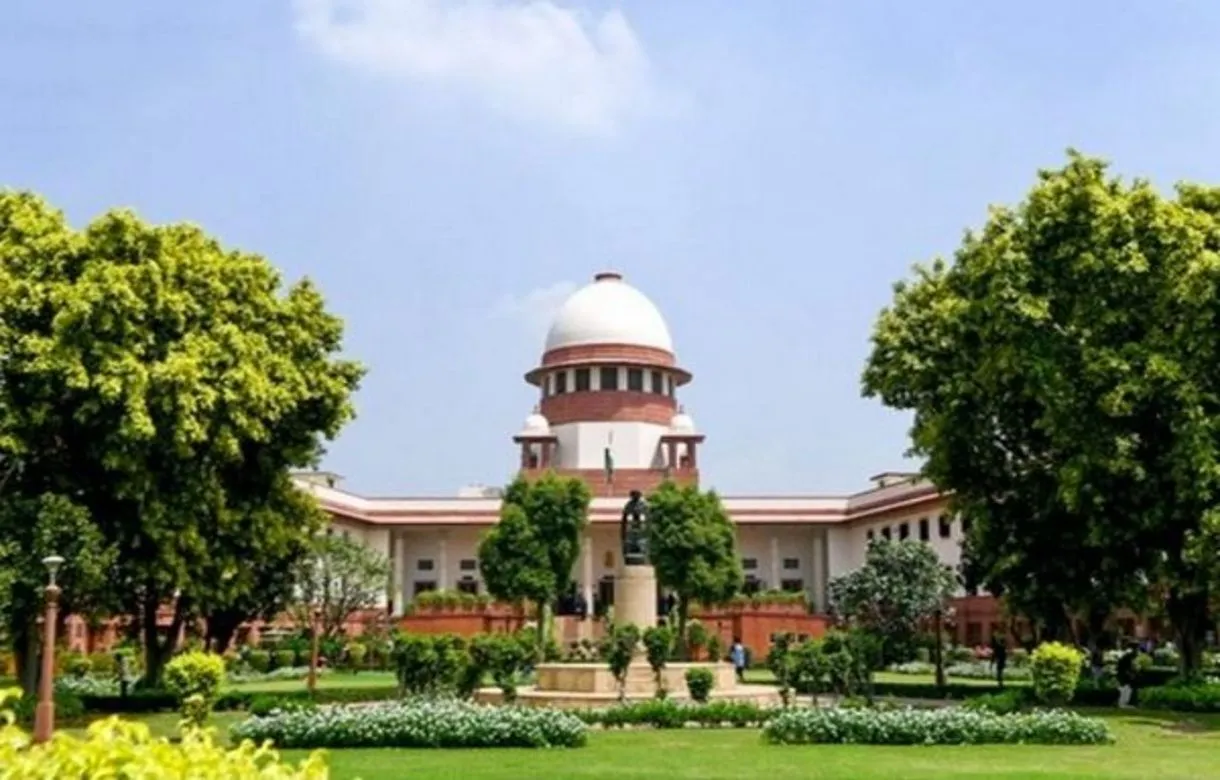
The Supreme Court on Wednesday questioned the Election Commission of India (ECI) over its inability to locate video recordings of the original vote counting in Karnataka’s Sringeri Assembly constituency in 2023. The court said it would not accept what it described as “lame excuses” and directed the poll body to produce whatever records are available at the next hearing.

A bench of Justices Sanjay Kumar and Sanjeev Sachdeva expressed displeasure after the Election Commission’s counsel informed it that the footage of the original counting could not be traced.

The bench also warned that it could draw an adverse inference if the required documents were not produced.

Questioning how the poll body could lose records relating to an election it had conducted, the judges stressed that maintaining election documentation was central to its responsibilities.

“How can the Election Commission of India say that it has lost the records? Your whole purpose is to hold an election, and you need to have a document. Where is the question of you saying we are trying to trace it?” the bench asked.

“We will not accept these kinds of lame excuses,” it added.

What is the Sringeri election dispute?

The case stems from the 2023 Karnataka Assembly election in Sringeri, where Congress leader TD Rajegowda was initially declared the winner.

The result was challenged by BJP candidate Jeevaraj before the Karnataka High Court. The High Court later ordered a recount of postal ballots, including the reverification of 279 rejected postal votes.

Following the recount, the Returning Officer declared a revised result in which Jeevaraj was declared the winner. Rajegowda then approached the Supreme Court to challenge the revised outcome.

In May, the Supreme Court granted interim relief to Rajegowda, directing that he continue as the Member of the Legislative Assembly while his plea remained pending.

Rajegowda seeks counting records and observer’s report

Rajegowda has sought access to the election observer’s report and video recordings of both the original counting conducted in 2023 and the recount held this year.

The missing original counting footage became a point of concern during Wednesday’s hearing, with the bench questioning the Election Commission’s inability to trace the recording.

The court directed the Commission to submit whatever records it possesses at the next hearing. Its warning about a possible adverse inference underscores the importance the bench attached to the production of the requested documents.

The court has scheduled the next hearing for February 15, 2027.

Continue Reading

India News

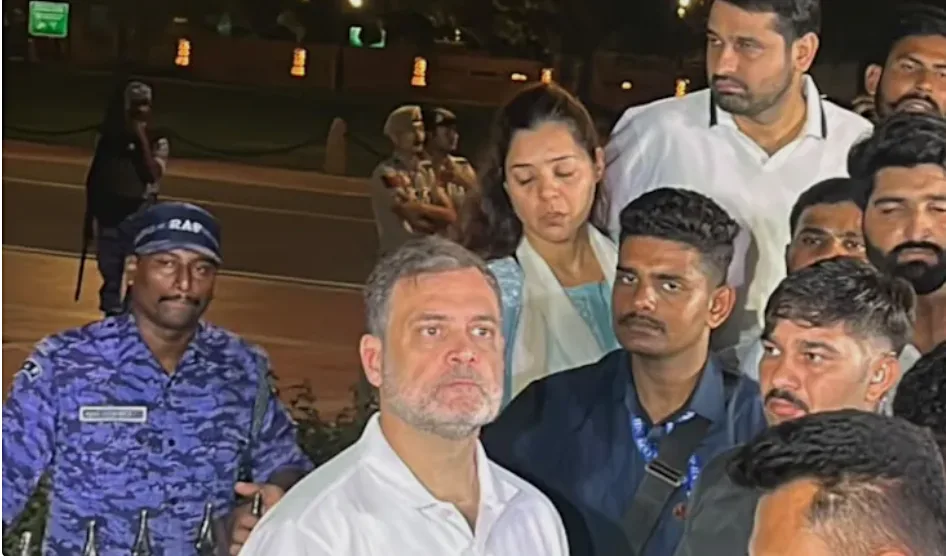
Rahul Gandhi joins India Gate protest by Ankita Bhandari’s parents

Rahul Gandhi joined the protest by Ankita Bhandari’s parents at India Gate in New Delhi on October 14. The demonstration has brought renewed attention to the 2022 murder case and the family’s concerns following Dushyant Gautam’s appointment as Sikkim Governor.
Published

on

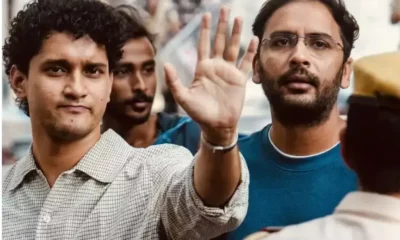
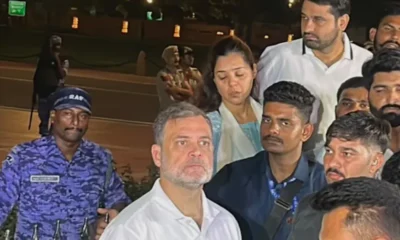
Congress leader Rahul Gandhi joined a protest by the parents of Ankita Bhandari at India Gate in New Delhi on Wednesday, October 14, bringing renewed attention to the 2022 murder case from Uttarakhand.

The family’s demonstration follows the appointment of Dushyant Gautam, a former BJP leader associated with the party’s Uttarakhand organisation, as Governor of Sikkim. The appointment has prompted objections from Ankita’s family and political leaders, who have raised concerns about the case and the demand for justice.

Congress MP Priyanka Gandhi Vadra also met the family, according to reports.

Why Ankita Bhandari’s family is protesting

Ankita Bhandari, 19, worked as a receptionist at a resort in Uttarakhand. She was murdered in September 2022, and the case triggered widespread public anger and demands for accountability.

The protest has returned to the spotlight amid questions raised by the family and activists over the alleged role of a VIP in the case. These allegations and demands should be distinguished from findings established through the criminal proceedings.

Dushyant Gautam’s appointment as Sikkim Governor has become a fresh point of contention because his name has been linked to allegations surrounding the alleged VIP connection. Such allegations should not be treated as proof of involvement in the crime.

Political reactions and demand for justice

Rahul Gandhi’s participation brought the Congress leadership into the family’s latest protest in the national capital. The demonstration reflects continuing demands for accountability and further clarity over the concerns raised by the family.

The case has remained a subject of public and political debate, including questions about the investigation and the alleged VIP connection. The family’s concerns and the political reactions have renewed attention on the demand for justice for Ankita Bhandari.

Continue Reading

India News

Meerut murder: Muskaan Rastogi and Sahil Shukla get death sentence

A Meerut court has sentenced Muskaan Rastogi and Sahil Shukla to death in the blue drum murder case involving the killing of merchant navy officer Saurabh Rajput in March 2025.

Published

on

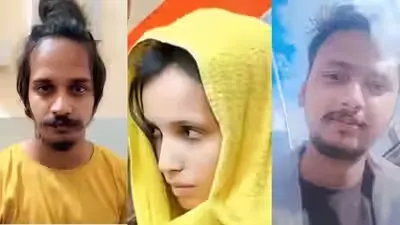
A court in Meerut has sentenced Muskaan Rastogi and Sahil Shukla to death for the murder of Saurabh Rajput, Muskaan’s husband and a former Merchant Navy officer. The sentencing was pronounced on Wednesday, October 14, 2026, after the court convicted the two in the case widely known as the Meerut blue drum murder.

The case involved the killing of Rajput in March 2025 and the concealment of his dismembered remains inside a blue plastic drum sealed with cement and sand.

The two were convicted on September 30. The prosecution had sought the death penalty, arguing for the maximum punishment in the case.

Court verdict follows 126 hearings

The trial involved 126 hearings and statements from 22 prosecution witnesses. District Judge Arvind Kumar Mishra delivered the sentence after the court considered the evidence presented during the proceedings.

The investigation and prosecution relied on a combination of circumstantial, technical and physical evidence. This included forensic findings, witness testimony and material recovered during the investigation.

The case drew attention after police discovered Rajput’s remains inside the cement-filled drum at the couple’s residence in Meerut.

How Saurabh Rajput was killed

According to the prosecution’s account of the case, Rajput was killed in March 2025 after he returned to Meerut from London. Investigators alleged that Muskaan and Sahil had planned the murder.

The prosecution said Rajput was given food laced with sleeping medication before he was attacked. His body was subsequently dismembered, and the remains were placed inside a blue plastic drum.

The drum was filled with a mixture containing cement and sand and sealed. Investigators later recovered the remains from inside it.

Evidence presented during the investigation

Investigators built the case using several strands of evidence. Shopkeepers provided testimony about the purchase of materials, including a blue drum, cement, sand and cutting implements, before the murder.

Call detail records and mobile tower information were also cited to establish Sahil’s presence at the residence around the time of the crime. The prosecution further relied on post-mortem findings that confirmed Rajput had died from stab injuries.

The investigation also traced the movements of Muskaan and Sahil during their trip to Himachal Pradesh following the killing. Investigators said photographs and activity linked to Rajput’s phone were used to create the impression that he was still alive.

The case came to light in March 2025

The murder came to light after questions arose over Rajput’s whereabouts. According to the investigation, the couple’s attempt to move the heavy drum eventually raised suspicion.

Rajput’s family approached the police, leading to an investigation that uncovered the remains. Muskaan and Sahil were arrested in March 2025.

The sentencing on October 14 marks a major development in the case, which had proceeded from the discovery of Rajput’s remains to a trial involving dozens of witness statements and more than a hundred hearings.

Continue Reading

Trending

© Copyright 2022 APNLIVE.com