English हिन्दी
Connect with us

India News

Trump: Arab Monarchs wouldn’t survive for two weeks if US leaves

Published

on

Trump: Arab Monarchs wouldn’t survive for two weeks if US leaves

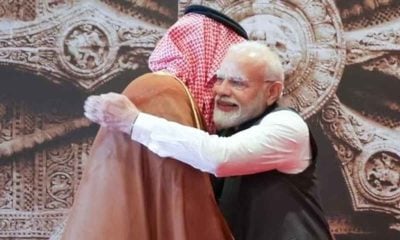
US President Donald Trump has reportedly indicated recently that the wealthy monarchs in the Middle East wouldn’t last two weeks if US withdraw from the region.

According to CNN report about a meeting Trump held with his administration officials regarding US forces in Syria on Tuesday, President has boasted to friends that once the US withdraws from the region, the wealthy monarchs of those nations will need to forgo their private jumbo jets and extravagant lifestyles.

Read More: Trump want money from Saudi Arabia for staying US forces in Syria

Iranian media covered Trump’s views about Arab monarchs on Friday evening. Some of the observers participating in the debate on the subject said that Trump was expressing the truth about the reality that monarchs in the region do not enjoy people’s support.

Reports say that Trump grew irritated with his top military brass and national security team when they advised him an immediate withdrawal of US troops from Syria would be unwise and could not provide a timeline for when American forces could exit.

Trump complained at length about the amount of American money being spent in the region, which he said had produced nothing for the US in return, according to senior administration officials.

A person familiar with Tuesday’s meeting quoted Trump saying to one of the Gulf monarchs, “Without us you wouldn’t last two weeks. You’d be overrun. And you’d have to fly commercial.”

The report said “That’s a sentiment Trump has emphasized in private, going after Gulf nations such as Saudi Arabia and the United Arab Emirates for not providing sufficient resources to battle ISIS.”

Read More: Saudi Crown Prince recognise Israelis right to their own land

Most of the monarchs in the region enjoy travelling by private aircraft. He was saying if US withdraws from the region the monarchs will be forced to travel by ordinary passenger flights. Saudi Arabia’s powerful Crown Prince Mohammed Bin Salman, also known as MBS, is currently visiting US for a three-week visit.

US President Donald Trump has expressed optimism that the Gulf nations would provide more money for stabilization efforts in Syria — including up to $4 billion from Saudi Arabia — though officials who attended the session said they weren’t clear what the basis for Trump’s confidence was.

Recently, Trump had announced for “very early” withdrawal of US forces from Syria. Saudi Arabia’s Crown Prince was quick to respond to Trump’s announcement asking US to keep forces in Syria for protecting the region from Iranian growing influence.

The  person familiar with meeting said attendees left “beside themselves” about how a hasty withdrawal and cutting of funds for recovery projects like restoring water and power and rebuilding roads could affect the future of Syria, and make it more likely that ISIS could return to prominence.

The official said, “It is a huge gamble that ISIS is not going to come back and that we are going to rely on others to stabilize Syria. The President blasted Obama for a timeline in Iraq, but that is in essence what we have been given.”

The White House said in a statement on Wednesday it remains committed to battling Daesh (IS), a sign that Trump’s desire to withdraw troops won’t happen in the near-term. But Trump has told his advisers that remaining elements of ISIS in Syria should be defeated quickly so American troops can return home.

He’s also continually returned to what he views as insufficient support from US allies in the region. Sanders said Wednesday that Trump was insistent “our allies and partners in the region, who have a lot more at risk, to put more skin in the game.”

Trump met last month with Saudi Crown Prince Mohammed bin Salman, the country’s de facto leader in White House and happily described the huge defence deals between the two countries. Later he spoke by phone this week with the Saudi king Salman bin Abdul Aziz and the Emir of Qatar Tamim bin Hamad Al-Thani and discussed, among other issues, the developments in Syria. issue arose, according to the White House.

Trump’s opinion about early withdrawal from Syria was also countered by the CIA Director Mike Pompeo, who is tapped to serve as secretary of state — has told him that an immediate withdrawal from Syria would be a mistake. For now there is no Secretary of State after the sudden exit of Rex Tillerson.

The incoming national security adviser John Bolton didn’t participate in Tuesday’s session at the White House. Trump has told confidants that he believes Bolton “has his back” on the Syria matter. It’s not clear where Bolton stands on the issue, however, though he has favoured actions that thwart Iran’s influence in the region. Bolton hasn’t talked about Syria since accepting the position last month.

India News

IPS Officer Nupur Prasad gets Medal for Meritorious Service after Sushant Singh Rajput probe

IPS officer Nupur Prasad, who led the CBI investigation into Sushant Singh Rajput’s death, has been selected for the Medal for Meritorious Service this year.

Published

on

IPS officer Nupur Prasad, who led the CBI investigation into actor Sushant Singh Rajput’s death, has been recognised with the Medal for Meritorious Service (MSM) this year.

A 2007-batch AGMUT cadre officer, Ms Prasad recently returned to the Delhi Police after completing her tenure with the CBI. She is currently serving as Joint Commissioner of Police in the Economic Offences Wing (EOW), where she oversees investigations involving financial and economic crimes.

The award is part of this year’s recognition for police personnel for distinguished and meritorious service. Such honours recognise contributions in areas including investigation, crime prevention, public service, law and order and administration.

Nupur Prasad’s role in Sushant Singh Rajput case

Ms Prasad came into national focus during the CBI investigation into the death of Sushant Singh Rajput, who was found dead at his Mumbai residence on June 14, 2020.

The case was transferred to the CBI in August 2020 following a complaint by the actor’s family and a legal dispute over jurisdiction.

During her tenure with the agency, Ms Prasad supervised key aspects of the investigation, including the examination of witness statements, forensic evidence and medical records.

In 2025, the CBI filed closure reports, saying its investigation found no evidence of foul play, abetment to suicide or criminal conspiracy in the actor’s death.

Career across Delhi Police, CBI

Ms Prasad has served in several positions during her career, including assignments in the Delhi Police, CBI, Arunachal Pradesh and West Bengal.

Before joining the CBI, she held senior positions in the Delhi Police and became the first Deputy Commissioner of Police (DCP) of Shahdara. During her tenure, she worked on establishing the district’s policing framework following its creation.

She also led operations targeting drug networks and illegal gambling activities while focusing on crime-prevention measures.

Later, as DCP of North Delhi, she oversaw security arrangements for major events, including Independence Day celebrations at the Red Fort and Delhi University elections.

Community-focused policing initiatives

Beyond investigations, Ms Prasad has been associated with community-focused programmes involving women’s self-defence, youth development, cyber safety and drug de-addiction.

During her CBI tenure, she was also associated with several prominent investigations. Media reports have linked her to cases concerning businessman Vijay Mallya and the AgustaWestland helicopter deal.

Current role in Delhi Police

After completing her assignment with the CBI, Ms Prasad returned to the Delhi Police and took charge as Joint Commissioner of Police in the Economic Offences Wing.

The latest recognition adds to her career spanning investigations, policing and public service across several challenging assignments.

Continue Reading

India News

Kharge, Rahul Gandhi skip Independence Day event for 2nd straight year

Congress chief Mallikarjun Kharge and Rahul Gandhi skipped the 80th Independence Day celebrations at the Red Fort for the second consecutive year.

Published

on

Rahul Kharge

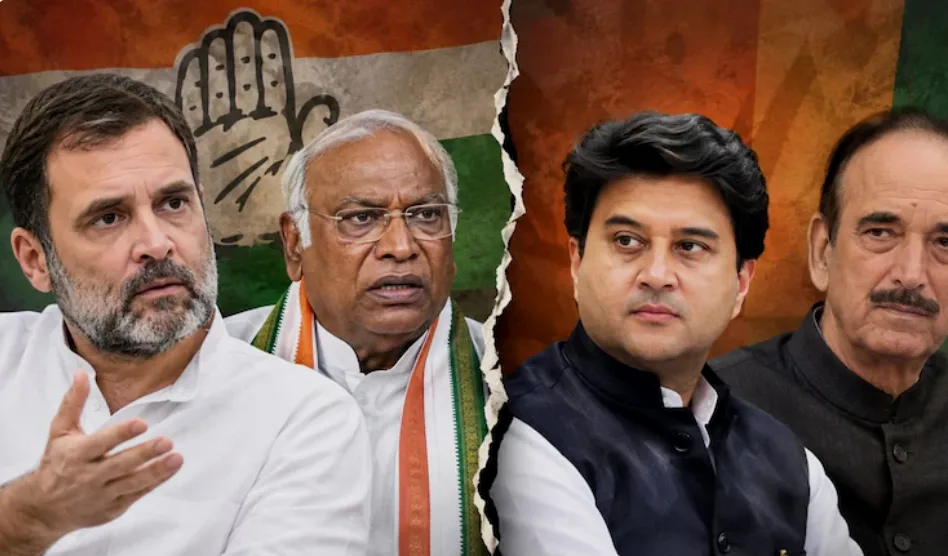
Congress president Mallikarjun Kharge and Leader of Opposition in the Lok Sabha Rahul Gandhi skipped the 80th Independence Day celebrations at Delhi’s Red Fort for the second consecutive year.

Prime Minister Narendra Modi led the Independence Day celebrations at the historic venue on Saturday.

The absence of the two senior Congress leaders comes amid strained relations between the ruling party and the Opposition, which further deteriorated during the Monsoon Session of Parliament that concluded on Thursday.

2024 seating controversy

Rahul Gandhi had attended the Independence Day celebrations in 2024 but his seating arrangement triggered a controversy. The Congress leader, who holds the status of a Cabinet minister as Leader of the Opposition in the Lok Sabha, was seated in the second-last row during the ceremony at the Red Fort.

The Opposition had criticised the seating arrangement, calling it an insult to the people. The Defence Ministry, which organised the event, said the arrangement had been modified to accommodate Olympians at the venue.

According to protocol, the Leader of the Opposition is seated in the front row during ceremonial events.

Opposition-ruling party tensions

Relations between the government and the Opposition remained tense during the Monsoon Session, which ended on Thursday.

The session saw repeated clashes between the two sides, with both the Opposition and the ruling party blaming each other for the low productivity of Parliament.

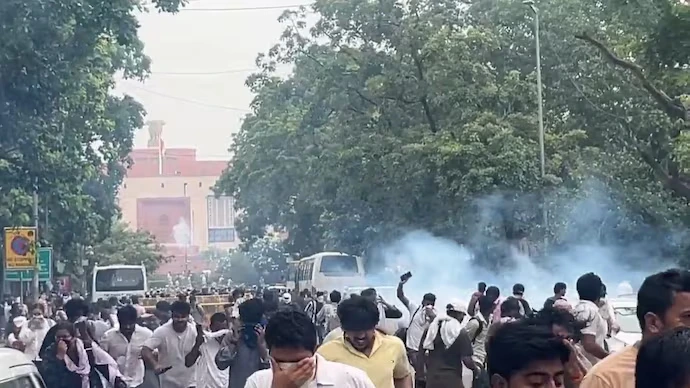
The session began on July 20, with students marching towards Parliament on the first day. Twelve bills were passed during the session, while detailed discussion took place on only one legislation, concerning paper leaks.

The Congress, along with the Trinamool Congress and Samajwadi Party, also boycotted the customary tea party hosted by Lok Sabha Speaker Om Birla after the House was adjourned sine die.

Continue Reading

India News

PM Modi’s Saptadhara Vision: 7 streams driving India’s next growth phase

PM Modi outlined “Shakti Ki Saptadhara”, identifying seven streams including manufacturing, farming, technology, defence, green energy and soft power.

Published

on

PM modi speech

Prime Minister Narendra Modi, in his Independence Day address from the Red Fort on Saturday, outlined “Shakti Ki Saptadhara”, describing seven key streams that he said can drive India’s next phase of growth and strengthen its journey towards self-reliance and development.

The seven streams identified by the Prime Minister are manufacturing, farming, technology, Gatishakti, Raksha Shakti, green and blue economy, and soft power.

Calling on the country to focus on these areas, PM Modi said the seven streams represent India’s strength and can help the country become more self-reliant.

Manufacturing as the engine of growth

PM Modi called manufacturing the first stream of Saptadhara and stressed the need to significantly strengthen the sector.

He said India needs to produce both components and complete products and should emerge as a key destination in global supply chains.

The Prime Minister highlighted cost, quality and scale as important factors for Indian manufacturers to compete globally. He also stressed the importance of attractive packaging and precision in manufacturing.

Farming and food processing

Agriculture and food processing were identified as the second stream.

PM Modi said global markets are increasingly accessible to Indian farmers and called for greater efforts to take agricultural products from farms to international markets.

He highlighted traditional foods, millets, spices, fruits and vegetables, saying these products should be developed into global brands.

Technology and innovation

Technology and innovation form the third stream of Saptadhara, according to PM Modi.

He highlighted areas such as data centres, robotics and emerging technologies, saying India should aim to become a hub for these sectors.

Referring to the country’s experience with UPI and Digital Public Infrastructure, PM Modi said India has already demonstrated its technological capabilities and must now take the next leap in next-generation communication technology.

He also spoke about the goal of Made-in-India 6G reaching across the country.

Gatishakti and faster connectivity

The fourth stream is Gatishakti, with the Prime Minister stressing the importance of speed and connectivity for India’s growth.

PM Modi called for greater emphasis on roads and expressways to support businesses and said the country needs seamless, high-speed connectivity.

He also highlighted high-speed rail connectivity between cities and port-led development as areas requiring greater focus.

Raksha Shakti and self-reliant defence

Defence is the fifth stream of Saptadhara.

PM Modi called for greater self-reliance in defence manufacturing and highlighted the need to develop advanced technologies in the sector.

He particularly stressed the importance of drone and counter-drone technology, saying India needs to invest in these areas.

The Prime Minister also said India should move beyond being a market for defence equipment and work towards becoming a global supplier by developing next-generation defence technologies.

Green and blue economy

Green energy forms the sixth stream of Saptadhara.

PM Modi called for greater innovation in green energy and said India should aim for global leadership in green hydrogen, renewable energy and energy storage while continuing to contribute solutions to global challenges.

He also highlighted opportunities in the Blue Economy, particularly in fisheries, coastal tourism and ocean technology, saying these areas can create new pathways for India’s growth.

Soft power

Soft power is the seventh stream identified by PM Modi.

He cited Yoga, handicrafts, films, animation, gaming, digital content and the creative sector as examples of India’s soft power.

The Prime Minister also highlighted India’s potential to attract global tourists and called for greater focus on the country’s tourism opportunities, including its national parks and other attractions.

With “Shakti Ki Saptadhara”, PM Modi outlined a broad growth framework covering manufacturing and agriculture, emerging technology, connectivity, defence, sustainable energy, the blue economy and India’s cultural and creative influence.

Continue Reading

Trending

© Copyright 2022 APNLIVE.com