English हिन्दी
Connect with us

India News

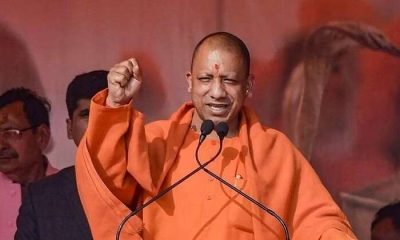
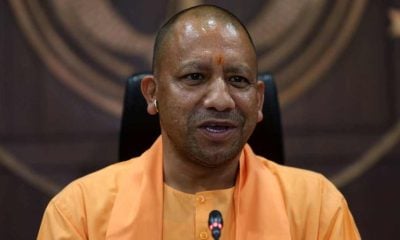
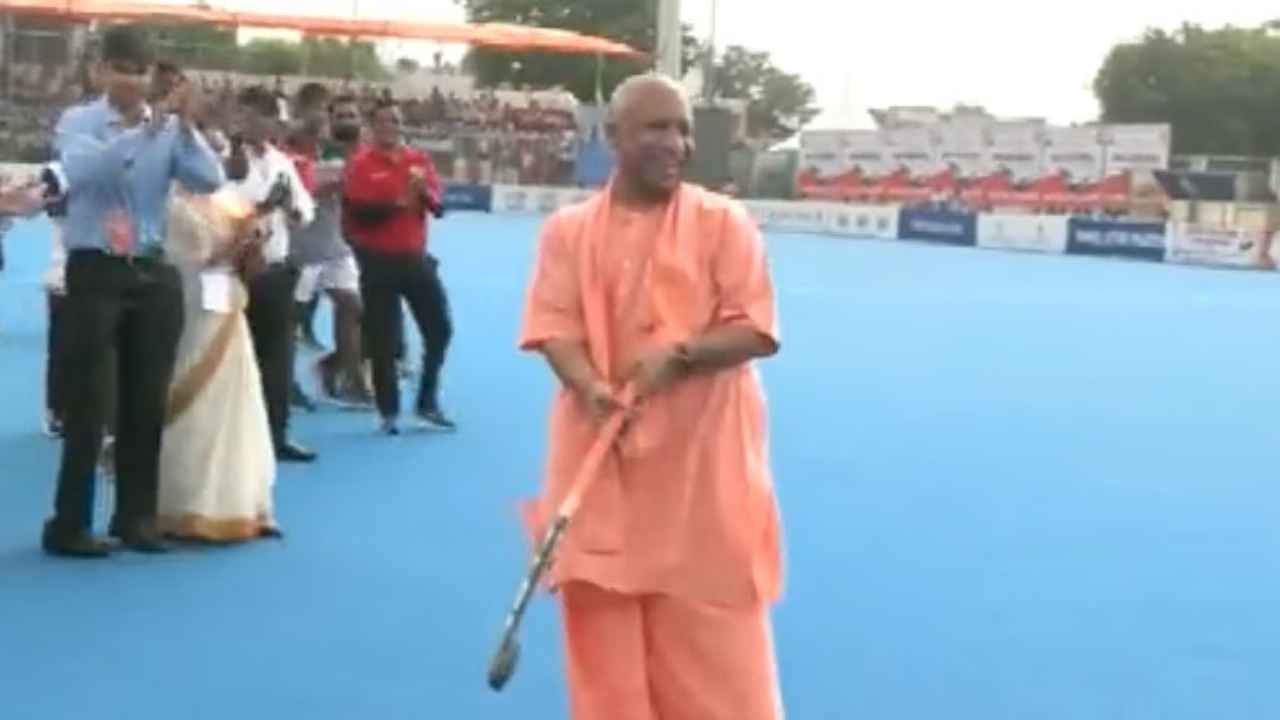
Jhansi: UP CM Yogi Adityanath plays hockey

The chief minister took a few practice swings before hitting the ball with a powerful stroke, sending it sailing across the field.

Published

on

Jhansi: UP CM Yogi Adityanath plays hockey

Uttar Pradesh Chief Minister Yogi Adityanath is known for his no-nonsense approach to law and order. He has been credited with reducing crime rates in the state, and has been praised by many for his tough stance on criminals. Adityanath’s hockey skills were on display recently at an event in Jhansi, where he inaugurated various development projects.

The chief minister took a few practice swings before hitting the ball with a powerful stroke, sending it sailing across the field. CM Yogi was seen hitting a shot with a hockey stick and seemed to have enjoyed the experience during the event at the Major Dhyanchand Stadium.
The hockey sweep was a metaphor for Adityanath’s approach to crime. Just as he swept the ball across the field, he is determined to sweep criminals out of Uttar Pradesh. He has said that he will not tolerate crime in the state, and has vowed to bring criminals to justice.

Adityanath’s tough stance on crime has been welcomed by many in Uttar Pradesh. However, it has also been criticized by some who say that he is being too harsh. Nevertheless, Adityanath remains determined to make Uttar Pradesh a safe and secure place for all.

After scoring a goal in the very first attempt, a sense of happiness can be clearly seen on the face of the CM. Although it was not an official game, the Chief Minister had reached the ground to encourage the players. This video of CM Yogi playing hockey is also viral in social media.

CM Yogi, after listening to the people’s words leisurely, gave necessary guidelines to the officials to solve the problem. Chief Minister Yogi Adityanath directed the officials that the needy, who have not yet got a permanent house, should be brought under the ambit of Pradhan Mantri Awas Yojana or Mukhyamantri Awas Yojana and provided with a permanent housing facility.

India News

India Metro Rail Network May Overtake US in 2 Years

India’s metro rail network has reached 1,170 km across 26 cities. Union minister Manohar Lal said the country could overtake the US in network length within two years.

Published

on

Manohar Lal Khattar

India is on track to become the country with the second-largest metro rail network in the world after China, with Union Minister Manohar Lal saying the country could overtake the United States within the next two years.

India’s metro rail network has now expanded to 1,170 km across 26 cities. The network is only 216 km shorter than the US metro rail network, which stands at 1,386 km, according to figures cited by the minister.

India’s metro network expands rapidly

Speaking after the inauguration of an extended metro service in Indore, Manohar Lal highlighted the pace at which metro connectivity has grown in India.

He said metro services were operational across just 245 km in five cities when Prime Minister Narendra Modi assumed office in 2014. The network has since expanded to 1,170 km across 26 cities.

The minister said India could overtake the US in terms of metro rail network length in the next two years and become the world’s second-largest country in this segment after China.

China currently has around 8,000 km of metro rail lines, according to the figures cited by the minister.

Indore metro extension inaugurated

The minister made the remarks after inaugurating an extended section of the Indore metro. The project was built at a cost of around Rs 2,850 crore.

The Indore metro was earlier operating commercially on a six-km stretch between Gandhi Nagar and Super Corridor-3 stations. Following the extension, the service will operate on a 17-km route between Gandhi Nagar and Malviya Nagar Chauraha.

Madhya Pradesh Chief Minister Mohan Yadav said the metro service would mark a new phase in Indore’s development. He also said the network would eventually be extended to Ujjain and other nearby areas.

India’s metro rail network: Key figures

  • India currently has 1,170 km of operational metro rail network.
  • Metro services are operational across 26 cities.
  • The US has around 1,386 km of metro rail network.
  • India is currently 216 km behind the US.
  • China has around 8,000 km of metro rail lines.
  • India’s operational network stood at 245 km across five cities in 2014.

Continue Reading

India News

PM Modi returns to SRCC after 13 years, revisits 2013 glass full speech

PM Narendra Modi returned to SRCC after 13 years for its centenary celebrations, revisiting themes from his landmark 2013 address.

Published

on

PM Narendra Modi

Prime Minister Narendra Modi returned to Delhi University’s Shri Ram College of Commerce (SRCC) on Saturday, 13 years after his previous visit to the institution as Gujarat chief minister. 

His latest visit came as SRCC marked its centenary celebrations. Modi’s 2013 address at the college had attracted significant attention as he spoke about India’s youth, governance and the country’s demographic potential.

In 2013, Modi was Gujarat chief minister and had not yet been named the BJP’s prime ministerial candidate. He returned to the same campus this year as Prime Minister, having completed 12 years as Prime Minister and serving his third consecutive term. 

What PM Modi said at SRCC in 2013

The 2013 lecture was titled Emerging Business Models in the Global Scenario. The address also covered governance and India’s young population.

He described India’s youth as a source of national strength rather than simply a group of new-age voters. He also highlighted India’s demographic advantage and argued that the country needed to make better use of its young population.

One of the notable moments from the speech involved a glass of water.  Modi contrasted the conventional descriptions of a glass as half full or half empty and said he viewed it as full, with half containing water and the other half air.

The speech also included his remarks on technology and young Indians. Referring to an anecdote from a visit to Taiwan, Modi used the phrase “mouse-charmers” to describe Indians using computers and suggested that young Indians had the ability to influence the world through technology.

‘Minimum government, maximum governance’

Modi’s 2013 address also touched on governance. He spoke about the role of government and the need for better governance.

He also spoke about India’s potential in the 21st century. 

Modi returns as PM for SRCC centenary

The September 5 visit coincided with Teachers’ Day and SRCC’s 100th anniversary. The Prime Minister’s Office had announced that Modi would participate in the college’s centenary celebrations and address the gathering. SRCC was established in 1926 by industrialist and philanthropist Sir Shri Ram.

Earlier this year, Modi also met the SRCC governing body at his residence in April in connection with the college’s centenary celebrations and released a commemorative postage stamp marking the occasion. 

The return to SRCC came 13 years after his 2013 appearance at the college, when he addressed students as Gujarat chief minister.

Continue Reading

India News

Supreme Court judge calls police assault on CJP protesters very distressing

Supreme Court judge Justice Ujjal Bhuyan criticised alleged police assaults on CJP protesters and raised concerns over excessive force.

Published

on

Supreme Court

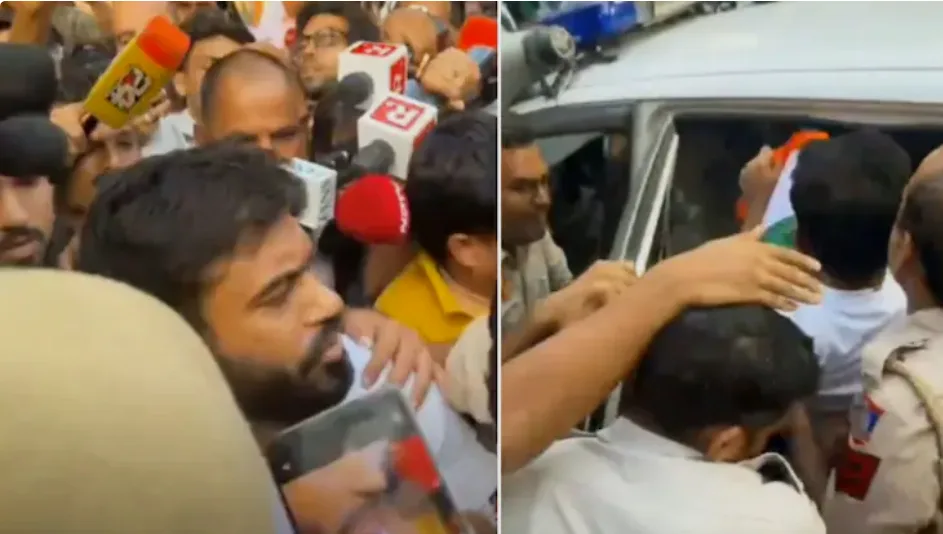
Supreme Court judge Justice Ujjal Bhuyan has criticised the assault of protesters by police personnel during the recent CJP demonstrations in Delhi, describing the conduct as “very, very distressing” and a matter of serious concern.

Speaking at the launch of retired IPS officer Yashovardhan Azad’s book Policing the Republic, Justice Bhuyan said the detachment expected from police officers appeared to be diminishing.

He expressed concern over young Indian Police Service officers personally participating in the assault of protesters and demonstrators.

Justice Bhuyan stresses need for responsible policing

Justice Bhuyan said effective policing does not require excessive use of force or infringement of human rights. He emphasised that the police play an important role in maintaining public confidence because citizens generally approach the police when they feel they have been wronged.

He said maintaining the credibility of the police force was therefore of “utmost importance”.

The judge’s remarks come amid continuing scrutiny of the police and paramilitary response to the CJP protests in Delhi.

Supreme Court panel to examine police action

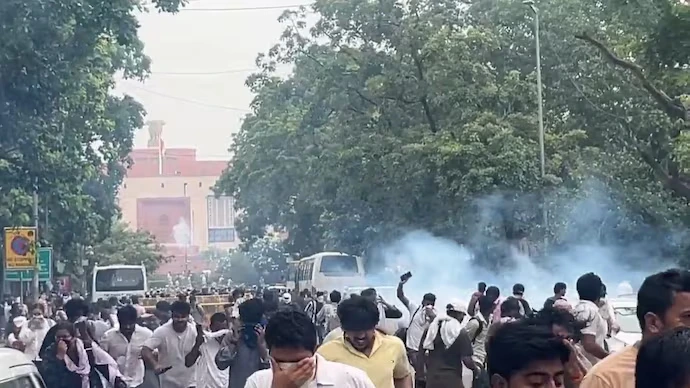
The Supreme Court has constituted a high-level panel to investigate allegations concerning the use of force by Delhi Police during the July 20 student protests at Jantar Mantar and the subsequent Parliament march.

The panel, headed by former Supreme Court judge Justice R Subhash Reddy, will examine complaints relating to lathi charges, tear gas, pellet guns and electronic batons. It will also look into allegations of targeted harassment or molestation of female protesters and review available CCTV and video footage.

The police response during the protests has faced criticism, while Delhi Police has maintained that its personnel were also attacked during the clashes.

Judge raises concern over custodial deaths and torture

Justice Bhuyan also spoke about custodial torture and deaths, describing custodial death as one of the gravest crimes in a society governed by the rule of law.

He stressed that torture and cruel, inhuman or degrading treatment cannot be accepted, regardless of whether such conduct takes place during investigation, interrogation or other circumstances.

The judge further warned that when government functionaries themselves become lawbreakers, it can undermine respect for the law and encourage lawlessness.

He questioned whether citizens lose their fundamental rights simply because they have been arrested by police.

‘Fake encounters’ cannot be part of policing

Justice Bhuyan also addressed allegations of extra-judicial killings, commonly referred to as “fake encounters”. Referring to a 2011 Supreme Court judgment, he said such encounters undermine the rule of law.

He stressed that an “encounter philosophy” cannot become part of legitimate policing and said proven fake encounters involving serving police officers must be treated with the utmost seriousness.

The Supreme Court’s panel will now examine the allegations surrounding the police action during the July 20 protests as scrutiny of the events continues.

Continue Reading

Trending

© Copyright 2022 APNLIVE.com