English हिन्दी
Connect with us

India News

Vice President election underway, results likely by 7pm

Published

on

Vice President election underway, results likely by 7pm
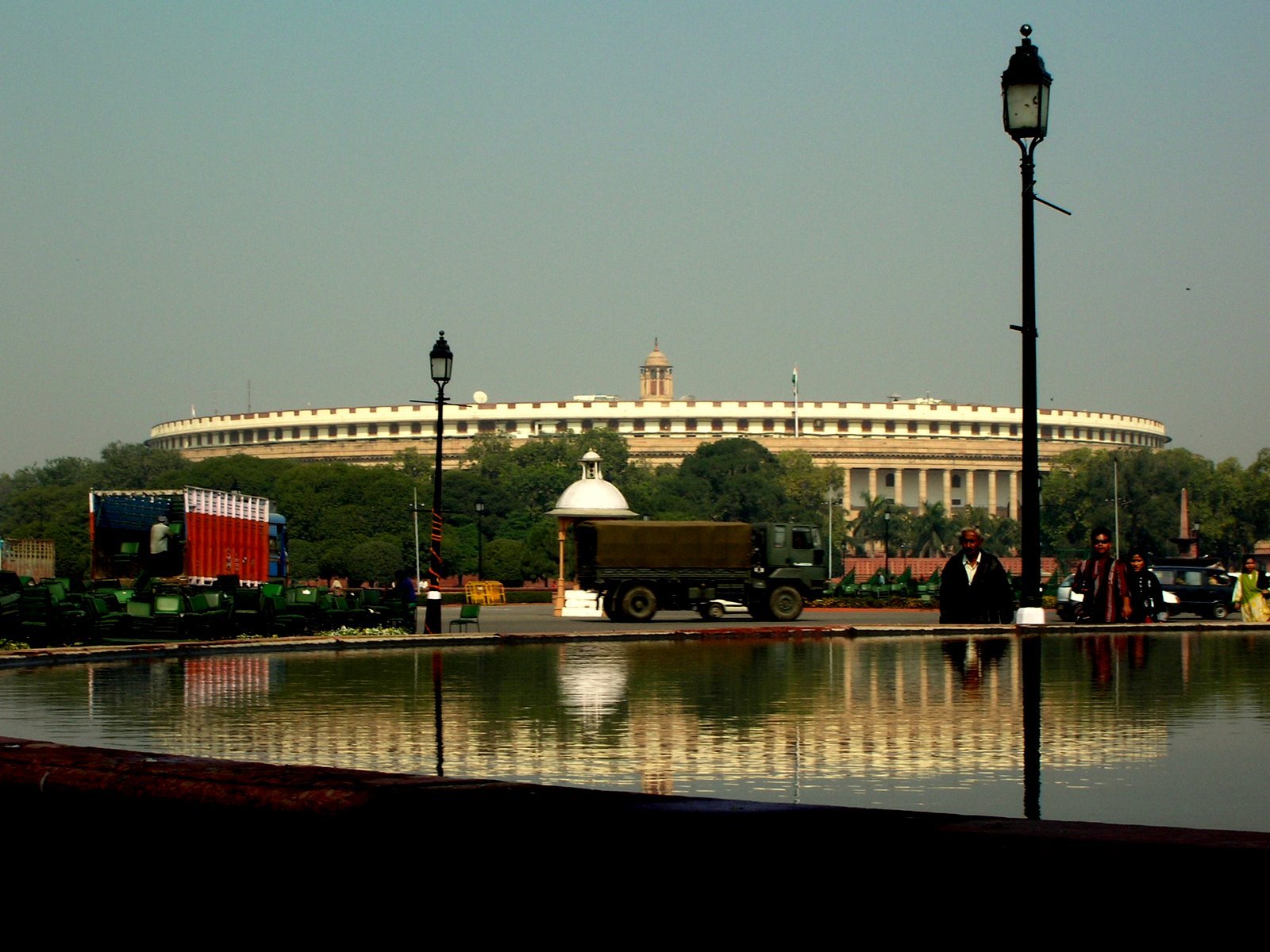
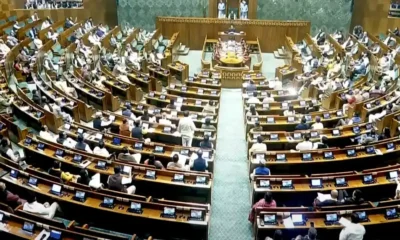
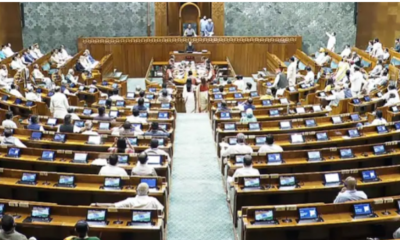
[vc_row][vc_column][vc_column_text]Ruling NDA’s candidate M Venkaiah Naidu is tipped to be voted India’s next vice president, also the ex-officio Chairman of the Rajya Sabha, in the election currently underway in Parliament.

The results are likely to be announced by 7 pm.

The voting began at 10 am Saturday and will go on till 5 pm in the evening. Till 1.45 pm, when last reports came in, 715 votes had been cast. Prime Minister Narendra Modi, NDA’s vice presidential candidate Venkaiah Naidu and Uttar Pradesh Chief Minister  Yogi Adityanath, who is yet to give up his Lok Sabha membership, were among the first to cast their ballot.

Members of both Houses of Parliament vote in the vice-presidential election through secret ballot and no whip is allowed. Members of Parliament will use special pens for marking their choice in the election.

The total strength of the two Houses is 790, but there are two vacancies in the Lok Sabha and one in the Rajya Sabha. BJP MP in Lok Sabha Chhedi Paswan is barred from casting vote following a judicial pronouncement.

While Naidu has the support of the NDA parties along with AIADMK, TRS and YSRCP, Gandhi will get the votes of MPs belonging to the Congress, RJD, JD(U), NCP, Left and other smaller parties.

In the 545-member Lok Sabha, the BJP has 281 members. The NDA led by BJP, has 338 members. In the 243-member Rajya Sabha, the BJP is now the single largest party with 58 members, overtaking the Congress which has 57.

The Biju Janata Dal (BJD) and the Janata Dal (United) which had supported NDA nominee Ramnath Kovind for the post of president, have decided to back opposition nominee Gandhi. The JD(U) has broken ties with ‘mahagathbandhan’ and joined hands with the Bharatiya Janata Party (BJP) to form a new government in Bihar, but has decided to vote for Gandhi.

The ruling National Democratic Alliance (NDA), which has a majority in the Lok Sabha, will find it easy to place its candidate as the next vice president. The opposition has fielded Gopal Krishna Gandhi against Naidu.

The term of the present incumbent Hamid Ansari, who has held the post for two consecutive terms, is coming to an end on 10 August.

Wait for updates[/vc_column_text][/vc_column][/vc_row]

India News

India clears Rs. 1.1 lakh crore defence procurement plan for radars, mine layers

India has cleared defence procurement proposals worth around Rs. 1.10 lakh crore for the Army, Navy and Air Force, including radars, mine layers, helicopters and electronic warfare systems.

Published

on

Rajnath Singh

The Defence Ministry has cleared military procurement proposals estimated at around Rs. 1.10 lakh crore for the Indian Army, Navy and Air Force, in a major push to strengthen operational capabilities and promote indigenous defence manufacturing.

The proposals were approved by the Defence Acquisition Council (DAC), headed by Defence Minister Rajnath Singh. The ministry said the DAC accorded Acceptance of Necessity (AoN) for a range of acquisitions. AoN is the first stage of the defence procurement process.

Nearly 98 per cent of the approved procurements are expected to be sourced from Indian industry, according to the Defence Ministry.

What the Army will get

The Army-related approvals include Chemical, Biological, Radiological and Nuclear (CBRN) reconnaissance vehicles, high-mobility vehicles, self-propelled mechanical mine layers, Advanced Light Helicopters (ALHs), trawl tanks and the Sarvatra bridge system.

CBRN reconnaissance vehicles will be used to detect and monitor areas contaminated by chemical, biological, radiological or nuclear agents.

The high-mobility vehicles are intended to support troop movement and logistics in difficult terrain. The trawl tanks and Sarvatra bridge system will help combat formations with mobility and crossings during military operations.

Advanced Light Helicopters will be used by both the Army and the Air Force for operations across different terrains and mission requirements.

Navy to receive Arudhra radars

For the Indian Navy, the DAC approved the procurement of Arudhra radars, along with the design, development and subsequent procurement of Marine Gas Turbines (MGTs).

The Marine Gas Turbine programme is aimed at developing a key propulsion system for warships while reducing dependence on foreign suppliers.

The Arudhra radars will replace existing air-route surveillance radars at naval air stations and are expected to strengthen the Navy’s surveillance capabilities.

Air Force gets electronic warfare systems

The Indian Air Force also received approval for projects aimed at strengthening the capabilities of its fighter aircraft, transport fleets and helicopters.

Among the approved systems is the Ground-Based Multi-Purpose Jammer (GBMPJ). The ministry said the jammer will provide electronic warfare capability against adversary radar networks.

Approval was also given for the installation of the Defence Forces Secure Access Card system.

Push for domestic defence manufacturing

The latest approvals are part of the government’s broader effort to strengthen the operational capabilities of the armed forces while promoting self-reliance in defence manufacturing.

The Defence Ministry said nearly 98 per cent of the approved procurements will be sourced from Indian industry, potentially giving further impetus to domestic defence production.

The Rs. 1.10 lakh crore figure represents the estimated value of the procurement proposals that received the DAC’s Acceptance of Necessity at this stage. It does not by itself mean that all the equipment has already been contracted or delivered.

Continue Reading

India News

Delhi hostel collapse: Rent agreement raised questions over student safety and hostel liability

The Satya Niketan hostel collapse has brought its rent agreement, building status and student safety conditions under scrutiny.

Published

on

The rent agreement of Delhi’s now-collapsed Hostel Daze has come under scrutiny after the five-storey building in Satya Niketan collapsed, killing seven residents.

According to the agreement, students were required to pay three months’ security along with one month’s advance rent. It also stated that the security deposit would not be refunded before the completion of the agreement period and that any damage to furniture or fixtures could be deducted from the deposit.

One clause in the agreement stated that the PG authorities were not responsible for casualties or risks to a student.

A separate terms-and-conditions document linked to the hostel also stated that the management would not be liable for compensation in cases involving personal injury, loss or damage to a tenant’s belongings caused by circumstances described as beyond the PG’s control, including sealing, fire, earthquakes and heavy rains.

Strict conditions for students

The agreement also laid down several conditions for tenants. Students were prohibited from putting posters or stickers on hostel walls.

It further stated that students leaving before the agreed period, including those removed for disciplinary reasons, would not receive a refund of hostel fees or security money.

The hostel management was also given the right to shift students to another room or hostel location when circumstances required it. The terms allowed immediate eviction for disciplinary issues without a refund.

Building was unauthorised, report says

The collapsed structure was a five-storey building in Satya Niketan that housed a boys’ hostel. According to a senior MCD official cited in the report, the nearly 50-year-old building stood on around 55 square yards of land in a resettlement colony where permission had been granted only for a two-storey structure.

No building plan had reportedly been approved for the structure.

The building had earlier been in a dilapidated condition. Its owner, Hari Ram Bansal, subsequently spent several months renovating it, and tenants began moving in during August 2026.

The hostel had around 30 rooms, with each room intended to accommodate two to three students. However, construction work was reportedly still underway when the building collapsed.

Labourers were working in the basement at the time of the incident. Of the 11 people rescued, two were labourers, one of whom later died.

Three arrested in Delhi hostel collapse case

Three people have been arrested in connection with the case — Hariram Bansal, his wife Urmila and their son Mahesh Bansal.

Records cited in the report show that electricity connections for the property were registered in the names of Hariram Bansal and Mahesh Bansal, while the property itself was registered in Urmila’s name.

The report also noted that the building was residential and was not intended for commercial use such as operating a paying-guest hostel.

Delhi civic body suspends five officials

The Municipal Corporation of Delhi suspended five officials a day after the tragedy.

Those suspended were Deputy Commissioner (South Zone) Rakesh Kumar, Superintending Engineer Ranvir Singh, Executive Engineer (Building) Lalit Kumar Goel, Assistant Engineer (Building) Sunil Chauhan and Junior Engineer (Building) Ashish Kumar.

Separately, the Delhi High Court ordered a high-level investigation into the collapse and observed that hostel facilities for students coming from outside Delhi were in a “pathetic condition.”

MCD order concerned neighbouring property

On September 6, the MCD had issued an order concerning the neighbouring property, number 13 in Satya Niketan, directing its owner or occupier to demolish the structure because it posed a threat to residents, visitors, passers-by and neighbouring buildings.

The collapsed building, however, was property number 14, according to an MCD statement.

Continue Reading

India News

Delhi building collapse triggers protests, questions over student housing safety

The Satya Niketan building collapse near Delhi University’s South Campus has raised questions over PG safety and student accommodation.

Published

on

A building collapse in Delhi’s Satya Niketan area near Delhi University’s South Campus has renewed concerns over the safety of accommodation used by students. The building had reportedly been vacated nearly a year ago, but PG accommodation resumed at the property around two to three months before the collapse.

The incident has prompted questions about how the property was occupied again and whether adequate structural and safety checks were carried out before people were allowed to stay there. Delhi Police is registering a case in connection with the collapse and is looking for the property’s owner, identified as Anand Bansal.

Building had been vacated earlier

According to the information reported so far, the building in Satya Niketan had been vacated about a year before the collapse. However, PG accommodation reportedly restarted at the property two to three months ago.

The development has raised questions about the process through which the building was allowed to be occupied again and whether the necessary structural safety checks were conducted.

The Delhi Police has initiated action in connection with the incident and is looking for the property owner. Rescue and relief operations were launched after several people were feared trapped beneath the debris. Teams from the NDRF and Delhi Police reached the location following the collapse.

Student accommodation safety comes into focus

Satya Niketan and surrounding areas are home to a large number of Delhi University students. With university hostels offering limited accommodation, many students depend on private paying guest facilities or rented properties.

The cost and availability of such accommodation can be a significant concern for students, while the collapse has now brought the question of safety standards in private student housing back into focus.

The incident has also raised broader questions about the checks carried out on buildings being used as PG accommodation, particularly when a property has previously been vacated.

Student groups join rescue operations

Student organisations reached the site soon after news of the collapse emerged.

DUSU President Aryan Maan visited the location and took stock of the situation. He also spoke with Delhi Chief Minister Rekha Gupta and the Delhi Police Commissioner over the phone regarding the incident and rescue operation.

ABVP National General Secretary Virendra Solanki also reached the site with other workers. ABVP members assisted the NDRF and Delhi Police during the rescue operation.

The organisation also had representatives at Ram Manohar Lohia Hospital and AIIMS to assist those affected by the incident. ABVP had separately organised a protest outside the MCD office and demanded the resignation of the MCD Commissioner.

NSUI stages protest over safety concerns

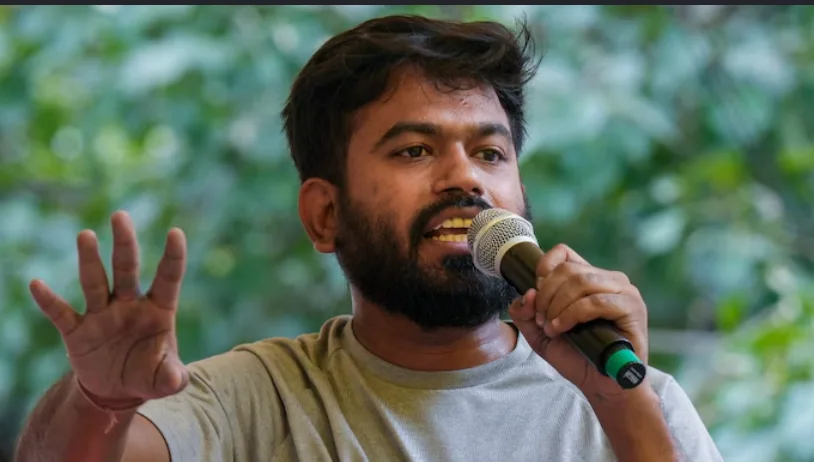
NSUI President Vinod Jakhar also visited the site and questioned the government over alleged lapses in safety standards.

NSUI workers staged a protest at the location but were later removed by police. Members of the organisation also participated in rescue-related efforts, while Jakhar visited AIIMS to meet injured people.

The organisation’s election in-charge Akhilesh Yadav also questioned the government over the incident while stating that NSUI workers were working to assist those affected.

Satya Niketan collapse becomes DUSU election issue

The building collapse has occurred ahead of the Delhi University Students’ Union elections, adding another issue to the political contest between ABVP and NSUI.

Both student organisations have also released helpline numbers through their social media platforms and asked their workers to remain deployed at hospitals to assist students and families.

The Satya Niketan incident has therefore put two issues in focus: the safety and affordability of private accommodation for Delhi University students and accountability over buildings being used for such accommodation.

With DUSU elections approaching, student safety and housing conditions are also expected to remain part of the political discussion on the campus.

Continue Reading

Trending

© Copyright 2022 APNLIVE.com