
India News
Zomato takes down Kachra ad after flak for being casteist, BoycottZomato trends
A comparison between Kachra (trash) and the outcast character in the film Lagaan, which was released in 2001, was made by Zomato.


Zomato, the food delivery brand, recently got into trouble after their new Kachra ad campaign which has now sparked controversy across the internet.
The campaign’s tagline, Don’t waste food, Don’t’ be Kachra, was displayed alongside a series of advertisements presenting left-over food in an effort to promote cleanliness and decrease food waste.
The campaign, which was released on June 5 on the occasion of World Environment Day, aimed to increase awareness of the burden that plastic waste has on the environment and to highlight how many kilograms of waste is used to produce even the most basic items. For example, a paperweight requires 3-4 kg of recycled waste, while hand towels require 9-12 kg.
The Zomato advertisement showed how the company chooses to deliver food without using any plastic, therefore protecting the environment.
A comparison between Kachra (trash) and the outcast character in the film Lagaan, which was released in 2001, was made by Zomato. The advertisement also featured the actor, Aditya Lakhiya, who played the character of Kachra in the film Lagaan. Given the larger backdrop of commercial entertainment in India, some users said, Kachra’s character in Lagaan had a contextual meaning.
The actor was presented in a variety of contexts, including as a recycled hand towel, a similar flower pot and paper.
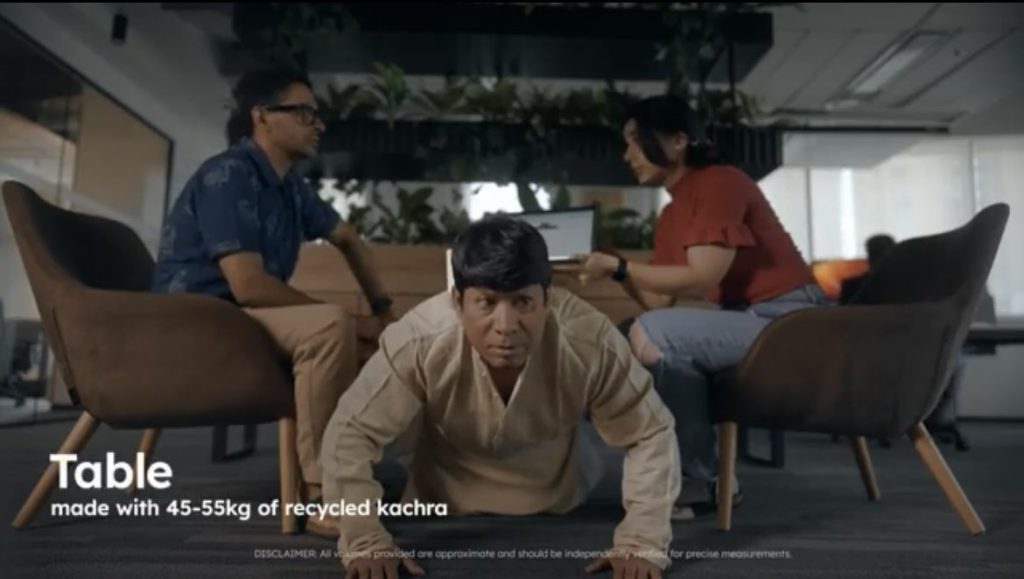
However, the campaign failed to connect with the audience and received criticism for its insensitive approach and was referred to as a casteist idea on various social media platforms.
Users have now flooded the internet with their criticism, expressing their dissatisfaction towards the ad. Twitter is filled with #BoycottZomato.
One user wrote, Zomato’s Kachra advertisement was not an accident, rather, it was a planned and intentional act that may have been approved by the company’s senior management. The user went on to criticise Zomato, labeling it as having casteist ideas. While another said, Zomato’s highly casteist campaign can be attributed to a lack of diversity.
However, the company informed in a Tweet about the advertisement being pulled down after the flak by the users and justifying its campaign wrote, on the occasion of World Environment Day, its intent was to aware the audience about the alternative usage of plastic waste and its recycling in a humorous way but unfortunately it hurt the sentiments of some individuals and community.
To this decision of Zomato taking the campaign back, it again received crticism from the users, while some called it arrogance for not making any apology, while some were satisfied with the timley action by the company.
A user wrote, the usual day casteism was unfortunate and was happy with Zomato’s timely action by removing the advertisement.








India News
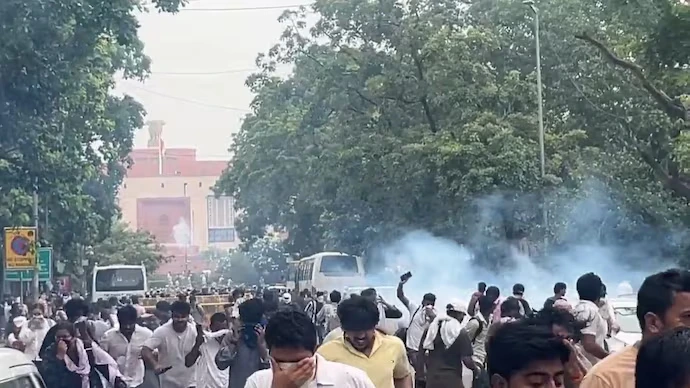
Delhi deploys 25,000 personnel, installs CCTV cameras ahead of CJP march
More than 25,000 police and paramilitary personnel have been deployed in Delhi ahead of the CJP’s planned protest march at Connaught Place. Authorities have also imposed restrictions and stepped up CCTV surveillance.

India News
Mallikarjun Kharge’s ‘Your Friends’ jab at Rahul Gandhi over congress exits
Congress president Mallikarjun Kharge took a dig at Rahul Gandhi after the Leader of the Opposition reportedly described former party leaders Jyotiraditya Scindia and Ghulam Nabi Azad as among those who had left the Congress.

India News
Delhi Police offers 11-person limit for CJP’s Connaught Place protest
Delhi Police has offered to facilitate a group of 11 people at Central Park in Connaught Place for the Cockroach Janata Party’s October 16 protest, while warning that violations of prohibitory orders could invite legal action.


Election Commission orders voter roll revision in 17 states, UTs

Delhi Police offers 11-person limit for CJP’s Connaught Place protest

Actor Imran Khan asked to leave India after CJP protest

Magnitude 7 earthquake strikes Russia’s Kamchatka Peninsula

Mallikarjun Kharge’s ‘Your Friends’ jab at Rahul Gandhi over congress exits
Magnitude 7 earthquake strikes Russia’s Kamchatka Peninsula

Delhi deploys 25,000 personnel, installs CCTV cameras ahead of CJP march
Mallikarjun Kharge’s ‘Your Friends’ jab at Rahul Gandhi over congress exits
Delhi Police offers 11-person limit for CJP’s Connaught Place protest
Actor Imran Khan asked to leave India after CJP protest

Afghan Men Try To Hang With The Jet Engine Of The Aircraft in Kabul- Afghanistan News – Kabul News
Trending Top 10 News: 10000 Crore Fine on Flipkart, Apple to Launch Unique Feature, Hdfc Bank Job Ad

Trending Top 10 News: Nokia 6310, Apple sales, Bachpan ka Pyar Video Kid, Dainik Bhaskar IT Raid

Trending Top 10 News: Canada bans Indian flights, Rain in Delhi NCR, AIMIM Twitter hacked, Raj Kundra case

Trending Top 10 News: Shein India, Apple New Service, Pocket Oxygen, Oppo Launched New Phone
-
 India News22 hours ago
Election Commission orders voter roll revision in 17 states, UTs
-
 India News21 hours ago
Delhi Police offers 11-person limit for CJP’s Connaught Place protest
-
 India News22 hours ago
Actor Imran Khan asked to leave India after CJP protest
-
 Latest world news9 hours ago
Magnitude 7 earthquake strikes Russia’s Kamchatka Peninsula
-
 India News9 hours ago
Mallikarjun Kharge’s ‘Your Friends’ jab at Rahul Gandhi over congress exits
-
 India News9 hours ago
Delhi deploys 25,000 personnel, installs CCTV cameras ahead of CJP march
