
India News
BLOW TO PAK: GERMANY TURNS DOWN PAK’S REQUEST
Pakistan had made the request for access to the air independent propulsion system that can recharge submarine batteries without having to surface for longer periods. Pakistan had proposed the upgrade for submarines in its inventory and the Yuan class submarines being manufactured…..


Pakistan had made the request for access to the air independent propulsion system that can recharge submarine batteries without having to surface for longer periods. Pakistan had proposed the upgrade for submarines in its inventory and the Yuan class submarines being manufactured under joint China-Pakistan project in China.
The AIP system would have enhanced the combat capabilities of its submarines by allowing the diesel engines to run without atmospheric air for a week or more. Conventional submarines have to surface almost every second day to run their air-breathing diesel engines, running the risk of detection.
An Indian official said Germany’s refusal to help Prime Minister Imran Khan’s government with this technology would “adversely impact its lethality and vulnerability”.

India’s Defence Research and Development Organisation is indigenously developing the system for the navy’s submarines. Last year, the effort crossed several milestones when it successfully tested a land-based prototype that New Delhi had then declared would have a “force multiplier effect on lethality of a diesel electric submarine”.
Pakistan watchers in Delhi said the primary reason for Germany to take a hard stance on Pakistan’s request was being attributed to its role in promoting terror, particularly Pakistan’s failure to cooperate in identifying the perpetrators of the truck bomb attack on the Germany Embassy in Kabul in May 2017.
Nearly 150 people were killed in the bombing that devastated a central area of Kabul near the embassy. The bombing, counted among the deadliest terror strikes in recent years, was linked to the Haqqani Network that is known in counter-terror circuits to be supported and directed by Pakistan.
Read Also: VACANT ASSEMBLY SEATS: EC YET TO DECIDE ABOUT BY-POLLS
The Afghan National Directorate of Security had then gone on record to blame the Haqqani network based in neighbouring Pakistan for the terror strike and accused Pakistan’s spy agency ISI of helping in planning the attack. German officials have noted that Islamabad hadn’t pursued the investigations at its end.









India News
Delhi deploys 25,000 personnel, installs CCTV cameras ahead of CJP march
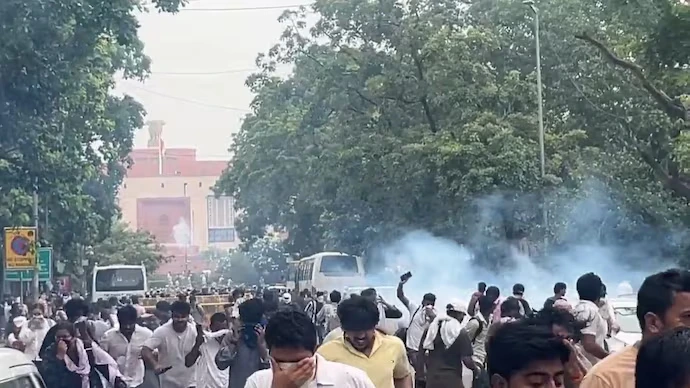
More than 25,000 police and paramilitary personnel have been deployed in Delhi ahead of the CJP’s planned protest march at Connaught Place. Authorities have also imposed restrictions and stepped up CCTV surveillance.

India News
Mallikarjun Kharge’s ‘Your Friends’ jab at Rahul Gandhi over congress exits
Congress president Mallikarjun Kharge took a dig at Rahul Gandhi after the Leader of the Opposition reportedly described former party leaders Jyotiraditya Scindia and Ghulam Nabi Azad as among those who had left the Congress.

India News
Delhi Police offers 11-person limit for CJP’s Connaught Place protest
Delhi Police has offered to facilitate a group of 11 people at Central Park in Connaught Place for the Cockroach Janata Party’s October 16 protest, while warning that violations of prohibitory orders could invite legal action.

India-US trade deal first phase finalised, drafting underway

Election Commission orders voter roll revision in 17 states, UTs

Actor Imran Khan asked to leave India after CJP protest

Delhi Police offers 11-person limit for CJP’s Connaught Place protest

Mallikarjun Kharge’s ‘Your Friends’ jab at Rahul Gandhi over congress exits

Magnitude 7 earthquake strikes Russia’s Kamchatka Peninsula

Delhi deploys 25,000 personnel, installs CCTV cameras ahead of CJP march
Mallikarjun Kharge’s ‘Your Friends’ jab at Rahul Gandhi over congress exits
Delhi Police offers 11-person limit for CJP’s Connaught Place protest
Actor Imran Khan asked to leave India after CJP protest

Afghan Men Try To Hang With The Jet Engine Of The Aircraft in Kabul- Afghanistan News – Kabul News
Trending Top 10 News: 10000 Crore Fine on Flipkart, Apple to Launch Unique Feature, Hdfc Bank Job Ad

Trending Top 10 News: Nokia 6310, Apple sales, Bachpan ka Pyar Video Kid, Dainik Bhaskar IT Raid

Trending Top 10 News: Canada bans Indian flights, Rain in Delhi NCR, AIMIM Twitter hacked, Raj Kundra case

Trending Top 10 News: Shein India, Apple New Service, Pocket Oxygen, Oppo Launched New Phone
-
 India News22 hours ago
India-US trade deal first phase finalised, drafting underway
-
 India News20 hours ago
Election Commission orders voter roll revision in 17 states, UTs
-
 India News19 hours ago
Actor Imran Khan asked to leave India after CJP protest
-
 India News18 hours ago
Delhi Police offers 11-person limit for CJP’s Connaught Place protest
-
 India News6 hours ago
Mallikarjun Kharge’s ‘Your Friends’ jab at Rahul Gandhi over congress exits
-
 India News6 hours ago
Delhi deploys 25,000 personnel, installs CCTV cameras ahead of CJP march
-
 Latest world news6 hours ago
Magnitude 7 earthquake strikes Russia’s Kamchatka Peninsula
