English हिन्दी
Connect with us

India News

Government boosts crop insurance with Rs 69,515 crore for farmers till 2026

Published

on

BJP leaders at meeting to finalize Delhi's Chief Minister

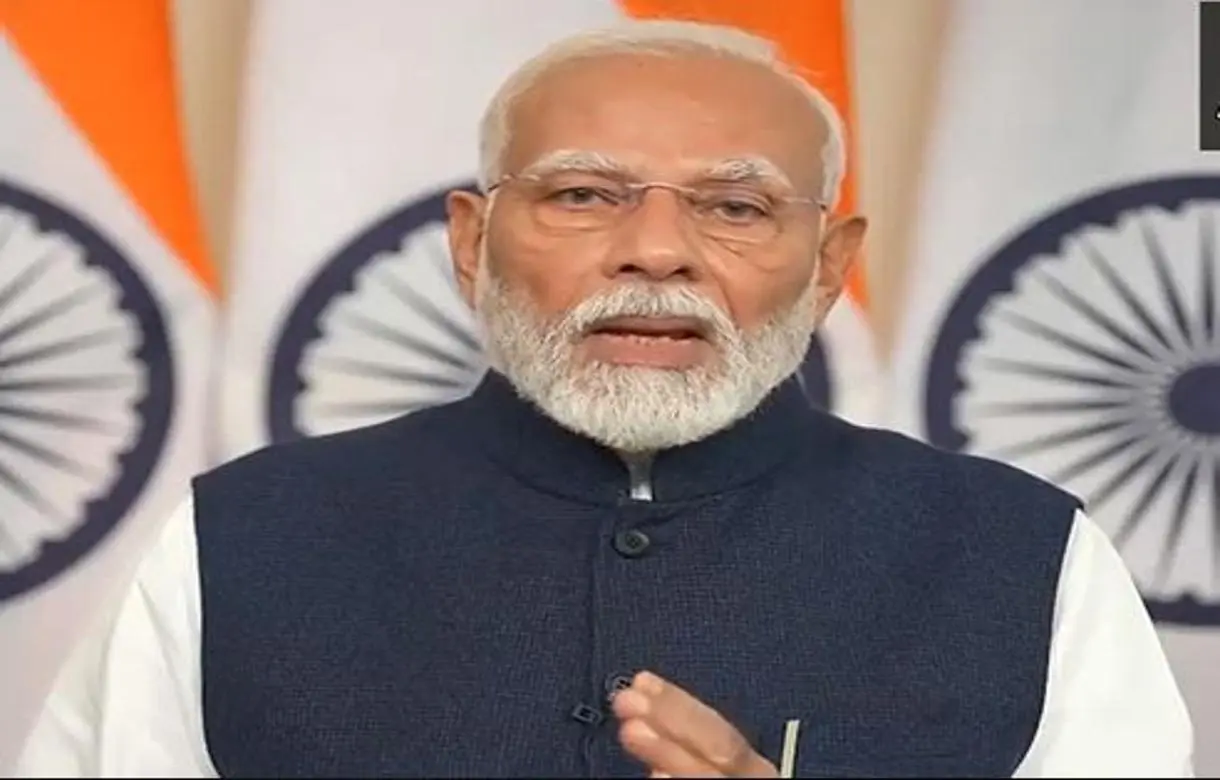
Prime Minister Narendra Modi today announced a significant increase in the government’s commitment to supporting farmers through enhanced crop insurance. The Cabinet approved a proposal to continue the Pradhan Mantri Fasal Bima Yojana (PMFBY) and the Restructured Weather Based Crop Insurance Scheme (RWBCIS) until 2025-26 with an overall budget of Rs 69,515.71 crore.

In a tweet, Prime Minister Modi dedicated this decision to the country’s farmers, highlighting that the increased allocation would not only improve crop safety but also reduce farmers’ concerns over potential losses due to natural calamities. “The first decision of the new year is dedicated to our country’s farmers. We have approved the increased allocation for crop insurance, which will further safeguard their crops and reduce their worries about losses,” Modi tweeted, sharing the press release from the Government of India.

The initiative, which covers the risk of crop loss from unavoidable natural disasters, will benefit farmers nationwide. In addition to the increased funding, the Cabinet also approved the establishment of a Fund for Innovation and Technology (FIAT) with a corpus of Rs 824.77 crore. This fund will be used to implement technological advancements such as the YES-TECH and WINDS programs, aimed at improving transparency, claim calculations, and settlement processes.

Key features of the new initiative

  1. PMFBY and RWBCIS Continuation: The schemes, which aim to provide financial support to farmers affected by natural calamities, will run until 2025-26.
  2. Technological Infusion: The government will invest in cutting-edge technologies to enhance the accuracy of yield estimates and the speed of claims settlement. YES-TECH, for example, uses Remote Sensing Technology for yield estimation with a focus on a minimum 30% weightage based on technology. Currently, nine states, including Uttar Pradesh, Maharashtra, and Tamil Nadu, are implementing YES-TECH.
  3. Weather-based Data Systems: The WINDS initiative aims to expand the network of weather stations to provide hyper-local weather data crucial for farmers. Automatic Weather Stations (AWS) will be installed at the block level, and Automatic Rain Gauges (ARG) will be set up at the panchayat level. This initiative is currently being implemented in nine major states, including Kerala and Karnataka.
  4. North Eastern States Priority: The center will continue to prioritize farmers in the North Eastern states, offering a 90% subsidy on premium costs. However, due to the voluntary nature of the scheme and low gross cropped area, the states will have flexibility in reallocating funds for other developmental projects.

Impact on Farmers

This move is expected to provide relief to farmers dealing with unpredictable weather conditions and natural disasters. The infusion of technology is expected to streamline claims processes, making them more efficient and transparent. Moreover, the central government’s support through premium subsidies will ensure wider coverage for farmers, particularly in regions like the North East, where agricultural challenges are more pronounced.

The initiative also aims to address the needs of farmers in rural areas who may have limited access to traditional insurance schemes. By providing a more accessible and reliable system, the government aims to mitigate the financial risks that farmers face, allowing them to focus on productivity rather than the unpredictability of weather and natural calamities.

This announcement is part of the government’s broader efforts to ensure that farmers remain financially protected against the increasing challenges posed by climate change and other environmental factors.

The scheme’s wider implementation across the country reflects the government’s ongoing commitment to supporting agriculture and rural economies.

For more information, check the official press release here.

India News

Kerala LSS USS result 2026: Official website slow? Check how to download scorecard online

The Kerala CM Kids LSS USS result 2026 has been declared online. Here is a comprehensive troubleshooting guide and step-by-step process to download your scorecard if the official portal bpekerala.in is down or unresponsive.

Published

on

Results

The Kerala Public Examination Section has officially announced the Kerala CM Kids LSS and USS result 2026. The scorecard link is live for candidates who sat for the scholarship eligibility examinations conducted in February 2026.

However, shortly after the declaration, several students and parents encountered difficulties trying to log onto the main portal, bpekerala.in. Due to a massive surge in simultaneous traffic from eager candidates, the official website has experienced temporary server slowdowns, loading delays, and intermittent error screens. Media reports indicate that the portal might stay slow during peak hours, but authorities ensure that the result data is perfectly safe and live online.

👉 Click Here to Check Kerala LSS USS Result 2026

Why the Kerala LSS USS result website is slow

Technical glitches right after a major result declaration are quite common due to infrastructural limitations during peak traffic. Some of the primary factors contributing to the current loading errors include:

  • High visitor traffic: Thousands of students trying to load the homepage simultaneously.
  • Server overload: Simultaneous database requests leading to temporary unresponsive servers.
  • Mobile compatibility limitations: Heavy traffic coupled with certain mobile browsers causing slow rendering times.

Step-by-step guide to download Kerala LSS USS result 2026

If you are experiencing slow loading speeds on the primary web server, you can carefully try the following steps to download your marksheet:

  • Step 1: Navigate to the official website at bpekerala.in and let the landing page load completely without interrupting.
  • Step 2: Find and click on the link labeled “CM Kids LSS USS Result 2026” or head directly to the dedicated “Results” tab on the interface.
  • Step 3: Enter your accurate credentials, which include your Registration Number and Date of Birth (formatted as DD/MM/YYYY), precisely as mentioned in your original hall ticket.
  • Step 4: Click on the “Submit” or “View Result” button. If the screen takes time to process, avoid refreshing multiple times as it can block your session.
  • Step 5: Once your breakdown of scores appears on the dashboard, download the digital copy or capture a screenshot, then print a physical copy for any future administrative or school needs.

Alternative links and troubleshooting tips

If bpekerala.in fails to open entirely, candidates are advised not to panic. A backup official digital platform has been set up to ease the main server load. Students can log into pareekshabhavan.kerala.gov.in to access mirrored links for checking their LSS and USS scholarship scores.

Additionally, you can follow these easy technical fixes to bypass server bottlenecks:

  • Clear browser data: Empty your browser cache or open the link using an Incognito/Private window.
  • Change connectivity: Switch your internet connection from mobile data to a stable Wi-Fi connection, or vice versa, to reset data routing.
  • Switch your browser: Try alternative web browsers like Mozilla Firefox or Google Chrome instead of default system web viewers.
  • Check during off-peak windows: Wait for about 15 to 30 minutes and re-attempt during non-peak windows when server traffic naturally drops down.

Continue Reading

India News

Satellite imagery shows major cloud surge across India, weather alerts issued for multiple states

A massive collision between hot summer air and shifting moisture zones has triggered a yellow weather alert across India’s northern states, while southern regions prepare for an early monsoon burst.

Published

on

The weather dynamics over the Indian subcontinent are experiencing a dramatic shift. Recent thermal infrared space data has captured a massive atmospheric disturbance moving over the upper regions of Northern India, prompting weather authorities to declare warning alerts for several regions. Simultaneously, signs of seasonal wind shifts are rapidly accelerating in the southern parts of the country.

Himalayan states on alert for heavy downpours

According to data released by the state meteorological body, a yellow alert has been activated across various Himalayan states due to an eastward-moving weather system that is triggering unstable atmospheric conditions. Advanced INSAT-3DS tracking imagery shows a giant, spiral-shaped cloud cover spreading extensively over Jammu & Kashmir, Himachal Pradesh, and Uttarakhand.

Media reports confirm that these dense, cold cloud formations are the result of an active western disturbance colliding with hot pre-monsoon air masses over Northern India. The distinct bright white bands observed in the satellite visuals represent heavily developed thunderclouds. Experts warn that these formations have the capacity to trigger severe localized rain, heavy lightning, and intense hailstorms in the affected mountain zones.

Southern India braces for early monsoon arrival

While the northern mountains handle shifting cloud patterns, a completely different weather system is gathering strength in Southern India. Deep convective cloud formations are accumulating rapidly over the Arabian Sea, specifically near Lakshadweep and the Kerala coastline.

This specific cloud pattern points to an active surge of moisture moving from the equatorial Indian Ocean directly into the southern mainland, which serves as a major indicator that the southwest monsoon is arriving ahead of schedule. Official forecasts note that the onset of the seasonal rains could happen as early as May 26, bypassing the traditional June 1 timeline. This would stand out as one of the earliest recorded monsoon arrivals in recent years.

Intense heatwave collides with incoming moist air

The upcoming seasonal transition has sparked a complex environmental situation. Even as these rain systems intensify, large areas of Central and Northwest India continue to struggle under severe heatwave conditions.

This severe clash between the scorching, dry continental air over the central plains and the incoming moist marine currents is actively fueling violent, sudden thunderstorm activities further north. Analysts monitoring the real-time satellite maps observe a massive atmospheric tug-of-war, with heavy cloud shields expanding over both the Himalayan range and the Arabian Sea, signaling the official end of peak summer conditions across the nation. Looking ahead, authorities have issued warnings for isolated heavy to very heavy precipitation over Kerala between May 28 and June 3 as the moisture currents consolidate.

Continue Reading

India News

No uniform civil code provisions will be imposed on tribals, clarifies Amit Shah

Union Home Minister Amit Shah has assured tribal communities that the proposed Uniform Civil Code will not interfere with their customs, urging them not to be misled by misinformation.

Published

on

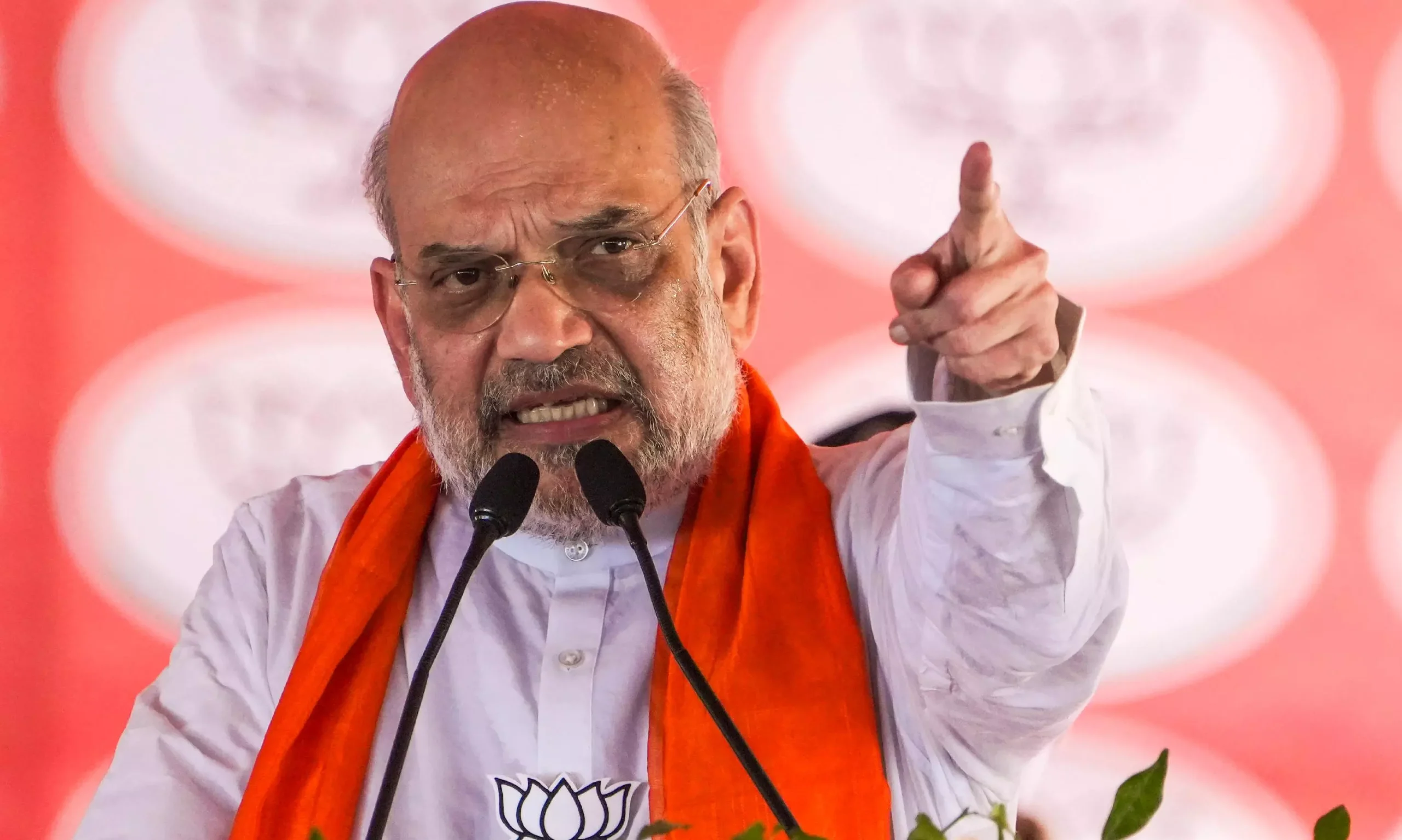
Union Home Minister Amit Shah on Sunday declared that the proposed Uniform Civil Code (UCC) will not impact tribal populations in any manner. He called upon the community to stay vigilant against “conspiracies” and misinformation circulating on the subject.

Addressing the Janjati Sanskritik Samagam—a tribal conclave organized by the Janjati Suraksha Manch at the Red Fort grounds to mark the 150th birth anniversary year of Birsa Munda—Shah stated that specific provisions have been implemented in states ruled by the ruling party to exclude tribal communities from the scope of the code.

Clarification on customs and traditions

The Home Minister highlighted that a deliberate narrative has emerged suggesting the proposed legislation would strip tribal societies of their distinct culture, traditions, and customary lifestyles.

He explicitly clarified that the central government has no intention of forcing UCC regulations upon tribal or Vanvasi communities. Shah pointed out that where regional administrations have initiated the code, care has been taken by the leadership to ensure that indigenous populations remain fully outside its jurisdiction. He requested attendees to disseminate this assurance deeply into forest zones and rural villages to erase lingering apprehensions.

Focus on security and community development

Beyond the legislative framework, Shah detailed the progress made toward curbing internal security threats, stating that the nation is steadily advancing toward eradicating Naxalism entirely. He noted that violent disruptions had severely restricted progress in these belts for decades, leading to the loss of thousands of tribal lives. According to the minister, regional stability will now pave the way for accelerated development across remote hills and forests.

The address also covered constitutional rights regarding personal faith. Shah mentioned that the original framework of the Constitution grants every citizen the dignity to practice their traditional beliefs without facing coercion, temptation, or material inducement for religious conversion.

Reflecting on financial allocations, the minister criticized earlier political administrations for keeping tribal welfare funding low. He underscored that the current administration under Prime Minister Narendra Modi significantly elevated the dedicated tribal budget from a previous Rs 28,000 crore to Rs 1.54 lakh crore. Terming the vast gathering a historical movement for cultural preservation, Shah described the societal awakening as a major step toward safeguarding tribal heritage for future generations.

Continue Reading

Trending

© Copyright 2022 APNLIVE.com