English हिन्दी
Connect with us

India News

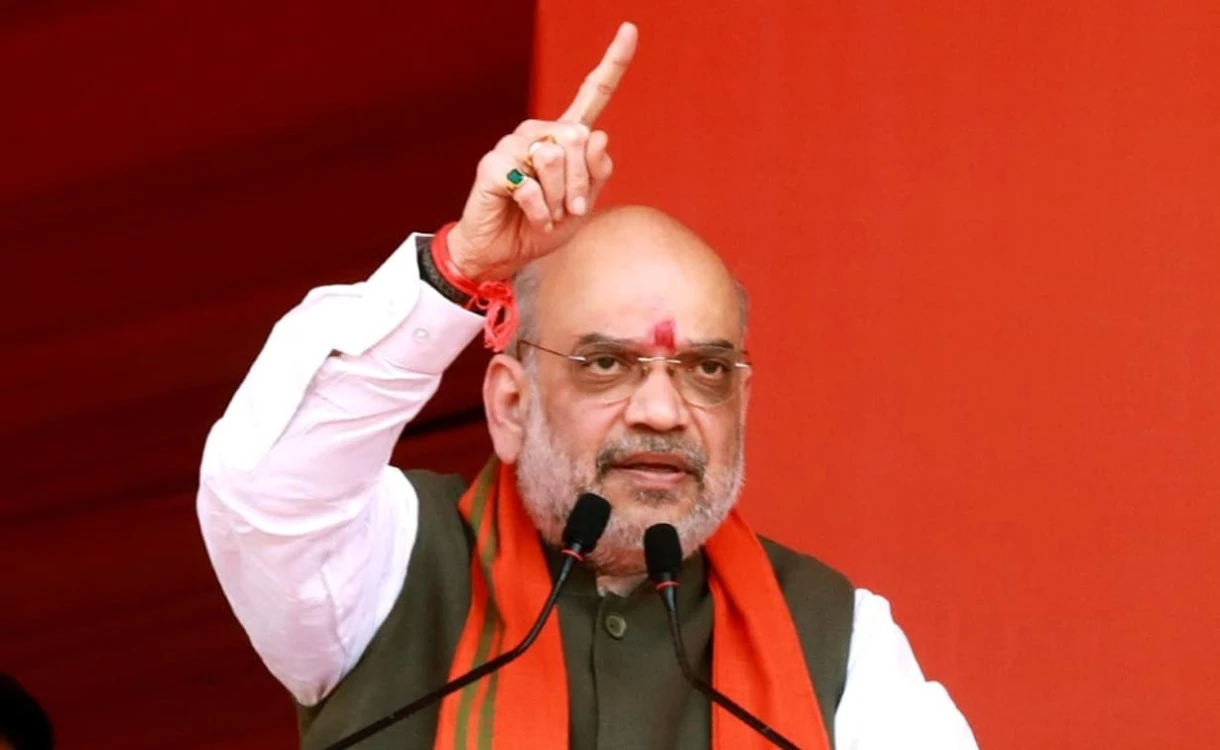
Amit Shah says Naxalism is over, vows to end Punjab drug trade by 2029

Amit Shah said the Centre would work to eliminate Punjab’s drug trade by December 31, 2029. He also called for CBI investigations into two additional cases involving people whose deaths were linked to the fight against drugs.

Published

on

Amit Shah

Union Home Minister Amit Shah has reiterated the Centre’s commitment to eliminating the drug trade in Punjab by December 31, 2029, drawing a parallel with the government’s claim that it has ended Naxalism.

Speaking at a Vijayadashami event in Ludhiana on Tuesday, Shah said the fight against narcotics would continue until the drug trade was eliminated. He also called on the Punjab government to transfer two additional cases involving people who had opposed the drug menace to the Central Bureau of Investigation (CBI).

Shah’s remarks came during his visit to Punjab, where he met families affected by deaths linked to the state’s drug problem.

Amit Shah sets 2029 deadline for drug-free Punjab

Addressing the gathering in Ludhiana, Shah said the government had fulfilled several of its commitments, citing the removal of Article 370 and Article 35A, progress against terrorism and the end of Naxalism.

He said the next priority was to eliminate the drug trade.

Shah reiterated his resolve to eliminate Punjab’s drug trade by December 31, 2029, describing the commitment as a tribute to three people whose families he met during his visit.

The Home Minister urged people to share information about the drug trade through the Narcotics Control Bureau’s toll-free helpline, assuring them that the Modi government would take action on the information received.

Shah seeks CBI probes into two more cases

During his Punjab visit, Shah met the families of Bikramjit Singh in Gurdaspur, Gulzar Singh in Sangrur and Parwinder Singh Jhota in Mansa.

Shah met the families and assured them that action would be taken in the cases.

Shah referred to the case involving Parwinder Singh Jhota in Mansa, which had been transferred to the CBI. He urged Chief Minister Bhagwant Mann to transfer the two other cases, associated with Sangrur and Gurdaspur, to the central agency as well.

The Home Minister said the investigations should establish accountability, adding that influential people involved in the cases would not be spared.

Shah criticises Punjab government over drug menace

Shah accused the Aam Aadmi Party-led government in Punjab of failing to control the drug trade. He also criticised the state administration over the treatment of people who had raised concerns about narcotics.

Referring to the spread of ‘chitta’, a term commonly used for heroin in Punjab, Shah said the drug trade had reached villages across the state.

He argued that people speaking out against the menace were facing serious consequences, including death and suicide, and called for stronger action against those responsible.

The Punjab government and the individuals referred to in the allegations should be given an opportunity to respond to specific accusations.

Shah maintained that the Centre would use its available resources to pursue the cases and work towards ending the drug trade in Punjab by the end of 2029.

India News

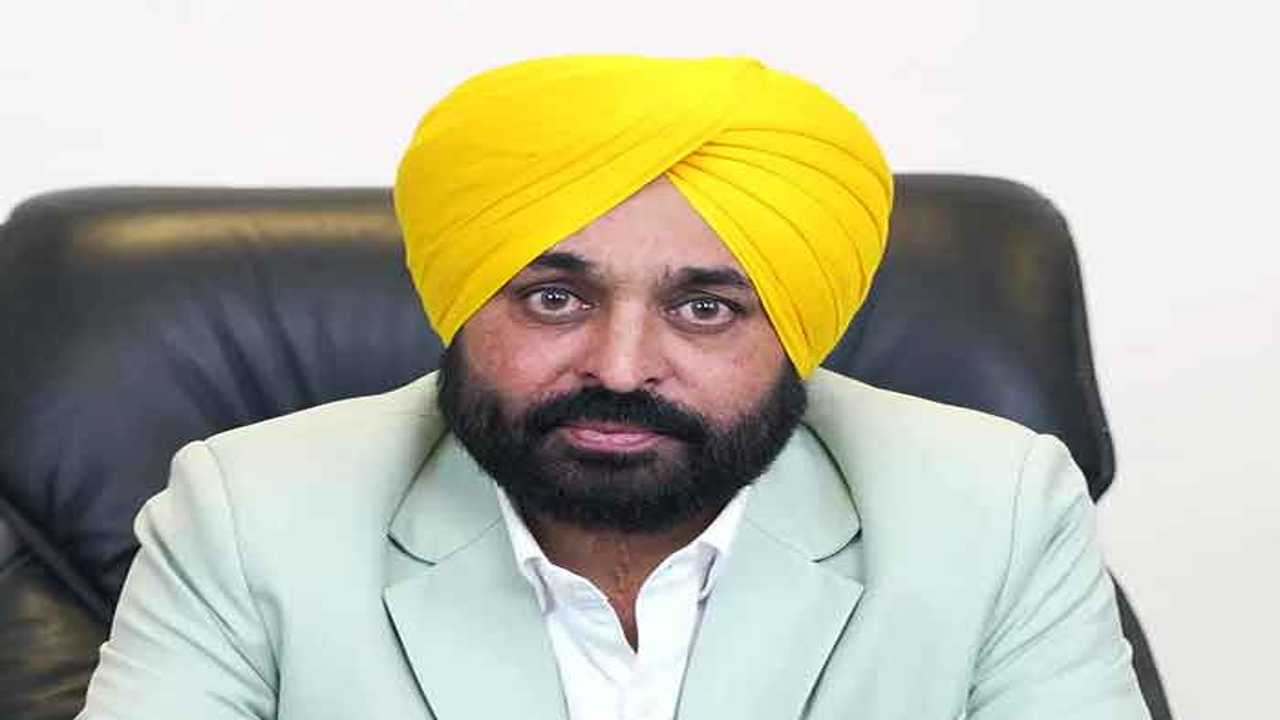
Nayab Saini takes a dig at Bhagwant Mann over alleged drinking habit

Haryana Chief Minister Nayab Singh Saini criticised Punjab CM Bhagwant Mann over an alleged drinking habit, days after Rahul Gandhi made a similar remark at a Sangrur rally.
Published

on

CM Mann

Haryana Chief Minister Nayab Singh Saini has stepped up the political attack on Punjab Chief Minister Bhagwant Mann over an alleged drinking habit, days after Congress leader Rahul Gandhi made a similar allegation at a rally in Sangrur.

Saini appealed to people in Punjab to help Mann give up alcohol while referring to the state’s ongoing battle against drug abuse.

“Mann sahab ki daaroo chhurwao, tabhi nasha khatam ho sakta hai,” Saini said, according to the report. The remark translates to an appeal to help Mann quit drinking, linking the comment to the broader issue of addiction in Punjab.

Rahul Gandhi’s earlier allegation against Mann

The latest political exchange follows remarks made by Rahul Gandhi at a Congress rally in Sangrur on November 4.

Recalling his time in Parliament with Bhagwant Mann, Gandhi alleged that he could smell alcohol on Mann’s breath even at around 11 am. Gandhi, however, said that drinking was Mann’s personal matter.

Gandhi’s argument was that the issue becomes relevant because the Punjab government is expected to lead the fight against substance abuse.

Saini backs Rahul Gandhi’s remarks

Saini had earlier supported Gandhi’s comments, describing them as “absolutely true” and recalling that the two politicians had sat together in the Lok Sabha when they were part of the INDIA alliance.

His latest remarks have extended the political criticism of Mann, bringing the Haryana Chief Minister into the controversy surrounding the Punjab Chief Minister’s alleged drinking habit.

AAP calls remarks a personal attack

The Aam Aadmi Party has rejected the criticism directed at Mann and described Rahul Gandhi’s remarks as a “below-the-belt” personal attack.

AAP also accused the Congress and BJP of joining hands to target the Punjab Chief Minister.

The controversy comes ahead of the 2027 Punjab Assembly election and has added a personal dimension to the opposition’s wider criticism of the AAP government’s handling of drugs and law and order in the state.

It is important to note that the drinking-related statements in the political controversy are allegations made by political opponents and should not be presented as independently established facts.

Continue Reading

India News

Sonia Gandhi says she has little contact with PM Modi, says he avoids eye contact

Sonia Gandhi has said she has had “practically no real contact” with Prime Minister Narendra Modi, describing their interactions at official gatherings as brief and formal.

Published

on

Sonia Gandhi

Former Congress president Sonia Gandhi has described her interactions with Prime Minister Narendra Modi as extremely limited, saying they have had “practically no real contact” despite their long political rivalry.

In her memoir Belonging: A Journey of Love, released on Tuesday, Gandhi writes that she and Modi generally meet only at semi-official gatherings, including occasions when political leaders gather in the Speaker’s chamber.

She says their encounters are usually limited to a formal greeting.

According to Gandhi’s account, when Modi comes face-to-face with her, the two exchange a formal “namaste”. She then writes that he “tends to look away, avoiding eye contact”.

Sonia Gandhi describes ideological differences

Gandhi also says that her differences with Modi extend beyond their political rivalry and reflect contrasting ideas about India.

She writes that Modi was fighting for his vision of India, while she stood for an India based on inclusiveness, secularism and social justice. She described the differences as ideological rather than personal.

At the same time, Gandhi acknowledges aspects of Modi’s political journey that she says she could relate to. She writes that he had worked his way to power within the RSS from an underprivileged world.

What Sonia Gandhi says about their conversations

Gandhi says that apart from brief exchanges, she and Modi have not really conversed. She adds that they have exchanged formal birthday and New Year greetings over the years.

She also recalls occasions when Modi asked about her wellbeing after she returned from hospital, to which she responded politely.

The memoir also contains Gandhi’s broader reflections on Modi’s politics, the RSS and his criticism of former Prime Minister Jawaharlal Nehru. These are presented as Gandhi’s own political views and interpretations in the book.

About Sonia Gandhi’s memoir

Belonging: A Journey of Love is Sonia Gandhi’s personal memoir, covering her life in Italy and the UK, her relationship with Rajiv Gandhi, her arrival in India and her decades in public life. It also discusses her relationship with former Prime Minister Indira Gandhi and several major personal events in her life.

Continue Reading

India News

Congress puts UP house in order ahead of alliance talks with Samajwadi Party

Congress has intensified its preparations for the 2027 Uttar Pradesh Assembly elections ahead of alliance talks with the Samajwadi Party, with Priyanka Gandhi Vadra tasked with key organisational responsibilities and candidate selection.
Published

on

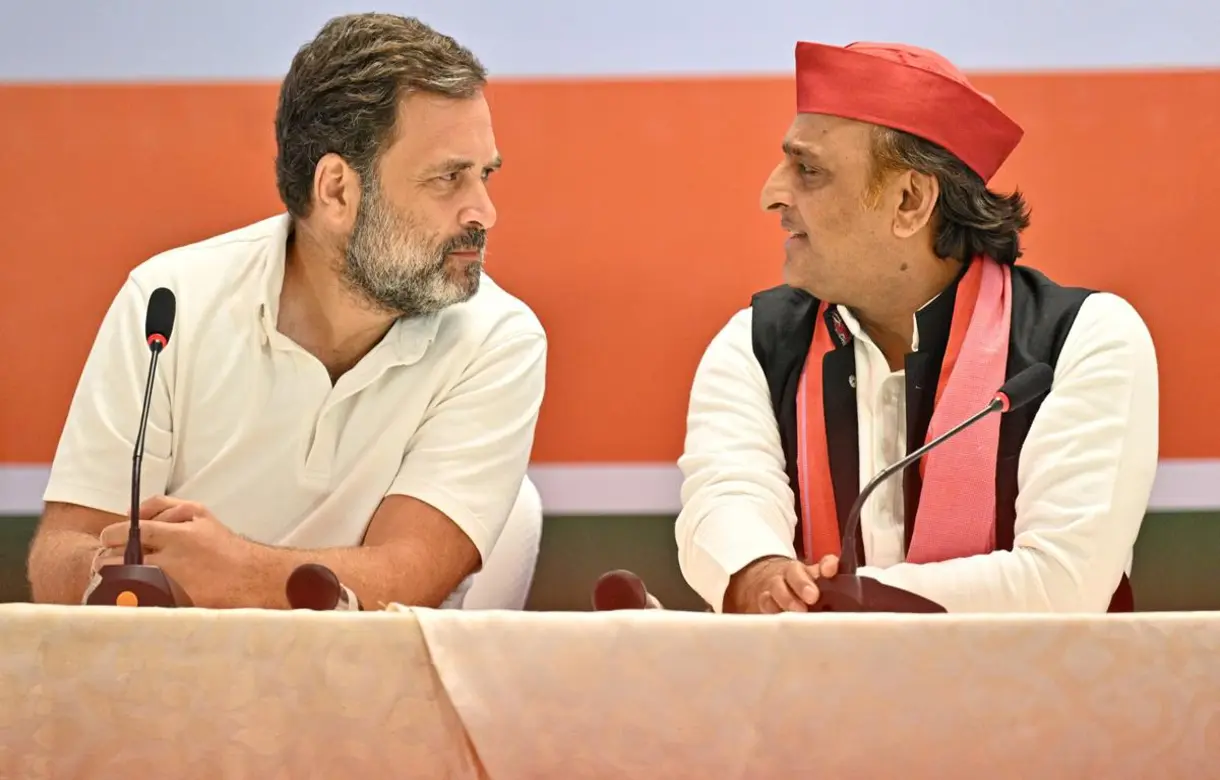
Rahul akhilesh

The Congress has begun strengthening its organisational structure in Uttar Pradesh ahead of proposed alliance discussions with the Samajwadi Party for the 2027 Assembly elections. With negotiations expected to begin after Chhath Puja, the party leadership has entrusted Congress general secretary Priyanka Gandhi Vadra with several key responsibilities in the state.

Rahul Gandhi has asked his sister to oversee the party’s preparations in Uttar Pradesh, where the Congress is looking to strengthen its position before entering seat-sharing negotiations with Samajwadi Party chief Akhilesh Yadav.

No date has been finalised for the discussions. However, party insiders expect the talks to begin after the Chhath festival.

Priyanka Gandhi gets key responsibilities

Priyanka Gandhi’s responsibilities include overseeing the formation of the party’s manifesto, campaign and coordination committees.

She has also been tasked with organising four major rallies across Uttar Pradesh’s Purvanchal, Bundelkhand, Awadh and Western regions.

One of her most important responsibilities will be identifying candidates for around 100-115 constituencies. The party wants to shortlist leaders who can challenge the BJP while remaining aligned with the Congress’s ideology.

Priyanka Gandhi has also increased her involvement in the state’s political affairs, partly to address unnecessary public statements by Congress leaders that could affect the party’s relationship with the Samajwadi Party.

Congress-SP alliance talks and seat-sharing differences

The Congress leadership is reportedly satisfied with the Samajwadi Party’s participation in the November 1 rally at Delhi’s Ramlila Maidan, where the SP brought a large number of workers.

A senior Congress leader told the media that there would be no major hurdles in forming an alliance with the Samajwadi Party for the Uttar Pradesh Assembly elections.

The final decision, however, will be taken by Rahul Gandhi, Priyanka Gandhi Vadra and Akhilesh Yadav, the leader said.

Despite the positive signals, differences over seat-sharing remain an important issue between the two parties.

Some Congress leaders have claimed that the party has already prepared a list of 180-200 constituencies. Others have maintained that the Congress should not be taken lightly during negotiations.

Samajwadi Party leaders, however, have indicated that the Congress should consider a figure closer to 80-100 seats.

Priyanka Gandhi has reportedly instructed the Uttar Pradesh Congress leadership, including the state in-charge, state president, working presidents and other office-bearers, to avoid unnecessary public statements that could negatively affect the proposed alliance.

Samajwadi Party gains confidence after MLC election results

The Samajwadi Party is also entering the proposed negotiations with increased confidence following its performance in the recent Uttar Pradesh Legislative Council elections.

The party won five of the 11 seats that went to polls. It had previously held only three of those seats.

The MLC elections were considered an important test for the party ahead of the 2027 Assembly elections.

Following the results, Akhilesh Yadav described the BJP’s performance as a “double defeat” and said the outcome had laid the groundwork for the Samajwadi Party’s victory in the next Assembly elections.

Swami Prasad Maurya could become a point of friction

Another issue that could complicate the Congress-SP relationship is Swami Prasad Maurya.

Akhilesh Yadav is understood to have reservations about Maurya, while Congress leader Rajendra Gautam, who is in charge of the state, considers him a friend.

Maurya had won the 2017 Uttar Pradesh Assembly election on a BJP ticket and served as a minister in the state government. He subsequently joined the Samajwadi Party ahead of the 2022 Assembly elections but lost his election.

He later formed his own political party, the Janata Party, and has frequently criticised Akhilesh Yadav and his PDA (Pichhda, Dalit, Alpsankhyak) platform.

The Samajwadi Party has made it clear that it does not want Maurya included in the proposed alliance under any circumstances.

This leaves the Congress with a difficult choice. If it decides to accommodate Maurya, it may have to allocate him a constituency from its own share of seats rather than the Samajwadi Party’s quota.

With alliance discussions approaching, the Congress is focusing on strengthening its organisation and identifying potential candidates before negotiating with Akhilesh Yadav’s party.

Continue Reading

Trending

© Copyright 2022 APNLIVE.com