English हिन्दी
Connect with us

India News

BJP seals Assam seat-sharing pact, Modi to hold 3 rallies in April

BJP has finalised its Assam seat-sharing plan with allies and is gearing up for an intense campaign led by PM Modi and Amit Shah.

Published

on

pm modi

The Bharatiya Janata Party has finalised its seat-sharing arrangement for the upcoming Assam Assembly elections, firming up its strategy alongside National Democratic Alliance partners as campaigning gathers pace in the state.

Under the agreement, the BJP will contest 89 seats, while its allies — Asom Gana Parishad and Bodoland People’s Front — will field candidates in 26 and 11 constituencies respectively. The distribution has been decided after internal deliberations, with the focus now shifting to candidate announcements and campaign execution.

Campaign push led by top leadership

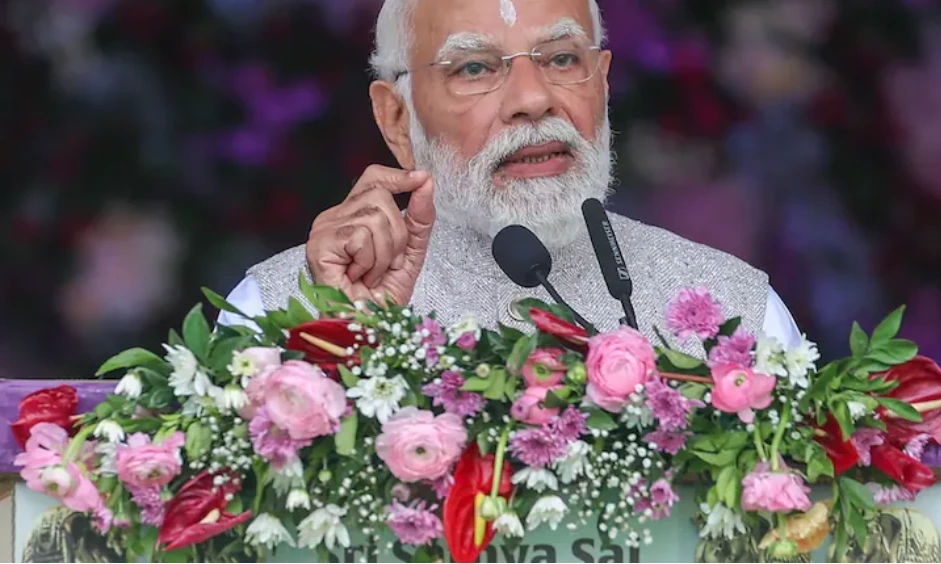
Prime Minister Narendra Modi is expected to address three rallies in Assam during the final leg of the campaign. Tentative dates for the rallies are April 1, April 3 and April 6, with events likely to be held in key constituencies.

Union Home Minister Amit Shah is also set to spearhead an extensive campaign across the state through March, aiming to energise party workers and strengthen voter outreach.

Candidate selection underway

The party’s Central Election Committee is currently meeting to finalise candidates. Sources indicate that approvals for most constituencies are expected soon, and the BJP may release its complete list of candidates within the next two days.

Ticket distribution remains a crucial exercise, with internal discussions highlighting its potential impact on local political dynamics. Party leaders have also touched upon the proposed delimitation exercise scheduled for 2027, which is expected to have long-term implications for Assam’s electoral landscape.

Polling and counting dates

Voting for all 126 Assembly seats in Assam is scheduled for April 9, while the votes will be counted on May 4.

India News

No state will lose a seat, Centre assures as delimitation debate takes centre stage in Parliament

Parliament’s special session begins with key focus on implementing women’s reservation and delimitation, setting the stage for major electoral changes.

Published

on

Parliament

A special session of Parliament commenced on Thursday, with the Centre set to take up crucial legislation related to women’s reservation and delimitation of constituencies. The session, scheduled over three days, is expected to witness intense debate as the government pushes forward its legislative agenda.

At the centre of discussions is the proposal to operationalise the women’s reservation law, which seeks to allocate 33 percent of seats in the Lok Sabha and state assemblies to women. The law, passed earlier, requires enabling provisions before it can be implemented.

The rollout of the reservation is closely tied to the delimitation exercise — a process that redraws parliamentary constituencies based on updated population data. The implementation is expected only after the next census and delimitation process are completed.

The government is aiming to put in place the framework so that the reservation can be enforced in future elections, likely around 2029.

Delimitation and numbers at play

Delimitation is a key aspect of the proposed changes, as it will determine how seats are redistributed and which constituencies are reserved. The exercise is expected to reflect population shifts and may also involve an increase in the total number of Lok Sabha seats.

This linkage has made the issue politically sensitive, with several opposition parties backing women’s reservation in principle but raising concerns over how and when delimitation will be carried out.

Political reactions and expected debate

The session is likely to see sharp exchanges between the government and opposition. While there is broad agreement on increasing women’s representation, disagreements remain over the timing, process, and potential political implications of the delimitation exercise.

Some leaders have argued that delimitation could significantly alter the balance of representation among states, making it a contentious issue beyond the women’s quota itself.

The government, however, has framed the move as a step toward strengthening women’s participation in governance and ensuring more inclusive policymaking.

Continue Reading

India News

Delimitation and women’s quota bills set to be tabled in Parliament today, key numbers explained

The Centre will table key bills on women’s reservation and delimitation, proposing a major expansion of Lok Sabha and changes in seat allocation based on updated census data.

Published

on

Lok Sabha

The Centre is set to introduce a set of crucial bills in Parliament aimed at implementing women’s reservation and redrawing electoral constituencies, marking a major shift in India’s political framework.

According to details accessed from official drafts, three separate legislations are expected to be tabled during the ongoing session. These include a constitutional amendment to operationalise 33% reservation for women, a delimitation bill to redraw constituencies, and changes to laws governing Union Territories.

The move is seen as a coordinated effort to align women’s reservation with a fresh delimitation exercise based on updated population data.

How the numbers may change

One of the most significant proposals is the expansion of the Lok Sabha. The draft legislation suggests increasing the maximum strength of the House to around 815 members, with up to 35 seats allocated to Union Territories.

Currently, the Lok Sabha has 543 elected members. The increase is aimed at ensuring proportional representation after decades of population changes across states.

The proposed delimitation exercise would rely on the latest available census figures, likely the 2011 Census, replacing the long-standing reliance on 1971 data.

Women’s reservation linked to delimitation

The proposed framework makes it clear that the 33% reservation for women in Parliament and state assemblies will only be implemented after the delimitation process is completed.

The reservation is expected to apply across general, Scheduled Caste, and Scheduled Tribe seats, with constituencies being rotated periodically to ensure broader representation.

The reform is likely to come into effect ahead of the 2029 general elections, depending on the completion of the delimitation exercise.

Why delimitation is central to the plan

Delimitation has remained frozen for decades, leading to imbalances in representation due to population growth, migration, and urbanisation.

The new bill proposes setting up a Delimitation Commission, which would be tasked with redrawing constituency boundaries and reallocating seats based on updated population data.

This process is expected to significantly alter the political map of the country and could trigger debates over regional representation.

Continue Reading

India News

Yogi Adityanath warns of strict action over labour violations in Noida

Yogi Adityanath has said workers’ rights are non-negotiable and warned of strict action against labour law violations in Noida amid recent unrest.

Published

on

Yogi Adityanath

Uttar Pradesh Chief Minister Yogi Adityanath has asserted that there will be no compromise on the rights, dignity, and social security of workers, while warning of strict action against any violations in Noida.

The statement comes in the backdrop of recent unrest in the industrial region, where protests by factory workers over wages and working conditions escalated tensions. The chief minister emphasised that safeguarding labour rights remains a top priority for the state government.

He directed officials to ensure that industries strictly follow labour laws, including timely payment of wages, proper working conditions, and social security benefits for workers. Authorities have also been instructed to take firm action against any entity found violating these norms.

The government has reiterated that while workers’ rights will be protected, any attempts to disrupt industrial peace or create unrest will not be tolerated. Officials have been asked to maintain a balance between protecting labour welfare and ensuring smooth industrial operations.

The remarks follow a series of protests in Noida, where workers raised concerns over wages and employment conditions, with some demonstrations turning disruptive.

Amid the situation, the state government has been engaging with stakeholders, including workers and industry representatives, to address grievances and restore stability in the region.

Continue Reading

Trending

© Copyright 2022 APNLIVE.com