English हिन्दी
Connect with us

Latest Politics News

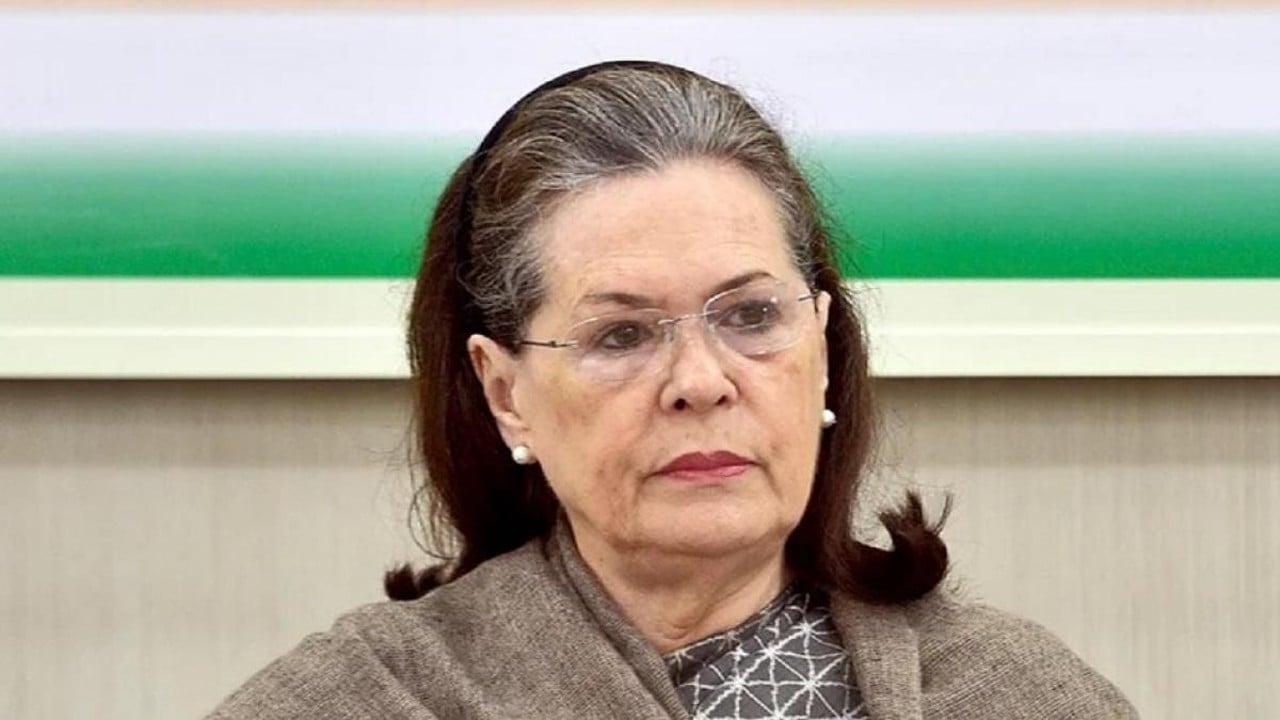
Sonia Gandhi chairs key Congress meet,  party to raise Manipur, Balasore train tragedy in monsoon session

Congress President Mallikarjun Kharge, former president Rahul Gandhi, Congress general secretary (communications) Jairam Ramesh and other leaders attended the meeting.

Published

on

Sonia Gandhi

As the debate over the implementation of Uniform Civil Code(UCC) has ignited,

 A key meeting of the Congress Parliamentary Strategy Group convened by former Congress President and United Progressive Alliance(UPA) chairperson Sonia Gandhi held at her residence at 10 Janpath in Delhi.

Congress President Mallikarjun Kharge, former president Rahul Gandhi, Congress general secretary (communications) Jairam Ramesh and other leaders attended the meeting.

The meeting centered around the violence situation in Manipur, Balasore train tragedy, Patna Opposition meet and others.  

The Congress after the meeting has demanded the resignation of Manipur Chief Minister N Biren Singh over the prevailing unrest in the hill state for nearly 60 days now.

It has also demanded Union Railway Minister Ashwini Vaishnaw to resign from his post over the tragic Balasore train mishap that took place last month claiming nearly 290 lives of the passengers travelling in both Coromandel Express and the Shalimar Express, the two trains that had a head-on collision.

Ramesh addressing a press conference said the first issue which was raised in the meeting was the situation in Manipur and demanded the state CM’s resignation saying the BJP government has failed to bring down the violence and further demanded a debate on it in the upcoming monsoon session of Parliament, starting from July 20 till August 11, the announcement of which was made earlier today.

He added, the next discussion was on Balasore train tragedy demanding Minister Vaishnaw’s resignation and said the issue will be raised by the Congress in the parliament’s session.

Ramesh also stated party Chief Kharge briefed the members of the meeting about the Patna Opposition meet held on June 23, in which Kharge and Rahul Gandhi were a part of.

Ramesh said Kharge in the meeting informed about the next meeting taking place in Bengaluru, of which the dates are not finalised yet.

Earlier this week, NCP Chief Sharad Pawar who attended the Patna meet had already announced the dates of next meet on July 13-14 in Bengaluru, which was earlier decided to be held in Shimla.

Earlier today, it was said the meeting of the Parliamentary Group Meeting to be convened by the UPA Chairperson Gandhi to discuss and chalk out the strategies of the party in regards to the Uniform Civil Code, scheduled to be discussed by the Parliamentary Standing Committee on Law and Justice on July 3.

Reports said, the party also discussed the issues it will raise to taken on the Narendra Modi government in the upcoming Parliament monsoon session.

As per reports, the grand old party also decided its plan of action to challenge the BJP government at the Centre, which is most likely to introduce UCC as a bill in the Parliament.

India News

PM Modi assures no discrimination in women’s quota, delimitation debate intensifies in Parliament

PM Narendra Modi has assured that women’s reservation will be implemented without discrimination, amid a heated debate over delimitation in Parliament.

Published

on

PM modi

Prime Minister Narendra Modi has assured that there will be no discrimination in the implementation of women’s reservation, as Parliament witnessed a sharp debate over the proposed linkage between the quota and delimitation exercise.

During the ongoing special session, the government reiterated its commitment to ensuring fair representation while addressing concerns raised by opposition parties regarding the timing and structure of the legislation.

The proposed framework aims to reserve 33 percent of seats for women in the Lok Sabha and state assemblies. However, its implementation is tied to a fresh delimitation exercise, which is expected after the next census.

Opposition questions timing and intent

Opposition leaders have raised concerns that linking the women’s quota to delimitation could delay its implementation. They argue that the process of redrawing constituencies may push the actual rollout further into the future.

The issue has triggered a broader political confrontation, with multiple parties questioning whether the move could alter representation across states.

Some critics have also alleged that the delimitation exercise could disproportionately benefit certain regions based on population, a charge the government has rejected.

Government reiterates commitment to fair implementation

Responding to these concerns, the Centre has maintained that the reforms are necessary to ensure accurate and updated representation based on population data.

Leaders from the ruling side have repeatedly emphasized that the process will be carried out transparently and without bias. The assurance that there will be “no discrimination” is aimed at addressing fears among states and opposition parties.

The debate marks a key moment in Parliament, with both sides engaging in intense exchanges over one of the most significant electoral reforms in recent years.

Continue Reading

India News

Give all tickets to Muslim women, Amit Shah says, attacking Akhilesh Yadav on sub-quota demand

A sharp exchange between Amit Shah and Akhilesh Yadav in Parliament over sub-quota for Muslim women highlights key divisions on women’s reservation implementation.

Published

on

A heated exchange broke out in Parliament during discussions on the women’s reservation framework, with Union Home Minister Amit Shah and Samajwadi Party chief Akhilesh Yadav locking horns over the demand for a sub-quota for Muslim women.

The debate unfolded as the government pushed forward key legislative measures to implement 33% reservation for women in the Lok Sabha and state assemblies.

Akhilesh Yadav argued that the proposed reservation must ensure representation for women from marginalised communities, including Other Backward Classes (OBCs) and Muslim women. He said that without such provisions, large sections could remain excluded from political participation.

He also questioned the timing of the bill, alleging that the Centre was avoiding a caste census. According to him, a census would lead to renewed demands for caste-based reservations, which the government is reluctant to address.

Government rejects religion-based quota

Responding to the demand, Amit Shah made it clear that reservation based on religion is not permitted under the Constitution.

He stated that any proposal to provide quota to Muslims on religious grounds would be unconstitutional, firmly rejecting the idea of a separate sub-quota for Muslim women within the broader reservation framework.

The government has maintained that the existing framework already includes provisions for Scheduled Castes (SC) and Scheduled Tribes (ST) women within the overall reservation structure.

Wider political divide over implementation

The issue of sub-categorisation within the women’s quota has emerged as a major flashpoint, even as most opposition parties broadly support the idea of women’s reservation.

Samajwadi Party leaders reiterated that their support for the bill depends on inclusion of OBC and minority women, while the government continues to defend its constitutional position.

The debate is part of a broader discussion during the special Parliament session, where multiple bills linked to delimitation and implementation of the women’s quota are being taken up.

Continue Reading

India News

Raghav Chadha’s security withdrawn by Punjab amid AAP rift, Centre steps in with cover

Punjab withdraws Raghav Chadha’s security amid party tensions, Centre offers fresh protection.

Published

on

The Punjab government has withdrawn the Z+ category security cover provided to Raghav Chadha, amid an ongoing rift within the Aam Aadmi Party.

According to sources, the security personnel deployed by Punjab Police have been asked to report back, marking a significant development in the political dispute involving the Rajya Sabha MP.

The move comes shortly after Chadha was removed from his position as deputy leader of the party in the Rajya Sabha, signalling deepening differences between him and the party leadership.

Centre offers fresh security arrangement

Soon after the withdrawal, the Ministry of Home Affairs stepped in to provide security cover to Chadha.

Sources indicate that he will now receive Z-category security in Delhi and Punjab, while a Y-category cover may be provided in other parts of the country.

This shift ensures continued protection for the MP despite the withdrawal of state-provided security.

Fallout linked to political disagreement

The development is part of a broader fallout between Chadha and his party. He was recently replaced as deputy leader in the Rajya Sabha, with the party reportedly expressing dissatisfaction over his political approach and conduct in Parliament.

Chadha, however, has denied the allegations, calling them baseless and asserting that his focus has been on raising public issues rather than engaging in political confrontation.

Growing divide within party ranks

Once considered a close associate of Arvind Kejriwal and a prominent face of the party, Chadha’s recent removal from key roles and the withdrawal of his security underline a widening internal divide.

He is among the few leaders in the party who have recently found themselves at odds with the leadership, indicating shifting dynamics within the organisation.

Continue Reading

Trending

© Copyright 2022 APNLIVE.com