English हिन्दी
Connect with us

India News

Himanta Sarma challenges Mamata Banerjee to implement CAA in Bengal amid migrant row

Published

on

himanta

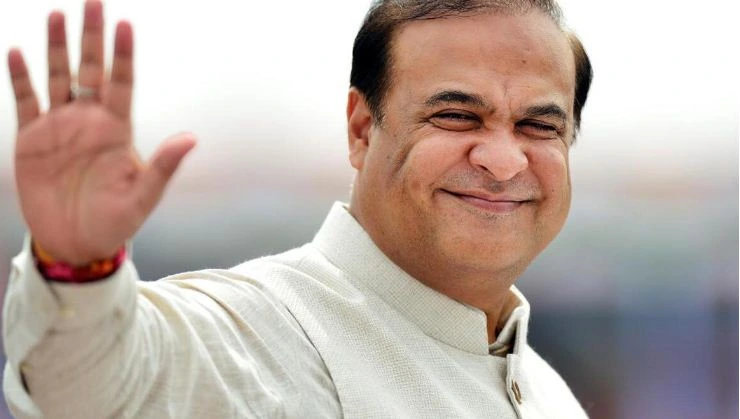
Assam Chief Minister Himanta Biswa Sarma has launched a sharp political attack on his West Bengal counterpart Mamata Banerjee, urging her to implement the Citizenship Amendment Act (CAA) in the state if she truly cares for Bengalis. The comment follows Banerjee’s recent protest in Kolkata against alleged harassment of Bengali-speaking migrants in BJP-ruled states.

Speaking to the media, Sarma claimed that Bengali Hindus in Assam are well-protected and integrated within Assamese society. “Bengali Hindus in Assam are not only safeguarded but also part of the broader Assamese cultural landscape. They continue their language and religious practices without fear,” he said.

In a direct challenge to Banerjee, Sarma questioned her motives and asked, “If you are genuinely interested in protecting Bengalis, why don’t you implement CAA in West Bengal?” He further alleged that Banerjee shows selective concern, implying she only advocates for Muslim Bengalis.

The Assam CM’s comments have reignited the debate over the CAA, a controversial law passed in 2019 that seeks to provide citizenship to non-Muslim refugees from Pakistan, Bangladesh, and Afghanistan who arrived in India before December 2014. While the law has been implemented in several BJP-ruled states, the Trinamool Congress-led West Bengal government has remained staunchly opposed to it.

Taking his attack to social media, Sarma shared a video clip and reiterated, “Bengali Hindus are safe in Assam, but TMC is only concerned about Bengali Muslims. If they truly cared about Bengali Hindus, why oppose the CAA?”

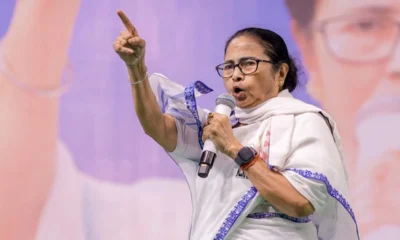
This war of words comes shortly after Mamata Banerjee led a street protest in Kolkata on Thursday, where she accused the BJP governments of treating Bengali migrants unfairly. “They are calling them Rohingya. Rohingyas are in Myanmar, not here,” she said, alleging that poor Bengali-speaking migrant workers were being detained and targeted under false pretenses.

She also appealed to migrant workers to return to Bengal, promising them safety and dignity in their home state. “BJP is sending Bengali speakers to detention camps. Is West Bengal not part of India?” she questioned during the protest, highlighting the contributions of Bengalis to India’s freedom movement.

The CAA issue continues to polarize political discourse across states, with both BJP and opposition leaders using it as a key electoral and ideological battleground.

India News

Delhi government announces two work-from-home days weekly for offices after PM Modi’s fuel-saving appeal

Delhi government employees will work from home twice a week under a new fuel conservation initiative announced by Chief Minister Rekha Gupta following Prime Minister Narendra Modi’s appeal for energy-saving measures.

Published

on

Rekha Gupta cm

Delhi Chief Minister Rekha Gupta on Thursday announced that government offices in the national capital will observe two work-from-home days every week as part of a broader fuel conservation campaign launched after Prime Minister Narendra Modi urged citizens to reduce fuel consumption amid global economic uncertainty.

The measures, which will take effect from Friday, are part of the Delhi government’s “Mera Bharat Mera Yogdan” campaign aimed at promoting sustainable practices, reducing fuel usage and improving energy efficiency across departments.

Under the new policy, ministers, officers and government employees will also participate in a “Monday Metro” initiative, encouraging the use of public transport instead of private vehicles. Citizens have additionally been urged to observe one “No Vehicle Day” every week.

The Delhi government said no new petrol, diesel or electric vehicles would be purchased for the next six months. Officials also announced a one-year halt on official foreign travel for ministers and officers as part of the austerity measures.

The Chief Minister’s convoy has also been reduced to four vehicles, including two electric vehicles, in a move the government described as an effort to encourage cleaner mobility and lower fuel use.

Additional measures include increasing transport allowance for employees by 10%, installing master switches in government offices to reduce electricity wastage, and fixing air-conditioner temperatures between 24 and 26 degrees Celsius.

The government has also requested universities and educational institutions to conduct non-practical classes online to cut travel-related fuel consumption.

Prime Minister Modi had recently appealed to citizens to conserve fuel, use public transport, adopt carpooling and revive work-from-home arrangements wherever possible due to concerns over global supply disruptions and rising fuel prices linked to tensions in West Asia.

Continue Reading

India News

India bans sugar exports till September 2026 amid domestic supply concerns

India has banned sugar exports with immediate effect until September 2026 or until further orders to stabilise domestic supply and control prices.

Published

on

The Indian government has banned the export of sugar with immediate effect until September 30, 2026, or until further orders, in a move aimed at addressing domestic supply concerns and stabilising local prices.

According to an order issued by the Directorate General of Foreign Trade (DGFT) under the Ministry of Commerce and Industry, the restriction applies to raw, white and refined sugar shipments.

The policy shift effectively changes the export status from “restricted” to “prohibited,” marking a significant tightening of India’s sugar export regime.

Shift from earlier export allowance

India had previously permitted limited sugar exports based on expectations of surplus production. However, the latest decision reverses that stance amid evolving supply conditions.

The move is intended to ensure sufficient domestic availability of sugar and control price pressures in the local market.

Key impact on trade and shipments

The ban will apply to all new export consignments of sugar categories covered under the order. However, exemptions may apply for shipments already in the pipeline, depending on compliance with specified conditions set by authorities.

The restriction is expected to significantly impact sugar trade flows, given India’s position as one of the world’s largest sugar producers and exporters.

Continue Reading

India News

Congress ends Kerala suspense, VD Satheesan to be CM

Congress has named V D Satheesan as the next chief minister of Kerala, concluding its internal deliberations over the state leadership.

Published

on

VD Satheesan

The Congress party has announced that V D Satheesan will be the next Chief Minister of Kerala, ending days of speculation over the leadership choice following the United Democratic Front’s (UDF) recent electoral victory.

The decision was taken by the party leadership after internal discussions and comes amid intense lobbying among senior leaders for the top post.

Leadership decision after prolonged suspense

According to reports, the announcement was made after a series of meetings within the Congress high command, which had been deliberating between multiple contenders for the chief minister’s post.

Satheesan, who currently serves as the Leader of the Opposition in the Kerala Legislative Assembly, emerged as the final choice after discussions involving senior party leadership in Delhi.

Who is V D Satheesan

V D Satheesan is a senior Congress leader from Kerala and has been one of the party’s most prominent faces in the state. He has served as Leader of the Opposition in the Kerala Assembly since 2021 and has represented the Paravur constituency multiple times.

He is widely seen as a key strategist within the Congress-led UDF in Kerala.

Internal competition within Congress

The selection process had reportedly seen competition among several senior leaders, including K C Venugopal and Ramesh Chennithala, before the party finalized Satheesan’s name.

The delay in announcing the chief minister had led to speculation and political debate within Kerala’s political circles.

UDF returns to power in Kerala

The announcement follows the United Democratic Front’s electoral victory in the state, which ended the Left Democratic Front’s (LDF) tenure in Kerala politics.

The new government formation is expected to take place soon after the formal swearing-in process is completed.

Continue Reading

Trending

© Copyright 2022 APNLIVE.com