English हिन्दी
Connect with us

India News

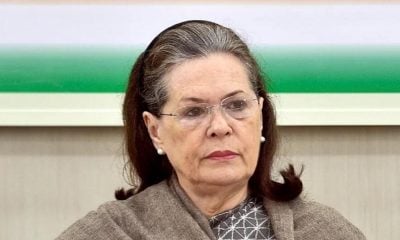
Mallikarjun Kharge reappointed Leader of Opposition in Rajya Sabha after oath

Congress president Mallikarjun Kharge has once again been recognised as the Leader of Opposition in the Rajya Sabha after being re-elected to the Upper House and taking oath as a member.

Published

on

mallikarjun-kharge

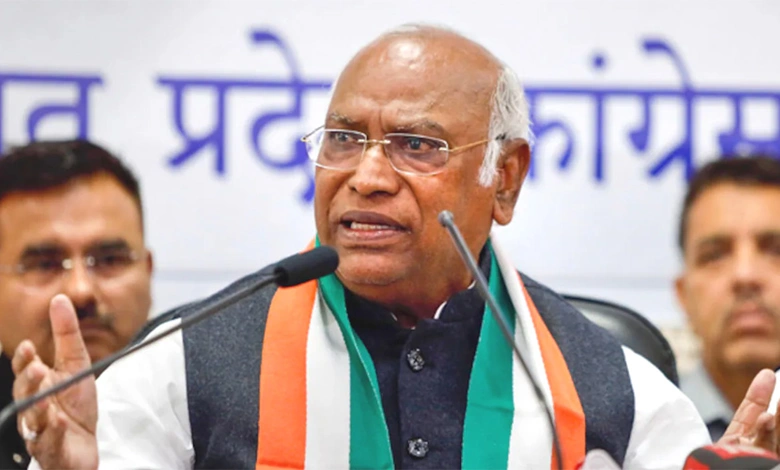
Congress president Mallikarjun Kharge was on Monday formally reappointed as the Leader of Opposition (LoP) in the Rajya Sabha after taking oath as a member of the Upper House following his re-election.

Kharge’s previous term as a Rajya Sabha member ended on June 25. Following his re-election to the Upper House from Karnataka, Rajya Sabha Chairman C P Radhakrishnan accorded recognition to him as the Leader of Opposition with effect from June 26.

The Congress veteran took oath as a Rajya Sabha member in the Chairman’s chamber on Monday. The oath ceremony marked the beginning of his fresh term in the Upper House.

Recognition effective from June 26

According to a bulletin issued by Rajya Sabha Secretary-General P C Mody, Kharge ceased to hold the office of Leader of Opposition after the expiry of his earlier Rajya Sabha term on June 25. Following his re-election, he was once again recognised as the Leader of Opposition under the provisions of the Salary and Allowances of Leaders of Opposition in Parliament Act, 1977.

Kharge had earlier been elected unopposed to the Rajya Sabha from Karnataka during the recent biennial elections to the Upper House.

India News

Rahul Gandhi condemns police action on CJP protest, says tear-gassing students not India’s way

Rahul Gandhi criticised the police action against students protesting over alleged exam irregularities in Delhi, while the Centre confirmed talks with CJP representatives after a written petition was submitted.

Published

on

Rahul Gandhi

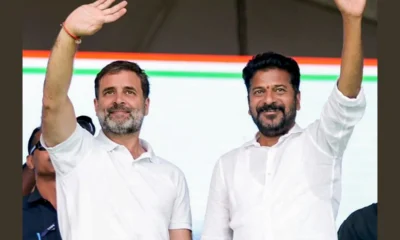
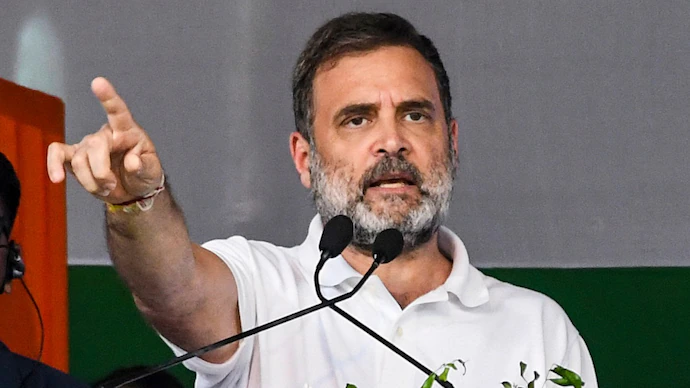
Students protesting against alleged irregularities in major examinations, including question paper leaks and technical glitches, clashed with police in Delhi on Monday as they attempted to march towards Parliament. The demonstration drew sharp political reactions, with Leader of Opposition Rahul Gandhi criticising the police action and accusing the Centre of suppressing peaceful protests.

Rahul Gandhi criticises police action

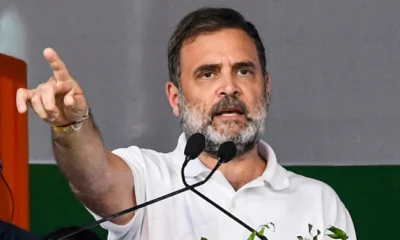
Reacting to the incident, Rahul Gandhi said the protesting students were demanding their rights and described the use of tear gas and baton charges as unacceptable.

In a video message, he said there was “absolutely nothing wrong” with the students’ protest and alleged that the government’s response was undemocratic. Gandhi also described Prime Minister Narendra Modi as the “most anti-youth prime minister” while sharing a video that purportedly showed the police action against demonstrators.

According to Gandhi, young people have the right to an education system that is fair, functional and respectful towards students. He added that India, with a large youth population, should listen to their concerns rather than suppress their voices.

Protest linked to exam issues and CJP campaign

The protest was organised by supporters of the Cockroach Janta Party (CJP) movement, which has gained significant attention on social media over issues related to the education system and unemployment.

The demonstration came shortly after activist Sonam Wangchuk’s 21-day hunger strike ended when he was taken to a hospital on Saturday.

CJP alleged on social media that police used tear gas against peaceful protesters and questioned the need for such action.

Police said permission had not been granted for the march, while internet services were suspended in parts of central Delhi during the protest.

Government holds talks with protesters

Rahul Gandhi also urged the Prime Minister to address the protesters’ demands, saying concerns over the education system were legitimate and should be taken seriously.

Meanwhile, CJP said two of its representatives met Union Minister JP Nadda and submitted a written memorandum outlining their demands after the government initiated contact for discussions.

Confirming the meeting, JP Nadda said the talks were held in a cordial atmosphere. He stated that the proposal for dialogue came from the protesters and that discussions had been underway since late morning.

According to the minister, the delegation submitted a written petition in the afternoon, following which he appealed to the protesters to end their sit-in and cooperate with authorities in restoring normalcy.

Continue Reading

India News

CJP says founder Abhijeet Dipke detained, but drops claim soon after

Published

on

The Cockroach Janta Party (CJP) on Monday claimed its founder Abhijeet Dipke had been detained by Delhi Police on the march to Parliament, only to drop the claim within an hour.

Dipke and a motley bunch of people, including several senior leaders of some political parties, were on their march to Parliament at the head of a 20,000-strong crowd.  

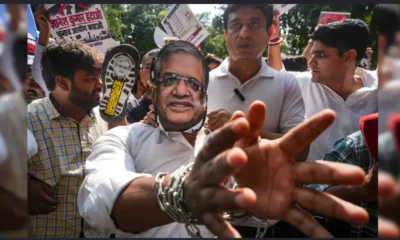
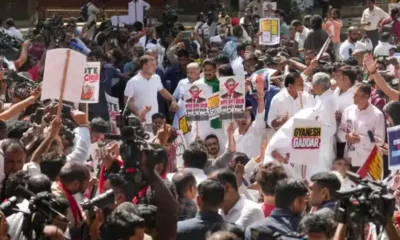
Thousands of supporters had gathered at Jantar Mantar before the march began to press their demands over alleged irregularities in competitive examinations and seek greater accountability in the education system. As the procession moved towards Parliament, police stopped the protesters at multiple barricades, stating that no permission had been granted for the march and that security restrictions were in place in the high-security zone. In between, there were some instances of lathicharge and some reports said tear gas canisters were fired at the crowd.

Some police officials claimed Dipke was taken into preventive custody after protesters attempted to move beyond the designated area. Several other demonstrators were also detained as police dispersed sections of the gathering to prevent them from reaching Parliament. Authorities said the situation remained under control and that appropriate legal action would be taken wherever necessary.

During the protest, Prime Minister Narendra Modi departed from the Parliament complex as per his scheduled engagements while security agencies maintained heightened vigil across central Delhi. Officials did not indicate any disruption to the Prime Minister’s movement but said security arrangements had been strengthened in view of both the Monsoon Session and the proposed march.

Protest organisers criticised the police action, alleging that participants were prevented from carrying out a peaceful demonstration. They reiterated that the agitation would continue until their demands were addressed.

Security remained tight throughout the day, with additional police personnel, barricades and traffic restrictions in place around Parliament House and adjoining areas. The march was eventually halted before reaching Parliament, and the situation remained tense but peaceful under close police supervision.

Continue Reading

India News

Mahua Moitra, Shabana Azmi among prominent faces at CJP’s Chalo Sansad March

Published

on

Several political leaders, actors and civil society members joined supporters of the Cockroach Janta Party (CJP) at Jantar Mantar on Monday as the organisation launched its Chalo Sansad march, demanding the resignation of Union Education Minister Dharmendra Pradhan over the alleged NEET-UG paper leak and other examination-related irregularities.

Among those who attended the protest were Trinamool Congress MP Mahua Moitra, veteran actor Shabana Azmi, actor-filmmaker Prakash Raj, CPI(M) leader Brinda Karat, and Aam Aadmi Party leaders Manish Sisodia, Sanjay Singh, Saurabh Bharadwaj and Gopal Rai. Their participation drew significant public attention to the demonstration, which coincided with the opening day of the Monsoon Session of Parliament.

The CJP had called on supporters from across the country to assemble at Jantar Mantar before marching towards Parliament to press for action over alleged irregularities in competitive examinations and demand greater accountability in the education system. Protest organisers said the agitation was intended to highlight concerns raised by students and aspirants affected by the controversy.

Ahead of the march, Delhi Police stated that no permission had been sought or granted for a procession to Parliament. Security was tightened across central Delhi, with barricades, additional personnel and surveillance deployed around Jantar Mantar, Parliament House and other sensitive locations to maintain law and order.

As protesters attempted to move towards Parliament, police stopped the procession, leading to brief confrontations in some areas. Authorities later dispersed sections of the gathering and maintained a strong security presence throughout the day. The protest remained largely centred around Jantar Mantar as the situation continued to be closely monitored.

Continue Reading

Trending

© Copyright 2022 APNLIVE.com