English हिन्दी
Connect with us

Latest Politics News

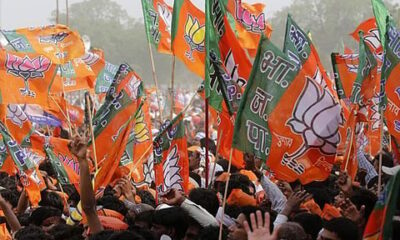
On Christmas Day, 6 of 7 Nitish Kumar party MLAs in Arunachal switch allegiance to BJP

The JDU MLAs who quit are Jikke Tako, Kanggong Taku, Hayeng Mangfi, Dongru Siongju, Talem Taboh and Dorjee Wangdi Kharma. Three of the six MLAs have been suspended and served notices last month for anti-party activity.

Published

on

nitish-kumar

After turning out as a junior partner to its long-time ally BJP in the recent Bihar polls,  Nitish Kumar’s JDU has suffered fresh humiliation as six of the party’s seven legislators in Arunachal Pradesh have joined the BJP. While the JDU now has just one MLA in the 60-member Arunachal assembly, the BJP now has 48 members including an MLA of the People’ Party of Arunachal.

The JDU MLAs who quit are Jikke Tako, Kanggong Taku, Hayeng Mangfi, Dongru Siongju, Talem Taboh and Dorjee Wangdi Kharma. Three of the six MLAs have been suspended and served notices last month for anti-party activity. The BJP’s Arunachal unit chief Biyuram Wahge said the development provoked people’s trust and faith in Prime Minister Narendra Modi and Chief Minister Pema Khandu’s leadership.
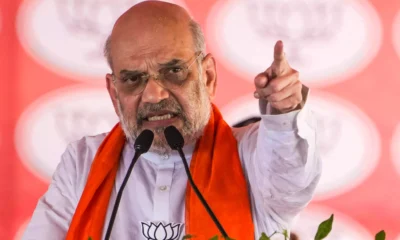
This move is seen as the BJPs betrayal and has come up during the two-day National Council meeting of the Janata Dal United this weekend. After winning seven seats in Arunachal Pradesh just last year, the JDU had become the second recognised party after the BJP which was the largest party with 41 seats.

The JDU leader KC Tyagi said the tally entitles the party to the status of the main opposition party, but the JDU will offer full support to the BJP government in the state. Even if the party gets the status of being an opposition party, the JDU will be a friendly opposition.

In the Bihar elections, the National Democratic Alliance (NDA)’s majority in the 243-member assembly was dominated by the BJP’s 74 seats which became the second largest party in the state after Tejashwi Yadav’s RJD. The JDU finished at number three with its tally dropping to 43 from 71 in 2015.

Nitish Kumar still became Chief Minister but the BJP showed who’s boss by replacing his long-time second-in-command Sushil Modi with two new Deputy Chief Ministers.

Read Also: India vs Australia Boxing Day Test preview: After first Test batting collapse, India eye comeback in Melbourne without Kohli

India News

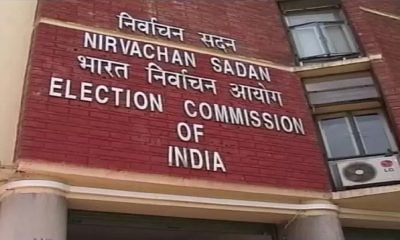
SIR 2026: EC gives voters in 7 states another chance to join final rolls

The Election Commission has opened another opportunity for voters left out of the draft SIR rolls in Delhi, Maharashtra, Haryana, Andhra Pradesh, Jharkhand, Telangana and Nagaland.

Published

on

Election Commission of India

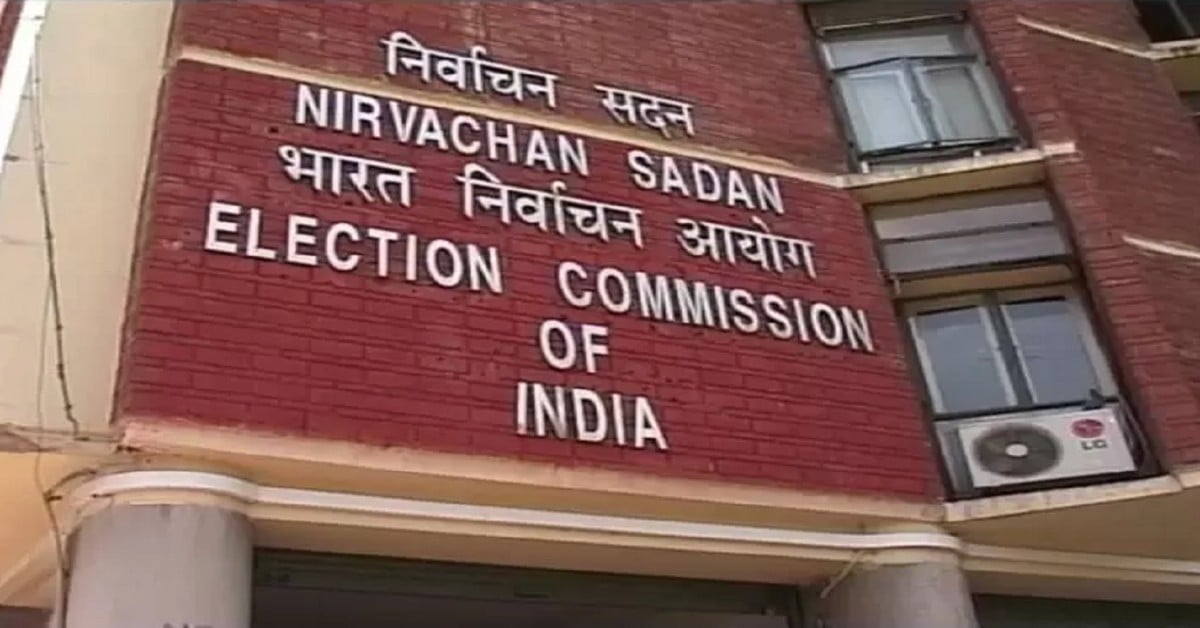
The Election Commission has given another opportunity to certain voters whose names were not included in the draft electoral rolls during the ongoing Special Intensive Revision (SIR) exercise.

The decision applies to Delhi, Maharashtra, Haryana, Andhra Pradesh, Jharkhand, Telangana and Nagaland. It covers electors who were issued Enumeration Forms but whose names were left out of the draft rolls after being marked under the ASDD categories — Absent, Shifted, Dead or Duplicate.

The move is aimed at ensuring that eligible voters get an opportunity to have their cases considered before the final electoral rolls are published. The EC has also directed officials to prevent duplicate enrolments while ensuring that eligible electors are not left out.

Lists of excluded voters to be displayed again

The Election Commission has directed officials to display booth-wise lists of voters falling under the specified categories again at the concerned polling stations.

The lists will also be made available at panchayat bhawans and urban local body offices and uploaded on the websites of the respective Chief Electoral Officers. They will mention the probable reasons why the voters’ names were not included in the draft rolls.

Fresh enumeration forms for affected voters

District election officials and Electoral Registration Officers have been asked to generate partially filled Enumeration Forms afresh through the ECINET system.

Booth Level Officers will be tasked with contacting the affected voters and helping ensure that the forms reach them. This can include physical delivery as well as communication through WhatsApp, email or SMS where contact details are available.

Voters can also download and fill their forms through the Election Commission’s website or ECINET using the same EPIC number that existed before their names were deleted from the draft roll.

What voters who have shifted need to do

The EC has made separate provisions for voters who have shifted their residence within the same state.

Such electors will not need to submit Form 8 for this process. They can submit the Enumeration Form along with a statement giving their new address and Assembly constituency, along with proof of address.

For homeless voters who do not have address documents, the Election Commission has provided for a field verification report by the Booth Level Officer to establish residence.

Forms will be verified before inclusion

The fresh submissions will not automatically result in inclusion in the electoral roll. The applications will be examined by the concerned Electoral Registration Officers under Rule 21(1) of the Registration of Electors Rules, 1960.

Forms accepted after verification will be kept separately for inclusion in the final electoral rolls under the SIR exercise.

The Election Commission has also directed state and Delhi election officials to establish monitoring mechanisms to oversee the implementation of the process and ensure that eligible electors get the opportunity to seek inclusion while duplicate entries are prevented.

Continue Reading

India News

Farooq, Omar Abdullah to meet upset NC MLAs amid party discontent

Farooq Abdullah and Omar Abdullah are set to meet National Conference MLAs who have raised concerns following the recent Cabinet expansion in Jammu and Kashmir.

Published

on

Omar Abdullah

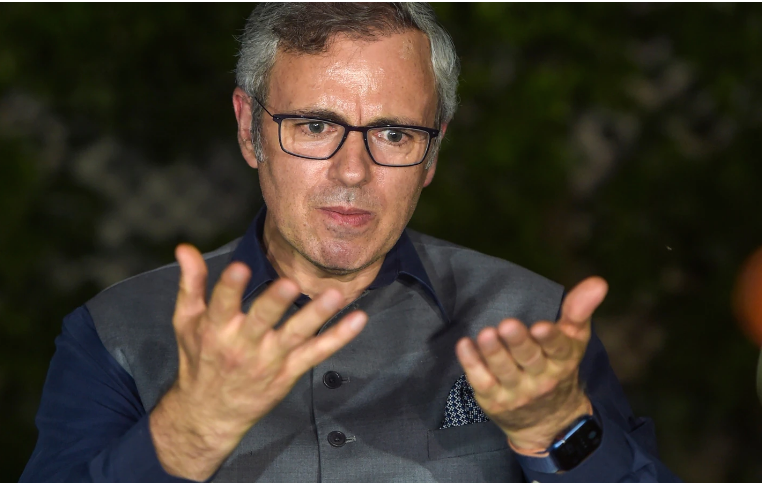
Jammu and Kashmir National Conference (NC) president Farooq Abdullah and Chief Minister Omar Abdullah are set to meet a group of party legislators who have raised concerns following the recent expansion of the Union Territory’s Council of Ministers.

The meeting is scheduled in Srinagar on Friday as the party leadership attempts to address grievances raised by several NC MLAs. Reports indicate that the legislators had met separately ahead of their interaction with the Abdullahs to finalise the issues they wanted to raise. 

The developments come days after Omar Abdullah expanded his Cabinet, inducting four new ministers and dropping Independent MLA Satish Sharma from the Council of Ministers. The reshuffle has led to discontent among sections of the ruling National Conference, particularly among legislators who were not included in the new ministerial team. 

What the NC MLAs want

The legislators have raised concerns about the functioning of the party and government, including the need for greater authority for elected representatives, stronger party organisation at the grassroots level and better implementation of commitments made to voters.

Some members of the group have also demanded changes involving ministers and the Chief Minister’s advisor Nasir Aslam Wani. Earlier reports said the legislators had prepared a memorandum outlining their grievances and demands. 

The group has stressed that its concerns are aimed at strengthening the party rather than destabilising the government. One legislator described the focus as improving the party’s functioning at the grassroots level and ensuring that MLAs are empowered to address public grievances.

Cabinet expansion triggered tensions

The latest discontent followed Omar Abdullah’s Cabinet expansion, under which four new ministers were inducted. They include Ali Mohammad Sagar, Mir Saifullah, Shamima Firdous and Altaf Ahmad Kaloo. Independent MLA Satish Sharma was dropped from the Council of Ministers. 

The Cabinet changes had already prompted concerns among some senior legislators over ministerial representation and the functioning of the party organisation. The disagreement has since developed into a broader discussion about the role and empowerment of elected representatives.

The meeting with Farooq and Omar Abdullah is therefore significant as the party leadership seeks to engage directly with the legislators and address their concerns.

Continue Reading

India News

Hardeep Singh Puri elected unopposed to Rajya Sabha from Madhya Pradesh

Union Minister Hardeep Singh Puri has been elected unopposed to the Rajya Sabha from Madhya Pradesh after the nominations of two other candidates, including a Congress-backed nominee, were rejected.

Published

on

Hardeep Puri

Union Petroleum Minister and Bharatiya Janata Party (BJP) leader Hardeep Singh Puri has been elected unopposed to the Rajya Sabha from Madhya Pradesh. The announcement was made on Thursday after the deadline for withdrawal of nominations ended, leaving Puri as the only candidate in the contest.

Puri’s election followed the rejection of nomination papers filed by two other candidates, Kante Sayanna and Rajkumar Lohani, who was backed by the Opposition Congress. Their nominations were rejected during the scrutiny process, making Puri the sole candidate remaining in the fray.

Returning Officer Umesh Sharma formally declared Puri elected to the Upper House of Parliament. Madhya Pradesh BJP president Hemant Khandelwal collected his certificate of election from the returning officer in the presence of party MLA Rameshwar Sharma.

Why Hardeep Singh Puri was elected unopposed

The Madhya Pradesh Rajya Sabha bypoll witnessed three candidates initially entering the contest. However, the nomination papers of the two other candidates did not clear scrutiny.

Kante Sayanna and Congress-backed candidate Rajkumar Lohani had their nominations rejected during the examination of election papers. With both candidates out of the contest, Puri remained the only candidate.

As a result, the returning officer declared him elected unopposed on the final day of withdrawal of nominations on November 5.

The bypoll, if required, had been scheduled to take place on November 12.

Why the Madhya Pradesh Rajya Sabha seat fell vacant

The by-election became necessary following the resignation of former Union minister L Murugan from the Rajya Sabha last month.

Murugan’s departure created a vacancy in the Upper House from Madhya Pradesh. His original term was scheduled to continue until April 2, 2030.

The BJP subsequently nominated Hardeep Singh Puri as its candidate for the by-election.

Puri, a former diplomat who later entered politics, currently serves as the Union Minister of Petroleum and Natural Gas.

Continue Reading

Trending

© Copyright 2022 APNLIVE.com