English हिन्दी
Connect with us

India News

Opposition slams Gyanesh Kumar’s appointment as Chief Election Commissioner, Congress calls it government’s control move

Published

on

Opposition reacts to Gyanesh Kumar’s appointment as CEC

The Congress party has raised serious concerns over the appointment of Gyanesh Kumar as the new Chief Election Commissioner (CEC), questioning the urgency behind the decision while the matter is still under judicial review.

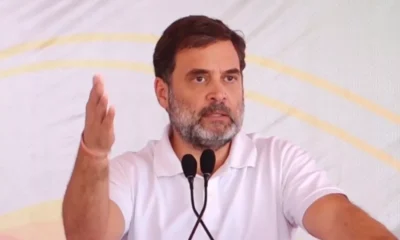
Leader of Opposition Rahul Gandhi, Congress MPs Pramod Tiwari, and Manickam Tagore strongly criticized the move, alleging that the government’s swift action bypassed scrutiny and undermined the democratic process.

Congress calls appointment a violation of constitutional spirit

Reacting sharply, Congress MP Pramod Tiwari termed the move a “contempt of the Supreme Court” and an attack on the Constitution’s core values.

“In a democracy, elections should not only be fair but should also appear to be fair. This appointment, while the Supreme Court is still hearing the matter, raises serious concerns about transparency,” said Tiwari.

Congress leader Manickam Tagore also condemned the appointment, stating that democracy “deserves better.”

“The government’s hasty midnight appointment of the new CEC undermines the spirit of our Constitution and free elections. As LoP Rahul Gandhi rightly said, this should have waited for the SC hearing on February 19,” he posted on X.

Rahul Gandhi’s objection to appointment process

Rahul Gandhi had earlier raised objections regarding the selection process of the CEC, criticizing the government-dominated panel responsible for appointments. During the selection committee meeting, he reportedly submitted a dissent note expressing concerns over the removal of the Chief Justice of India (CJI) from the selection panel.

Congress General Secretary K C Venugopal also alleged that the government acted hastily to “circumvent Supreme Court scrutiny.”

“This appointment was done before a clear order could come from the apex court, raising questions about the ruling regime’s intentions. The government is destroying the electoral process and bending the rules for its own benefit,” Venugopal remarked.

First CEC under new appointment law

Gyanesh Kumar is the first Chief Election Commissioner to be appointed under the Chief Election Commissioner and other Election Commissioners (Appointment, Conditions of Service and Term of Office) Act, 2023.

His tenure will last till January 26, 2029, just before the Election Commission is expected to announce the next Lok Sabha election schedule.

Congress leaders argue that given the significant changes in the selection law, the government should have waited for the Supreme Court’s verdict before making the appointment.

New election commissioner also appointed

Alongside Gyanesh Kumar, Dr Vivek Joshi has been appointed as an Election Commissioner. He will assume office as per the notification issued by the Ministry of Law and Justice.

Meanwhile, Rajiv Kumar, the outgoing Chief Election Commissioner, is set to demit office on February 18, making way for Gyanesh Kumar’s appointment.

Political impact and Supreme Court’s role

The Supreme Court is set to hear the matter regarding the selection of election commissioners on February 19, where further developments in the case are expected.

With opposition parties raising concerns over electoral transparency and fairness, the government’s decision is likely to remain a contentious issue ahead of the 2024 General Elections.

India News

Mother Dairy raises milk prices by Rs 2-4 per litre from November 12

Mother Dairy has increased milk prices by Rs 2-4 per litre from November 12. Full cream milk will now cost Rs 76 per litre, while toned milk will be priced at Rs 62.

Published

on

mother dairy

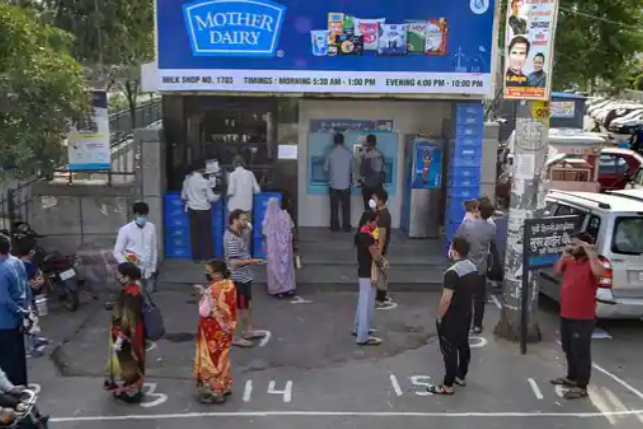
Mother Dairy has increased the prices of its liquid milk variants by Rs 2 to Rs 4 per litre, with the revised rates coming into effect from Thursday, November 12. The price revision will affect consumers in the Delhi-NCR market, where the dairy company is a major milk supplier.

The increase comes amid rising input costs, particularly higher procurement prices paid to farmers. According to sources, the company has decided to pass on part of the additional cost to consumers.

A spokesperson for Mother Dairy declined to comment on the latest price revision.

Check new Mother Dairy milk prices

The revised rates cover several liquid milk variants sold in the NCR market. Full cream milk has seen the highest increase of Rs 4 per litre.

Here are the revised prices:

Milk variantOld priceNew price
Toned milk (bulk vended)Rs 58Rs 60
Full cream milk (pouched)Rs 72Rs 76
Toned milk (pouched)Rs 60Rs 62
Double toned milkRs 54Rs 56
Cow milkRs 62Rs 65

The new prices will be applicable from November 12.

Why Mother Dairy has increased milk prices

The latest revision follows an increase in the procurement prices of milk from farmers. Sources said the higher procurement costs have prompted Mother Dairy to partly transfer the additional input expenses to consumers.

The company passes on around 75-80 per cent of its milk sales realisation to farmers.

Mother Dairy had last increased milk prices on May 14, 2026. Before that, its previous price revision took place in April 2025.

Mother Dairy’s daily milk sales

Mother Dairy sells approximately 35 lakh litres of milk every day in the Delhi-NCR market through its own outlets, general trade channels and e-commerce platforms.

Its overall daily milk sales exceed 50 lakh litres.

The company recorded a 17 per cent increase in turnover to Rs 20,300 crore in the last financial year. The growth was supported by improved demand for its milk products and cooking oils.

About Mother Dairy

Commissioned in 1974, Mother Dairy is a wholly owned subsidiary of the National Dairy Development Board (NDDB).

The company sells milk and milk products under the Mother Dairy brand. It markets edible oils under the Dhara brand, while fresh fruits and vegetables, frozen vegetables, snacks, pulps and concentrates are sold under the Safal brand.

Mother Dairy operates nine milk processing plants and four horticulture processing plants. Its edible oil operations are supported by 16 associated plants.

Continue Reading

India News

Air pollution as big a health emergency as COVID, says former WHO chief Soumya Swaminathan

Former WHO Chief Scientist Dr Soumya Swaminathan said air pollution should be treated with the same urgency as COVID, highlighting its effects on children, pregnancy and multiple organs.

Published

on

air pollution

Air pollution should be treated as a major public health emergency requiring an urgent and coordinated response, former World Health Organisation (WHO) Chief Scientist Dr Soumya Swaminathan has said.

In an exclusive interview, Dr Swaminathan compared the scale of the air pollution health crisis with COVID and said its effects can extend across the body, including the brain, lungs and cardiovascular system. She also highlighted links between pollution exposure and conditions such as asthma and diabetes.

Why air pollution needs a COVID-like response

Dr Swaminathan said COVID triggered an immediate public response because it was sudden, visible and associated with an unknown virus. Air pollution, by contrast, is often less visible and its effects accumulate over time.

She said people may become accustomed to pollution because it is not always visible, particularly outside the winter months. But she stressed that prolonged exposure can still cause serious health damage.

She called for the issue to receive an “equal, urgent, coordinated and scientific” response, similar to the approach taken during the COVID crisis.

PM2.5 poses risks from pregnancy to childhood

Dr Swaminathan also highlighted concerns about exposure to fine particulate matter, particularly PM2.5, among pregnant women and children.

According to her, these tiny particles can enter the lungs and bloodstream and may also reach the placenta. She pointed to higher rates of premature births and low birth weight among babies born in areas where mothers are exposed to high levels of air pollution.

She also said children are particularly vulnerable because their brains and other organs are developing rapidly. Children breathe faster than adults, and those growing up in heavily polluted areas can have smaller lungs, she said.

Why AQI may not tell the full health story

Dr Swaminathan suggested moving beyond the conventional Air Quality Index (AQI) towards an Air Quality Health Index (AHQI).

The proposal would place greater emphasis on how individual pollutants affect different groups of people. She noted that the dominant pollutant can vary from one city to another, while its health impact may also differ for groups such as pregnant women and children.

The current AQI uses eight major pollutants as parameters: PM10, PM2.5, ozone, sulphur dioxide, nitrogen dioxide, carbon monoxide, lead and ammonia. The overall AQI is determined by the highest pollutant sub-index.

Swaminathan does not favour shutting schools

On protecting children from polluted air, Dr Swaminathan said she was not in favour of simply closing schools.

She argued that children from poorer families may continue breathing polluted air at home, while also losing access to education, social interaction and midday meals.

Instead, she suggested making school environments cleaner. Her proposals included installing air purifiers in classrooms, providing pick-and-drop bus facilities and encouraging older children to wear masks when outdoors.

Five measures suggested to tackle pollution

Dr Swaminathan outlined five key measures for addressing the pollution crisis:

  1. Launch a national clean air programme, which she suggested could be called the “Swachh Vaayu Abhiyan”.
  2. Prepare a costed, long-term plan with sustained investment and study lessons from countries such as China.
  3. Establish empowered leadership and accountability for tackling air pollution.
  4. Create a panel of experts to develop a science-based, multi-sectoral and multi-year plan.
  5. Put health at the centre of air pollution policy.

She also supported treating the right to clean air as a basic public health entitlement, linking it to the constitutional right to life.

Dr Swaminathan’s central argument was that air pollution should no longer be treated as a slow-moving or routine environmental problem, but as a serious health crisis requiring sustained action.

Continue Reading

India News

Terrorists open fire at CRPF personnel in Jammu and Kashmir’s Kulgam, search operation underway

Terrorists opened fire on CRPF personnel at a naka in Jammu and Kashmir’s Kulgam district. The attackers fled and a search operation was launched.
Published

on

jammu and kashmir encounter

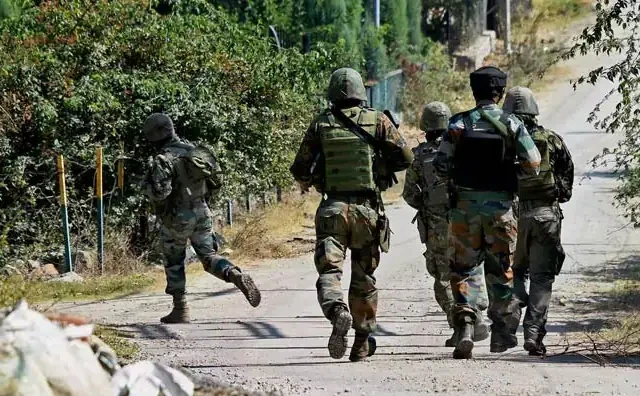
Unidentified assailants opened fire on Central Reserve Police Force (CRPF) personnel in Jammu and Kashmir’s Kulgam district on Wednesday afternoon, according to the CRPF.

The incident took place at a security naka in the Kulgam area. The attackers, who were reportedly travelling on a motorcycle, fled after opening fire on the security personnel.

According to the CRPF statement, the firing occurred at around 2:15 pm. The injured personnel were shifted to a hospital in Anantnag district for treatment.

Search operation launched for attackers

Following the firing, security forces launched a cordon and search operation to locate the attackers.

The assailants have not been identified so far, and further details about the incident are awaited.

What happened in Kulgam

The CRPF personnel were deployed at a naka when the unidentified motorcycle-borne assailants opened fire at them. After the attack, the assailants fled from the spot.

The CRPF said the injured personnel were taken to a hospital in Anantnag for medical treatment. A search operation was subsequently launched to track down those responsible for the attack.

Continue Reading

Trending

© Copyright 2022 APNLIVE.com