English हिन्दी
Connect with us

India News

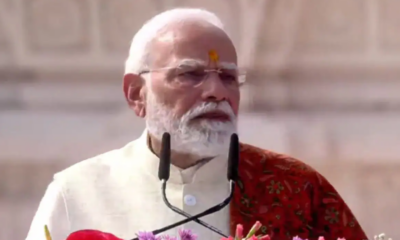
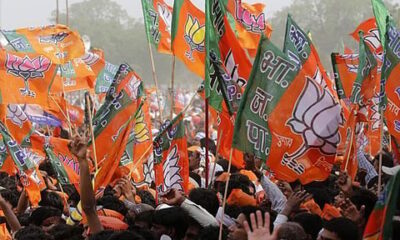
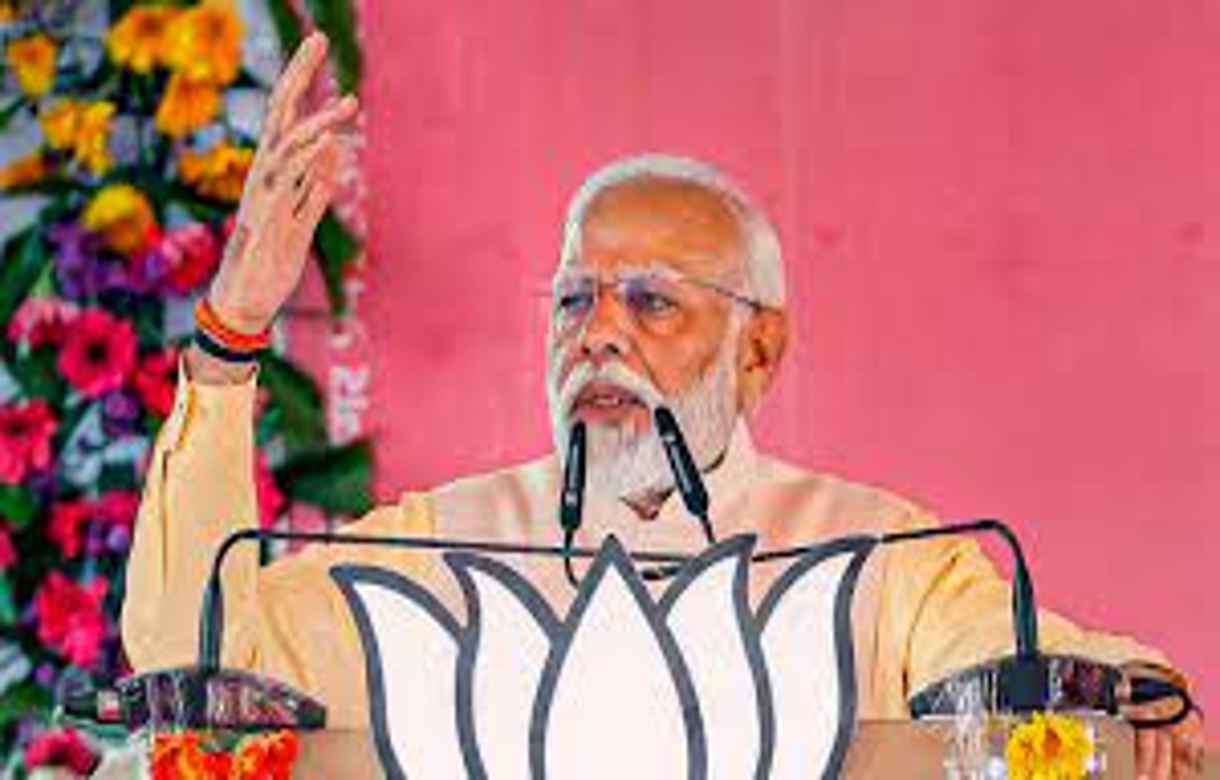
Assembly elections: PM Modi ends campaign in Madhya Pradesh, Chhattisgarh, says choose BJP for developed India

Urging people to vote for BJP, he claimed that Congress has no vision, no roadmap for the development

Published

on

Assembly elections: PM Modi wraps up campaign in Madhya Pradesh, Chhattisgarh, says choose BJP for developed India

Prime Minister Narendra Modi wrapped up his election campaign in Madhya Pradesh and Chhattisgarh. The first phase of the assembly election in Chhattisgarh was held on November 7 and the second phase will be carried out on November 17 to elect 90 members of the State Legislative Assembly. Meanwhile, Madhya Pradesh will also hold single phase elections on November 17 to elect all 230 members of the state legislative assembly.

Taking to X, formerly Twitter, Narendra Modi wrote that this time’s campaign for the Madhya Pradesh Assembly elections was very special. The Prime Minister added that he went to every corner of the state and interacted with many people. The affection that people have for BJP, the faith they have in BJP, is the biggest asset, the Prime Minister remarked.

Mentioning that women empowerment is the priority of the BJP, he underlined that the women power of Madhya Pradesh is coming forward in this election and raising the flag of BJP.  He continued that the new generation is looking at the next 25 years of India and their own 25 years together. 

He expressed that the people of Madhya Pradesh believe that only BJP can make the state developed. Urging people to vote for BJP, he claimed that Congress has no vision, no roadmap for the development of Madhya Pradesh.
Speaking about Chhattisgarh, PM Modi said that his campaign in the state was amazing and unprecedented. He said that the people of the state know that BJP can only free the state from the clutches of misgovernance and corruption. He added that the way the youth of SC, ST and OBC categories of the state are connecting with BJP’s development model is very encouraging and that this power of the youth of Chhattisgarh is going to write a new chapter of change.

He further stated that Congress’s crushing defeat in this election is certain and that people are trusting the good governance of BJP and not the empty promises of Congress. He ensured that BJP is determined and committed to fulfill its every resolution.

The counting of votes for all the five states will take place on December 3.

India News

West Bengal government to launch Annapurna scheme from June 1, offering monthly aid of Rs 3,000 to women

The West Bengal government has announced the Annapurna Yojana, providing Rs 3,000 monthly financial assistance to eligible women aged 25–60 starting June 1, 2026. Existing beneficiaries of the older scheme will be automatically migrated subject to verification.

Published

on

The West Bengal government has officially notified the rollout of the ‘Annapurna Yojana,’ a welfare initiative aimed at providing assured monthly financial assistance of Rs 3,000 to women across the state. Introduced by the Department of Women and Child Development and Social Welfare, the scheme is structured to foster the socio-economic upliftment of women and will officially come into effect on June 1, 2026.

Under this new initiative, financial benefits will be transferred directly into the Aadhaar-linked bank accounts of qualified beneficiaries using the Direct Benefit Transfer (DBT) system.

Strict eligibility criteria outlined

According to the official government notification, specific guidelines have been established to determine eligibility for the monthly cash assistance:

  • Target Age Group: Eligible women must be between 25 and 60 years of age.
  • Employment Status: Applicants must not hold permanent government employment or receive a regular salary or pension from the central government, state government, statutory bodies, panchayats, municipalities, local bodies, or government-aided educational institutions.
  • Tax Criteria: Women who are income tax payers are excluded from the scheme.

Automatic migration and scrutiny rules

The new order clarifies that all current beneficiaries of the erstwhile Lakshmir Bhandar Scheme will be automatically migrated to the Annapurna Yojana. However, the transition involves a rigorous filtering process. Individuals identified as deceased, shifted, deleted, or recorded as absentee electors during the SIR-2026 exercise or voter slip distribution will be systematically excluded from the beneficiary list.

On the other hand, individuals who have filed appeals before the SIR Tribunal or submitted applications under the Citizenship (Amendment) Act will continue to receive financial assistance until their applications are legally resolved by authorities.

Application process for new beneficiaries

For fresh applicants, a dedicated online portal for the Annapurna Yojana will be launched on June 1, 2026. To ensure transparency, all new applications will undergo a strict multi-tier verification process by designated local administrative officials:

  • Rural Areas: Block Development Officers (BDOs) will manage the verification and inquiries.
  • Urban Areas: Sub-Divisional Officers (SDOs) will oversee the process.
  • Kolkata: Officials of the Kolkata Municipal Corporation (KMC) will handle applications within their jurisdiction.

Following field inquiries, verified reports will be uploaded directly to the digital portal. The respective District Magistrates and the KMC Commissioner will serve as the final sanctioning authorities in their corresponding jurisdictions to approve the disbursement of funds.

Continue Reading

India News

Tamil Nadu Chief Minister C. Joseph Vijay travels to New Delhi for first official meeting with PM Narendra Modi

Newly sworn-in Tamil Nadu Chief Minister C. Joseph Vijay embarked on his first official visit to New Delhi to hold a high-level meeting with PM Narendra Modi, focusing on economic aid, fertilizer supply, and water rights disputes.

Published

on

Tamil Nadu CM Vijay and PM Modi

Marking his maiden official visit to the national capital since assuming office, Tamil Nadu Chief Minister C. Joseph Vijay is scheduled to meet Prime Minister Narendra Modi on Wednesday to deliberate on a wide range of state-specific matters. The Tamilaga Vettri Kazhagam (TVK) chief, who led his fledgling party to a historic victory in the recent assembly elections, took the oath of office on May 10. While the Prime Minister had previously extended his congratulations via social media, this marks the first formal in-person meeting between the two leaders.

According to official sources, the Chief Minister departed from Chennai on a chartered flight at 10:00 AM. The high-profile meeting with the Prime Minister is slated for 4:30 PM, where Vijay is expected to submit a comprehensive memorandum outlining Tamil Nadu’s long-pending welfare and developmental demands.

Key state matters on the table

The core of the discussions is expected to center around financial assistance and clearances for major infrastructure projects in the state. Media reports indicate that the Chief Minister will heavily push for additional funds to bankroll ongoing developmental initiatives.

Furthermore, the interstate Mekedatu water dispute remains a high-priority issue. Chief Minister Vijay has already written to the Prime Minister, urging him to instruct the Union Jal Shakti Ministry and the Central Water Commission (CWC) to reject the Detailed Project Report submitted by Karnataka for a reservoir at Mekedatu.

Other critical administrative concerns to be raised include ensuring an uninterrupted supply of fertilizers for the upcoming Kharif farming season and the removal of the 11 percent import duty on cotton to protect the raw material supply chain for the state’s textile industry.

A packed diplomatic itinerary

Accompanied by a team of senior officials and select cabinet colleagues, the Chief Minister’s itinerary extends beyond the Prime Minister’s Office. Vijay is likely to sit down with Union Finance Minister Nirmala Sitharaman to directly advocate for financial backings for key state portfolios.

The new administration has also drawn national interest for its structural innovations, including retaining critical departments under the Chief Minister—such as Home, Police, and Women Welfare—and carving out a dedicated cabinet-level Artificial Intelligence department, making Tamil Nadu only the second state in the country to do so.

Navigating a complex political landscape, the TVK-led government, which holds 108 seats in the assembly and enjoys backing from coalition partners including the Congress, Left parties, VCK, and IUML, is also using this trip to engage with national opposition leaders. Chief Minister Vijay is scheduled to meet Congress leaders Sonia Gandhi and Rahul Gandhi during his stay in the capital.

Before wrapping up his tour, the Chief Minister is slated to participate in a cultural event at Jawaharlal Nehru University (JNU), where he will formally inaugurate a statue of the revered Tamil poet-saint Thiruvalluvar installed by the Tamil Nadu government. Sources indicate that Vijay will conclude his official engagements and return to Chennai on Thursday.

Continue Reading

India News

Assam clears Uniform Civil Code bill, becomes third state after Uttarakhand and Gujarat

Assam has officially become the third state in India to pass the Uniform Civil Code bill. The legislation was cleared by the state assembly on Wednesday despite strong objections raised by opposition lawmakers who claimed it impacts minority rights.

Published

on

himanta

The Assam Legislative Assembly on Wednesday passed ‘The Uniform Civil Code, Assam, 2026 Bill’, making it the third state ruled by the Bharatiya Janata Party (BJP) to adopt a uniform legal framework after Uttarakhand and Gujarat.

Opposition flags concerns over rights during house debate

The bill was taken up for final passage in the state assembly on Wednesday, sparking a heated discussion among lawmakers. During the legislative floor debate, opposition MLAs strongly voiced their concerns regarding the proposed law, stating that the legislation will hurt and compromise the fundamental rights of a certain section of society.

Despite objections from the opposition benches, the treasury benches cleared the passage of the bill, cementing Assam’s position as the latest state to move away from diverse personal laws in favor of a uniform code. Media reported that the legislative move follows extensive political discussions in the state surrounding civil regulations. With this enactment, Assam joins Uttarakhand and Gujarat, which have previously passed their respective uniform civil codes.

Continue Reading

Trending

© Copyright 2022 APNLIVE.com