[vc_row][vc_column][vc_column_text]Within hours of the Supreme Court order rejecting a probe into Rafale deal and finding no flaw in the decision making process on Friday, Dec 14, the judgment was questioned on facts it was based upon.
Congress president Rahul Gandhi picked on a para in the order to launch a renewed attack on Narendra Modi government, accusing it of misleading the top court. This was the para that said that the Comptroller and Auditor General (CAG) has given its report on the deal to Parliament’s Public Accounts Committee (PAC) and that it was in public domain:
Para 25 of the order said: “The material placed before us shows that the Government has not disclosed pricing details, other than the basic price of the aircraft, even to the Parliament, on the ground that sensitivity of pricing details could affect national security, apart from breaching the agreement between the two countries. The pricing details have, however, been shared with the Comptroller and Auditor General (hereinafter referred to as “CAG”), and the report of the CAG has been examined by the Public Accounts Committee (hereafter referred to as “PAC”). Only a redacted portion of the report was placed before the Parliament, and is in public domain.”
The CAG hasn’t submitted anything to PAC, and the factual error in the court’s order provided Gandhi with fresh ammunition to repeat his charge that Prime Minister Narendra Modi had changed the deal for purchase of the fighter aircraft to benefit his ‘friend’ Anil Ambani.
Speaking at a press conference along with PAC chief Mallikarjun Kharge, Leader of the Opposition in Rajya Sabha Ghulam Nabi Azad and others, Gandhi said, “How does the Supreme Court judgment have this line that Rafale pricing has been examined by the PAC? Now, we have to ask the government, where is this CAG report?”
He added, “Maybe it is happening in some other Parliament, may be in France. Or, Modi-ji might have set up a PAC in the Prime Minister’s Office,” before reiterating his slogan, “Chowkidar chor hai.”
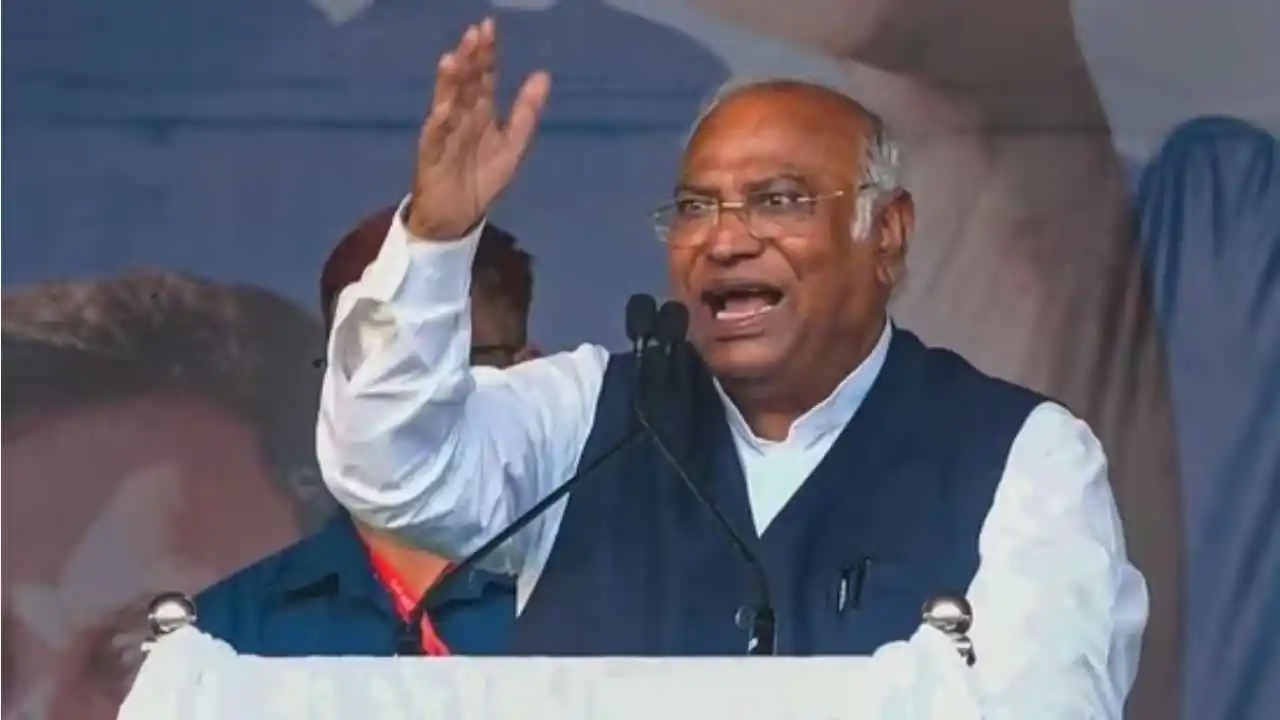
Kharge emphasised that the deputy CAG deposed before his panel on Friday but the audit watchdog has not given any report on Rafale. “We don’t know how this happened. But this is strange,” added Kharge.
On Saturday, leader of the opposition in the Lok Sabha, Mallikarjun Kharge of the Congress said that he would summon the Attorney General, and Comptroller and Auditor General for ‘lying’ in the apex court.
Addressing the media a day after the Supreme Court rejected petitions that sought a court monitored probe into the Rafale fighter jet deal, Kharge accused the two constitutional functionaries of lying in the apex court by saying that the CAG report was presented in the house and in PAC and PAC has probed it. He said he will request all members of the panel to summon the Attorney General and the CAG to ask them when the public auditor’s report was tabled in Parliament.
“Government said in SC it is in public domain. Where is it? Have you seen it? I am going to take this up with other members of PAC. I will request the PAC members to call the Attorney General (AG) and the Comptroller and Auditor General to ask them when the CAG report on the Rafale deal tabled in Parliament was,” he told reporters.
“When has the CAG discussed the PAC report? It has not been table so far. Wrong information is being feeded in the Supreme Court, it is a matter of shock…Government should apologise for misleading SC by presenting wrong facts on CAG report before Supreme Court,” he said.
Further, he said Narendra Modi-led government got a clean chit based on wrong information, and this is not right. Kharge said they respect the Supreme Court, but it is not a probe agency and only a Joint Parliamentary Committee (JPC) can investigate the alleged corruption in the Rafale deal.
Reacting on the Kharge’s statements, BJP leader Subramanian Swamy commented, “PAC Chairman Mallikarjun Kharge saying he has not got CAG report then we have to take his word. He should file affidavit or review petition in court saying I did not receive and the committee has not examined it.”
Petitioners find additional points
Petitioners in the case Yashwant Sinha, Arun Shourie and heir counsel Prashant Bhushan, said some of the facts mentioned in the order are neither on record nor factually correct and the Supreme Court’s dismissal of a plea seeking an independent court-monitored investigation into the Rafale fighter jet deal was shocking and disappointing.
They observed that the judgment “does not even address the documented facts stated in our petition or even deal with our main prayer seeking an investigation”.
Since the courts did not examine the material placed before them by the petitioners, the judgment can by no means be considered to be the SC’s clean chit to the deal, they argued.
“The court overlooks the fact that we were not seeking any enquiry by the court, but only an independent investigation by the CBI or SIT,” they added.
They said that the CAG report has not been submitted to PAC, that no portion of the CAG report has been placed before Parliament or placed in the public domain and “this factually incorrect statement must be based on some communication [not on record and unknown to us] made by the government to the court.”
They said that the court also mentioned its judgment that the chief of the Indian Air Force had communicated his reservation regarding the disclosure of the pricing details which would adversely affect national security. They said this “alleged fact” was also not on record and it is not understood as to where and how the court got this.
The judgment mentioned that the bench during hearing in the case interacted with the senior Air Force officials who “answered Court queries in respect of different aspects, including that of the acquisition process and pricing.”
The petitioners termed this too as “factually incorrect”. “The only question asked of the Air Force officials by the court and the only questions they answered was about whether the Rafale aircraft belonged to the 3rd, 4th and 5th generation and when the last acquisition took place. They were neither questioned, nor did they say anything on the acquisition process or on pricing. At least this did not happen during court proceedings,” they said.
The petitioners had also alleged that the Rafale maker Dassault gave an offset contract to Anil Ambani’s group company at the cost of public sector Hindustan Aeronautics Limited (HAL) and the court, in its order seems to get confused between Reliance Industries, promoted by Mukesh Ambani, with which Rafale maker Dassault was discussing a partnership in 2012 and Reliance Defence, promoted by Anil Ambani, with which Dassault entered into a partnership in 2015. The two run separate conglomerates.
The trio suggested that there was no procedure while procuring the aircraft and the Prime Minister unilaterally announced a new deal, with the Cabinet Committee on Security (CCS) simply rubber-stamping these with retrospective effect.
“The court takes a dangerous step in condoning the total disregard of procedures,” a statement released by the three said.
Slamming the judgement, they said: “(It) is in line with earlier judgments… where we have seen that courts have stopped short of ordering independent investigations in matters involving corruption in high places or even given judgments seeking to put a lid on those cases. The issue will continue to agitate the public mind until there is full public disclosure of all the facts and a comprehensive and independent investigation into the deal.”
Full text of the statement (highlighting key points):
The judgement of the Supreme Court dismissing our petition seeking an independent court monitored investigation into the Rafale deal is as shocking as it is disappointing. We had gone to court after making a detailed complaint to the CBI pointing out the following:
The Prime Minister signed an agreement for 36 Rafale jets on 10th April 2015 without any such requirement of 36 jets given by the Airforce head quarters and without the approval of the Defence Acquisition Council (DAC), which are the mandated first steps for any defence procurement.
The Air Force had in fact been asking for at least 126 fighter jets which had been approved by the DAC, tenders had been issued, 6 companies had applied, two were short listed and finally Dassault was selected as the lowest tender. The tender was on the basis that 126 fighters would be procured out of which only 18 would be bought in a ready to fly condition and the remaining would be manufactured in India by HAL with transfer of technology by HAL.
By 25th March, the tender negotiations had been virtually completed with Dassault and the CEO of Dassault in the presence of top officials of IAF and HAL had said that the contract negotiations were 95% complete and that the deal would be inked soon. There was nothing to suggest that the deal had run into rough weather. However, on 10th April the Prime Minister unilaterally signed a 36 aircraft deal with the French President, all to be purchased in a ready to fly condition. Thus 126 was reduced to 36, transfer of technology and make in India was knocked out and a clause for offset partners was brought in. Exactly at this time Anil Ambani registered a new company Reliance Defence and Dassault entered into a partnership with this company which was to get the bulk of the offset contract from this deal. The then French President Hollande also confirmed later in an interview that the choice of Reliance Defence, a brand new company with no credibility or experience in defence manufacturing was of the India government and the French had nothing to do with it.
It thereafter transpired that the benchmark price of 36 Rafale aircrafts was fixed by three senior officials in the price negotiating committee, at 5.2 billion euros. However this price was unilaterally increased by the cabinet committee on security headed by the Prime Minister to 8.2 billion euros and the contract was finally awarded for 7.2 billion euros. The per aircraft cost for the 36 aircraft deal comes to around 1650 crores. This can be contrasted with the price mentioned by the then Defence Minister Parrikar himself in an interview immediately after 10th April 2015 where he said that the 126 aircrafts in the earlier deal would have cost around 90000 crores which is about 715 crores per aircraft.
It was on these facts which were all documented in the complaint to the CBI, that we sought a court monitored investigation (when the CBI did not register an FIR on our complaint which is mandatory as per law).
The Courts judgement today does not even address the documented facts stated in our petition or even deal with our main prayer seeking an investigation. On the contrary it proceeds on the basis that we were challenging the contract itself and uses the facts stated by the government either in the short open affidavit filed or perhaps facts claimed in the sealed cover handed only to the court which was never shared with us. In fact some of the facts mentioned in the court judgement are not only not on record but are patently incorrect.
The Court mentions in para 25 that “The pricing details have, however, been shared with the Comptroller and Auditor General (hereinafter referred to as“CAG”), and the report of the CAG has been examined by the Public Accounts Committee (hereafter referred to as “PAC”). Only a redacted portion of the report was placed before the Parliament, and is in public domain”
All the facts mentioned above are neither on record nor factually correct. The PAC judgment has not been submitted to the Public Accounts Committee and no portion of the CAG report has been placed before Parliament or placed in the public domain. Obviously this factually incorrect statement must be based on some communication (not on record and unknown to us) made by the government to the court. That the court has relied on such communication which is factually incorrect on 3 counts shows how dangerous it is for the court to rely on statements made in a sealed cover (not subject to scrutiny or verification) and give its judgement on that basis.
It is astounding that the court has stated such a patently incorrect fact in its short judgement. The court has also mentioned in the same para that the Chief of the Indian Air Force had communicated his reservation regarding the disclosure of the pricing details which would adversely affect national security. This alleged fact was also not on record and it is not understood as to where and how the court got this. The court has also mentioned that Air Force officials were examined by the court on the acquisition process and pricing. This is also factually incorrect as the only question asked of the Air Force officials by the court and the only questions they answered was about whether the Rafale aircraft belonged to the 3rd, 4th and 5th generation and when the last acquisition took place. They were neither questioned, nor did they say anything on the acquisition process or on pricing. At least this not happen during court proceedings.
On the acquisition process, the court obligingly accepts the government claim that the acquisition process in the earlier 126 aircraft deal got stuck and was not proceeding which is why the new deal of 36 aircrafts had to be made. The court does not even deal with the facts mentioned by us completely shredding this claim of the government where we had annexed a video of the CEO of Dassault of 25thmarch 2015 saying that the negotiations was 95% complete and the deal would be inked soon. He had also said that Dassault would remain complaint to the RFP and that they were happy and satisfied with HAL. The Court also does not deal with the specific issue of violation of the procurement procedure raised by us, that the PM signed the 36 aircraft deal with the French government on 10th April, before any requirement given by the Air Force for 36 aircrafts and before DAC okaying the need to buy 36 aircrafts without any transfer of technology or make in India.
On the issue of price the court says that “We have examined closely the price details and comparison of the prices of the basic aircraft along with escalation costs as under the original RFP as well as under the IGA. We have also gone through the explanatory note on the costing, item wise. Suffice it to say that as per the price details, the official respondents claim there is a commercial advantage in the purchase of 36 Rafale aircrafts. The official respondents have claimed that there are certain better terms in IGA qua the maintenance and weapon package. It is certainly not the job of this Court to carry out a comparison of the pricing details in matters like the present. We say no more as the material has to be kept in a confidential domain.”
The Court does not even advert to or deal with the facts disclosed by us about the sudden increase of the benchmark price from 5.2 billion to 8.2 billion euros, despite the objections of three relevant official experts in the price negotiating committee who were subsequently transferred out. It however curiously mentions a CAG report on this issue which fact was never stated and is nonexistent.
On the issue of offset contracts to Ambani’s Company the court says that this was to be decided by Dassault which was already in negotiation with Reliance since 2012. This despite the fact that the Reliance Company with which Dassault was once discussing, was a completely different company of Mukesh Ambani and had nothing to do with the new company of Anil Ambani incorporated at the time of the 2015 deal. The court also overlooks the specific provisions of the DPP and the off set guidelines pointed out by us which requires every off set contract to be approved by the Raksha Mantri himself.
On this basis the court concludes that there is no reason for any intervention by the Court on the sensitive issue of purchase of 36 aircrafts by the Indian government. It says that “perception of individuals cannot be the basis of a fishing and roving enquiry by the Court”.
The Court overlooks the fact that we were not seeking any enquiry by the court but only an independent investigation by the CBI or SIT. The law on this has been laid down in a Constitution bench of the Supreme Court in Lalita Kumari’s case which says that if allegations made in a complaint are of a criminal offence an FIR must be registered and investigation must be made. The allegations in the complaint by us were of huge commissions being given to Ambani’s company through the guise of offset contracts in a deal which was contrived to ensure that such commission would be paid.
It is in these circumstances that we say that we are shocked and disappointed by the Courts judgment. However since the court has not examined nor said that it was examining the facts in detail, and has dismissed the petition only on the basis of its perception of its own jurisdiction under article 32 of the Constitution, this judgment can by no means be considered to be the Supreme Courts clean chit to this deal. As mentioned in our complaint, all the facts and circumstances, show that this was an unholy deal which has compromised national security, plundered our public exchequer and will bleed our public sector defence company HAL. This contrived deal has been struck only for the purpose of giving large commissions to Anil Ambanis company in the guise of offset contracts. The Supreme Court’s judgment is thus by no means a clean chit to the government on this deal. The Courts judgment is in line with earlier judgments of the courts in the Bofors case and in the Birla Sahara case where we have seen that Courts have stopped short of ordering independent investigations in matters involving corruption in high places or even given judgments seeking to put a lid on those cases. The issue will continue to agitate the public mind until there is full public disclosure of all the facts and a comprehensive and independent investigation into the deal.[/vc_column_text][/vc_column][/vc_row]