English हिन्दी
Connect with us

Latest Politics News

Assembly election: Over 70% voter turnout recorded in Rajasthan

The BJP is aiming to unseat the ruling congress led by Chief Minister Ashok Gehlot in Rajasthan.

Published

on

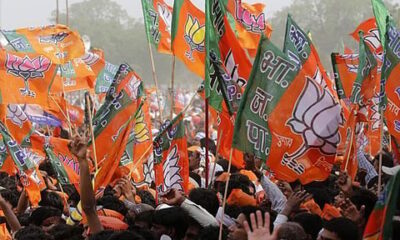
The Rajasthan assembly election is being held today to elect 199 members of the state legislative assembly. The voter turnout was recorded over 70%, some reports said 72%, at the end of polling in the state, final figures are awaited. The Bharatiya Janata Party is aiming to unseat the ruling Congress led by Chief Minister Ashok Gehlot in Rajasthan. The counting of votes will take place on December 3. 
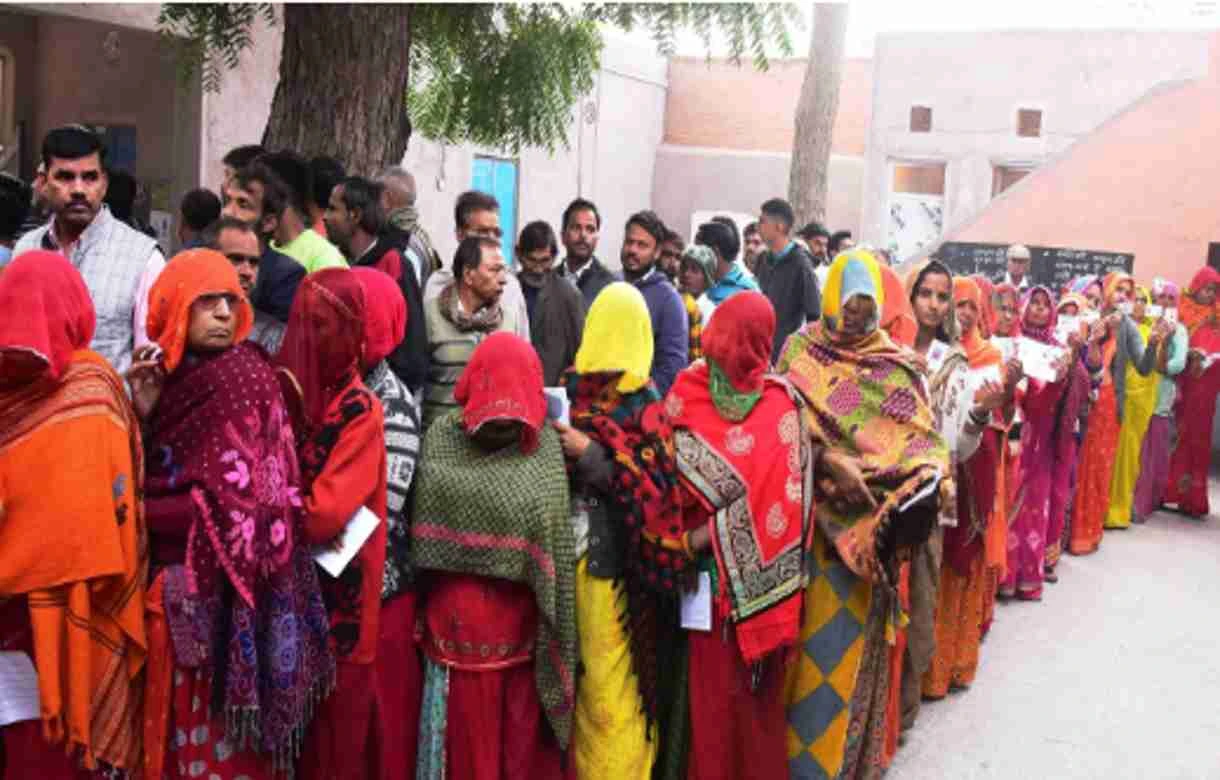
Reports said that the BJP is contesting on all seats while the Congress has left one seat, Bharatpur, for its ally Rashtriya Lok Dal (RLD) like the 2018 elections. The state has a total of 200 Assembly seats but polling will be held in 199 seats as the Congress candidate from Ganganagar’s Karanpur seat Gurmeet Singh Konoor passed away. 

The Election Commission officials said that there are 5,26,90,146 voters in 199 constituencies. Furthermore, the voting will be carried out through as many as 2.74 lakh workers, 6,247 sector officials as well as over 1.02 lakh security personnel.

The Congress party is pitching on its welfare schemes, policies and guarantees under the Ashok Gehlot government. The party in its manifesto pledged a new employment scheme for jobs at the panchayat level, cooking gas cylinders at Rs 400 to beneficiaries of the Ujjwala scheme, Rs 2 lakh interest free loans to farmers, an annual honorarium of Rs 10,000 to the woman head of the family, law for old pension scheme for government employees, free laptops for students taking admission to government colleges, insurance cover up to Rs 15 lakh per family to compensate for losses due to natural calamity. 

Meanwhile the BJP is banking on polarisation along with accusations of appeasement politics, Udaipur tailor Kanhaiya Lal murder and riots under Gehlot government, as well as issues of law and order, crimes against women, corruption and paper leaks. The BJP in its manifesto pledged to establish anti-romeo squads in every district of the state to ensure safety of the women. It also announced an initiative to promote the well-being of daughters under the Lado Protsahan scheme, a saving bond of Rs 2 lakh will be given to every household where a daughter is born. In addition, the party also promised to formulate a comprehensive compensation plan for farmers whose land has been acquired for various projects. 

Earlier on Saturday, Prime Minister Narendra Modi urged the voters to create a new record of voting by exercising their franchise in maximum numbers. He added that on this occasion, his best wishes to all the young friends of the state who are voting for the first time. 

India News

PM Modi takes aim at critics with Dimagi Naxal remark at SRCC centenary address

PM Modi revived his dimagi Naxal remark at SRCC’s centenary celebrations and spoke about India’s development journey.

Published

on

PM Modi

Prime Minister Narendra Modi revived his ‘dimagi Naxal’ remark while addressing the centenary celebrations of Shri Ram College of Commerce (SRCC) in Delhi on Saturday, using the term to criticise his opponents.

Speaking to students at the Delhi college, PM Modi described the phrase as a “homeopathic pill” and said it had prompted those he described as “dimagi Naxals” to come forward and reveal their views.

The prime minister also used his address to speak to Gen-Z about India’s development journey and asked students to consider the challenges the country had faced in the past.

PM Modi recalls past crises

During his speech, PM Modi referred to the 2013 Kedarnath disaster and the 2008 global financial crisis while criticising the handling of national emergencies by previous governments.

He said the government at the time of the Kedarnath disaster was shaken and questioned its ability to respond to the crisis.

Referring to the 2008 banking crisis, PM Modi alleged that the government of the time failed to effectively deal with the situation and claimed that India’s banking system was pushed close to collapse.

Prime minister lists challenges faced by his government

PM Modi also highlighted several major global crises that occurred during his government’s tenure.

He mentioned the COVID-19 pandemic, the Russia-Ukraine war, disruptions to global trade and supply chains, and the crisis in West Asia.

The prime minister said there had been concerns that India would struggle during these crises but argued that the country had continued to move forward.

PM Modi’s earlier SRCC visit

PM Modi had earlier visited SRCC in 2013, when he was the chief minister of Gujarat. His speech at the college received significant attention, particularly on social media, ahead of the 2014 Lok Sabha election.

His latest visit came during the college’s centenary celebrations, where his address focused on young people, India’s development ambitions and the challenges faced by the country.

Continue Reading

India News

Nagaland Assembly urges Centre to withdraw Protected Area Permit regime

Nagaland Assembly unanimously passed a resolution urging the Centre to withdraw the Protected Area Permit regime, citing concerns over tourism, investment and international engagement.

Published

on

The Nagaland Legislative Assembly has unanimously passed a resolution urging the Centre to withdraw the Protected Area Permit (PAP) regime in the state, arguing that the restrictions are affecting tourism, investment, international engagement and economic opportunities.

The resolution was moved by Deputy Chief Minister and Home Minister Yanthungo Patton and was adopted through a voice vote.

PAP regime was reimposed in 2024

The Protected Area Permit regulates the entry of foreign nationals into notified areas. The regime had been relaxed in Nagaland in 2011 but was reimposed on December 17, 2024.

During the Assembly discussion, Patton said Nagaland had emerged as a peaceful destination for tourism, culture, investment, entrepreneurship and international engagement. He said these sectors were increasingly contributing to employment and livelihood opportunities, particularly for young people.

The resolution also highlighted events and initiatives such as the Hornbill Festival and the “Land of Festivals” initiative, saying they had helped showcase Nagaland and India’s cultural diversity internationally while generating economic opportunities for local communities and entrepreneurs.

Assembly links PAP restrictions to economic concerns

The state government argued that the return of the PAP regime has complicated efforts to expand international tourism, business and investment.

The Assembly resolution said the regime was creating difficulties for international tourism, business and investment, along with cultural exchanges and overseas partnerships.

However, the state maintained that relaxing the permit regime would not mean compromising national security.

The resolution assured the Centre that foreign nationals could continue to be registered, regulated and monitored through technology-based and institutional mechanisms in coordination with central agencies.

Neiphiu Rio backs review of PAP regime

Chief Minister Neiphiu Rio also participated in the debate along with Tourism and Higher Education Minister Temjen Imna Along, Industries and Commerce Advisor Hekani Jakhalu and MLA Naiba Konyak.

The legislators maintained that Nagaland’s present circumstances warranted a different approach, stressing that the state was peaceful and seeking greater opportunities in tourism, investment and other sectors.

Rio linked the demand to Nagaland’s economic aspirations and the need to create more opportunities for young people while maintaining the state’s commitment to national security.

“Security and development can go together,” Rio said.

The resolution further argued that regulations that have outlived their developmental relevance should not become barriers to employment, economic activity and Nagaland’s participation in the wider national and global economy.

Continue Reading

India News

Mayawati says Akash Anand needs more maturity, rules out major BSP role

BSP chief Mayawati says nephew Akash Anand needs greater political maturity before taking on a major responsibility in the party.

Published

on

Akash Anand

Bahujan Samaj Party (BSP) chief Mayawati on Thursday said her nephew Akash Anand needs to gain greater political maturity before he can be entrusted with any major responsibility in the party.

Addressing a national-level meeting of BSP office-bearers, Mayawati said she had allowed Akash Anand to continue working within the organisation but felt that he was not yet ready to handle a significant party responsibility.

“I have allowed Akash Anand to work in the party, which is before all of you, but Akash Anand still needs to become more mature. Till then, it would not be appropriate to give him a major responsibility in the party,” Mayawati said.

Mayawati also made it clear that Akash Anand, who is the BSP’s national coordinator, would continue working in the party. However, he will not be entrusted with any major responsibility for the time being.

Mayawati refers to Kanshi Ram’s principles

Explaining her position, Mayawati referred to the principles of BSP founder Kanshi Ram.

She said Kanshi Ram had permitted members of his family and other relatives to assist with party work, but was against giving them election tickets or positions after the party came to power.

Mayawati said she was also committed to following that principle. According to her, maintaining this approach was important to protect the BSP from tactics allegedly employed by political opponents during elections.

BSP to contest elections alone

During the meeting, Mayawati also announced a major political decision concerning the BSP’s electoral strategy.

She said the party had decided to contest all elections across the country on its own, irrespective of whether they were small or major elections.

Targeting the Congress, Mayawati described it as a “strongly anti-Dalit and anti-Ambedkar” party and said the BSP would therefore fight elections independently rather than depend on other parties.

The decision was announced as Mayawati reviewed the BSP’s organisational work and discussed shortcomings with party office-bearers.

She instructed leaders at different levels to implement the party’s annual organisational activities with complete honesty and dedication.

Mayawati attacks RSS over minority rights

Mayawati also criticised the Rashtriya Swayamsevak Sangh (RSS), referring to comments made by its chief Mohan Bhagwat during his recent visit to the United States.

Bhagwat had said that a Hindu who believes there should be no Muslims in Bharat would not remain a Hindu. He had also spoken about Hindu philosophy accepting that different faiths can lead to the same truth and emphasised the idea of unity in diversity.

Mayawati, however, said there was a significant difference between the RSS’s statements and its actions.

She argued that the organisation lacked credibility when it came to issues concerning the interests and welfare of the Bahujan Samaj, reservation as a constitutional right, and the safety, dignity and religious freedom of women, Muslims and other religious minorities.

She further said that despite its long existence, the RSS had not received the recognition and respect it sought.

Mayawati invokes Ambedkar’s Constitution

The BSP chief also challenged the RSS to demonstrate its commitment to the Constitution drafted under the leadership of Babasaheb Dr Bhimrao Ambedkar.

Mayawati said that if the RSS genuinely had faith in a humanitarian, welfare-oriented and egalitarian Constitution, it should follow its principles honestly and ensure that its members did the same.

BSP reiterates focus on Bahujan Samaj

At the national meeting, Mayawati reviewed the BSP’s organisational activities, assessed its shortcomings and gave directions to office-bearers regarding the party’s future work.

She reiterated that protecting the interests of the Bahujan Samaj and bringing exploited and deprived sections to political power remained the BSP’s central mission.

Mayawati maintained that achieving political power was necessary for the party to fulfil these objectives.

Her latest remarks on Akash Anand indicate that while her nephew will remain associated with the BSP and continue working for the organisation, he will not receive a major party responsibility until she believes he has attained the required political maturity.

Continue Reading

Trending

© Copyright 2022 APNLIVE.com