English हिन्दी
Connect with us

India News

Revanth Reddy under fire for Ram rich, Shiva poor remark

Telangana CM Revanth Reddy’s remarks describing Lord Ram as the “God of the rich” and Lord Shiva as the “God of the poor” have drawn BJP criticism.

Published

on

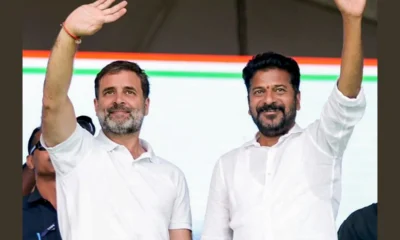
Telangana Chief Minister A Revanth Reddy has faced criticism from the BJP after making remarks comparing the political use of Lord Ram and Lord Shiva during an event in New Delhi.

Speaking at The Conclave 2026 on Monday, September 28, Revanth Reddy contrasted the BJP’s use of the “Jai Shri Ram” slogan with the “Hara Hara Mahadev” chant. He said both Lord Ram and Lord Shiva are deities, before drawing a political and social comparison between the two.

What Revanth Reddy said about Ram and Shiva

Revanth Reddy said the BJP places greater emphasis on “Jai Shri Ram”, while people in southern India commonly use “Hara Hara Mahadev”.

He questioned why BJP leaders do not use the “Hara Hara Mahadev” slogan as frequently.

The Telangana Chief Minister then made the remark that has drawn attention, saying that Lord Ram is the “God of the rich” and Lord Shiva is the “God of the poor”. He also linked the comparison to his broader argument about differences between political and cultural traditions in northern and southern India.

Reddy further described the political-cultural divide using the terms “Dravidians” for the South and “Aryans” for the North, while saying that people in the South are more associated with devotion to Shiva and people in the North with devotion to Ram.

BJP criticism of Revanth Reddy

The remarks have triggered criticism from the BJP, bringing the religious comparison into the ongoing political exchanges between the BJP and the Congress.

Reddy’s comments came in the context of a wider political speech in which he criticised the BJP-led central government on issues including the Election Commission, the Special Intensive Revision (SIR) of electoral rolls and the proposed delimitation of Lok Sabha constituencies.

Revanth Reddy’s wider remarks at the event

During the same event, the Telangana Chief Minister also alleged that the political situation was no longer simply a “North versus South” divide but had become a “Gujarat versus the entire country” situation.

He criticised the Centre over what he described as inadequate support for Telangana’s development projects and raised concerns about the possible impact of population-based delimitation on southern states. These were statements and allegations made by Reddy during the event.

Reddy also criticised the SIR exercise and called for a nationwide “SIR Go Back” movement. He alleged that the revision process could lead to the removal of voters and questioned the role of the Election Commission. These claims were made by the Chief Minister and are presented as his allegations, rather than independently established facts.

Why Revanth Reddy’s Ram-Shiva remark matters

The “Ram for rich, Shiva for poor” comment has become the most prominent part of Reddy’s remarks because it directly connects religious symbolism with his political argument about the BJP and Congress.

The statement was made as part of a broader discussion about the perceived political and cultural differences between northern and southern India. The BJP’s criticism of the comment has added another point of contention to the political exchange between the two parties.

India News

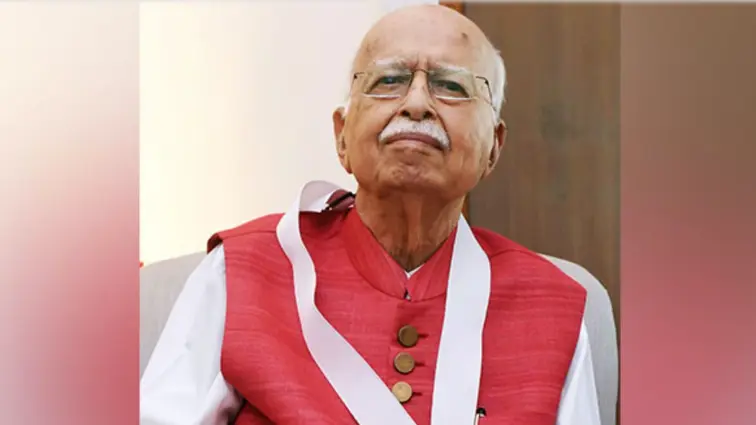
L.K. Advani turns 99, PM Modi highlights his 2 defining qualities

On L.K. Advani’s 99th birthday, PM Narendra Modi highlighted two qualities he said set the BJP veteran apart — ideological clarity and intellectual sharpness.
Published

on

Prime Minister Narendra Modi on Sunday recalled the long political journey of veteran BJP leader and former Deputy Prime Minister L.K. Advani as he turned 99.

Advani, born on November 8, 1927, in Karachi, entered the 100th year of his life on Sunday. In a tribute, Mr Modi highlighted Advani’s contribution to the growth of the Bharatiya Janata Party and described two qualities that, according to him, set the veteran leader apart.

What are Advani’s 2 defining qualities?

According to PM Modi, the first defining quality was ideological clarity and intellectual sharpness.

He said this was reflected in Advani’s speeches, writings and interviews. Modi also noted that the resolutions Advani authored for the Jana Sangh and the BJP remained relevant for study.

The second quality highlighted by the Prime Minister was Advani’s manner of challenging what Modi described as “pseudo-secularism” promoted by a section of the Indian political class over the years.

Modi recalls Advani’s role in BJP’s growth

Modi said Advani played an important role in strengthening the Jana Sangh and subsequently building the BJP.

He recalled that during Advani’s terms as BJP president, the party emerged as the single-largest party in Parliament for the first time in 1996. Modi also credited Advani with nurturing successive generations of party workers and giving the BJP a foundation based on the principle of “Nation First”.

The Prime Minister also recalled the partnership between Advani and former Prime Minister Atal Bihari Vajpayee. He said the two leaders worked together for decades without becoming competitors and together influenced the course of Indian politics.

Advani’s journey from Rajasthan to national politics

Modi recalled Advani’s early work as an RSS pracharak in Rajasthan before he moved to Delhi and became involved in the Jana Sangh.

Advani became chairman of the Delhi Metropolitan Council in 1967, while his parliamentary career began in 1970. He later served as Leader of the Opposition and held key positions in the Union government.

Modi also remembered his association with Advani during the 1991 Lok Sabha election campaign. He said he helped prepare Advani’s papers and assisted him during the campaign when the BJP leader contested from Gandhinagar among two seats.

Modi recalls Emergency, Rath Yatra and Advani’s public life

The Prime Minister described the Emergency as a significant phase in Advani’s life and recalled his experiences during that period.

He also highlighted Advani’s role in the Somnath-to-Ayodhya Rath Yatra and said he had been involved in the initiative from its planning stage through its execution. Modi recalled Advani’s arrest in Bihar during the Yatra and the subsequent political developments in Gujarat.

Beyond politics, Modi described Advani as an avid reader with an interest in cinema, theatre and history. He also recalled Advani’s efforts to remain connected with Sindhi culture and his association with the Sindhu Darshan Puja near Leh.

Advani was awarded Bharat Ratna in 2024

Modi also referred to Advani receiving the Bharat Ratna in 2024, recognising his decades of public service.

Advani, who served as Deputy Prime Minister and Home Minister, has been one of the BJP’s most prominent leaders and played a significant role in the party’s political journey.

Concluding his birthday tribute, Modi wished Advani good health as he entered his 100th year.

Continue Reading

India News

Yogi Adityanath takes a dig at Akhilesh Yadav over Ram Temple visit plan

Yogi Adityanath’s remarks came after the Samajwadi Party announced that Akhilesh Yadav would visit the Ram Temple in Ayodhya on December 12.
Published

on

Yogi Adityanath

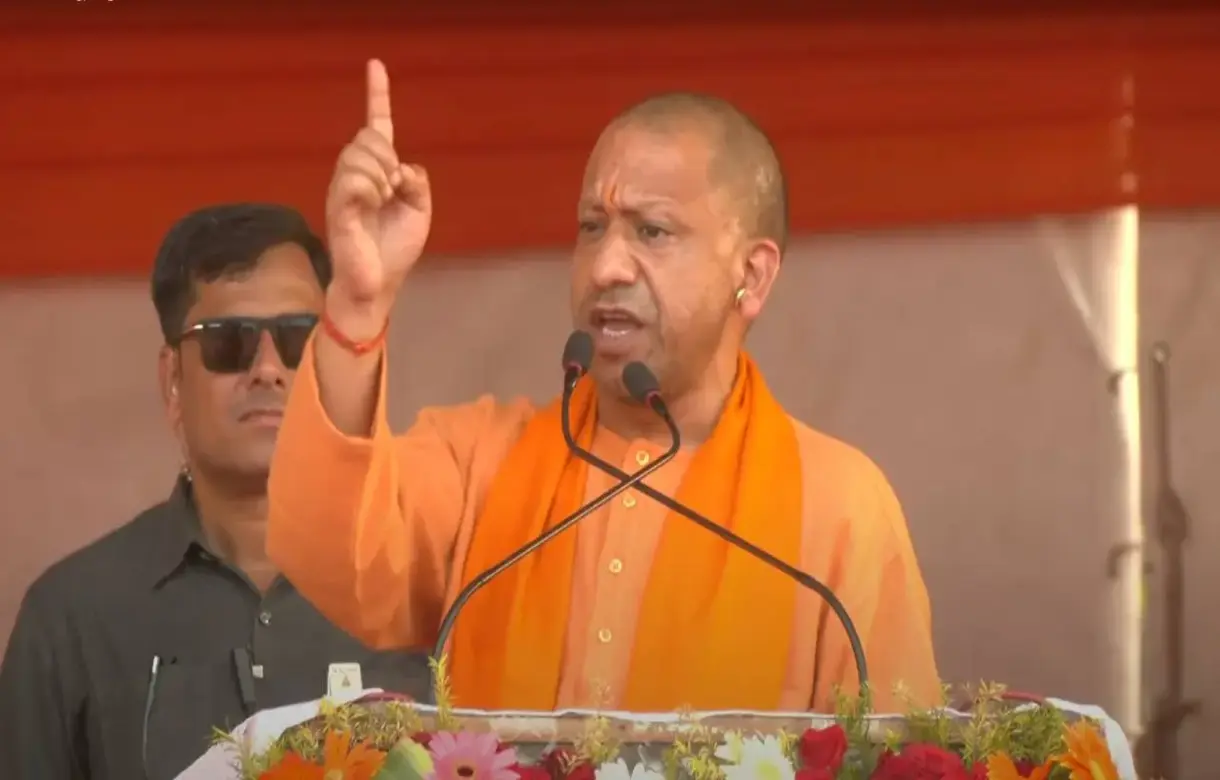
Uttar Pradesh Chief Minister Yogi Adityanath on Saturday took an apparent swipe at Samajwadi Party chief Akhilesh Yadav over his planned visit to the Ram Temple in Ayodhya, saying those who had fired on Ram devotees should first apologise to them and to the saints.

Yogi made the remarks while addressing the 10th edition of Deepotsav in Ayodhya. He did not name Akhilesh Yadav directly.

Yogi’s remarks come after Akhilesh’s Ayodhya visit plan

The chief minister’s comments came after the Samajwadi Party announced that Akhilesh Yadav would visit the Ram Temple in Ayodhya on December 12. It would be his first visit to the temple since its inauguration, according to the report.

Yogi said those who had earlier neglected and insulted Ayodhya, opened fire on Ram devotees and subjected saints to lathicharge should come to the city only after seeking forgiveness.

“Let them apologise to the devotees of Lord Ram; let them apologise to the saints,” Yogi said, adding that they should repent for their past actions.

Reference to 1990 firing on kar sevaks

Yogi’s remarks referred to the 1990 police firing on kar sevaks during the Ram Janmabhoomi movement. At the time, the Uttar Pradesh government was headed by Mulayam Singh Yadav, Akhilesh Yadav’s father.

The chief minister said those who had once “bloodied” Ayodhya were now remembering the city. He also criticised political leaders over their conduct at religious gatherings, referring to the decorum of a katha.

Akhilesh has not yet visited the Ram Temple

Akhilesh Yadav has visited Ayodhya earlier but has not so far visited the Ram Temple. The SP leader was in the city on October 8 to attend a Bhagwat Katha organised by party leader Pawan Pandey.

According to the report, Akhilesh and his wife, Mainpuri MP Dimple Yadav, are scheduled to offer prayers at the Ram Temple and Hanumangarhi on December 12.

The planned visit comes amid political activity in Ayodhya ahead of the Uttar Pradesh Assembly elections due by February 2027.

Yogi highlights Ayodhya’s transformation

During his Deepotsav address, Yogi also spoke about the changes in Ayodhya and described the city’s transformation as an ideological victory.

He said those who had previously neglected Ayodhya were now witnessing its development. He also said Lord Ram represented India’s national consciousness, culture, values and self-respect.

The chief minister further recalled the Ram Janmabhoomi movement and said Ayodhya had regained the glory for which kar sevaks and saints had struggled.

Continue Reading

India News

Ahead of Diwali, Yogi govt hikes DA by 5% for UP government staff

The Uttar Pradesh government has increased Dearness Allowance by 5 percentage points, taking it from 58% to 63%. The revised rate will benefit lakhs of eligible employees ahead of Diwali.

Published

on

Yogi Adityanath

The Uttar Pradesh government has announced a 5 per cent increase in Dearness Allowance (DA) for state government employees ahead of Diwali. With this revision, the DA rate has increased from 58 per cent to 63 per cent, providing financial relief to lakhs of eligible employees across the state.

The revised allowance will be effective from July 1, 2026, according to the government announcement. A government order was also issued on Saturday, November 7.

The enhanced DA will be paid along with employees’ regular November 2026 salaries.

Which employees will benefit from the DA hike?

The decision covers regular state government employees and several other categories of eligible staff.

These include employees of aided educational and technical institutions, regular and full-time employees of urban local bodies, work-charged employees and personnel drawing salaries under University Grants Commission (UGC) pay scales.

The revision is expected to benefit a large section of the Uttar Pradesh workforce ahead of the festive season.

What happens to the DA arrears?

The revised DA rate will apply retrospectively from July 1, 2026. Consequently, employees will also be entitled to arrears for the period preceding the November salary payment.

The government has made provisions for the payment of the arrears for July to October 2026. These amounts will be credited to employees’ provident fund accounts, according to the reported payment arrangements.

The enhanced allowance for November will be reflected in the regular salary for that month.

The decision comes ahead of Diwali and will provide additional financial relief to eligible government employees in Uttar Pradesh.

Continue Reading

Trending

© Copyright 2022 APNLIVE.com