English हिन्दी
Connect with us

India News

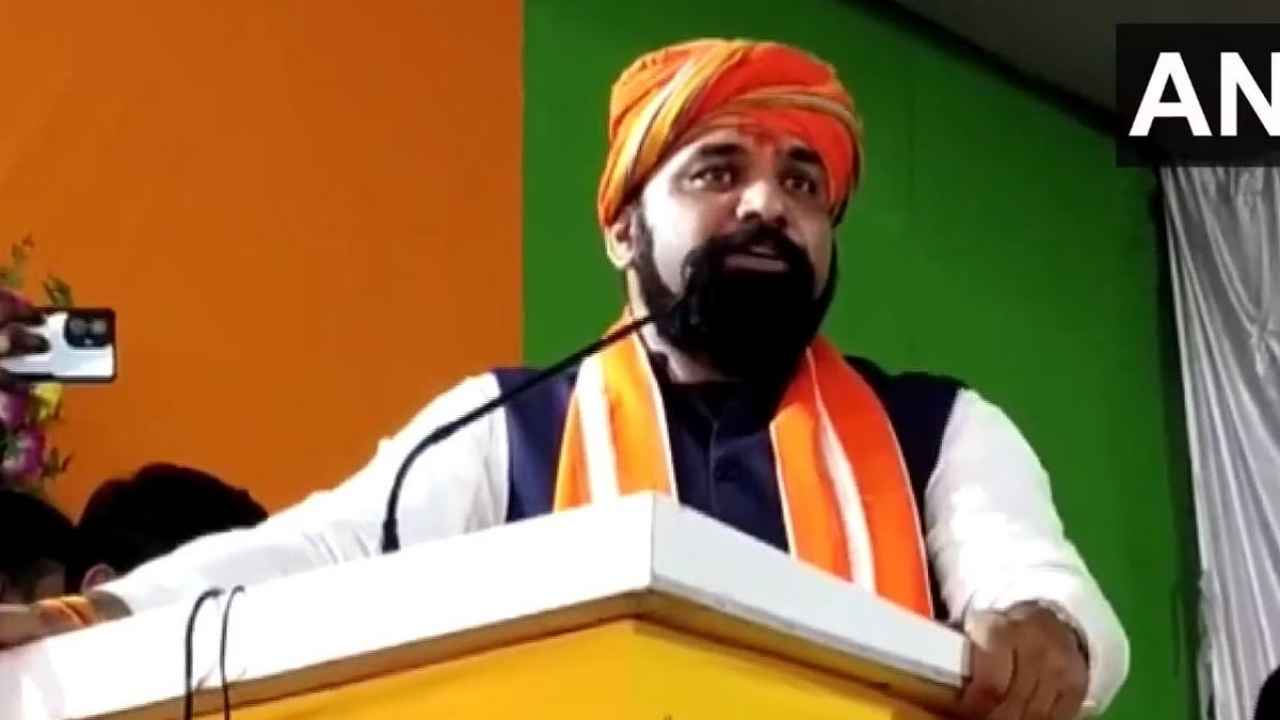
Who is Samrat Choudhary, the BJP leader chosen as Bihar chief minister

Samrat Choudhary has been named Bihar’s new chief minister, becoming the first BJP leader to hold the post in the state.

Published

on

Samrat Choudhary

Samrat Choudhary has been chosen as the new chief minister of Bihar, marking a major political shift in the state. His elevation follows the resignation of Nitish Kumar, who is set to move to the Rajya Sabha.

With this development, Choudhary becomes the first leader from the Bharatiya Janata Party to occupy the top post in Bihar, a state long dominated by Nitish Kumar’s leadership for over two decades.

Who is Samrat Choudhary

Born on November 16, 1968, Samrat Choudhary is a seasoned politician with a long career in Bihar politics. He has served in multiple key roles, including deputy chief minister and minister in various state departments.

He represents the Tarapur assembly constituency and has previously held positions such as leader of the opposition in the Bihar Legislative Council and president of the BJP’s Bihar unit.

Choudhary comes from a political family, with his father, Shakuni Choudhary, also being an established political figure. Over the years, he has built a strong grassroots presence, particularly in the Munger region.

Political journey and rise in BJP

Choudhary began his political career in the 1990s and was earlier associated with parties like the Rashtriya Janata Dal and Janata Dal (United) before joining the BJP.

His rise within the BJP has been steady, culminating in his appointment as deputy chief minister in 2024. He handled important portfolios such as finance, urban development, and panchayati raj during his tenure.

He is also considered an influential OBC leader, which is seen as a key factor in his selection as chief minister, reflecting the party’s strategy to broaden its social base.

A major political shift in Bihar

Choudhary’s appointment signals a new phase in Bihar politics, with the BJP taking direct leadership of the state government. The party, which is the single-largest in the assembly, elected him as its legislative party leader, clearing the path for his swearing-in as chief minister.

His leadership will be closely watched as he takes charge after a long period dominated by Nitish Kumar.

India News

16 candidates shortlisted for Ayodhya Ram Mandir Trust CEO post 

The Ayodhya Ram Mandir Trust CEO selection has reached its final stage, with 16 candidates interviewed in Ayodhya.

Published

on

Ram Mandir

The selection process for the Chief Executive Officer of the Shri Ram Janmabhoomi Teerth Kshetra has reached its final stage, with interviews of 16 shortlisted candidates completed in Ayodhya.

The final round of face-to-face interviews was held at the Trust’s campus on August 11 and 12. The candidates were assessed for their management abilities, leadership potential, vision, strategic planning, personality and expertise in technology.

From 5,585 applications to 16 finalists

The recruitment process began with 5,585 applications for the CEO position. Of these, 3,877 applicants submitted detailed CVs for evaluation.

Candidates were initially assessed on their management capabilities, experience in handling large-scale events and personnel, personal excellence, language skills, vision and strategic planning.

In the second stage, around 111 candidates were invited for online interactions. Their communication skills, professional experience, leadership qualities, vision, personality and technological knowledge were evaluated.

The process eventually narrowed the field to 16 candidates for face-to-face interviews in Ayodhya. The shortlisted group included Army veterans, retired IAS and IPS officers and professionals from government and non-government services.

Search Committee to recommend three names

The three-member Search Committee will now evaluate the final candidates and forward a panel of three names to the Shri Ram Janmabhoomi Teerth Kshetra Trust.

The committee comprises Justice (Retd.) Permod Kohli, Lieutenant General (Retd.) VK Chaturvedi and nuclear scientist Dr Suresh Hawre. The Trust will make the final appointment and announce the new CEO in due course.

The committee said the selection process was designed to ensure a merit-based, transparent and comprehensive assessment for the leadership position.

What will the new CEO oversee?

The CEO will work under the direct supervision of the Trust and will be responsible for its management, administration and future development.

The role includes ensuring compliance with statutory and regulatory requirements, maintaining financial transparency, coordinating security arrangements with government agencies and overseeing religious rituals and festivals.

The CEO will also be responsible for arrangements concerning devotees and distinguished guests, as well as the day-to-day functioning of the Trust within the powers delegated by it.

The CEO will be appointed on a three-year contract, which can be renewed based on satisfactory performance. The salary and other benefits will be decided through mutual discussion.

Continue Reading

India News

Kharge rally sparks political row over shuddhikaran ceremony in Haldwani

A political row has erupted in Uttarakhand over a shuddhikaran ceremony held at Haldwani’s Ramlila Ground after Mallikarjun Kharge’s rally.

Published

on

mallikarjun-kharge

A political dispute has erupted between the Congress and the BJP in Uttarakhand over a ‘shuddhikaran’ (purification) ceremony held at the Ramlila Ground in Haldwani after a rally addressed by Congress president Mallikarjun Kharge on August 8.

Uttarakhand Congress chief Ganesh Godiyal alleged that the ‘Shri Ram Sena’ group that conducted the ceremony was associated with the BJP. The BJP has strongly denied having any connection with the group.

Godiyal claimed that the purification ritual was conducted because Kharge belongs to the Dalit community. He accused the BJP of promoting divisions in society on the basis of caste and described the ceremony as a “crime against humanity”.

The Congress leader also questioned the Nainital senior superintendent of police over the alleged lack of action against the right-wing group. He said the incident reflected what he described as a fundamental ideological difference between the Congress and the BJP.

BJP rejects Congress allegations

The BJP rejected the allegations and accused the Congress of targeting the saffron party for political gain.

BJP state spokesperson and Cabinet Minister Khajan Das said certain slogans were raised during Kharge’s rally at the Ramlila Ground that, according to him, hurt the sentiments of the Sanatan community.

Das said the Ramlila Ground has religious significance and claimed that people were angered by the chanting of slogans associated with another religion at the venue.

The BJP also rejected the Congress’s claim that the purification ceremony was linked to Kharge’s caste. Das, in turn, accused the Congress of disrespecting Dalit leaders, naming former Congress president Sitaram Kesri, Babu Jagjivan Ram and Dr Bhimrao Ambedkar.

The controversy has since led to a political exchange between the two parties, with the Congress questioning the motive behind the ceremony and the BJP maintaining that the ritual was not connected to Kharge’s caste.

Continue Reading

India News

5.5 magnitude earthquake jolts Leh in Ladakh early morning

A 5.5-magnitude earthquake struck Leh in Ladakh at 6:05 AM on Thursday at a depth of 10 kilometres. No immediate casualties or major structural damage were reported.

Published

on

Earthquake

A 5.5-magnitude earthquake struck Leh in Ladakh early Thursday morning, according to the National Centre for Seismology (NCS).

The earthquake was recorded at 6:05:15 AM IST on August 13, 2026, with the epicentre located at 36.881°N latitude and 74.402°E longitude. The NCS said the earthquake occurred at a depth of 10 kilometres.

There were no immediate reports of casualties or major structural damage following the tremor.

Earthquake recorded at shallow depth

The NCS reported the earthquake as a shallow event, with its depth recorded at 10 kilometres.

Earthquakes are classified according to how deep their focus is beneath the Earth’s surface. According to US Geological Survey (USGS) data cited in the source, earthquakes can occur from the Earth’s surface to about 700 kilometres below it, with the range divided into shallow, intermediate and deep earthquakes.

Shallow earthquakes can produce stronger shaking at the surface because seismic waves have less distance to travel before reaching the ground. This can increase the potential for structural damage and casualties, depending on factors including the earthquake’s magnitude and local conditions.

Continue Reading

Trending

© Copyright 2022 APNLIVE.com