English हिन्दी
Connect with us

India News

Nirmala Sitharaman hits back at Rahul Gandhi over IDBI Bank sale

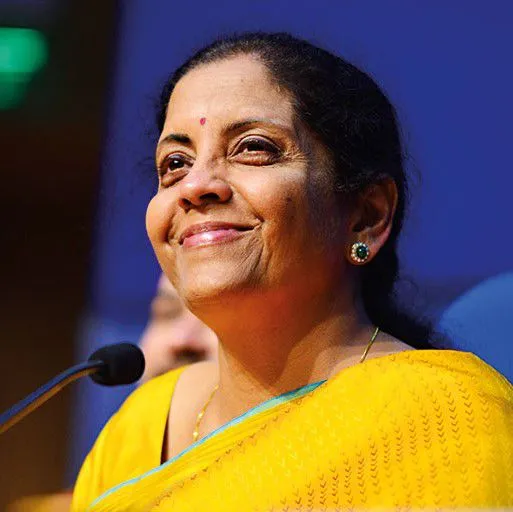
Finance Minister Nirmala Sitharaman has responded to Rahul Gandhi’s opposition to the proposed IDBI Bank sale, alleging that loans to politically connected businesses left the lender in poor financial condition before the NDA government took charge.

Published

on

Finance Minister Nirmala Sitharaman on Friday responded to Congress leader Rahul Gandhi’s criticism of the proposed IDBI Bank sale, saying the lender was handed over to the Narendra Modi-led government in poor financial condition. She accused successive Congress governments of exerting political pressure on banks to extend loans to businesses with links to influential political figures.

The exchange comes a day after Rahul Gandhi opposed the government’s decision to sell IDBI Bank to Canadian company Fairfax. The Congress leader questioned why a bank that had returned to profitability was being sold and raised concerns about the future of its employees, reservation policies and the government’s reduced ownership.

In a post on X, Sitharaman alleged that IDBI Bank had been compelled to extend loans to several large business groups with connections to Congress leaders. She named Videocon, Winsome, ABG Shipyard and Kingfisher, saying the loans subsequently turned into bad debts and caused substantial losses to the bank.

Defending the NDA government’s handling of the lender, the Finance Minister said it had been revived through professional management, prudent lending practices and recapitalisation of more than Rs 25,000 crore.

“IDBI Bank is now poised for its next phase of growth,” she said, adding that all due procedures had been followed in the bank’s strategic restructuring.

Sitharaman cites instances of alleged political interference in banking

The Finance Minister also accused the Congress of treating public sector banks and financial institutions as personal entities, alleging that political influence had been used to bypass established lending practices.

To support her argument, Sitharaman referred to several incidents from different periods of Congress rule.

She cited the 1957 Haridas Mundhra episode, alleging that LIC funds were extended to him under the influence of Congress leaders.

She also referred to the removal of State Bank of India chairman R.K. Talwar in 1976 during Indira Gandhi’s government. According to Sitharaman, Talwar was removed after resisting political pressure to relax lending conditions for a company associated with Sanjay Gandhi’s circle.

The Finance Minister further alleged that Sanjay Gandhi had pressured the Central Bank of India over loans to Maruti.

She also named former Minister of State for Finance B. Janardhana Poojary, alleging that he pressured bank employees to issue loans during the 1980s.

Another instance she mentioned involved former UPA minister Pawan Kumar Bansal, whom she accused of pressuring Canara Bank to extend loans to businesses linked to his family.

Taking a swipe at the Congress, Sitharaman said the practice of influential people using political connections to obtain bank loans was over. She maintained that ordinary citizens now had easier access to credit and bank employees were no longer under pressure to approve loans through political recommendations.

Why Rahul Gandhi is opposing the IDBI Bank sale

Rahul Gandhi had criticised the government’s decision to sell IDBI Bank in a post on X on Thursday, arguing that the institution was established during Congress rule to support India’s industrial development.

He questioned the government’s approach to public sector banking, contrasting the establishment of banks during Congress rule with their proposed sale under the Modi government.

Gandhi also shared a letter addressed to IDBI Bank employees, expressing support for their concerns over the transaction.

Recalling his meeting with a group of bank employees at Parliament House in March last year, the Congress leader said they had questioned why the government wanted to sell a lender that they had helped turn profitable.

He credited the employees for the bank’s financial recovery and questioned the rationale behind its proposed sale.

Gandhi also raised concerns about the government’s commitment to maintaining its ownership in IDBI Bank.

He said Parliament had been assured in 2003 that the government would retain at least 51 per cent ownership in the bank. While acknowledging that the commitment was not written into law, he described it as a promise made to Parliament and the people.

The Congress leader further questioned the implications of private ownership for reservations for Scheduled Castes, Scheduled Tribes and Other Backward Classes, along with the service conditions of bank employees.

He argued that public sector banks should remain instruments of nation-building rather than being treated as assets for sale.

India News

Rahul Gandhi’s compromised PM post triggers sharp BJP attack

Rahul Gandhi’s post on the Trump-Xi-Putin meeting triggered a political clash, with the BJP accusing him of damaging India’s global image and questioning the Congress’s record on foreign policy.
Published

on

Rahul Gandhi

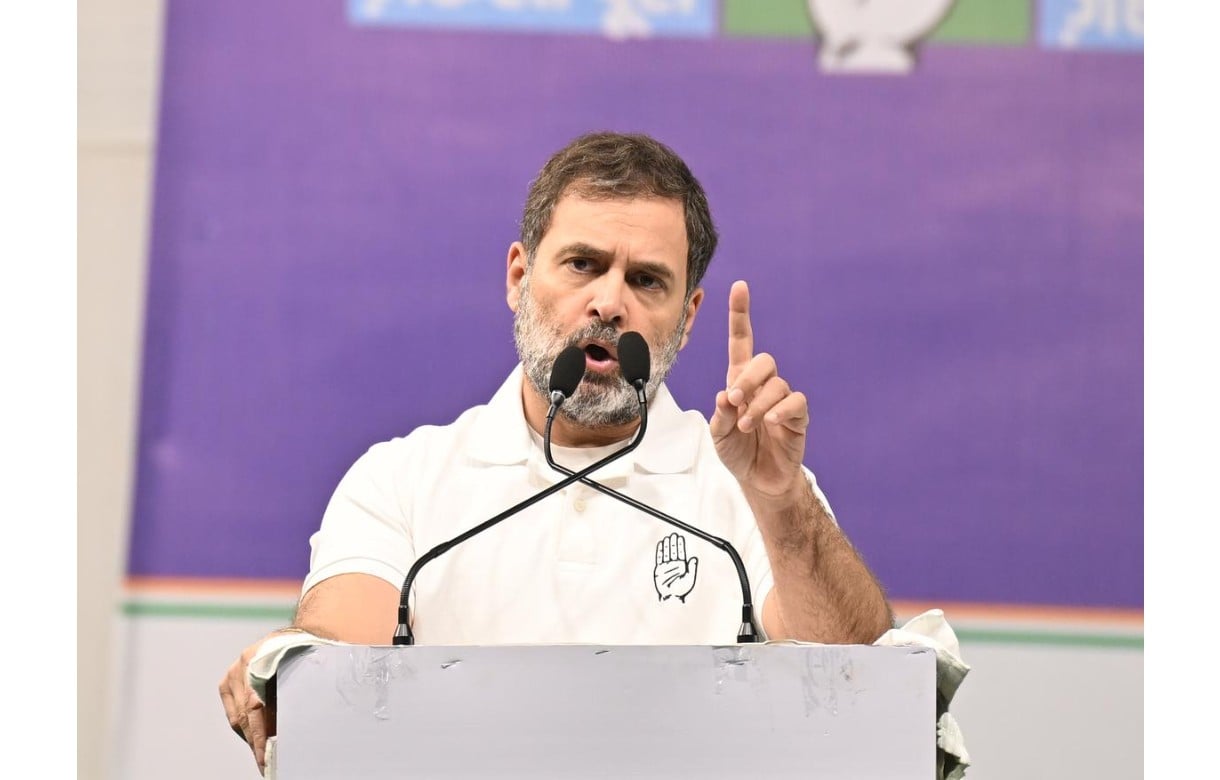
Congress leader and Leader of Opposition Rahul Gandhi triggered a political clash with the BJP after posting a picture from a rare meeting involving US President Donald Trump, Chinese President Xi Jinping and Russian President Vladimir Putin.

Reacting to the meeting, Mr Gandhi said that if the Congress were in power, India’s Prime Minister would have been sitting at the table with the three leaders. He added that a “compromised PM” could never sit at that table.

The post drew a strong response from the BJP, which accused Mr Gandhi of projecting a negative image of India and questioned the Congress’s record on foreign policy.

Rahul Gandhi’s ‘compromised PM’ remark

Sharing the photograph of the Trump-Xi-Putin trilateral meeting on X, Mr Gandhi wrote: “If Congress were in power, India’s Prime Minister would be sitting at this table. A compromised PM can never sit at this table.”

The remark came amid an ongoing political exchange between the Congress and BJP over India’s position in global geopolitics and its diplomatic engagement with major powers.

BJP hits back at Rahul Gandhi

BJP spokesperson Tuhin Sinha accused the earlier Congress governments of compromising India’s interests while responding to Mr Gandhi’s post.

Mr Sinha cited the Shimla Agreement and the release of Pakistani prisoners of war under the Indira Gandhi government. He also referred to the Sharm-el-Sheikh statement during the tenure of former Prime Minister Manmohan Singh while making his argument against the Congress.

“It seems Rahul Gandhi is paid to defame India,” Mr Sinha said, according to the report.

Another BJP spokesperson, RP Singh, accused Mr Gandhi of promoting what he described as a negative narrative about India. He said India currently has a strong position in the global order and highlighted Prime Minister Narendra Modi’s relations with leaders across countries.

BJP-Congress clash over India’s global role

The latest exchange follows Mr Gandhi’s recent criticism of India’s role in international affairs. Speaking at the University of Chicago in the US, he had described India as becoming a “side player” while Pakistan was negotiating with Iran and the United States.

Mr Gandhi argued that India had traditionally maintained an independent approach to international relations, combining partnerships with its own understanding of global developments.

The BJP had earlier criticised those remarks as well. BJP spokesperson Pradeep Bhandari accused Mr Gandhi of being overly focused on Pakistan and described him as a “Pak Fanboy”.

The latest controversy has therefore added another layer to the ongoing BJP-Congress political battle over India’s foreign policy and its standing in global affairs.

Continue Reading

India News

Kashmir free of India-born terrorists after 35 years, says Amit Shah

Amit Shah said Kashmir is now free of India-born terrorists after 35 years following the killing of Lashkar-e-Taiba terrorist Lateef Bhat.
Published

on

Amit Shah

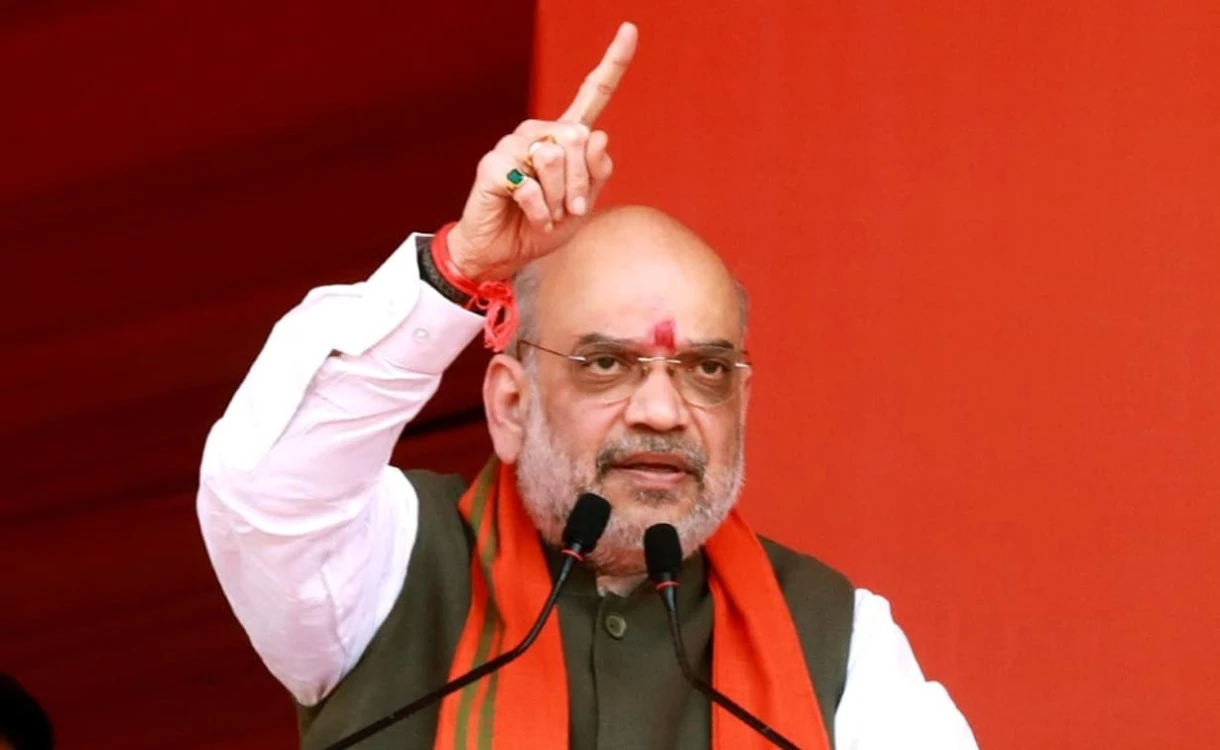
Union Home Minister Amit Shah said Kashmir has become free of India-born terrorists after 35 years, describing the development as a major milestone in the fight against terrorism.

Shah made the remarks while addressing the inaugural session of a two-day counter-terrorism conference organised by the National Investigation Agency in New Delhi. He credited Prime Minister Narendra Modi’s “zero-tolerance” policy towards terrorism for the results achieved on the ground.

What Amit Shah said on Kashmir

According to Shah, the killing of Lashkar-e-Taiba terrorist Lateef Bhat resulted in Kashmir becoming free from the presence of India-born terrorists.

“With the elimination of Lashkar terrorist Latif Bhat, the entire Kashmir has become free from the presence of India-born terrorists,” Shah said, adding that the situation had come about after 35 years.

Lateef Bhat was killed by security forces on Wednesday during an encounter in South Kashmir’s Kulgam district. As per the report he carried a reward of Rs. 15 lakh and was wanted in connection with a November 11 attack on a CRPF post that left three paramilitary personnel injured.

Shah calls for coordinated counter-terrorism action

The Home Minister said that merely targeting individual terrorists was not enough and stressed the need to investigate and dismantle the entire terrorist network.

He called for stronger coordination between the Centre and states and said police station-level intelligence should be transmitted through multiple levels to enable actionable intelligence at the level of the Director General of Police.

Shah also asked states to strengthen the cyber units of their Anti-Terrorism Squads and called for a proactive approach to counter-terrorism.

303 fugitives brought back since 2019

Shah said a special drive launched in 2019 to bring fugitives back to India has resulted in 303 fugitives being brought back from 36 countries.

He said such efforts were necessary to tackle terrorism, organised crime and drug-related offences, particularly by bringing back those who had taken shelter abroad.

Shah highlights PFI, Shahzad Bhatti network

The Home Minister also cited the dismantling of the Popular Front of India network as an example of coordinated action by police forces and central agencies. He said the operation involved forces from 11 states.

He further said the Shahzad Bhatti network had been designated a terrorist organisation under the Unlawful Activities (Prevention) Act. According to Shah, more than 40 of its modules had been dismantled, over 100 cases registered and more than 271 arrests made.

Shah said the fight against terrorism requires a shared objective, clear accountability and coordinated action against the entire network, including terror financing.

Continue Reading

India News

Cyclone Akvan weakens before landfall, Odisha and Andhra brace for heavy rain

Cyclone Akvan weakened into a cyclonic storm before its expected landfall near Gopalpur, with heavy rain and strong winds forecast across parts of Odisha, Andhra Pradesh and West Bengal.

Published

on

cyclone

Cyclone Akvan weakened into a cyclonic storm on Friday as it moved towards the North Andhra Pradesh-South Odisha coast, with the India Meteorological Department (IMD) forecasting its crossing near Gopalpur.

According to the IMD, the system was centred over the west-central Bay of Bengal at 2:30 am on November 20. It was moving north-northwestwards at around 21 kmph. At that time, it was about 170 km south of Gopalpur and 170 km east of Visakhapatnam.

The weather department said the cyclone was likely to cross the North Andhra Pradesh-South Odisha coast close to Gopalpur by the forenoon of November 20. Maximum sustained winds were expected to be around 70-80 kmph, with gusts reaching 90 kmph.

Cyclone Akvan’s land interaction begins

The IMD said satellite imagery indicated that land interaction had already started, with the cloud mass associated with the cyclone entering coastal parts of North Andhra Pradesh and South Odisha.

The system was being monitored through Doppler weather radars at Visakhapatnam and Gopalpur.

The IMD’s forecast showed the system weakening further after crossing the coast. By the evening of November 20, it was expected to weaken into a deep depression, before becoming a well-marked low-pressure area by November 21.

Heavy rain forecast in Odisha, Andhra Pradesh

Odisha and coastal Andhra Pradesh remained among the areas facing significant weather warnings as Akvan approached the coast.

The IMD had warned of heavy to very heavy rainfall, including isolated extremely heavy rainfall in Odisha, while coastal Andhra Pradesh was also expected to receive intense rainfall in some areas.

Gangetic West Bengal was also expected to experience widespread rainfall, with heavy to very heavy rain possible at isolated locations.

Odisha evacuates thousands ahead of cyclone

Odisha authorities stepped up preparations as Akvan approached the coast. According to officials cited in the report, 2,98,676 people had been evacuated by Thursday evening and moved to 2,523 relief camps.

The state had also deployed rescue teams and set up cyclone shelters in vulnerable areas. 

The East Coast Railway cancelled and rescheduled several trains as a precaution, while other railway services were also affected by the approaching cyclone.

Continue Reading

Trending

© Copyright 2022 APNLIVE.com