English हिन्दी
Connect with us

Latest Politics News

Unhappy with questions on GDP calculation, job data, BJP MPs block Parl Committee report

Published

on

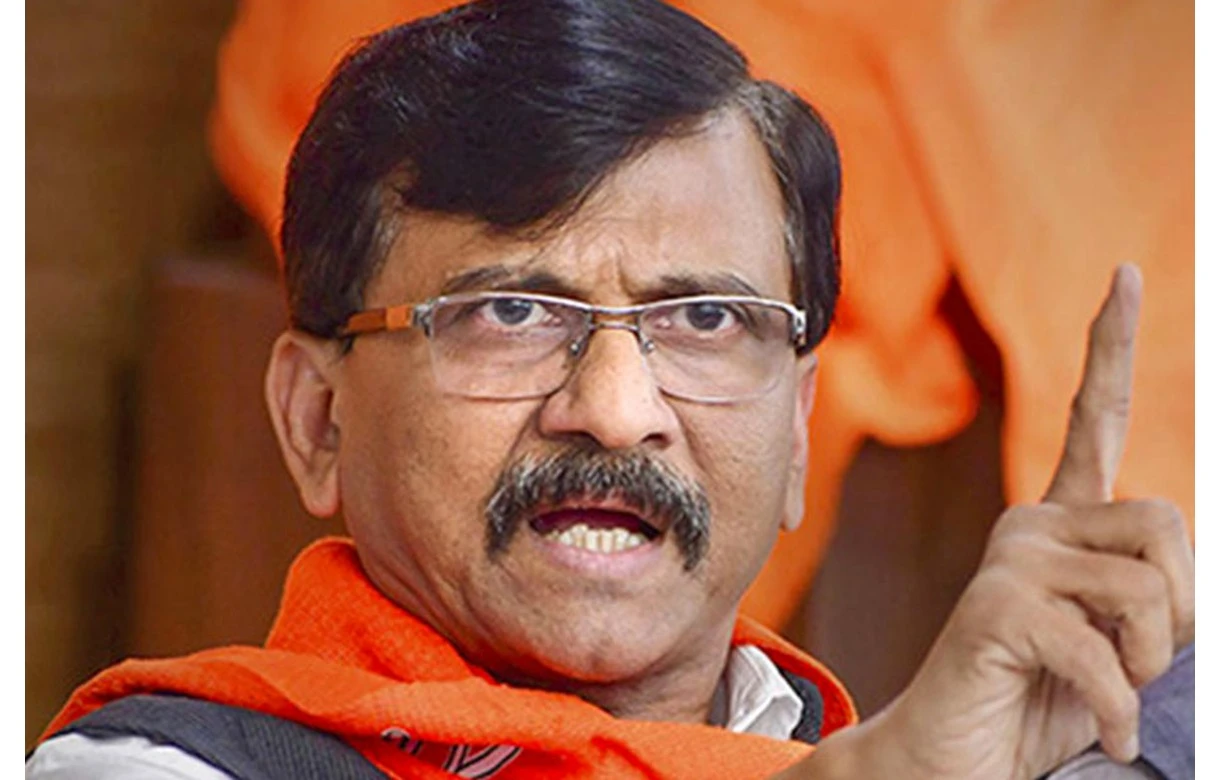
BJP leader Murli Manohar Joshi

BJP MPs have blocked the adoption of the Parliament’s Estimates Committee report that questioned the mechanism for calculating the country’s Gross Domestic Product (GDP) and the job data, said media reports.

This is the third report of a Standing Committee to be blocked due to protests by BJP members, noted a NDTV report.

The parliamentary panel headed by veteran BJP leader Murli Manohar Joshi, in a draft report prepared by it, has questioned the mechanism for calculating the country’s GDP and asserted that the methodology needs review to reflect the ground reality, reported The Hindu.

The report also questions the reliability of employment data collected by the government, reported NDTV.

The report, which was tabled in the Estimates Committee meeting on Thursday, created a rift among the BJP parliamentarians of the panel, as Joshi was in favour of adopting the report, while other party members led by MP Nishikant Dubey strongly opposed it, The Hindu said.

“Detailed examination reveals several inadequacies in the GDP measuring mechanism, most noticeable being depletion of natural resources not being taken into consideration,” the report stated.

It also said there is no mechanism to assess whether increase in GDP leads to happiness among the people.

The committee concluded that the mechanism developed for GDP estimation needs review and it should reflect the ground reality.

Countering the claims in the report, Dubey said India has adopted and followed all globally accepted parameters for calculating the GDP, and in an era of globalisation, the country cannot isolate itself by developing an indigenous method to calculate the index.

He further said if the country does so, it will severely impact flow of foreign investment and the country’s ratings by international agencies.

About calculation of unemployment in the country, the report claimed annual employment and unemployment surveys have their own limitations, and said it is disturbing to note that the most precise period for which complete data on employment is available is 2011-12.

As per sources, the draft report of the Estimates Committee on “measuring growth, employment and income” asks the government on how it can address the critical issue of unemployment if it does not have “real time” and “holistic” data.

It points out that the latest National Sample Survey Office (NSSO) survey on employment was carried on in 2011. The Labour Bureau started carrying out quarterly employment surveys only since April 2016. And that too covers non-farm eight major sectors and it does not reflect the work force engaged in establishments having less than 10 workers which constitute 98% of the establishments, the report notes.

The report also criticises the sample size of the NSSO survey which had only 600 sample villages. The report has criticised the approach as “casual and shoddy”.

Noting these constraints, the draft report said: “With the aforesaid scenario whereby up-to-date realistic position about the employment at a particular time on various important parameters is not available, the committee fails to understand how the critical issue of unemployment in the country can be addressed.”

In the committee’s meeting held on Thursday, BJP members led by Jharkhand MP Nishikant Dubey and Delhi MP Ramesh Bidhuri first protested, claiming that they had not got adequate time to read the report.

Joshi countered saying that the report was circulated on October 3 and each member was given multiple reminders to read it.

Dubey, according to sources, said that evidence of the Ministry of Statistics and Programme Implementation has not been adequately recorded.

Joshi, according to sources, snapped at Dubey, asking him to read the report closely before making such charges.

A few BJP members reportedly pressed for a dissent note, to which Joshi did not agree. He reportedly told both the BJP MPs that financial committees like the estimates committee, according to Parliamentary conventions, do not carry any notes of dissent as they are based on the data provided by the government itself. So what the labour ministry submits is sacrosanct.

Significantly, said a report in The Wire, even while the meeting was going on, BJP leader Vijay Goel, who is not a member of the committee, was seen outside and communicating with the party MPs. Sources say that Goel was sent as an emissary by BJP president Amit Shah.

A Reserve Bank of India-backed research report stated that during the first two years of the Modi administration, employment in 27 sectors fell by 0.2% and 0.1% respectively, said The Wire report. This happened even though GDP growth was at a decent 7.4% and 8.2% in 2014-15 and 2015-16 respectively. This resulted in a loss of nearly 10 lakh jobs, according to the research.

Independent estimates of job situation, such as by the Centre for Monitoring Indian Economy (CMIE), also have not painted a flattering picture, the report pointed out.

In the last year, Modi has given a number of interviews to friendly publications, wherein he has stated that “jobs were being created but the data did not reflect them”. He has often claimed that work such as “pakoda frying” are productive jobs but are not reflected in organised sector data.

Significantly, the government has shown little respect for parliamentary checks and balances. Last month, it removed the BJP’s own BC Khanduri as the chairman of the defence committee, replacing him with Kalraj Mishra, after the committee gave a report which made adverse remarks on India’s defence preparedness.

BJP members also derailed a report of the standing committee on external affairs chaired by congress MP, Shashi Tharoor which had taken the government to task over the Doklam stand-off with China.

India News

Congress suspends 5 Haryana MLAs over cross-voting in Rajya Sabha polls

Congress suspends five Haryana MLAs for cross-voting in Rajya Sabha elections, citing serious indiscipline and anti-party activities.

Published

on

The Congress has suspended five of its MLAs in Haryana for cross-voting during the recent Rajya Sabha elections, taking disciplinary action over what it described as “anti-party activities”.

The move came after the state unit reviewed the conduct of certain legislators during the polls, where some were found to have voted against the party’s authorised candidate.

Five MLAs suspended after disciplinary process

According to party sources, the MLAs were issued show-cause notices seeking an explanation for their actions. After reviewing their responses, the Congress disciplinary committee recommended suspension.

The decision was approved by the party leadership, including Congress president Mallikarjun Kharge, and has been implemented with immediate effect.

Party calls it ‘grave indiscipline’

Haryana Congress chief Udai Bhan said the action was necessary to uphold party discipline, stressing that defying the official party line during elections weakens organisational unity.

He said the party takes such violations seriously and will continue to act against any form of indiscipline.

Leadership backs strict action

Senior Congress leader and Leader of Opposition Bhupinder Singh Hooda supported the decision, saying it was taken after due consideration.

He noted that while Rajya Sabha elections are conducted through an open ballot system, allowing legislators some flexibility, the party retains the authority to initiate internal disciplinary action in cases of deviation.

Background

The action follows cross-voting reported during the recent Rajya Sabha elections in Haryana, which led to internal concerns within the party. The development has highlighted organisational challenges and prompted the leadership to take corrective steps to reinforce discipline.

Continue Reading

India News

PM Modi assures no discrimination in women’s quota, delimitation debate intensifies in Parliament

PM Narendra Modi has assured that women’s reservation will be implemented without discrimination, amid a heated debate over delimitation in Parliament.

Published

on

PM modi

Prime Minister Narendra Modi has assured that there will be no discrimination in the implementation of women’s reservation, as Parliament witnessed a sharp debate over the proposed linkage between the quota and delimitation exercise.

During the ongoing special session, the government reiterated its commitment to ensuring fair representation while addressing concerns raised by opposition parties regarding the timing and structure of the legislation.

The proposed framework aims to reserve 33 percent of seats for women in the Lok Sabha and state assemblies. However, its implementation is tied to a fresh delimitation exercise, which is expected after the next census.

Opposition questions timing and intent

Opposition leaders have raised concerns that linking the women’s quota to delimitation could delay its implementation. They argue that the process of redrawing constituencies may push the actual rollout further into the future.

The issue has triggered a broader political confrontation, with multiple parties questioning whether the move could alter representation across states.

Some critics have also alleged that the delimitation exercise could disproportionately benefit certain regions based on population, a charge the government has rejected.

Government reiterates commitment to fair implementation

Responding to these concerns, the Centre has maintained that the reforms are necessary to ensure accurate and updated representation based on population data.

Leaders from the ruling side have repeatedly emphasized that the process will be carried out transparently and without bias. The assurance that there will be “no discrimination” is aimed at addressing fears among states and opposition parties.

The debate marks a key moment in Parliament, with both sides engaging in intense exchanges over one of the most significant electoral reforms in recent years.

Continue Reading

India News

Give all tickets to Muslim women, Amit Shah says, attacking Akhilesh Yadav on sub-quota demand

A sharp exchange between Amit Shah and Akhilesh Yadav in Parliament over sub-quota for Muslim women highlights key divisions on women’s reservation implementation.

Published

on

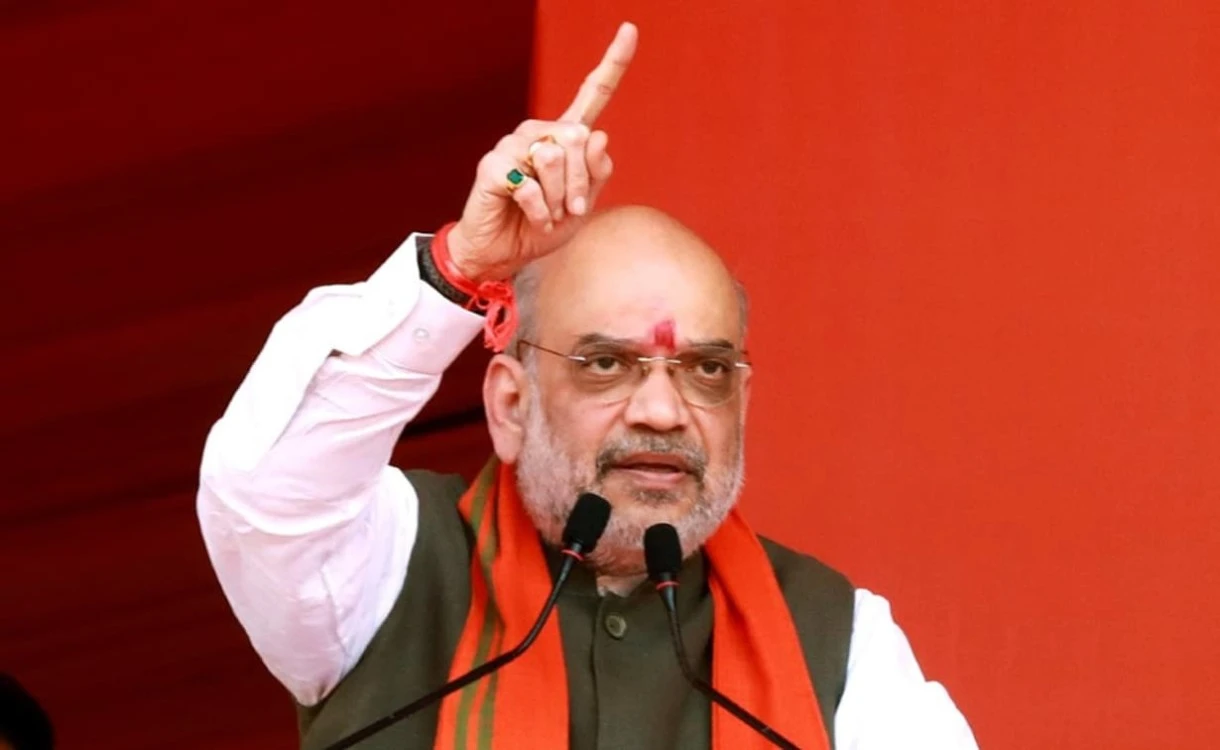
A heated exchange broke out in Parliament during discussions on the women’s reservation framework, with Union Home Minister Amit Shah and Samajwadi Party chief Akhilesh Yadav locking horns over the demand for a sub-quota for Muslim women.

The debate unfolded as the government pushed forward key legislative measures to implement 33% reservation for women in the Lok Sabha and state assemblies.

Akhilesh Yadav argued that the proposed reservation must ensure representation for women from marginalised communities, including Other Backward Classes (OBCs) and Muslim women. He said that without such provisions, large sections could remain excluded from political participation.

He also questioned the timing of the bill, alleging that the Centre was avoiding a caste census. According to him, a census would lead to renewed demands for caste-based reservations, which the government is reluctant to address.

Government rejects religion-based quota

Responding to the demand, Amit Shah made it clear that reservation based on religion is not permitted under the Constitution.

He stated that any proposal to provide quota to Muslims on religious grounds would be unconstitutional, firmly rejecting the idea of a separate sub-quota for Muslim women within the broader reservation framework.

The government has maintained that the existing framework already includes provisions for Scheduled Castes (SC) and Scheduled Tribes (ST) women within the overall reservation structure.

Wider political divide over implementation

The issue of sub-categorisation within the women’s quota has emerged as a major flashpoint, even as most opposition parties broadly support the idea of women’s reservation.

Samajwadi Party leaders reiterated that their support for the bill depends on inclusion of OBC and minority women, while the government continues to defend its constitutional position.

The debate is part of a broader discussion during the special Parliament session, where multiple bills linked to delimitation and implementation of the women’s quota are being taken up.

Continue Reading

Trending

© Copyright 2022 APNLIVE.com