English हिन्दी
Connect with us

Latest Politics News

Venkaiah Naidu takes oath of office as Vice President; Congress – BJP sparring continues

Published

on

Venkaiah Naidu

[vc_row][vc_column][vc_column_text]Rajya Sabha members urged Naidu to continue the practice of not allowing any bill to be passed in the din and also to ensure that every member is allowed to speak

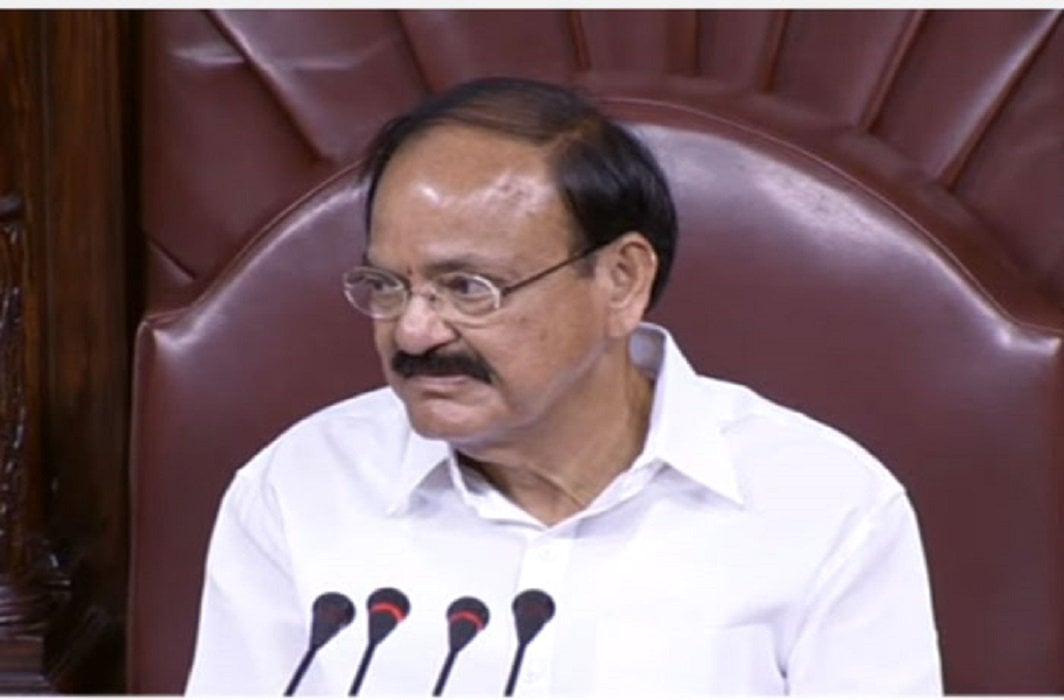
M Venkaiah Naidu took oath of office as the 13th Vice President at the Rashtrapati Bhavan on Friday. President Ramnath Kovind administered the oath to Naidu at a ceremony attended by a number of leaders, including Prime Minister Narendra Modi, Union Home Minister Rajnath Singh, BJP National President Amit Shah and former prime minister Manmohan Singh.

Naidu is also the ex officio chairman of the Rajya Sabha by virtue of being the vice president.

In his maiden speech as Rajya Sabha Chairman, Naidu spoke of the tendency across the country to obstruct and disrupt House proceedings. “This option needs to be immediately replaced by a quest for effective debates and discussion to resolve issues and finding solutions to the problems being faced by our people,” he said.

Seeking active cooperation of the members, he said, “All that we need to do is to do things differently and that is by intensely and passionately debating and discussing the issue rather than resorting to obstruction and disruption. I firmly believe in opposition having its say and the Government of the day, its way. This essentially means both the sides respecting and accommodating each other in the process.”

Prime Minister Narendra Modi joined the members of the Rajya Sabha in welcoming the Vice President as Chairman of the House. He said that Naidu is the first Vice President born in Independent India.

Recalling his long association with the new vice president, the Prime Minister said Naidu is always sensitive to the requirements of the rural areas, the poor and the farmers, and his inputs on these issues have been of immense value.

The Prime Minister said that the fact that people from humble, rural background, today occupy the highest positions in India, shows the maturity of Indian democracy, and the strength of India’s Constitution.

In a virtual reply to Modi, Senior Congress leader and Leader of Opposition Ghulam Nabi Azad said that contributions of not only the poor but even well-off persons like Motilal Nehru who gave up their riches for the freedom struggle should not be forgotten.

Members of the house accorded a warm welcome to Naidu while urging him to continue the practice of not allowing any bill to be passed in the din.

Leader of Opposition Ghulam Nabi Azad said that after attaining the position of the Rajya Sabha Chairman, for Naidu, his religion or party should now remain only in his mind and not in conduct.

“There is a tradition of this House that no bill is passed in din. That practice should be continued,” he said.

SP leader Ram Gopal Verma and Trinamool Congress leader Derek O’Brien also spoke on the same lines and expressed confidence that Naidu “will not commit a sin to pass any bill in the din.”

Many members also reminded Naidu of his sense of humour and the ability to coin witty acronyms.

“I hope that you would use this kind of wit because this House has sometimes been too dry and it looked like we are fighting each other,” Keshav Rao of TRS said.

While urging Naidu to continue his practice of using acronyms, O’Brien made an acronym of Naidu as ‘Now All India’s Dearest Umpire’.

CPI(M) leader Sitaram Yechury, in his last remark in the house, expressed confidence that Naidu will uphold the Constitution and do justice while presiding over the Rajya Sabha.

Leaders of smaller parties urged Naidu to ensure that every member in the house gets an opportunity to speak.

With Naidu swearing in as the vice president, for the first time the top four constitutional position are now held by BJP leaders. Besides Naidu, President Ram Nath Kovind, Prime Minister Narendra Modi and Lok Sabha Speaker Sumitra Mahajan are also BJP members.[/vc_column_text][/vc_column][/vc_row]

India News

Congress to challenge Meenakshi Natarajan’s Rajya Sabha nomination rejection in Madhya Pradesh High Court

Congress leader Meenakshi Natarajan has announced that the party will challenge the rejection of her Rajya Sabha nomination in the Madhya Pradesh High Court, alleging the decision was legally flawed and that the Election Commission failed to follow a consistent approach.

Published

on

The Congress is preparing to challenge the rejection of senior leader Meenakshi Natarajan’s Rajya Sabha nomination before the Madhya Pradesh High Court, shifting the dispute from the political arena to the legal forum.

Weeks after her nomination was rejected ahead of the Rajya Sabha elections, the former Member of Parliament asserted that the decision was not the result of any lapse by Congress leaders, legal experts or those involved in preparing the nomination papers. Instead, she claimed the rejection was based on an incorrect legal interpretation.

Congress to file election petition

Natarajan said the party would file an election petition within the prescribed time and contest the entire process before the High Court. She also alleged that a deliberate narrative was created to portray the rejection as a consequence of negligence within the Congress, thereby diverting attention from the Election Commission’s role.

According to her, the Returning Officer rejected her nomination citing non-disclosure of information related to a pending case. However, she argued that Form-26, which candidates are required to submit along with their nomination papers, does not contain any specific provision requiring disclosure of such information.

Natarajan said she has contested multiple elections in the past and maintained that experienced legal experts within the Congress have handled nomination papers for years, making such an oversight highly unlikely.

Questions raised over Election Commission’s approach

The Congress leader also questioned the Election Commission’s handling of the matter, alleging that it failed to apply uniform standards in similar cases.

She referred to the case of Rajya Sabha candidate Parimal Nathwani in Jharkhand, claiming he was given 24 hours to rectify issues in his nomination papers, whereas she was not provided a similar opportunity. According to Natarajan, the differing treatment raises concerns about consistency in the poll body’s decision-making process.

Congress sources said the party’s legal cell is preparing the election petition under the guidance of senior lawyers. The dispute had earlier reached the Election Commission and subsequently the Supreme Court, but the party will now pursue the legal remedy available after the election process through the High Court.

The Congress has also alleged that the Election Commission did not act impartially during the proceedings. Party leaders claimed senior Congress representatives and lawyers reached the poll body on time to present their arguments, but the proceedings were delayed. They further alleged that the Election Commission had the authority to overturn the Returning Officer’s decision but chose not to intervene.

BJP rejects Congress allegations

The Bharatiya Janata Party dismissed the Congress’ allegations, attributing the controversy to internal issues within the opposition party.

BJP state spokesperson Ajay Yadav said the rejection of Natarajan’s nomination was the result of internal infighting in the Congress. He also claimed that the senior leader had been sidelined within her party and suggested that the Congress should introspect instead of blaming the Election Commission.

Natarajan, however, rejected claims that the Congress was responsible for any lapse leading to the rejection of her nomination.

Continue Reading

Latest Politics News

Punjab Congress faction games hold up who will lead party as poll approaches

The Congress leadership is expected to finalize the new Punjab Congress chief soon as factions oppose Amarinder Singh Raja Warring continuance as chief.

Published

on

mallikarjun-kharge

The Congress leadership is likely to decide the name of a new Punjab Pradesh Congress Comittee (PPCC) president in light of the growing factional differences emerging within the party state unit.

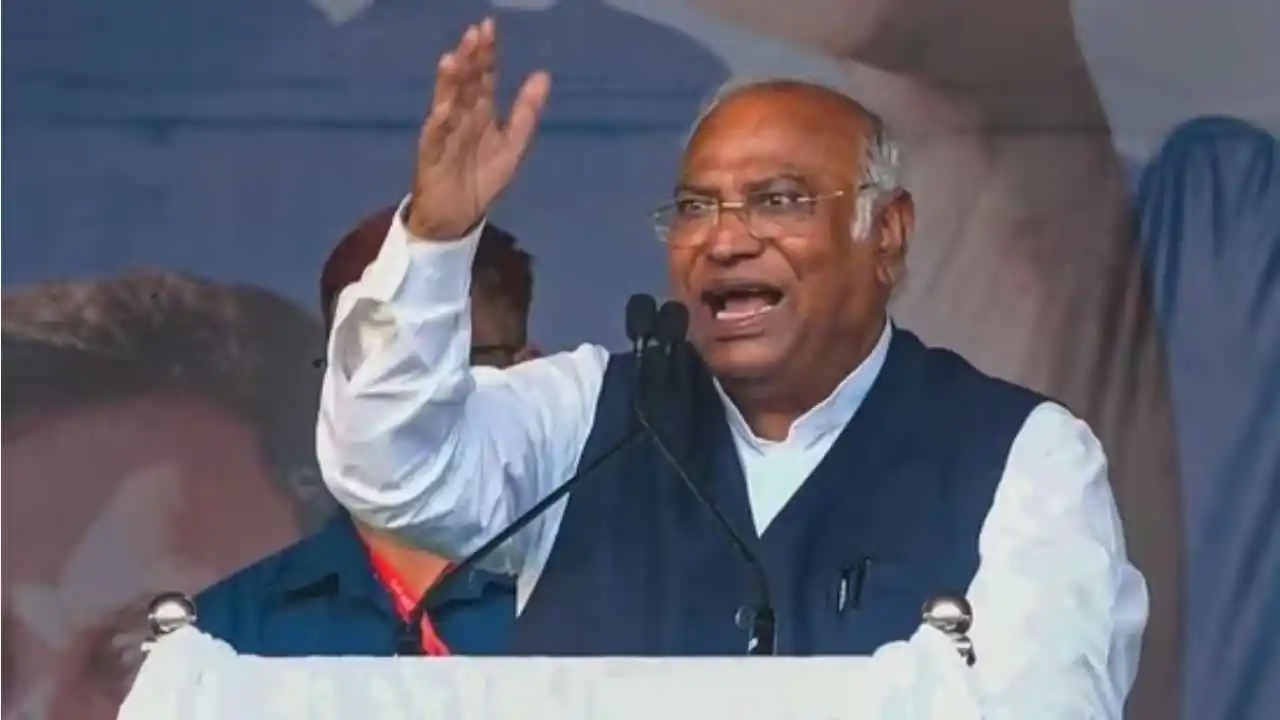
The decision by party president Mallikarjun Kharge on choosing the head of the state unit is likely to be finalized after he takes note of other senior leaders’ opinions on the matter, as differences over the continuation of Amarinder Singh Raja Warring as PPCC president has led to former Chief Minister Charanjit Singh Channi pitching his hat in the ring.

The leadership crisis has reflected the diverging interests of opposing factions in the Punjab Congress. Channi has the backing of several party leaders including Bharat Bhushan Ashu, Gurpreet Singh Kangar, Darshan Singh Brar, and Nazar Singh Manshahia, among other supporters of Channi, while another faction is supporting incumbent chief Warring.

The Congress needs to stem the crisis soon since the state is headed for elections next year as the term of the Bhagwant Mann-led Aam Aadmi Party government winds down. Many in the party have said that having a widely accepted state leader can strengthen the organizational structure.

The delay in decision-making has caused speculation with some senior leaders meeting BJP heavyweights in Delhi. Though these leaders have dismissed any rumours of switching sides, the strain among the factions is telling on party unity. But given the way several Rajya Sabha MPs of the Aam Aadmi Party switched to the BJP, nothing can be ruled out as election fever picks up.

Continue Reading

India News

Congress MP Manish Tewari says terror must end before India-Pakistan dialogue resumes

Congress MP Manish Tewari has questioned calls to restart India-Pakistan dialogue, arguing that meaningful talks cannot resume until Pakistan takes verifiable action against terrorism.

Published

on

Congress MP says decades of peace initiatives have repeatedly been followed by terror attacks and calls for verifiable action against terrorism before any engagement

Congress MP Manish Tewari has questioned renewed calls to resume dialogue between India and Pakistan, saying any discussion with Islamabad must first address the issue of cross-border terrorism. Responding to an appeal by 117 eminent personalities from both countries seeking the restoration of diplomatic engagement, Tewari asked whether such talks could be meaningful without concrete action against terror infrastructure.

Speaking on Friday, the Congress leader said successive Indian governments had consistently attempted to improve relations with Pakistan, but those efforts were repeatedly undermined by terrorist attacks.

According to Tewari, governments led by P.V. Narasimha Rao, H.D. Deve Gowda, I.K. Gujral, Atal Bihari Vajpayee, Manmohan Singh and Prime Minister Narendra Modi all pursued dialogue with Pakistan through formal negotiations or backchannel diplomacy. However, he claimed that each attempt was followed by acts of terrorism.

Calls for proof of dismantling terror infrastructure

Tewari said the key issue was whether Pakistan had provided any verifiable assurance that it had dismantled its terror infrastructure.

Referring to former Pakistan President Pervez Musharraf, he said a public commitment had been made after the Parliament attack to act against terrorism, but the assurance was later withdrawn. He added that similar commitments made during the tenures of former Prime Ministers Manmohan Singh and Narendra Modi also failed to produce lasting results.

Questioning the appeal for renewed engagement, Tewari said those advocating talks should clarify what specific issues they intended to discuss while the threat of terrorism remained unresolved.

References Pahalgam terror attack and Indus Waters Treaty

The Congress MP also referred to the Pahalgam terror attack in April 2025, saying it further reinforced India’s concerns regarding terrorism.

He noted that India’s position became even more firm following the attack, pointing to the suspension of the Indus Waters Treaty as part of the government’s response.

Commenting on the timing of the letter seeking renewed dialogue, Tewari said India had consistently maintained that terrorism and bilateral talks could not proceed simultaneously. He also reiterated the government’s position that it would not differentiate between terrorists and those responsible for directing such attacks.

Peace remains desirable, but security comes first

While acknowledging that millions of people across South Asia aspire for lasting peace, Tewari argued that meaningful dialogue was not possible as long as terrorism remained a continuing threat.

He said India must first receive credible assurances from Pakistan, beginning with an end to the export of terrorism, before considering any resumption of diplomatic engagement.

Continue Reading

Trending

© Copyright 2022 APNLIVE.com