English हिन्दी
Connect with us

India News

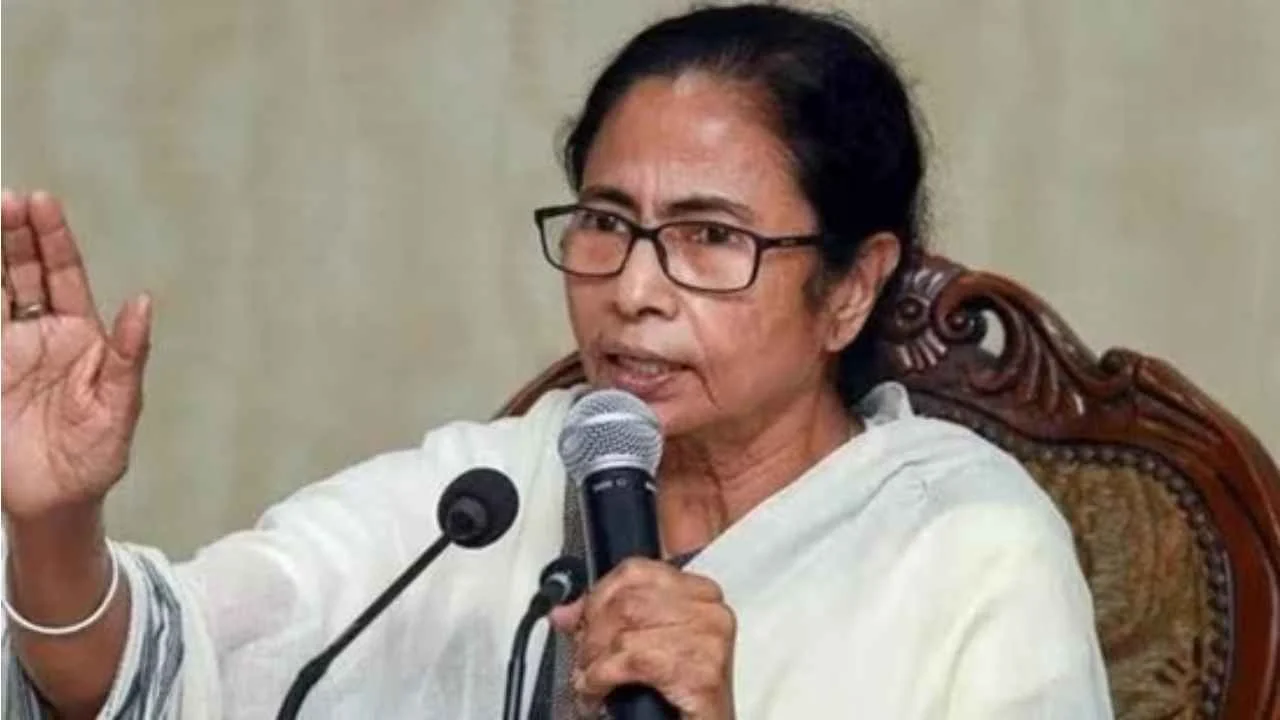
Mamata Banerjee says a poisonous snake can be trusted, but not BJP

Banerjee compared the BJP to a poisonous snake and said the party can never be trusted. She said the BJP is destroying the country. The West Bengal chief minister alleged the BSF (Border Security Force) and the Central Industrial Security Force (CISF) are working for BJP.

Published

on

West Bengal chief minister Mamata Banerjee on Thursday took a dig at BJP and said even a poisonous snake can be trusted but not the ruling party. She added the BJP follows only one principle ie one nation, one party. The TMC supremo said the BJP wants to enroll the names for Awas Yojana again. She asked why will the names be enrolled again? She added further enrollment is being carried out so that names can be striked off.

Banerjee compared the BJP to a poisonous snake and said the party can never be trusted. She said the BJP is destroying the country. The West Bengal chief minister alleged the BSF (Border Security Force) and the Central Industrial Security Force (CISF) are working for BJP. She said her party will humbly plead to the Election Commission to ensure a level playing field as central agencies are working for the BJP.
Banerjee slammed BJP for nominating former Cooch Behar SP Debashish Dhar as its candidate from Birhum. She alleged Dhar was responsible for the killing of 5 people during the 2021 assembly elections. She accused the BJP of not following a moral code of coduct for the Lok Sabha elections. The TMC supremo asserted TMC will not bow before the threat of central agencies. She urged people of Cooch Behar to file police complaints if there are instances of BSF torturing locals ahead of the Lok Sabha polls.

Banerjee added that she stood firm on her refusal to implement the Citizenship Amendment Act in the state. She said applying for the CAA would designate an applicant as a foreigner and advised against it. She said the BJP is a jumla party and is responsible for peddling lies regarding CAA. She added CAA is a trap to turn legal citizens into foreigners. She said once the CAA is implemented by the BJP then NRC will follow.

India News

Delhi Winter Pollution Plan: Construction ban, 50% WFH and more

Delhi’s winter pollution plan includes construction curbs, dust-control measures, 50% work-from-home, higher parking charges and restrictions on certain vehicles.

Published

on

Delhi-Pollution

Delhi has put in place a permanent framework of measures aimed at tackling the rise in air pollution during the winter months. The plan covers construction and demolition activities, dust control, office attendance, parking charges, vehicle emissions and open burning.

The framework is designed to come into force automatically each year between November 1 and February 28, rather than requiring separate winter-specific orders.

Construction and demolition restrictions

Dust-generating demolition and outdoor civil construction activities will be prohibited from November 1 to January 31, with exemptions for essential public infrastructure projects.

A stricter phase of restrictions will apply from December 10 to January 20. During this period, construction and demolition activities will face a wider ban, with limited exemptions for urgent government and emergency works.

Indoor finishing, plumbing and electrical work can continue subject to dust-control requirements.

The winter framework also provides for restrictions on the movement of vehicles carrying construction materials such as sand, cement, bricks, stone and construction debris during the stricter period.

Dust-control measures

The government has placed greater emphasis on monitoring dust from construction sites. Large construction sites will be required to use measures such as mist systems for dust suppression.

Commercial buildings meeting specified size and height criteria, including malls, hotels and offices, will also be required to install anti-smog guns or mist systems.

The framework provides for field and drone-based surveillance to identify violations, including open burning.

50% work from home

From November 1 to January 31, government and private offices in Delhi will have to limit physical attendance to 50 per cent, with the remaining employees working from home.

Essential services, including hospitals, fire services, public transport, electricity, water supply and disaster management, are exempt from the work-from-home requirement.

Private offices will also be encouraged to stagger working hours and promote carpooling, ride-sharing and public transport.

Staggered office timings

Government offices will follow different working hours from November 1 to February 28.

Municipal Corporation of Delhi offices will operate from 8:30 am to 5 pm, while Delhi government offices will function from 10 am to 6:30 pm.

The measure is intended to spread commuting across different time periods and reduce peak-hour traffic.

Parking charges to double

Parking charges at authorised parking facilities will be doubled from November 1 to February 28.

Delhi Metro Rail Corporation parking facilities are exempt from the increase.

The measure is intended to discourage private vehicle use and encourage commuters to use public transport.

No PUC, no fuel

The framework also provides for a year-round requirement that vehicles have a valid Pollution Under Control certificate to receive fuel at petrol, diesel and CNG/LPG outlets in Delhi.

PUC details can be checked through physical documents and electronic systems, including vehicle registration databases and automatic number plate recognition systems.

Restrictions on older vehicles

From November 1 to January 31, non-Delhi vehicles that do not meet BS-VI emission standards will be restricted from entering the capital.

CNG and electric vehicles, along with emergency and other essential vehicles, are exempt from the restriction.

Action against open burning

The winter framework also places responsibility on resident welfare associations, housing societies, institutions, contractors and other establishments to prevent open burning on premises under their control.

Violations can lead to action under the Environment (Protection) Act, including environmental compensation, prosecution and measures such as sealing or closure of premises.

The framework will operate alongside the Graded Response Action Plan, which introduces additional restrictions depending on air-quality conditions in Delhi-NCR.

Continue Reading

India News

J&K Kathua Firing: Jawan kills 4 colleagues, including officer

Four personnel, including an officer, were killed after a jawan opened fire on colleagues at a camp in Jammu and Kashmir’s Kathua.

Published

on

Four personnel, including an officer, were killed after a jawan opened fire on his colleagues at a camp in Jammu and Kashmir’s Kathua, according to the report.

The incident took place at a security camp in Kathua, where the jawan allegedly opened fire on fellow personnel. Four colleagues were killed in the firing.

An officer was among those killed in the incident. Further details about the circumstances surrounding the firing and the sequence of events are being reported as authorities investigate the incident.

The incident comes after similar cases of personnel opening fire on colleagues at security-force camps have been reported in different parts of the country. However, no conclusion about the reason behind the Kathua firing should be drawn without an official account of the incident.

The focus of the investigation will be on establishing what led to the firing and the circumstances in which the four personnel were killed.

Continue Reading

India News

Revanth Reddy under fire for Ram rich, Shiva poor remark

Telangana CM Revanth Reddy’s remarks describing Lord Ram as the “God of the rich” and Lord Shiva as the “God of the poor” have drawn BJP criticism.

Published

on

Telangana Chief Minister A Revanth Reddy has faced criticism from the BJP after making remarks comparing the political use of Lord Ram and Lord Shiva during an event in New Delhi.

Speaking at The Conclave 2026 on Monday, September 28, Revanth Reddy contrasted the BJP’s use of the “Jai Shri Ram” slogan with the “Hara Hara Mahadev” chant. He said both Lord Ram and Lord Shiva are deities, before drawing a political and social comparison between the two.

What Revanth Reddy said about Ram and Shiva

Revanth Reddy said the BJP places greater emphasis on “Jai Shri Ram”, while people in southern India commonly use “Hara Hara Mahadev”.

He questioned why BJP leaders do not use the “Hara Hara Mahadev” slogan as frequently.

The Telangana Chief Minister then made the remark that has drawn attention, saying that Lord Ram is the “God of the rich” and Lord Shiva is the “God of the poor”. He also linked the comparison to his broader argument about differences between political and cultural traditions in northern and southern India.

Reddy further described the political-cultural divide using the terms “Dravidians” for the South and “Aryans” for the North, while saying that people in the South are more associated with devotion to Shiva and people in the North with devotion to Ram.

BJP criticism of Revanth Reddy

The remarks have triggered criticism from the BJP, bringing the religious comparison into the ongoing political exchanges between the BJP and the Congress.

Reddy’s comments came in the context of a wider political speech in which he criticised the BJP-led central government on issues including the Election Commission, the Special Intensive Revision (SIR) of electoral rolls and the proposed delimitation of Lok Sabha constituencies.

Revanth Reddy’s wider remarks at the event

During the same event, the Telangana Chief Minister also alleged that the political situation was no longer simply a “North versus South” divide but had become a “Gujarat versus the entire country” situation.

He criticised the Centre over what he described as inadequate support for Telangana’s development projects and raised concerns about the possible impact of population-based delimitation on southern states. These were statements and allegations made by Reddy during the event.

Reddy also criticised the SIR exercise and called for a nationwide “SIR Go Back” movement. He alleged that the revision process could lead to the removal of voters and questioned the role of the Election Commission. These claims were made by the Chief Minister and are presented as his allegations, rather than independently established facts.

Why Revanth Reddy’s Ram-Shiva remark matters

The “Ram for rich, Shiva for poor” comment has become the most prominent part of Reddy’s remarks because it directly connects religious symbolism with his political argument about the BJP and Congress.

The statement was made as part of a broader discussion about the perceived political and cultural differences between northern and southern India. The BJP’s criticism of the comment has added another point of contention to the political exchange between the two parties.

Continue Reading

Trending

© Copyright 2022 APNLIVE.com