English हिन्दी
Connect with us

Latest Politics News

Women Reservation Bill: Here’s a look at 20 states with 50% quota for women in panchayats, municipalities

At present, there are 15 lakh elected women representatives in panchayats and municipalities across the country. 

Published

on

Women Reservation Bill: Here’s a look at 20 states with 50% quota for women in panchayats, municipalities

Taking a significant step ahead, the Women’s Reservation Bill was introduced in the Lok Sabha during the special session of the Parliament on Tuesday. Prime Minister Narendra Modi urged the Opposition to unanimously pass the bill, Nari Shakti Vandan Adhiniyam. The Women’s Reservation bill was stuck for almost three decades.

While the Women’s Reservation Bill that seeks to provide a 33 per cent quota for women in Lok Sabha and state assemblies remained stuck, around 20 states witnessed 50% reservations for women in local government bodies. As far as reports are concerned, at present, there are 15 lakh elected women representatives in panchayats and municipalities across the country. 
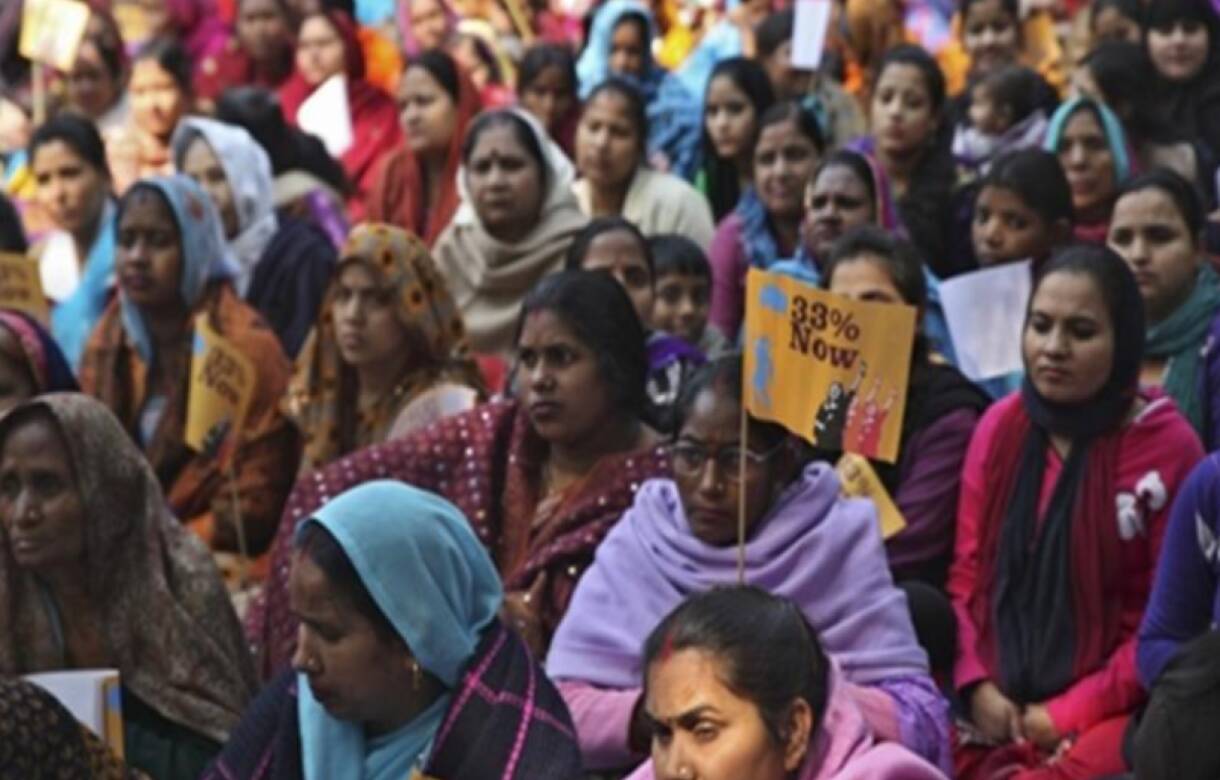
States like Andhra Pradesh, Assam, Bihar, Chhattisgarh, Gujarat, Himachal Pradesh, Jharkhand, Karnataka, Kerala, Madhya Pradesh, Maharashtra, Odisha, Punjab, Rajasthan, Sikkim, Tamil Nadu, Telangana, Tripura, Uttarakhand and West Bengal have made provisions for 50% reservation of women in Panchayati Raj Institutions in their respective State Panchayati Raj Acts. 

Evidently, the move for reservation for women in local bodies dates back to 1992 and 1993, when the then prime minister P.V. Narasimha Rao reintroduced the Constitution Amendment Bills 72 and 73, which reserved one third (33%) of all seats and chairperson posts for women in rural and urban local bodies. The Bills were passed by both the houses. Earlier,  in May 1989, former Prime Minister Rajiv Gandhi introduced the Constitution Amendment Bill to provide one-third reservation for women in rural and urban local bodies. The Bill was passed in Lok Sabha but failed to get passed in Rajya Sabha in September 1989.

Echoing the contribution of the aforesaid leaders in Women’s Reservation, several Congress leaders including Sonia Gandhi, KC Venugopal took the credit of the bill. However, though the Women’s Reservation Bill is introduced in the Lok Sabha, the legislation will come into effect after the next delimitation exercise, which might be carried out after 2026. At present, only 14% of the members in the Indian Parliament are women. 

Furthermore, it is to be noted that in 1988, the National Perspective Plan for Women recommended the provision of reservation for women at various political levels, from Panchayati Raj institutions to Parliament. 

India News

Gandhi Parivar vs Sangh Parivar, Revanth Reddy’s remark sparks BJP attack

Telangana Chief Minister Revanth Reddy’s remarks contrasting the Gandhi Parivar with the Sangh Parivar triggered a BJP response accusing Congress of prioritising the Gandhi family.

Published

on

Telangana Chief Minister Revanth Reddy’s remarks comparing the Gandhi Parivar and Sangh Parivar have triggered a political exchange, with the BJP hitting back at the Congress leader.

Speaking in Kerala on Friday, Mr Reddy described the contest over India’s future as a fight between the two “parivars”. He said the Gandhi family had made sacrifices for the country while accusing the Sangh Parivar of attempting to divide India on the basis of religion, caste, region and language.

What Revanth Reddy said

Mr Reddy cited Mahatma Gandhi, Indira Gandhi and Rajiv Gandhi while speaking about what he described as sacrifices made by the Gandhi family.

He also referred to Sonia Gandhi, Rahul Gandhi and Priyanka Gandhi, saying they had given up positions, power and high office.

The Telangana Chief Minister said he had no remaining personal political ambitions and described his objective as working towards a Congress-led government at the Centre with Rahul Gandhi as Prime Minister.

Mr Reddy also appealed to people to stand with the Gandhi Parivar and oppose the Sangh Parivar. He described the latter as a threat to India’s democracy.

BJP hits back

The BJP responded to Mr Reddy’s remarks on Saturday.

BJP spokesperson Pradeep Bhandari said the Telangana Chief Minister’s comments amounted to an admission that Congress’s objective was to bring the Gandhi family back to power.

He also linked Mr Reddy’s remarks to the ongoing political debate around “vote chori”, the Election Commission, the Constitution and democracy, arguing that the Congress’s focus was instead on the Gandhi family.

The exchange adds to the political confrontation between the BJP and Congress, with Mr Reddy presenting the Gandhi Parivar and Sangh Parivar as opposing forces in India’s political future, while the BJP has interpreted his remarks as evidence of Congress’s focus on the Gandhi family.

Continue Reading

India News

Veeramani POCSO case: Vijay questions Stalin over earlier probe

Tamil Nadu Chief Minister Vijay has questioned MK Stalin over the handling of the Veeramani POCSO case, while Stalin has rejected allegations that the previous DMK government protected anyone.

Published

on

Actor Vijay

Tamil Nadu Chief Minister and Tamilaga Vettri Kazhagam (TVK) president C Joseph Vijay has questioned DMK president MK Stalin over the handling of the POCSO case involving Gem Granites founder R Veeramani. The political exchange follows renewed investigation into allegations involving minor girls.

Vijay’s remarks came as the ruling TVK stepped up its questions about how the case was handled during the previous DMK government. The party’s IT wing has alleged that the earlier investigation was weakened and questioned why a final report was filed.

The allegations have been rejected by the DMK. Stalin has said that no order was issued by the DMK government to protect anyone in the case and has called the allegations false and defamatory.

What did Vijay say about the Veeramani case?

Vijay questioned Stalin over the handling of the case and demanded an explanation from the former chief minister.

The TVK has specifically questioned why action was not taken against Veeramani during the previous administration and why the earlier investigation resulted in a closure report.

The party has also raised questions about the role of officials involved in the earlier investigation. These are political allegations made by the TVK and have not been established as facts.

What is the Veeramani POCSO case?

The case concerns allegations of sexual abuse of minors involving R Veeramani, the founder of Gem Granites.

The case came under renewed scrutiny after a special POCSO court rejected an earlier closure report and ordered further investigation. The expanded probe has subsequently identified additional alleged survivors who were minors at the time of the alleged offences, according to current reporting.

The investigation is also examining the circumstances surrounding the earlier probe and whether there were any lapses in how the case was handled.

What has MK Stalin said?

Stalin has rejected allegations that the previous DMK government protected Veeramani.

He has said that no order was issued by the DMK government to shield anyone in the case. Stalin has also said that everyone responsible for the alleged offences, including anyone who aided or attempted to protect the accused, should face the law.

The DMK president has further said that the focus should remain on securing justice for the affected girls rather than making political allegations.

Why has the case become a political issue?

The Veeramani case has become the subject of a political dispute between the ruling TVK and the DMK over the handling of the earlier investigation.

The TVK is questioning the previous government’s handling of the case, while the DMK has denied that it intervened to protect the accused.

At this stage, claims about political interference or deliberate weakening of the earlier investigation should be treated as allegations unless established by the ongoing investigation or judicial proceedings.

Continue Reading

India News

Congress protests against Gyanesh Kumar, demands Election chief’s resignation

Congress workers took to the streets against Chief Election Commissioner Gyanesh Kumar, with protests and demonstrations held over the party’s allegations concerning the Election Commission.

Published

on

Congress stepped up its campaign against Chief Election Commissioner Gyanesh Kumar, with party workers taking to the streets and demanding his resignation amid the ongoing row over the Election Commission.

The protests followed repeated criticism by Congress leaders of the poll panel and its functioning. The party has alleged irregularities in the electoral process and has sought accountability from the Election Commission.

Congress leaders have also targeted Gyanesh Kumar personally, with Rahul Gandhi among those calling for the Chief Election Commissioner to step down.

Congress takes protest to streets

Congress workers staged demonstrations in different places as part of the party’s campaign against the Election Commission.

The protests featured sharp symbolism, including masks and handcuffs, as Congress sought to highlight its allegations against the poll panel and demand action against Gyanesh Kumar.

The demonstrations are part of a wider confrontation between the Congress and the Election Commission over issues related to electoral rolls and the conduct of elections.

Congress demands Gyanesh Kumar’s resignation

The Congress has repeatedly demanded the resignation of Gyanesh Kumar, accusing the Election Commission of failing to adequately address the concerns raised by the opposition party.

Rahul Gandhi has also stepped up his criticism of the poll panel. In a statement on Thursday, he demanded that Gyanesh Kumar resign and alleged that the Election Commission had acknowledged the issue of “vote theft”. These are allegations made by the Congress and should not be treated as an established finding unless confirmed by the relevant authority.

The dispute comes amid a broader political debate over electoral rolls, voter verification and the functioning of the Election Commission.

Election Commission under opposition scrutiny

The Congress has intensified its campaign against the poll body in recent weeks, with party leaders repeatedly questioning its decisions and procedures.

The Election Commission, meanwhile, has maintained that India’s electoral process is conducted according to the Constitution, electoral laws and prescribed procedures. Chief Election Commissioner Gyanesh Kumar has previously defended the integrity of the electoral system and rejected claims that electronic voting machines can be remotely hacked.

The latest protests add to the continuing political confrontation over the Election Commission and the opposition’s demands concerning the poll panel’s functioning.

Continue Reading

Trending

© Copyright 2022 APNLIVE.com