English हिन्दी
Connect with us

India News

Supreme Court Bar Association elects Pradeep Rai as President

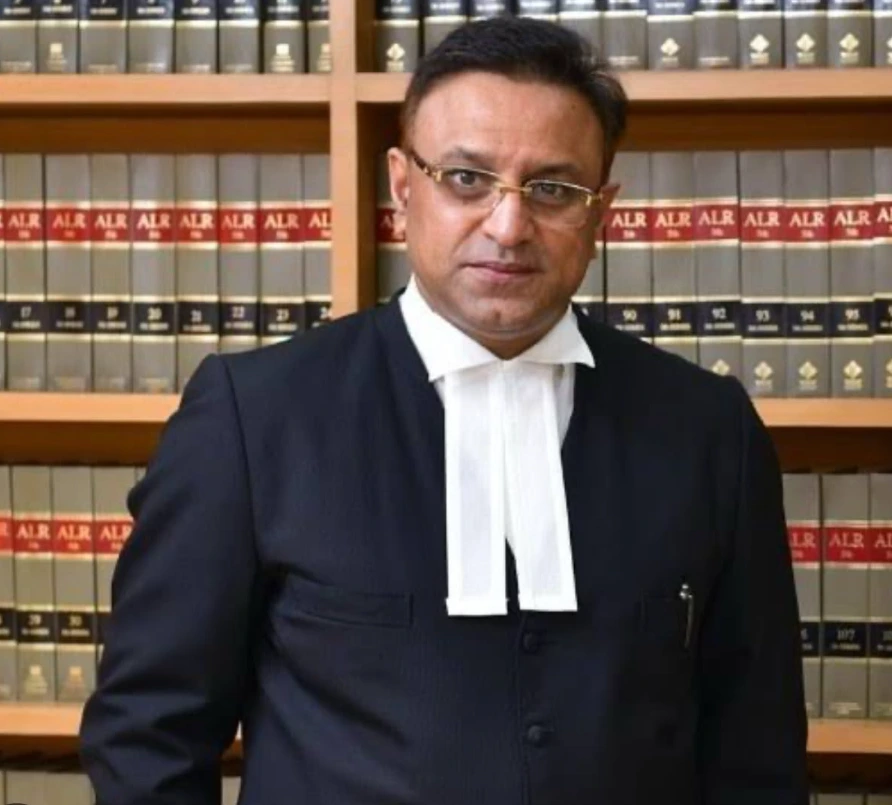
Senior Advocate Pradeep Rai has been elected president of the Supreme Court Bar Association after defeating Anupam Lal Das with 822 votes.

Published

on

Senior Advocate Pradeep Rai has been elected president of the Supreme Court Bar Association (SCBA), securing a decisive mandate in the 2026 election. Rai received 822 votes to defeat Senior Advocate Anupam Lal Das, who secured 451 votes.

The result places Rai at the helm of the representative body of advocates practising before the Supreme Court and gives him the responsibility of leading the Association on issues concerning the professional interests, welfare and institutional concerns of its members.

The SCBA occupies an important position as the collective representative of advocates appearing before the Supreme Court. Its responsibilities extend beyond the administration of the Association, with matters relating to the professional interests and welfare of members forming an important part of its institutional role.

Eight candidates contested for SCBA president

The presidential election was keenly contested, with eight candidates entering the race for the top post.

Those contesting for the position included Senior Advocate Pradeep Rai, Senior Advocate Mahalakshmi Pavani, Md Izhar Alam, Senior Advocate Adish Aggarwala, Gaurav Bhatia, Senior Advocate Anupam Lal Das, Senior Advocate Sukumar Pattjoshi and Senior Advocate Siddharth Mridul.

Rai ultimately emerged victorious with 822 votes, while Anupam Lal Das finished with 451 votes.

The election brought several issues concerning the functioning of the Association and the concerns of members of the Bar into focus. Professional opportunities for advocates, welfare measures and greater institutional responsiveness were among the broader issues surrounding the contest.

Rai’s agenda focused on reform and professional empowerment

Rai’s campaign was centred on an agenda of institutional reform and professional empowerment.

One of the areas highlighted during the campaign was the need to expand opportunities for younger members of the Bar. The agenda also included strengthening welfare mechanisms and addressing structural concerns affecting advocates practising before the country’s highest constitutional court.

The emphasis on younger advocates and welfare measures comes amid wider concerns within professional bodies about ensuring adequate institutional support and opportunities for members of the legal profession.

Rai’s electoral mandate now places the responsibility on the incoming leadership to translate these campaign priorities into concrete measures for members of the Association.

Significance of the SCBA leadership

The election comes against the backdrop of an evolving discussion on the role of Bar associations in ensuring effective representation and protecting the independence and institutional autonomy of the legal profession.

The SCBA has a distinctive position within India’s constitutional and legal framework as the collective representative of advocates appearing before the Supreme Court.

The Association also provides a platform for members of the Bar to deliberate on issues affecting their profession and the functioning of the legal system. Its leadership therefore has an important role in representing the collective concerns of advocates and maintaining an effective institutional forum for discussion.

Rai’s return to the Association’s leadership

For Pradeep Rai, the election victory marks a return to the leadership of the Supreme Court Bar Association.

Rai has previously served as the Association’s Vice President and has remained an active voice on issues concerning the Bar.

His latest electoral mandate brings with it the responsibility of taking forward the priorities outlined during the campaign while ensuring that the Association’s decision-making remains responsive to the wider interests of its membership.

The challenge before the new leadership will be to convert electoral assurances into tangible institutional measures while maintaining continuity in the Association’s functioning.

Bench-Bar dialogue among key institutional issues

The SCBA election also assumes significance in the context of the continuing dialogue between the Bench and the Bar on matters relating to institutional governance, professional ethics, access to justice and the working conditions of advocates.

A strong and autonomous Bar is an important component of the constitutional framework, particularly in a judicial system where advocates play a critical role in assisting courts in the administration of justice.

The Association’s leadership will therefore be expected to balance the professional and welfare concerns of its members with its wider institutional responsibilities.

What lies ahead for the new SCBA leadership

With the election process concluded, attention will now turn to the implementation of the incoming leadership’s stated agenda.

For Rai, the immediate task will be to work towards the priorities outlined during the election campaign, including measures aimed at expanding opportunities for younger advocates, strengthening welfare mechanisms and addressing structural concerns affecting members of the Bar.

The new leadership will also have to ensure that the SCBA continues to function as an effective forum for representation, deliberation and collective advocacy.

Rai’s victory consequently represents more than a change in office-bearers. It gives the new leadership a fresh mandate to address the concerns of Supreme Court advocates and shape the Association’s institutional priorities during its new term.

India News

PM Modi hails ISRO after successful GSLV-F17 launch, calls it proud moment

PM Modi congratulated ISRO after GSLV-F17 successfully launched EOS-05, calling the achievement a proud moment for India.

Published

on

Prime Minister Narendra Modi on Friday congratulated the Indian Space Research Organisation (ISRO) after the successful launch of the GSLV-F17 rocket carrying the EOS-05 Earth observation satellite, describing the achievement as a proud moment for the nation.

The GSLV-F17 lifted off at 2:55 a.m. IST from the Satish Dhawan Space Centre in Sriharikota, Andhra Pradesh. The EOS-05 satellite was subsequently placed into its designated sub-geosynchronous transfer orbit.

PM Modi praises ISRO’s growing capabilities

In a post on X, PM Modi said the successful mission reflected the excellence, innovation and expanding capabilities of India’s space sector.

He also highlighted the growing partnership between ISRO and Indian industry, saying it was strengthening India’s space programme and expanding capabilities across the wider space ecosystem.

The prime minister described the successful launch of GSLV-F17 carrying EOS-05 as another outstanding achievement by ISRO and a matter of national pride.

EOS-05 strengthens earth observation capabilities

According to the report, EOS-05 is India’s first-ever imaging satellite from geosynchronous orbit. The satellite is designed to provide continuous observation of the country from an altitude of nearly 36,000 km above Earth.

The mission is expected to strengthen India’s earth observation capabilities and support advanced imaging and observation applications.

ISRO Chairman Dr V Narayanan expressed satisfaction with the mission, saying the satellite was precisely injected into its intended orbit.

Mission Director Thomas Kurian described the launch as a significant milestone for the GSLV programme. He said it was the 19th flight of the GSLV and noted that EOS-05 is the heaviest satellite the launch vehicle has placed into a geosynchronous transfer orbit or sub-GTO orbit.

GSLV-F17 launch vehicle details

The GSLV-F17 stands 51.7 metres tall and has an approximate liftoff mass of 420.5 tonnes.

Science and Technology Minister Jitendra Singh also congratulated the ISRO team following the successful mission. He described EOS-05 as a state-of-the-art Earth observation satellite capable of advanced imaging across visible, infrared, multispectral and hyperspectral bands.

Continue Reading

India News

Nagaland Assembly urges Centre to withdraw Protected Area Permit regime

Nagaland Assembly unanimously passed a resolution urging the Centre to withdraw the Protected Area Permit regime, citing concerns over tourism, investment and international engagement.

Published

on

The Nagaland Legislative Assembly has unanimously passed a resolution urging the Centre to withdraw the Protected Area Permit (PAP) regime in the state, arguing that the restrictions are affecting tourism, investment, international engagement and economic opportunities.

The resolution was moved by Deputy Chief Minister and Home Minister Yanthungo Patton and was adopted through a voice vote.

PAP regime was reimposed in 2024

The Protected Area Permit regulates the entry of foreign nationals into notified areas. The regime had been relaxed in Nagaland in 2011 but was reimposed on December 17, 2024.

During the Assembly discussion, Patton said Nagaland had emerged as a peaceful destination for tourism, culture, investment, entrepreneurship and international engagement. He said these sectors were increasingly contributing to employment and livelihood opportunities, particularly for young people.

The resolution also highlighted events and initiatives such as the Hornbill Festival and the “Land of Festivals” initiative, saying they had helped showcase Nagaland and India’s cultural diversity internationally while generating economic opportunities for local communities and entrepreneurs.

Assembly links PAP restrictions to economic concerns

The state government argued that the return of the PAP regime has complicated efforts to expand international tourism, business and investment.

The Assembly resolution said the regime was creating difficulties for international tourism, business and investment, along with cultural exchanges and overseas partnerships.

However, the state maintained that relaxing the permit regime would not mean compromising national security.

The resolution assured the Centre that foreign nationals could continue to be registered, regulated and monitored through technology-based and institutional mechanisms in coordination with central agencies.

Neiphiu Rio backs review of PAP regime

Chief Minister Neiphiu Rio also participated in the debate along with Tourism and Higher Education Minister Temjen Imna Along, Industries and Commerce Advisor Hekani Jakhalu and MLA Naiba Konyak.

The legislators maintained that Nagaland’s present circumstances warranted a different approach, stressing that the state was peaceful and seeking greater opportunities in tourism, investment and other sectors.

Rio linked the demand to Nagaland’s economic aspirations and the need to create more opportunities for young people while maintaining the state’s commitment to national security.

“Security and development can go together,” Rio said.

The resolution further argued that regulations that have outlived their developmental relevance should not become barriers to employment, economic activity and Nagaland’s participation in the wider national and global economy.

Continue Reading

India News

Mayawati says Akash Anand needs more maturity, rules out major BSP role

BSP chief Mayawati says nephew Akash Anand needs greater political maturity before taking on a major responsibility in the party.

Published

on

Akash Anand

Bahujan Samaj Party (BSP) chief Mayawati on Thursday said her nephew Akash Anand needs to gain greater political maturity before he can be entrusted with any major responsibility in the party.

Addressing a national-level meeting of BSP office-bearers, Mayawati said she had allowed Akash Anand to continue working within the organisation but felt that he was not yet ready to handle a significant party responsibility.

“I have allowed Akash Anand to work in the party, which is before all of you, but Akash Anand still needs to become more mature. Till then, it would not be appropriate to give him a major responsibility in the party,” Mayawati said.

Mayawati also made it clear that Akash Anand, who is the BSP’s national coordinator, would continue working in the party. However, he will not be entrusted with any major responsibility for the time being.

Mayawati refers to Kanshi Ram’s principles

Explaining her position, Mayawati referred to the principles of BSP founder Kanshi Ram.

She said Kanshi Ram had permitted members of his family and other relatives to assist with party work, but was against giving them election tickets or positions after the party came to power.

Mayawati said she was also committed to following that principle. According to her, maintaining this approach was important to protect the BSP from tactics allegedly employed by political opponents during elections.

BSP to contest elections alone

During the meeting, Mayawati also announced a major political decision concerning the BSP’s electoral strategy.

She said the party had decided to contest all elections across the country on its own, irrespective of whether they were small or major elections.

Targeting the Congress, Mayawati described it as a “strongly anti-Dalit and anti-Ambedkar” party and said the BSP would therefore fight elections independently rather than depend on other parties.

The decision was announced as Mayawati reviewed the BSP’s organisational work and discussed shortcomings with party office-bearers.

She instructed leaders at different levels to implement the party’s annual organisational activities with complete honesty and dedication.

Mayawati attacks RSS over minority rights

Mayawati also criticised the Rashtriya Swayamsevak Sangh (RSS), referring to comments made by its chief Mohan Bhagwat during his recent visit to the United States.

Bhagwat had said that a Hindu who believes there should be no Muslims in Bharat would not remain a Hindu. He had also spoken about Hindu philosophy accepting that different faiths can lead to the same truth and emphasised the idea of unity in diversity.

Mayawati, however, said there was a significant difference between the RSS’s statements and its actions.

She argued that the organisation lacked credibility when it came to issues concerning the interests and welfare of the Bahujan Samaj, reservation as a constitutional right, and the safety, dignity and religious freedom of women, Muslims and other religious minorities.

She further said that despite its long existence, the RSS had not received the recognition and respect it sought.

Mayawati invokes Ambedkar’s Constitution

The BSP chief also challenged the RSS to demonstrate its commitment to the Constitution drafted under the leadership of Babasaheb Dr Bhimrao Ambedkar.

Mayawati said that if the RSS genuinely had faith in a humanitarian, welfare-oriented and egalitarian Constitution, it should follow its principles honestly and ensure that its members did the same.

BSP reiterates focus on Bahujan Samaj

At the national meeting, Mayawati reviewed the BSP’s organisational activities, assessed its shortcomings and gave directions to office-bearers regarding the party’s future work.

She reiterated that protecting the interests of the Bahujan Samaj and bringing exploited and deprived sections to political power remained the BSP’s central mission.

Mayawati maintained that achieving political power was necessary for the party to fulfil these objectives.

Her latest remarks on Akash Anand indicate that while her nephew will remain associated with the BSP and continue working for the organisation, he will not receive a major party responsibility until she believes he has attained the required political maturity.

Continue Reading

Trending

© Copyright 2022 APNLIVE.com