
Latest Science News
DNA test suggests mussel peston Cochin coast to be invasive foreigner


[vc_row][vc_column][vc_column_text]
~By Kollegala Sharma
Marine biologists at the Cochin University of Science and Technology have found that a heavily fouling mussel growing in backwaters of Cochin harbour could be a foreigner species.
Comparing the genome of the mussel with an international genetic database as well as with DNA of other species of mussels, they have concluded that the mussel seen near the shores of Cochin harbour is more like Mytilopsis sallei, which is found in the Lam Tsuen River in Hong Kong.
Biofouling is excessive growth of marine animals on structures and ships and is of great economic nuisance. Extensive biofouling could weaken foundations of the harbour and ship hulls. Unabated fouling can make ships heavier and difficult to manoeuvre. If it happens in the ballast filled with water, it could damage pumps and other machinery too.
Mussels, especially the Mytilopsis species are the prominent among the list of biofouling agents. The others are marine algae, microorganisms and corals.

A massive population of Mytilopsissp. was first noticed on wooden materials partially submerged in the water, in Ezhupunna region of Vembanad Lake, according to the researchers. The lake is several kilometres inland. The population density was as high as 780 individuals growing in one square meter. Their bulk weight and ability to grow together in large numbers means fouling by them could weigh down even heaviest of ships.
Mytilopsis sallei, also known as black striped mussel is a well known invasive mussel and has been known to populate strange seas across the world since 16th Century by riding on seafarer ships.

Dr. P.R. Jayachandran, M. Jima, Philomina Joseph, V.F. Sanu, and Dr.S. BijoyNandan (L to R)
“In India, Mytilopsisspecies were recorded from Visakhapatnam harbour during the 1960s for the first time and then from Mumbai harbour in 1975. Our study records their presence in the south-west coast of India for the first time,” said Dr Jayachandran, a member of the research team.
In order to confirm if the species is Mytilopsis or not, the team took samples of DNA from five specimens and compared them with unique DNA portions or sequences of Mytilopsissallei from the Lam Tsuen River, and also with an Asian mussel Congeriakusceri. It is difficult to distinguish between the two merely from their looks.
“The sequences of M sallei exhibited 0% intraspecific divergence which confirms that the sequence from Cochin mussels clearly matched with those from Lam Tsuen River, Hong Kong, thus confirming bioinvasion of M sallei in the Cochin backwaters,” the study notes.
“The results confirm that it is one of the several Mytilopsisspecies, if not Mytilopsissallei.We can’t surely say that our specimen is Mytilopsis sallei, because many researchers believe that the Indian and other Asian population, including the Lam Tsuen River species, are indeed Mytilopsis adamsi and is wrongly labelled as Mytilopsis sallei,” said Jayachandran. That requires matching the sequences with the mussels that are native to Guatemala. That data is not available now.
In any case, mussels growing offshore in the backwaters of Cochin are surely not local. “This species is highly tolerant to salinity and temperature variations. Eradicating marine invasion is an extremely difficult. A similar invasion in the harbour of Darwin islands required 2.2 million Australian dollars to chemically clean the water,” the study said.
India does not have adequate control measures to avoid marine pest or fouler intrusion except using antifouling paints on ships, and these antifouling paints are marine pollutants.
The research team included Dr PR Jayachandran, M Jima PhilominaJoseph, VF Sanu, and S BijoyNandan. The study has been published in Current Science. (India Science Wire)[/vc_column_text][/vc_column][/vc_row]
India News
PM Modi hails ISRO after successful GSLV-F17 launch, calls it proud moment
PM Modi congratulated ISRO after GSLV-F17 successfully launched EOS-05, calling the achievement a proud moment for India.


Latest Science News
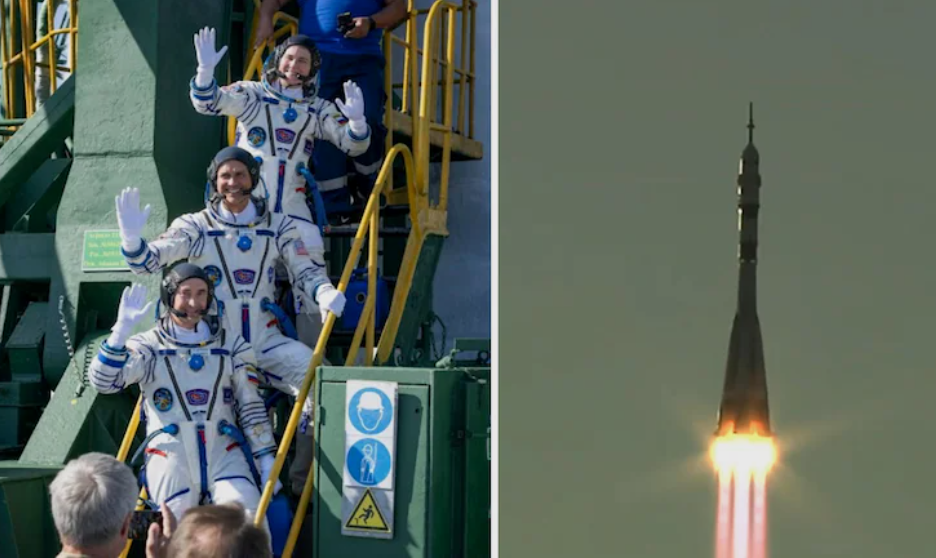
Indian-origin astronaut Anil Menon begins first mission to International Space Station
Indian-origin NASA astronaut Anil Menon has launched aboard Soyuz MS-29 on his first mission to the International Space Station, where he is expected to spend around eight months conducting research.
Latest Science News
Astronaut Shubhanshu Shukla to meet PM Modi after return from historic space mission
Astronaut Shubhanshu Shukla, who recently returned from the ISS as part of the Axiom-4 mission, will meet PM Modi this evening. Parliament will also hold a special discussion on his historic journey.


Punjab strike hits public services as 3 lakh employees and roadways workers protest

Two election commissioners complained against senior poll officer, RTI reveals

Om Prakash Mathur sworn in as Keralam Governor

Delhi High Court rejects Neha Bora’s plea against peace bond notice

PM Modi to inaugurate Rs 169-crore RBI data centre in Odisha on October 25

MEA responds after ITBP chief flags ongoing face-offs with China in Arunachal
Delhi High Court rejects Neha Bora’s plea against peace bond notice
PM Modi to inaugurate Rs 169-crore RBI data centre in Odisha on October 25
Om Prakash Mathur sworn in as Keralam Governor
Two election commissioners complained against senior poll officer, RTI reveals

Afghan Men Try To Hang With The Jet Engine Of The Aircraft in Kabul- Afghanistan News – Kabul News
Trending Top 10 News: 10000 Crore Fine on Flipkart, Apple to Launch Unique Feature, Hdfc Bank Job Ad

Trending Top 10 News: Nokia 6310, Apple sales, Bachpan ka Pyar Video Kid, Dainik Bhaskar IT Raid

Trending Top 10 News: Canada bans Indian flights, Rain in Delhi NCR, AIMIM Twitter hacked, Raj Kundra case

Trending Top 10 News: Shein India, Apple New Service, Pocket Oxygen, Oppo Launched New Phone
-
 India News21 hours ago
Punjab strike hits public services as 3 lakh employees and roadways workers protest
-
 India News20 hours ago
Two election commissioners complained against senior poll officer, RTI reveals
-
 India News9 hours ago
Om Prakash Mathur sworn in as Keralam Governor
-
 India News8 hours ago
Delhi High Court rejects Neha Bora’s plea against peace bond notice
-
 India News9 hours ago
PM Modi to inaugurate Rs 169-crore RBI data centre in Odisha on October 25
-
 India News7 hours ago
MEA responds after ITBP chief flags ongoing face-offs with China in Arunachal
