
Latest Science News
Just tweaking time of administration can make cancer drugs more effective


~By Sarah Iqbal
Just by changing the time of administering drugs, doctors may be able to improve outcome of cancer therapy, suggests new research done at the Indian Institute of Technology-Madras (IITM).
This work is rooted in rhythms of reactive species production. In the course of day-to-day life, all life forms produce highly reactive molecules called reactive species. While small doses of these molecules can aid biological functions, when produced at high rates, they can also kill the cell by creating oxidative stress. Most cancer drugs seek to kill malignant cells by producing rapid bursts of reactive species. But because there is a lack of specific action, drugs also end up affecting normal cells surrounding cancerous tumours.

Variation in internal reactive species production has been a neglected area of research. The research team at IITM led by GK Suraishkumar has found that there’s a lot of fluctuation in levels of reactive species within a cell. These short-term fluctuations can be ignored when one is studying a much slower process such as cell growth, and work with average levels instead.
Cancer therapy relies on increasing oxidative stress beyond a critical point. Therefore, the timing of internal rhythms in reactive species production is crucial. Scientists found that two important reactive species used for targeting cancer cells – superoxide radicals and hydroxyl radicals – peak at an interval of 15.4 hours and 25 hours respectively.
They reasoned that by aligning drug administration with internal rhythms of reactive species production, the efficiency of drugs could be increased. To test this hypothesis, they administered two drugs menadione and curcumin to cervical cancer cell lines and a colon cancer cell line.
Just by changing the timing of drug administration, researchers could reprogram internal rhythms of reactive species production. For instance, treating cancer cells with curcumin at the time of increased superoxide production ensured that the superoxide radical would peak after every 9 hours. By tuning drug dose to hydroxyl radical production, the periodicity of its rhythm was reduced from 25 hours to 11 hours. This, in turn, improved the drug efficiency by 20%.
The strategy is noninvasive and can be extended to any cancer drug that operates via production of reactive species. The researchers are now planning to extend this to patients. “All we will have to do is change the timing of treatment in tune with the peaking of reactive species production,” explained Suraishkumar while speaking to India Science Wire. “We believe that doing so will also reduce the complications associated with cancer treatment.”
The research team also included Karunagaran, Raghunathan Rengaswamy, Uma Kizhuveetil, Meghana Palukuri, Prerna Bhalla and Steffi Jose. The research project is financially supported by the Science and Engineering Research Board of the Department of Science and Technology (DST). (India Science Wire)







India News
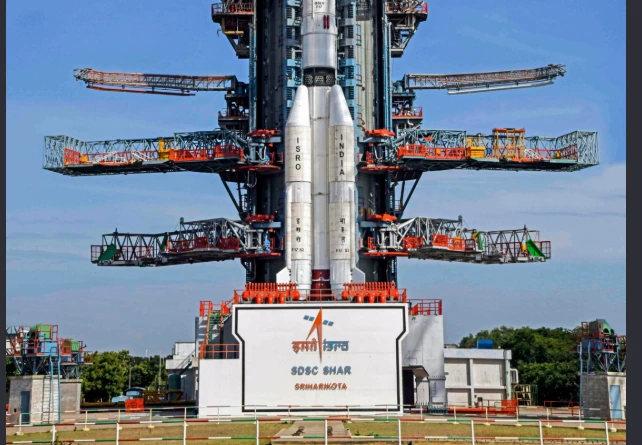
PM Modi hails ISRO after successful GSLV-F17 launch, calls it proud moment
PM Modi congratulated ISRO after GSLV-F17 successfully launched EOS-05, calling the achievement a proud moment for India.

Latest Science News
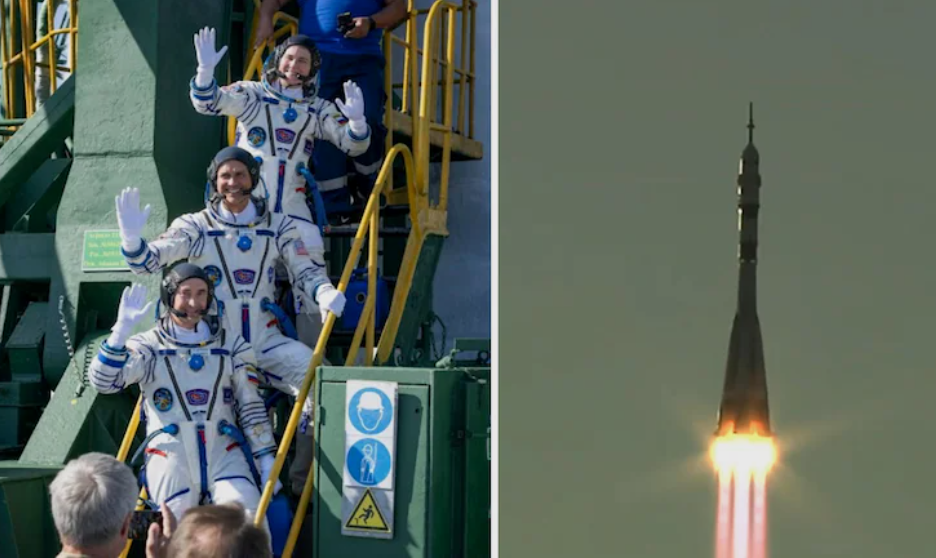
Indian-origin astronaut Anil Menon begins first mission to International Space Station
Indian-origin NASA astronaut Anil Menon has launched aboard Soyuz MS-29 on his first mission to the International Space Station, where he is expected to spend around eight months conducting research.
Latest Science News
Astronaut Shubhanshu Shukla to meet PM Modi after return from historic space mission
Astronaut Shubhanshu Shukla, who recently returned from the ISS as part of the Axiom-4 mission, will meet PM Modi this evening. Parliament will also hold a special discussion on his historic journey.



Yogi Government cites Rs.15,233 crore seizures in UP gangster crackdown

Magnitude 7 earthquake strikes Tibet after floods

PM Modi attacks Rahul Gandhi with failed product jibe

Amit Shah says congress won’t return to power for 30 years

Punjab strike hits public services as 3 lakh employees and roadways workers protest

Two election commissioners complained against senior poll officer, RTI reveals
Punjab strike hits public services as 3 lakh employees and roadways workers protest
Amit Shah says congress won’t return to power for 30 years
Magnitude 7 earthquake strikes Tibet after floods
PM Modi attacks Rahul Gandhi with failed product jibe

Afghan Men Try To Hang With The Jet Engine Of The Aircraft in Kabul- Afghanistan News – Kabul News
Trending Top 10 News: 10000 Crore Fine on Flipkart, Apple to Launch Unique Feature, Hdfc Bank Job Ad

Trending Top 10 News: Nokia 6310, Apple sales, Bachpan ka Pyar Video Kid, Dainik Bhaskar IT Raid

Trending Top 10 News: Canada bans Indian flights, Rain in Delhi NCR, AIMIM Twitter hacked, Raj Kundra case

Trending Top 10 News: Shein India, Apple New Service, Pocket Oxygen, Oppo Launched New Phone
-
 India News17 hours ago
Yogi Government cites Rs.15,233 crore seizures in UP gangster crackdown
-
 Latest world news13 hours ago
Magnitude 7 earthquake strikes Tibet after floods
-
 India News13 hours ago
PM Modi attacks Rahul Gandhi with failed product jibe
-
 India News13 hours ago
Amit Shah says congress won’t return to power for 30 years
-
 India News2 hours ago
Punjab strike hits public services as 3 lakh employees and roadways workers protest
-
 India News1 hour ago
Two election commissioners complained against senior poll officer, RTI reveals
