English हिन्दी
Connect with us

Top Stories

Bigg Boss 16: Abdu Rozik’s rival Hasbulla Magomedov to enter as wildcard contestant; all you need to know about their enmity

In 2020, Hasbulla issued a challenge to take on any person in his weight class up to 18 kilograms and Abdu Rozik accepted the call.

Published

on

Bigg Boss 16: Abdu Rozik's rival Hasbulla Magomedov to enter as wildcard contestant; all you need to know about their enmity

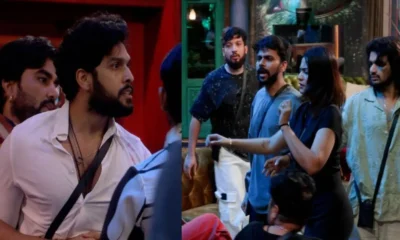
Bigg Boss 16 has entered its third week and is hooking the viewers with their fights, arguments, and love stories. One of the most loved contestants of this season is Abdu Rozik. He is wooing hearts with his unique style. Abdu has a friendly camaraderie with each contestant but it seems that the makers have something else in line for Abdu.

The makers are planning to bring Tajikstan’s singer rival Hasbulla Magomedov into the reality show. The 19-year-old blogger hailing from Russia also has dwarfism.

Who is Hasbulla Magomedov?

Hasbulla Magomedov is a pint-sized social media sensation who has gained immense popularity in recent years due to a combination of his good looks, love for fighting, and apparent confidence to compete against some of the biggest names in professional boxing.

Read Also: Jasmin Bhasin blushes when crowd shouts Aly Goni’s name during Honeymoon promotion, video viral | WATCH

Read Aslo: Jasmin Bhasin blushes when crowd shouts Aly Goni’s name during Honeymoon promotion, video viral | WATCH

Abdu Rozik and Hasbulla Magomedov Rivalry

In 2020, Hasbulla issued a challenge to take on any person in his weight class up to 18 kilograms and Abdu Rozik accepted the call. They were then called for a press conference organized by Ashab Chechen Hulk Tamaev.

The two clashed bitterly and pointed questions about one other’s social media influence, adherence to Islam, and financial situation throughout the half-hour interview. Hasbulla once waved a bank card at Abdu Rozik and said See this card, boy? I can buy you if I want to. Abdu Rozik called Hasbulla rude and teased him for endorsing a carpet store. The two young men leaped out of their chairs as if they were going to fight immediately. Tamaev had to separate the two several times, frequently while chuckling.

Most Muslim nations consider it an insult to show the bottom of the foot as it’s the lowest part of the body. With Tamaev between the two, Abdu Rozik taunted his tentative opponent, saying, Come here, little kid and as they lunged at each other, Hasbulla wound up for a kick.

Though he missed it at first but later accomplished his goal, infuriating Rozik. He warned Hasbulla that if he touches him again, he will be a dead man. Hasbulla went for the leg kick, ignoring the warning and going for it. Abdu Rozik, furious, started shouting even louder. After a few more seconds of their argument, Tamaev cuts the video.

No official match between Hasbulla and Abdu Rozik has ever been recorded. There was a rumour that it did take place with no released footage, but that remains unverified.

However, it would be interesting to see Abdu and Hasbulla under the same roof.

Pushpa The Rule BTS photo goes viral, fans demand first look
Sam Bahadur: Vicky Kaushal wraps up first schedule of Field Marshal Sam Manekshaw’s biopic | See Photos

India News

Congress Dismisses Karnataka Leadership Transition Rumors After Six-Hour Delhi Meet

The Congress party has rejected ongoing rumors regarding a leadership change or a rotating Chief Minister formula in Karnataka, stating that a recent six-hour meeting in Delhi focused strictly on the upcoming Rajya Sabha and MLC elections.

Published

on

The Congress party has strongly downplayed the intense political buzz surrounding a potential leadership transition or a change in the Chief Minister’s post in Karnataka. Following a marathon six-hour meeting with the state’s top leadership in New Delhi, the party explicitly rejected the ongoing speculation, labeling it as having “no reality.”

A brief statement issued to the media after the high-level meeting advised against spreading rumors, clarifying that the discussions were entirely centered on upcoming electoral strategies rather than structural changes within the state government. The party stated that the deliberations solely revolved around the state’s three vacant Rajya Sabha seats and the upcoming Member of Legislative Council (MLC) elections.

Rajya Sabha and MLC Polls Take Center Stage

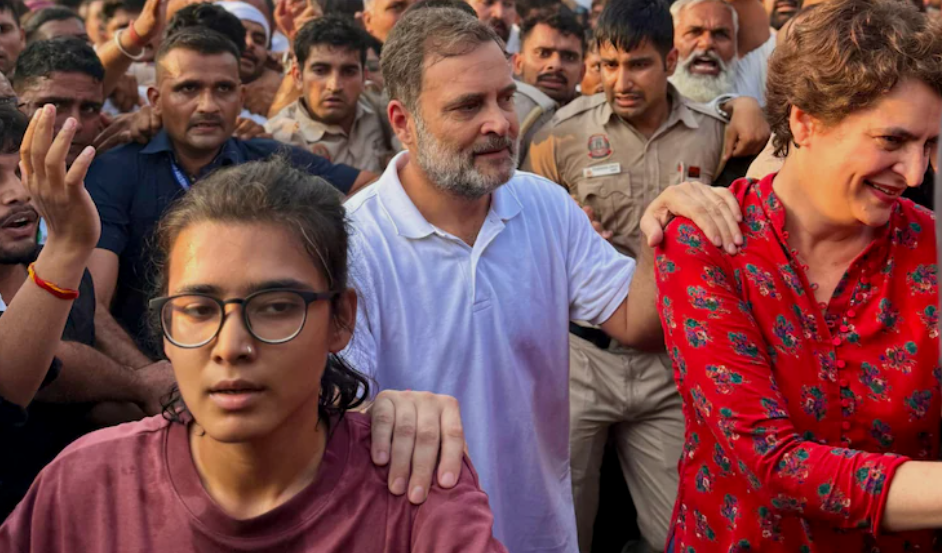
The high-stakes meeting was attended by Congress President Mallikarjun Kharge, senior leader Rahul Gandhi, and party General Secretary KC Venugopal, alongside Karnataka Chief Minister Siddaramaiah and Deputy Chief Minister DK Shivakumar.

Briefing the media post-meeting, KC Venugopal stated that conversations were strictly confined to the Rajya Sabha and MLC elections, emphasizing that there is no truth to any other political speculation. Chief Minister Siddaramaiah also confirmed that the agenda of a potential cabinet expansion or a leadership shift did not come up during the six-hour-long discussion.

Background of the Power Struggle

The question of leadership in Karnataka has remained a recurring theme for over a year. Supporters of Deputy Chief Minister DK Shivakumar have consistently maintained that the central leadership promised a rotating Chief Ministership arrangement when the government was formed after the 2023 assembly elections.

Speculation had intensified recently as the ruling government faced local anti-incumbency pressures alongside renewed political activity from the opposition bench. Some internal reports had even indicated a push from within certain sections of the high command, including Priyanka Gandhi Vadra, for a leadership revamp.

Balancing Caste Equations and Party Structure

The central leadership has navigated the situation cautiously to maintain political stability. Chief Minister Siddaramaiah, 80, commands a powerful “Ahinda” support base—a coalition comprising minority communities, backward classes, and Dalits. This social alliance was crucial in helping the party navigate the traditional Vokkaliga and Lingayat caste dynamics during the 2023 elections.

Although the rotation issue had previously gained significant momentum when the government completed two years in office, the party high command had chosen to maintain the status quo to avoid any adverse electoral impact in neighboring assembly elections, such as in Tamil Nadu. With those elections concluded, supporters of the 64-year-old Deputy Chief Minister had expressed optimism for a transition. Shivakumar currently holds the dual responsibility of being the Deputy Chief Minister as well as the state Congress chief, signaling his critical organizational value to the party. However, for the time being, the party high command has firmly signaled that the current leadership structure will remain unchanged.

Continue Reading

India News

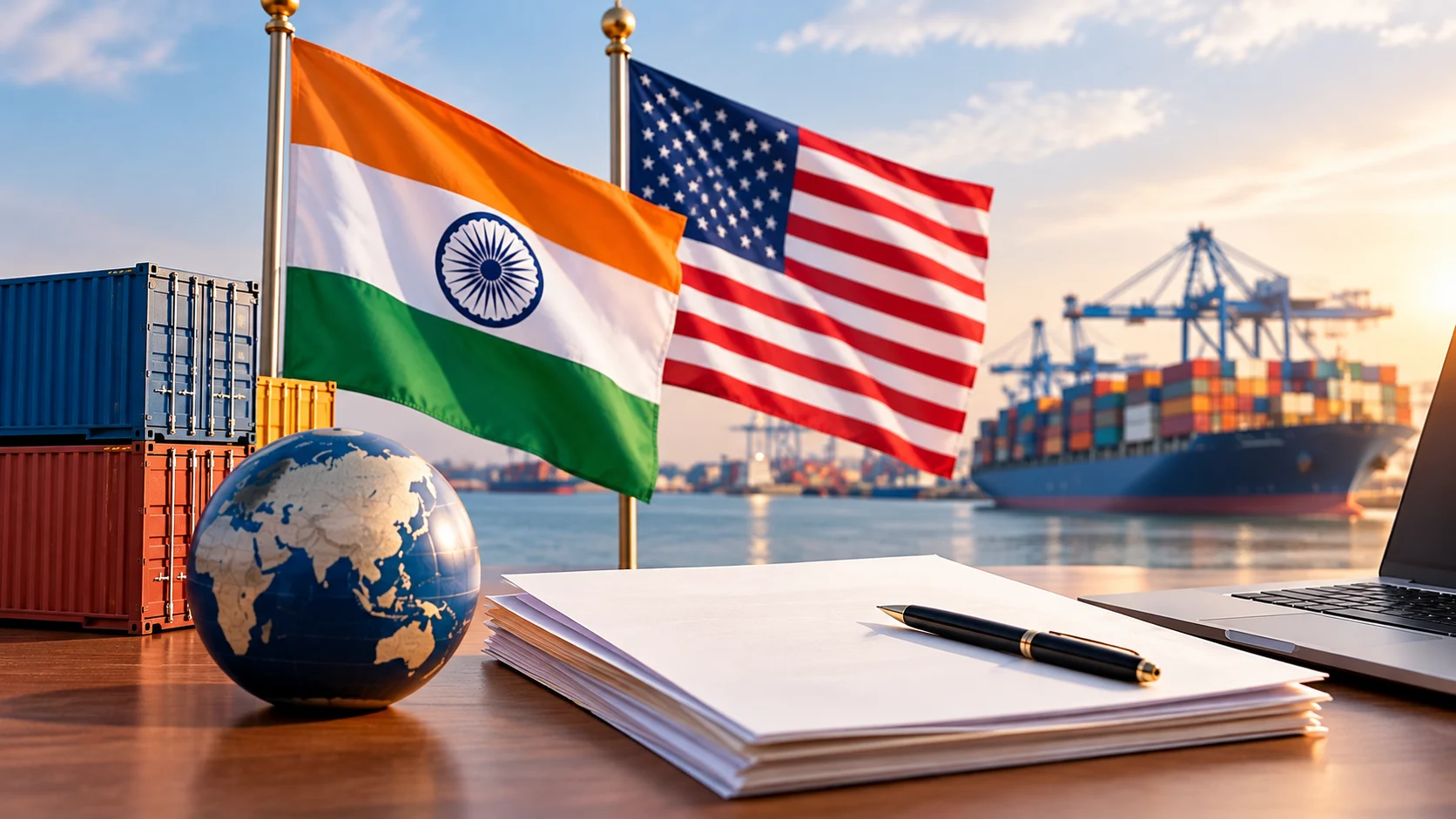
External Affairs Minister S Jaishankar and US Secretary of State Marco Rubio review global strategic partnership amid regional conflicts

n a high-stakes meeting in New Delhi, External Affairs Minister S Jaishankar defined India’s multi-alignment stance on West Asia, while US Secretary of State Marco Rubio declared the two nations as global strategic allies.

Published

on

S Jayshankar Marco Rubio meet

External Affairs Minister S Jaishankar and visiting US Secretary of State Marco Rubio held comprehensive delegation-level talks in New Delhi, emphasizing that the relationship between the two nations remains strong, strategic, and far-reaching. Addressing a joint press conference at Hyderabad House, both leaders rejected suggestions that the bilateral partnership has lost momentum, outlining instead a shared vision for global cooperation.

India outlines ‘multi-alignment’ stance on West Asia conflict

During the high-level discussions, the ongoing conflict in West Asia emerged as a key focal point. Addressing the media, External Affairs Minister S Jaishankar stated that India continues to maintain robust and stable relationships with all key stakeholders in the region, including the United States, Israel, Iran, and Gulf nations.

Jaishankar stressed that India approaches regional conflicts through a distinct policy of “multi-alignment”. He explicitly outlined India’s core operational priorities in West Asia:

  • Ensuring regional peace and stability
  • Safeguarding the welfare of the vast Indian diaspora living and working in the region
  • Maintaining lower energy prices to shield the domestic economy
  • Securing safe and uninterrupted maritime commerce through vital sea lanes

Global strategic allies extending beyond the region

Secretary Rubio strongly backed the depth of the partnership, asserting that the ties between Washington and New Delhi set themselves apart from standard global relationships.

“The US and India aren’t just allies. We are strategic allies and that’s of critical importance,” Rubio stated. “We obviously work with countries all over the world on a variety of issues, but our strategic partnership is what sets this relationship apart because it’s not simply limited to the region, it extends to offer opportunities to cooperate globally in different regions of the world.”

Rubio further revealed that their high-level deliberations, which included a working dinner, covered potential avenues for joint India-US cooperation in the Western Hemisphere and other global theaters.

Clarifications on immigration reforms and visa concerns

The joint press conference also touched upon critical people-to-people and diplomatic friction points. Responding to concerns flagged by media regarding the new US immigration rules—which require certain legal immigrants to leave the US before applying for permanent residency—Rubio reassured the Indian public that the overhaul is a global modernization effort and is not targeted at India.

He acknowledged the profound economic contributions made by Indian professionals and corporations to the American economy. Rubio attributed the policy changes to the broader migration challenges confronting the US, noting that the administration is modernizing the system to regulate how many people enter and when, admitting that the transition period could cause “some bumps”.

When questioned on isolated instances of online racism or prejudice faced by Indians, Rubio took a firm stance alongside Jaishankar. Branding such instances as “dumb” commentary, the top US diplomat remarked, “Every country in the world has stupid people. I’m sure there are stupid people here; there are stupid people in the United States who make dumb comments all the time.” He re-emphasized that the US remains a highly welcoming country whose fabric has been significantly enriched by immigrants from across the world.

Continue Reading

India News

Congress high command steps in to resolve Karnataka leadership impasse with crucial Delhi meeting

The Congress leadership, including Mallikarjun Kharge and Rahul Gandhi, is holding a vital meeting in Delhi with Karnataka Chief Minister Siddaramaiah to find a definitive solution to the state’s prolonged leadership impasse.

Published

on

The top leadership of the Congress party is scheduled to hold a high-level meeting at its headquarters in the national capital today morning to address the long-standing leadership dispute in Karnataka. Senior leaders, including party president Mallikarjun Kharge and MP Rahul Gandhi, will lead the discussions aimed at resolving the continuous friction between Chief Minister Siddaramaiah and Deputy Chief Minister DK Shivakumar.

The ongoing power struggle over the state’s top position has persisted since the party’s electoral victory in 2023. For the current session, only Chief Minister Siddaramaiah has been called to join the discussions in Delhi. When questioned about the agenda by reporters, the Chief Minister stated that he was unaware of the specific subjects to be discussed, noting that political speculation is inevitable.

Background of the internal division

The internal friction intensified significantly in November 2025 when the state government completed its two-and-a-half-year mark in office. Supporters of the Deputy Chief Minister pointed to a purported unacknowledged internal arrangement suggesting a rotational chief ministership split equally across the five-year term. Despite multiple prior interventions by central party leadership to manage the internal friction, a permanent resolution has remained elusive.

While Deputy Chief Minister DK Shivakumar has not been invited to this morning’s initial session, indications suggest that separate individual discussions and a potential joint meeting involving both leaders are planned as part of the broader resolution process. Observers note that several state ministers and legislators have also traveled to the national capital as the party leadership aims to settle the administrative roadmap and finalise leadership plans before the next assembly elections.

Continue Reading

Trending

© Copyright 2022 APNLIVE.com