English हिन्दी
Connect with us

Top Stories

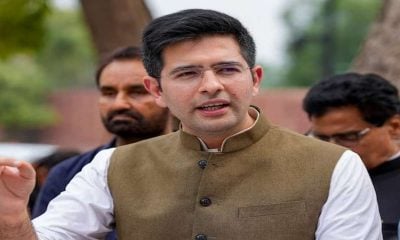
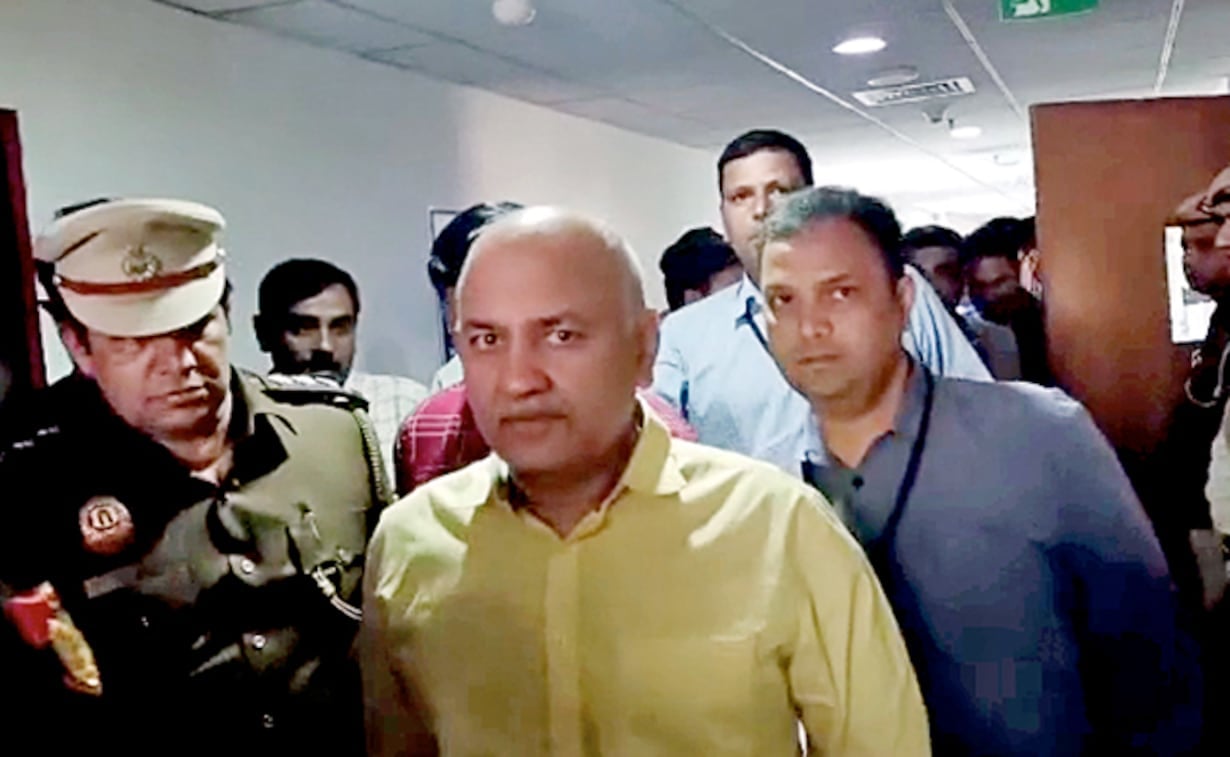
After questioning, Enforcement Directorate arrests Manish Sisodia

Manish Sisodia was arrested by the Central Bureau of Investigation (CBI) last month in the now-scrapped Delhi excise policy scam.

Published

on

Manish Sisodia

The Enforcement Directorate (ED) on Thursday arrested former Delhi Deputy Chief Minister Manish Sisodia over money laundering charges after questioning him in Tihar Jail in the Delhi excise policy case. The ED action comes a day before Sisodia’s bail hearing in the CBI court hearing the original case. The latest arrest could work against the Aam Aadmi Party MLA.

The ED had questioned the former Deputy CM for some six hours earlier. The agency had questioned him over the allegedly changed and damaged cell phones that were in his possession, as well as the timeline and decisions he made while serving as Delhi’s excise minister. These charges were made in its charge-sheets filed before the court.

The ED agents, earlier, questioned Sisodia and specifically questioned him about his associations with Vijay Nair and Dinesh Arora (co-accused in the case), the decision to change the wholesaler profit margin from 5 percent to 12 percent.

Read Also: India more likely to respond with military force under PM Modi if provoked by Pakistan: US intel report

The ED also alleged upfront kickbacks paid by the South Group, a group of politicians and businessmen from Telangana and Andhra Pradesh, in return for the Delhi government handing over nine out of 32 retail liquor zones to the lobby.

The AAP strongly disputes the claim that the Delhi government’s excise policy for 2021–2022, which granted licenses to liquor traders, allowed cartelization and favoured certain dealers who had reportedly paid bribes for it.

Manish Sisodia was arrested by the Central Bureau of Investigation (CBI) last month in the now-scrapped Delhi excise policy scam. The ED has also booked a case against him under the Prevention of Money Laundering Act (PMLA).

Air India cabin crew caught smuggling 1.5 kg gold at Kochi airport, arrested

Karnataka BJP MP S Muniswamy berates woman for not sporting Bindi at Women’s Day event, triggers row | WATCH

India News

Himanta Biswa Sarma resigns as Assam chief minister, oath ceremony likely after May 11

Himanta Biswa Sarma resigns as Assam Chief Minister after BJP-led NDA’s victory. He will continue as caretaker CM until the new government is sworn in after May 11.

Published

on

Himanta sharma

Assam Chief Minister Himanta Biswa Sarma resigned from his post on Wednesday, paving the way for the formation of a new government after the BJP-led NDA secured a decisive victory in the 2026 Assembly elections.

Sarma submitted his resignation to Governor Lakshman Prasad Acharya at Lok Bhawan in Guwahati. The Governor accepted the resignation and asked him to continue as the caretaker Chief Minister until the new government takes charge.

The resignation comes after the NDA’s strong electoral performance, where the alliance won a clear majority in the 126-member Assembly, ensuring its return to power for another term.

Oath ceremony expected after May 11

Speaking to reporters after submitting his resignation, Sarma said the swearing-in ceremony for the new government is likely to be held after May 11.

He indicated that Prime Minister Narendra Modi has been invited to attend the ceremony but is unavailable until May 11, which has influenced the tentative schedule.

Decision on next chief minister soon

Sources suggest that central observers, including senior BJP leaders, are expected to arrive shortly to oversee the selection of the legislature party leader. The newly elected MLAs will then decide on the next Chief Minister.

Despite the formal resignation, party sources indicate that Sarma is likely to continue in the role for another term, given the BJP’s strong mandate in the state.

The move marks the beginning of the government formation process in Assam following the election results declared earlier this week.

Continue Reading

India News

Rahul Gandhi and Vijay alliance took shape through backchannel talks, early signals from Congress leaders

Congress outreach and political calculations led to Rahul Gandhi and Vijay coming together after the Tamil Nadu 2026 election results.

Published

on

The coming together of Rahul Gandhi and actor-politician Vijay in Tamil Nadu after the 2026 Assembly elections was not sudden, but the result of behind-the-scenes political manoeuvring and early signals within the Congress.

According to media reports, some leaders in the Tamil Nadu Congress had already sensed the scale of Vijay’s surge during the campaign, anticipating what was later described as a “wave” in favour of his party.

After the results, where Vijay’s Tamilaga Vettri Kazhagam (TVK) emerged as the single largest party but fell short of a majority, communication channels between the Congress leadership and Vijay quickly became active.

A key moment in this evolving political equation was a phone call from Rahul Gandhi to Vijay, congratulating him on the party’s strong performance. The conversation was seen as more than a courtesy, signalling the possibility of cooperation at a time when government formation required additional support.

Reports indicate that discussions within Congress weighed the political benefits of supporting Vijay, especially given the shifting dynamics in the state where traditional dominance by major Dravidian parties has been challenged.

With TVK needing allies to cross the majority mark, Congress emerged as a potential partner, leading to a broader political realignment in the state. This development also triggered tensions within opposition alliances, highlighting the strategic importance of the decision.

The evolving partnership reflects a mix of electoral pragmatism and changing voter sentiment, particularly the growing influence of younger voters, which leaders acknowledged as a key factor in the election outcome.

Continue Reading

India News

Blasts outside defence establishments in Punjab within 2 hours trigger security alarm

Two explosions near defence-linked locations in Punjab within two hours have triggered alarm and heightened security across the state.

Published

on

Two explosion incidents reported within a span of around two hours near key defence-linked locations in Punjab have raised serious security concerns and triggered political reactions.

The first incident took place near the Border Security Force (BSF) headquarters in Jalandhar, where a blast involving a delivery scooter was reported in a populated area. The proximity of the explosion to a sensitive security installation immediately drew the attention of authorities.

Shortly after, another blast was reported near a military-linked area in Amritsar, further heightening concerns over security preparedness in the border state. Police and security agencies responded swiftly, deploying bomb disposal squads and forensic teams at both locations.

Officials confirmed that no casualties were reported in either incident. However, the back-to-back nature of the explosions caused panic in nearby areas and prompted authorities to place the state on high alert.

Political leaders reacted strongly, questioning the handling of security and pointing to possible lapses. They urged authorities to take preventive steps to avoid such incidents in the future.

Punjab, being a strategically important border state, remains sensitive to such developments. Investigations are currently underway to determine the cause of the explosions and whether there are any links between the two incidents.

Security has been tightened around key installations, with agencies assessing whether the blasts were isolated events or part of a broader threat.

Continue Reading

Trending

© Copyright 2022 APNLIVE.com