English हिन्दी
Connect with us

Top Stories

PM Narendra Modi’s motorcade stops to let go ambulance first | WATCH

Published

on

As Himachal Pradesh is all set to witness its assembly election on November 12, PM Narendra Modi on Wednesday visited the state to address a rally. While he was on his way to attend the event, PM’s convoy was stopped in the middle of the road in Kangra district’s Chambi village. However, there was no security breach, the official took the decision to hold the motorcade in order to let an ambulance go first.

The whole incident has been captured on the camera, which was later shared on the Internet. The clip showed that PM Modi who was seen sitting inside the vehicle was on his way to address two public events ahead of Himachal Pradesh’s first phase of polling. Amid this, PM Modi’s security personnel witnessed an ambulance, which was about to cross the road, the official then ordered the convoy to wait for a while until the ambulance crosses the road first.

Take a look at the viral video where PM’s convey stopped in Himachal Pradesh

In the viral footage, PM Modi’s SUV’s can be seen resting in the middle of the junction as an ambulance speeds through. After the ambulance left, a cop indicates PM Modi’s convoy to move ahead. The PM was also seen waving his hand to the public, who were gathered there to greet him.

This is not the first time PM’s convoy has been stopped. Earlier, a similar incident has been reported from Gujarat where PM’s motorcade was stopped to let an ambulance pass first.

Meanwhile, talking about his event in Kangra today which has the largest seats in the state, PM said he said the state needs a strong and stable government that can modify the future of people there.

In his Sujanpur rally, PM slammed the congress for betraying the state when it was in power.

India News

Rahul Gandhi accuses Modi of foreign backing, BJP hits back with UK clip

Rahul Gandhi alleged that foreign forces helped Narendra Modi become Prime Minister and continue in power. The Congress leader also challenged Modi to an open debate, while the BJP responded by sharing an old video of his remarks during a UK visit.

Published

on

Rahul Gandhi

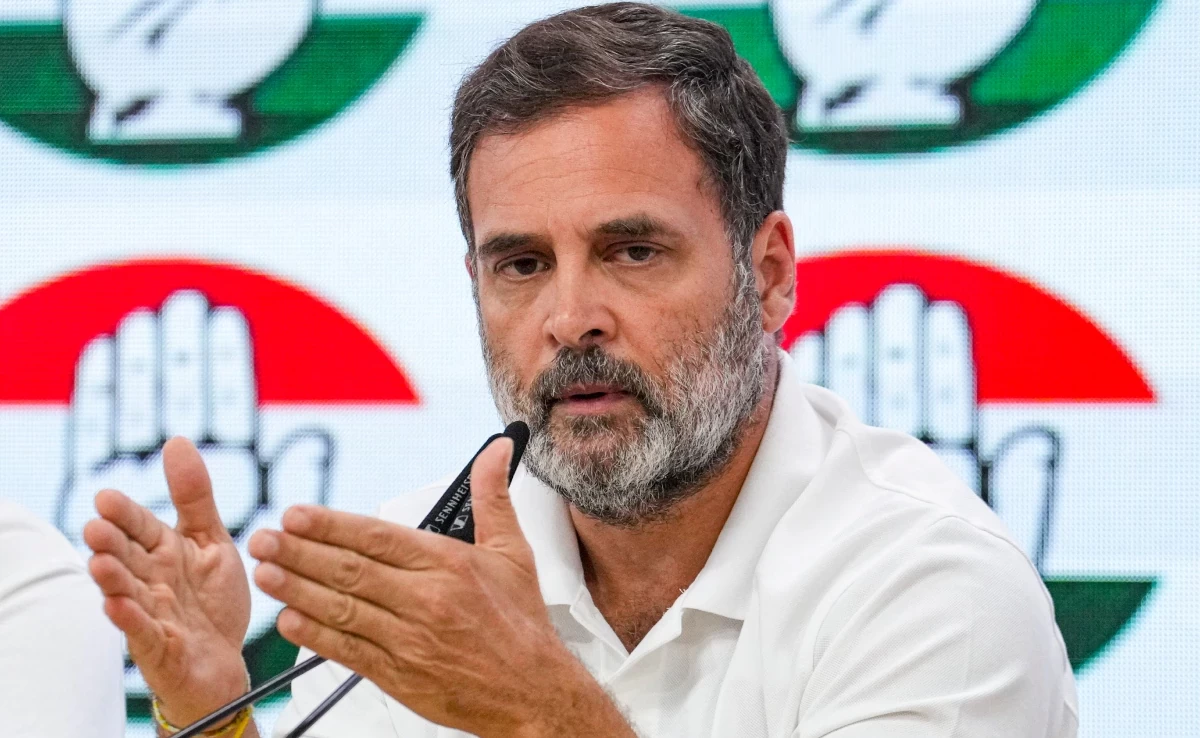
A fresh political confrontation has erupted between the Congress and the Bharatiya Janata Party (BJP) after Leader of Opposition Rahul Gandhi accused Prime Minister Narendra Modi of becoming and remaining in power with foreign assistance.

Gandhi also challenged the Prime Minister to an open debate on the issue, saying he was ready to face him on any platform and at any time.

The BJP responded by bringing up an old video of Gandhi from his visit to the United Kingdom, reviving the controversy surrounding his remarks about India’s democratic institutions and the role of foreign countries.

What Rahul Gandhi said about PM Modi

Gandhi’s remarks came in response to Modi’s recent comments targeting the Opposition during his address at the Rashtriya Ekta Diwas celebrations in Gujarat on October 31.

In a post on X on Monday, Gandhi accused the Prime Minister of relying on foreign support to attain and retain power.

“Mr Modi, stop lying to this nation. You became PM because of foreign help. You remain PM because of foreign help,” Gandhi wrote.

He further alleged that India’s financial system was fully controlled and supported by foreign entities and claimed that foreign social media platforms backed the Prime Minister.

The Congress leader also challenged Modi to discuss the allegations publicly.

“I challenge you to an open debate about this. Any stage, any time. Come if you have the guts,” he said, adding that the Prime Minister would not accept the challenge because of what Gandhi claimed to know about him.

Why PM Modi criticised the Opposition

Gandhi’s response followed Modi’s address at the Rashtriya Ekta Diwas event in Ekta Nagar, Gujarat, marking the 151st birth anniversary of Sardar Vallabhbhai Patel.

During his speech, the Prime Minister accused the Opposition of moving away from its democratic responsibility of questioning the government and instead becoming an obstructionist force.

Modi described the Opposition as an “Avrodh Paksh” rather than a “Virodh Paksh”, alleging that it was creating obstacles to the country’s development.

Without directly naming Gandhi, the Prime Minister also raised questions about the foreign visits of certain political leaders and their alleged connections with forces opposed to India.

“Who is secretly meeting whom abroad? Whom are the anti-India forces supporting? Who is speaking the language of India’s enemies?” Modi asked.

He also expressed concern over the use of social media to spread rumours and attempts to damage India’s image.

BJP brings back Rahul Gandhi’s old UK remarks

The BJP responded to Gandhi’s allegations by sharing an old video from his UK visit, bringing attention back to his earlier comments about India’s democratic institutions and the involvement of foreign countries.

During an interaction at Chatham House in London in March 2023, Gandhi had alleged that several Indian institutions, including the Press, judiciary, Parliament and Election Commission, were under threat.

He had also questioned why Europe and the United States were not doing enough to raise concerns about what he described as threats to democracy in India.

The remarks had triggered a political controversy at the time, with the BJP accusing Gandhi of seeking foreign intervention in India’s internal affairs.

BJP leaders had demanded an apology from the Congress leader over his comments during the UK visit.

The resurfacing of the old video has brought those earlier remarks back into the political debate as the Congress and BJP trade accusations over alleged foreign backing.

Political confrontation intensifies

The latest exchange comes amid an ongoing confrontation between the ruling BJP and the Opposition over several issues, including allegations of electoral irregularities and the role of constitutional institutions.

Gandhi’s challenge to Modi for an open debate has added another dimension to the political dispute, with both parties questioning each other’s alleged connections with foreign forces.

While Gandhi has accused the Prime Minister of benefiting from foreign support, the BJP has repeatedly questioned the Congress leader’s overseas remarks and alleged attempts to involve foreign countries in India’s internal political matters.

Neither side’s allegations about foreign backing should be treated as established facts without supporting evidence.

Continue Reading

Latest world news

Two helicopters collide while landing in Nepal, one Indian killed

Two helicopters struck each other while approaching a heliport near Mount Everest in Nepal. One Indian national died, while another person was taken to hospital with injuries.
Published

on

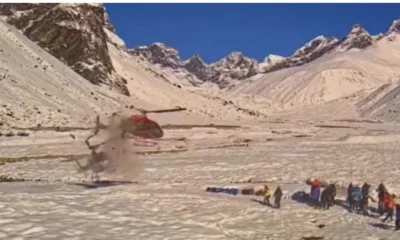
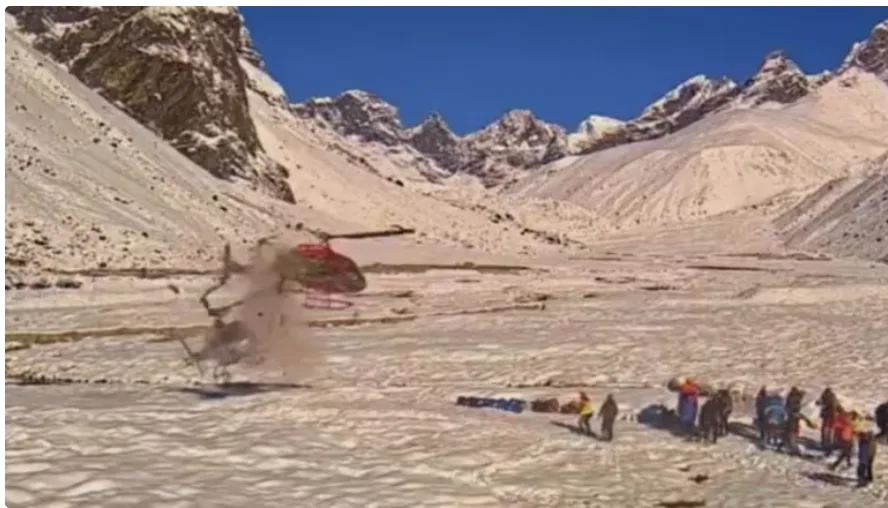
An Indian national was killed and another person injured after two helicopters collided while attempting to land at a high-altitude heliport in Nepal’s Solukhumbu district, near Mount Everest.

Nepal Police confirmed the incident in a post on X. The heliport is located around 250 km from Kathmandu, the country’s capital. The deceased was identified as Vasanth Kumar Balaramaramadu, an Indian national, according to a report by Kathmandu Post.

The accident came into public attention after a video purportedly showing the collision circulated on social media. The footage appears to show the rotor blades of the two helicopters striking each other shortly before landing, following which both aircraft fall onto the icy ground.

However, the authenticity of the video has not been independently verified by report.

Nabin Raja Budhathoki, who is in charge of Solukhumbu district police, told AFP that one foreign national had died at the scene, while another injured person had been taken to hospital.

Helicopters play an important role in Nepal, transporting tourists, mountaineers and supplies across its mountainous terrain. They are also used for emergency evacuations.

Nepal has eight of the world’s 14 highest mountains and receives thousands of foreign climbers and trekkers every year. Flying in these high-altitude areas presents considerable challenges.

At higher elevations, thinner air gives helicopter rotor blades fewer air molecules to push against, reducing the lift they can generate. Engines also receive less oxygen for combustion, which can affect their power output.

A similar high-altitude helicopter accident was reported just days earlier in India’s Uttarakhand. That helicopter crashed shortly after taking off from Badrinath, killing all six people on board, including the pilot and five passengers.

An Indian national was killed and another person injured after two helicopters collided while landing at a high-altitude heliport in Nepal’s Solukhumbu district, near Mount Everest. A purported video of the collision has surfaced on social media, but its authenticity remains unverified.

Continue Reading

India News

Delhi Pollution: GRAP-II curbs imposed across NCR as AQI hits 324

Delhi’s air quality deteriorated to the very poor category on November 2, prompting the CAQM to implement GRAP Stage II across Delhi-NCR. The measures aim to control dust and vehicular pollution.
Published

on

Delhi-Pollution

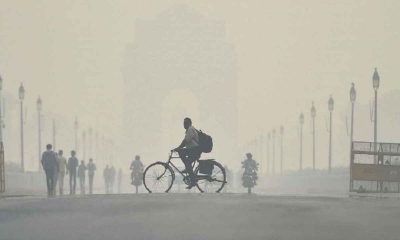
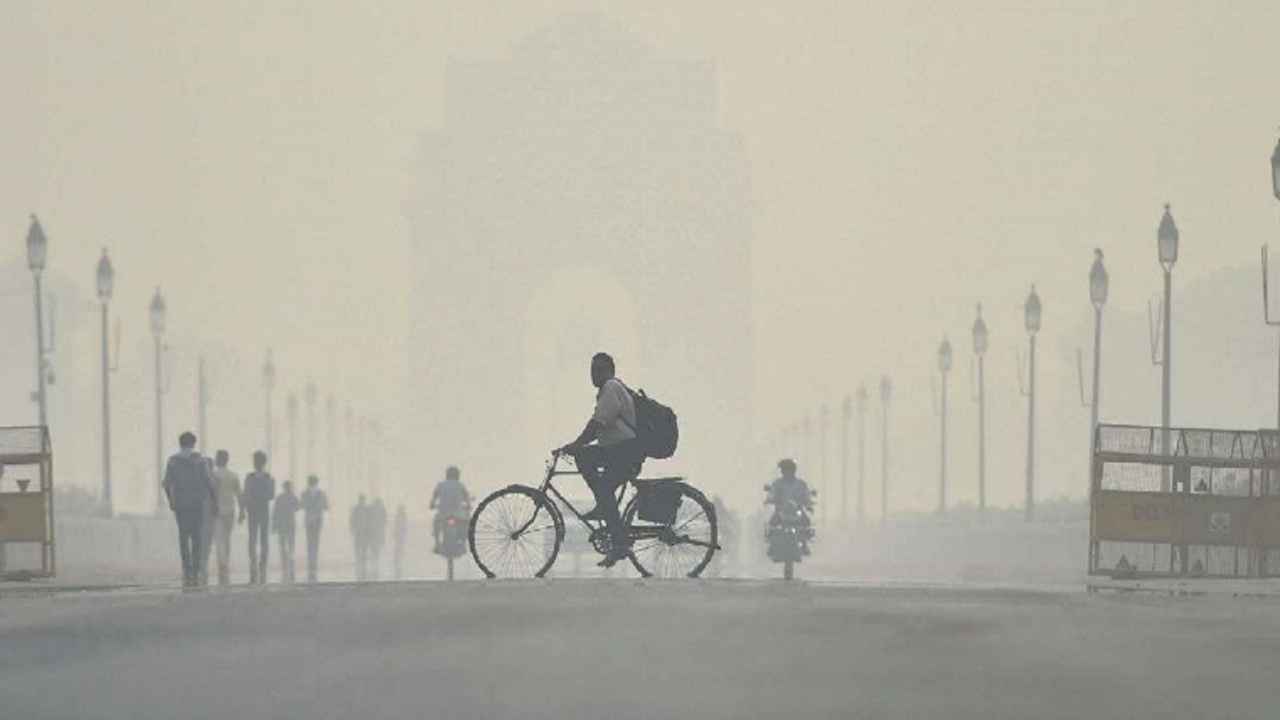
Delhi’s air quality deteriorated to the ‘very poor’ category on Monday, November 2, prompting the Commission for Air Quality Management (CAQM) to invoke Stage II of the Graded Response Action Plan (GRAP) across the National Capital Region (NCR) with immediate effect.

The national capital’s Air Quality Index (AQI) reached 324 at 4 pm, placing it in the very poor category. The deterioration followed a sharp increase in pollution levels over three days, with the AQI rising from 117 on October 31 to 261 on November 1 before crossing the 300 mark on Monday.

The CAQM attributed the worsening air quality to unfavourable meteorological conditions. Forecasts by the India Meteorological Department (IMD) and the Indian Institute of Tropical Meteorology (IITM) also indicated that Delhi’s air quality could remain in the very poor category over the coming days.

What is GRAP Stage II and why has it been imposed?

The Graded Response Action Plan is a set of emergency measures designed to tackle worsening air pollution in Delhi-NCR. It has different stages based on the severity of air quality.

Under the AQI classification, readings between 301 and 400 fall in the very poor category. GRAP Stage II is applicable when air quality reaches this range.

With Delhi’s AQI climbing to 324, the CAQM directed authorities to implement Stage II measures across the NCR. The directions also require agencies to continue implementing measures under the earlier stages of GRAP.

What restrictions come under GRAP Stage II?

The second stage of GRAP focuses on strengthening pollution-control measures, particularly those related to road dust, vehicular emissions and other sources of pollution.

Some of the important measures include:

  • Road cleaning: Authorities are required to intensify mechanical sweeping of roads and water sprinkling to control dust.
  • Traffic management: Traffic police are directed to manage congestion at busy roads and intersections.
  • Vehicle checks: Enforcement teams are required to intensify checks for valid Pollution Under Control (PUC) certificates and take action against visibly polluting vehicles.
  • Parking charges: Higher parking fees are among the measures intended to discourage the use of private vehicles.
  • Diesel generators: The use of diesel generator sets is subject to stricter regulation.
  • Public transport: Authorities are required to encourage the use of public transport to reduce vehicular emissions.

These measures are intended to reduce pollution levels across Delhi-NCR.

Delhi’s AQI worsens over three days

Delhi witnessed a significant deterioration in air quality over a short period.

The AQI stood at 117 on October 31, placing it in the moderate category. It subsequently increased to 261 on November 1, entering the poor category.

On November 2, the reading climbed further to 324 by 4 pm, pushing the national capital into the very poor category.

The situation was also reflected in readings from individual monitoring stations. Several locations recorded AQI levels above 300.

Among the areas reporting high pollution levels were RK Puram, ITO, Akshardham, India Gate, Alipur, Dwarka Sector 8 and Delhi University’s North Campus.

With pollution levels worsening and unfavourable weather conditions expected to persist, authorities have been directed to strengthen enforcement of the prescribed pollution-control measures across the region.

Continue Reading

Trending

© Copyright 2022 APNLIVE.com